Recognizing shapes Math Worksheets for Ages 5-9 - Page 2
35 filtered results
-
From - To
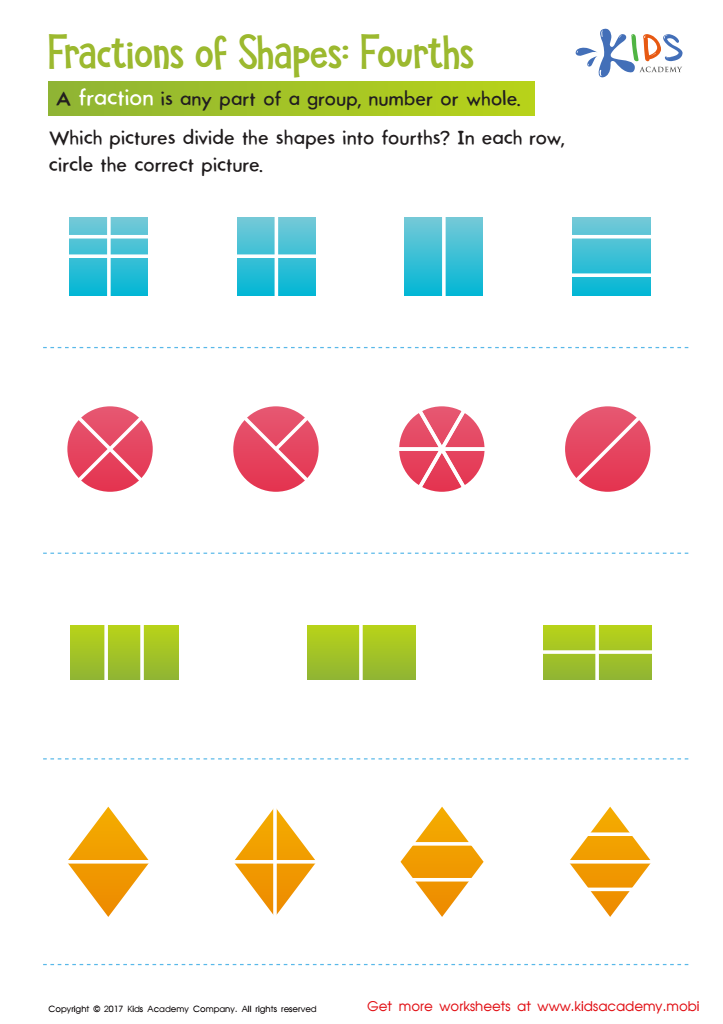
Fractions of Shapes Worksheet
 Assign to My Students
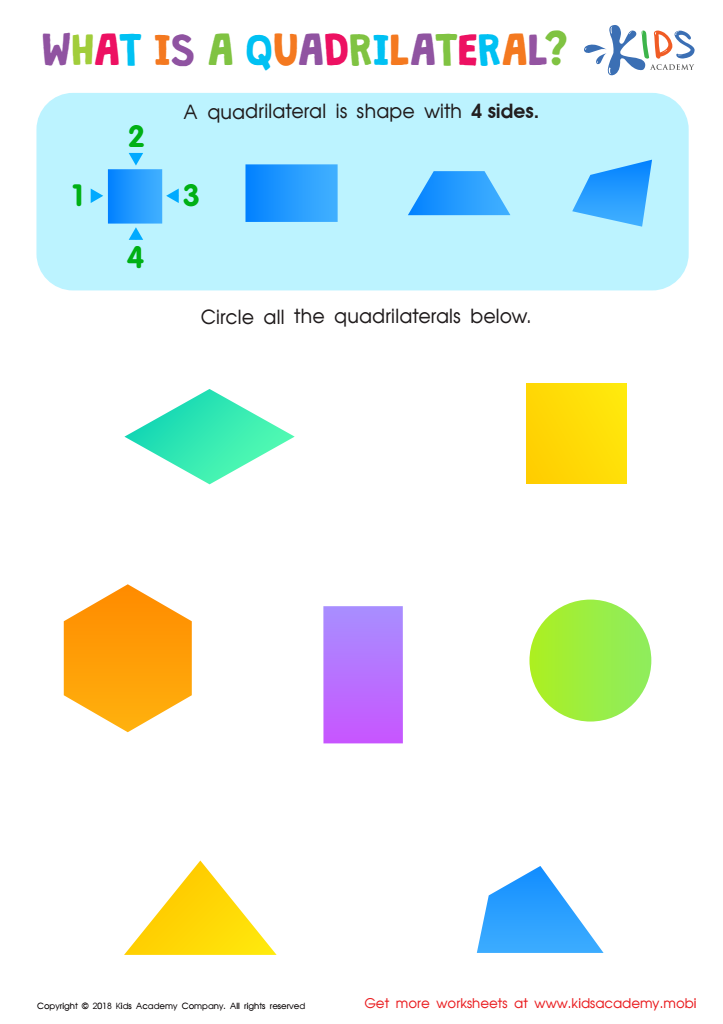
What Is a Quadrilateral? Worksheet








Recognizing shapes is a critical foundational skill for children aged 5-9 that supports their overall cognitive development and mathematical understanding. This skill goes beyond identifying geometric figures like squares, triangles, and circles; it fosters spatial awareness, problem-solving abilities, and logical thinking. When children learn to recognize and categorize shapes, they develop the ability to make connections in their learning, which is essential for advanced math concepts.
For parents and teachers, nurturing a child's recognition of shapes early can significantly enhance their ability to understand more complex mathematical concepts later on. Shapes are present in every aspect of daily life, from nature to architecture, and helping children recognize these forms strengthens their observational skills. Furthermore, shape recognition encourages creativity and critical thinking, as children learn to visualize and manipulate shapes through hands-on activities like building with blocks or engaging in drawing exercises.
Moreover, competencies in shapes set the groundwork for essential skills like geometry and measurement in later years. By prioritizing shape recognition, parents and teachers not only empower children academically, but they also cultivate a love for learning and exploration that can have lifelong benefits. Overall, recognizing shapes is vital for fostering both intellectual growth and practical life skills.








