Understanding graphs Math Worksheets for Ages 5-9
6 filtered results
-
From - To
Unlock your child's potential in math with our "Understanding Graphs Math Worksheets" specifically designed for ages 5-9! These engaging worksheets introduce young learners to the fundamentals of graphs, making complex concepts easy and enjoyable. Through interactive exercises, children will explore different types of graphs, learning to read, interpret, and create their own graphical representations of data. Our materials are tailored to build a solid foundation in early math skills, fostering critical thinking and problem-solving abilities. Whether for home or classroom use, these worksheets are perfect for supporting your child's educational journey! Start making math fun today with our graphing resources!
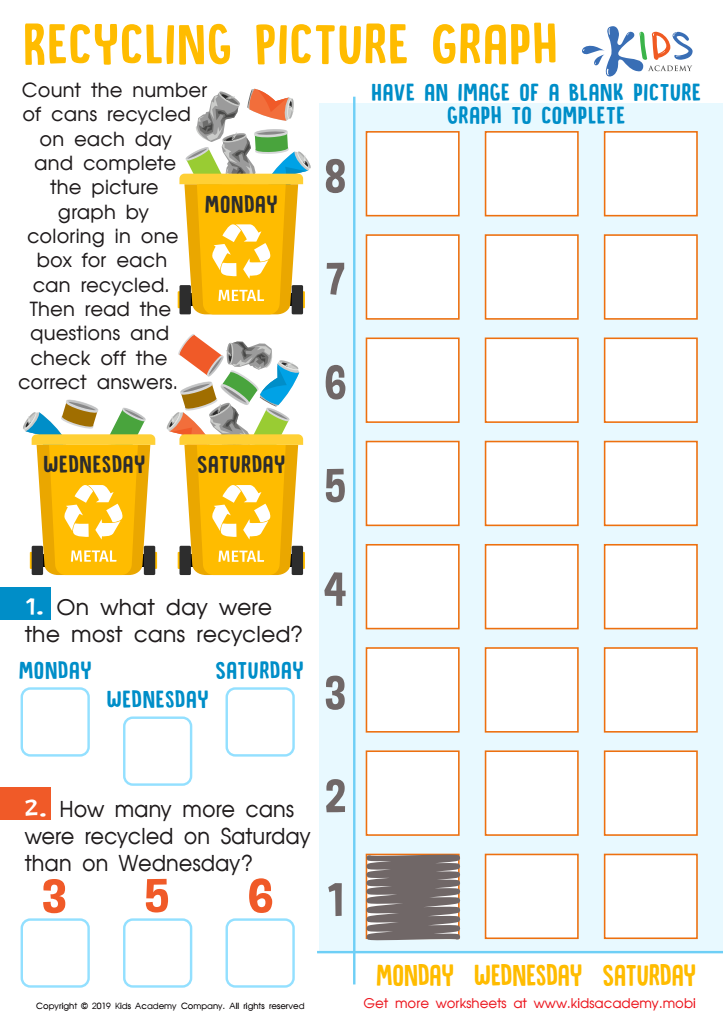
Recycling Picture Graph Worksheet
 Assign to My Students
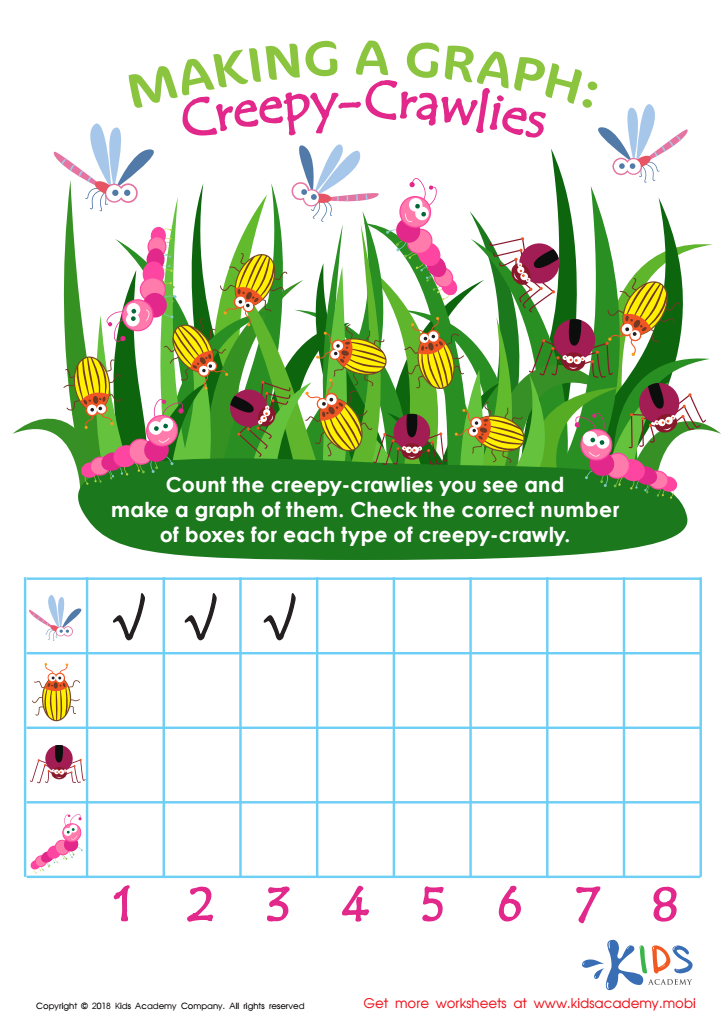
Making a Graph: Creepy Crawlies Worksheet
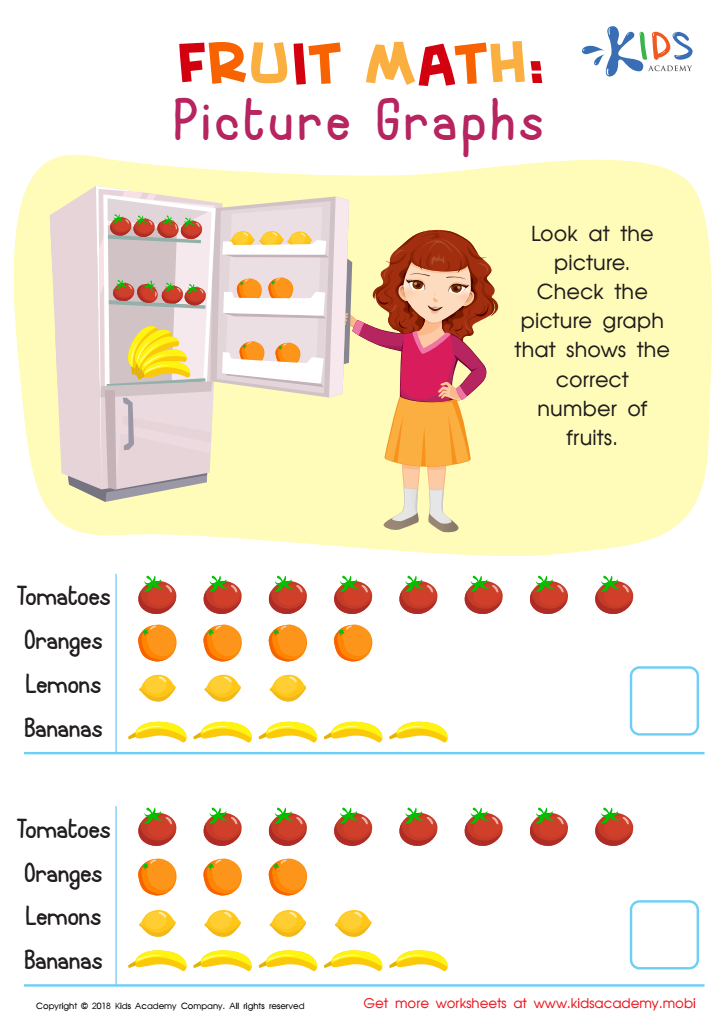
Fruit Math: Picture Graphs Worksheet
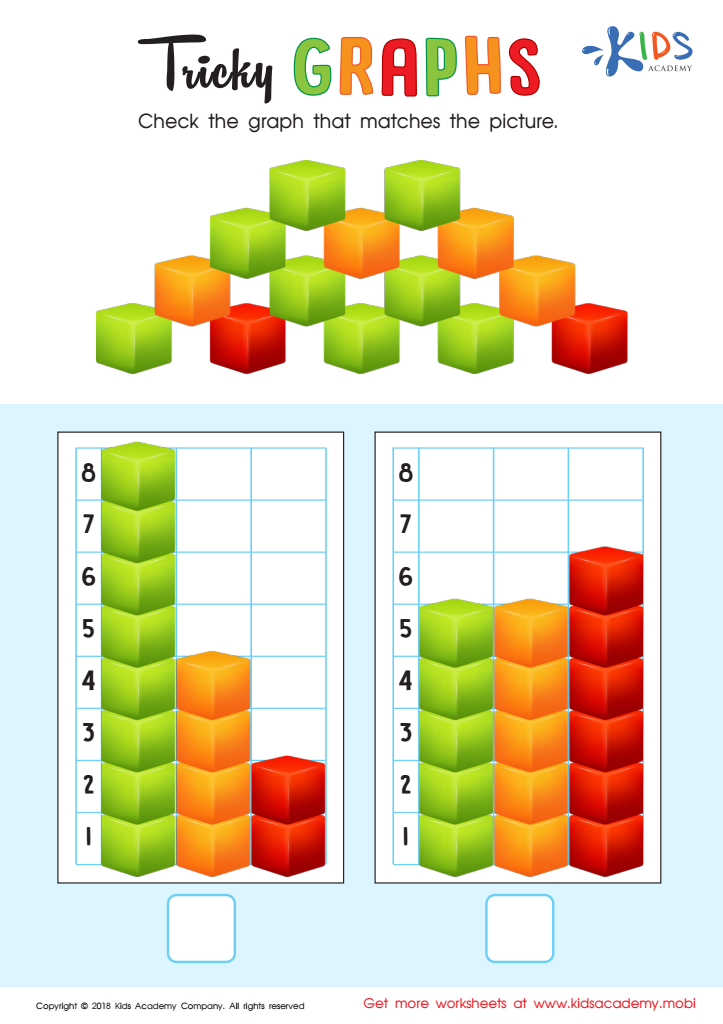
Tricky Graphs Worksheet
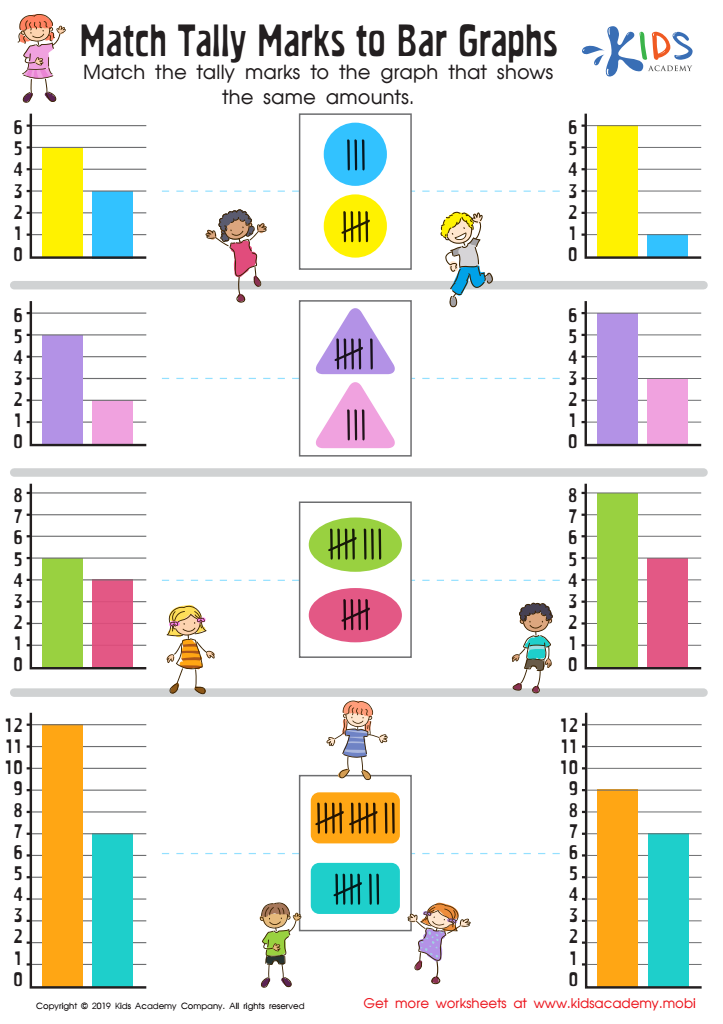
Match Tally Marks to Bar Graphs Worksheet

Aircraft Carrier Picture Graphs Worksheet








Understanding graphs is crucial for children aged 5-9 as it lays a strong foundation for their mathematical and analytical skills. During these formative years, children are naturally curious and open to learning concepts that will benefit them throughout their lives. Graphs provide a visual representation of data that can help young learners develop critical thinking and problem-solving skills.
By introducing children to graphs, parents and teachers can enhance their ability to interpret information and recognize patterns. This skill is not only pivotal in math but also transcends into various subjects, including science and social studies. Understanding graphs fosters important skills such as comparison, categorization, and data interpretation—all essential for making informed decisions later in life.
Moreover, graphing makes learning engaging and interactive, thus capturing children's attention and encouraging active participation. As they learn to create and analyze graphs, children also bolster their creativity and spatial awareness. Engaging with graphs nurtures their confidence in math, making them less intimidated by numbers as they progress through school.
In summary, graph understanding plays a key role in supporting essential academic skills and promotes lifelong learning, making it imperative for both parents and teachers to prioritize this foundational concept during early education.








