Understanding measurements Math Worksheets for Ages 5-9 - Page 2
26 filtered results
-
From - To
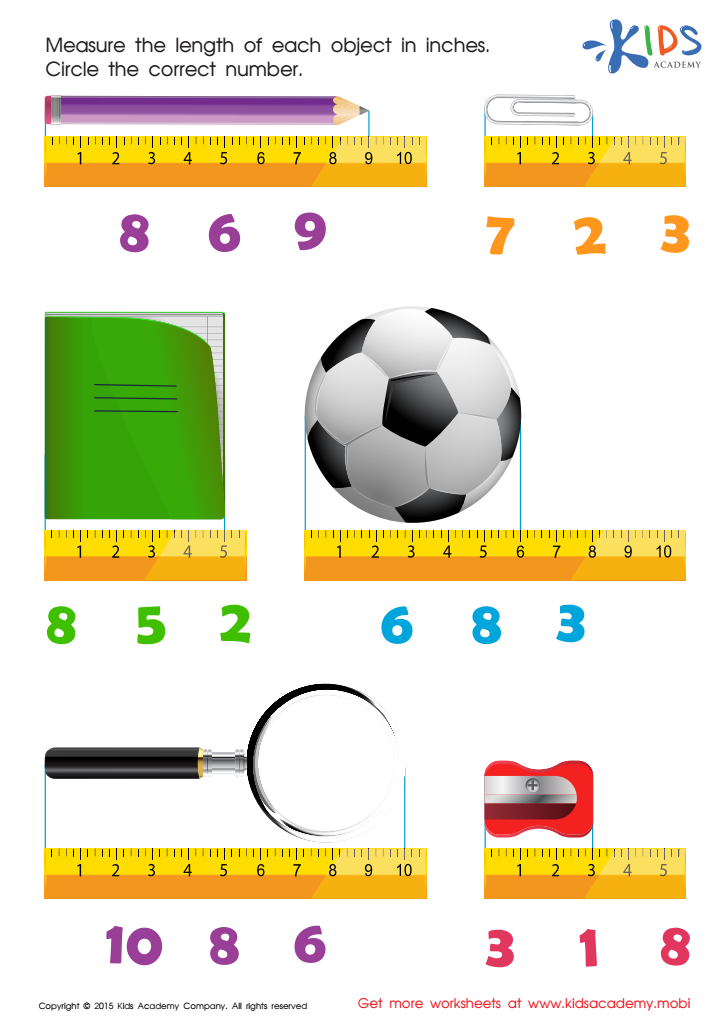
Learning measuring objects in inches Worksheet
 Assign to My Students
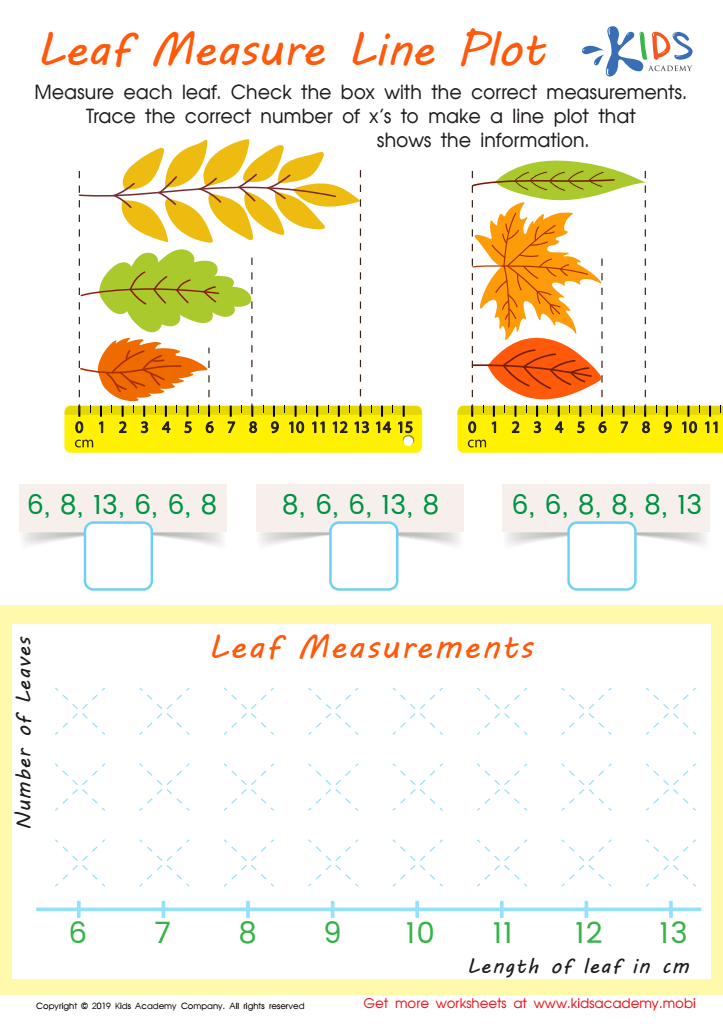
Leaf Measure Line Plot Worksheet





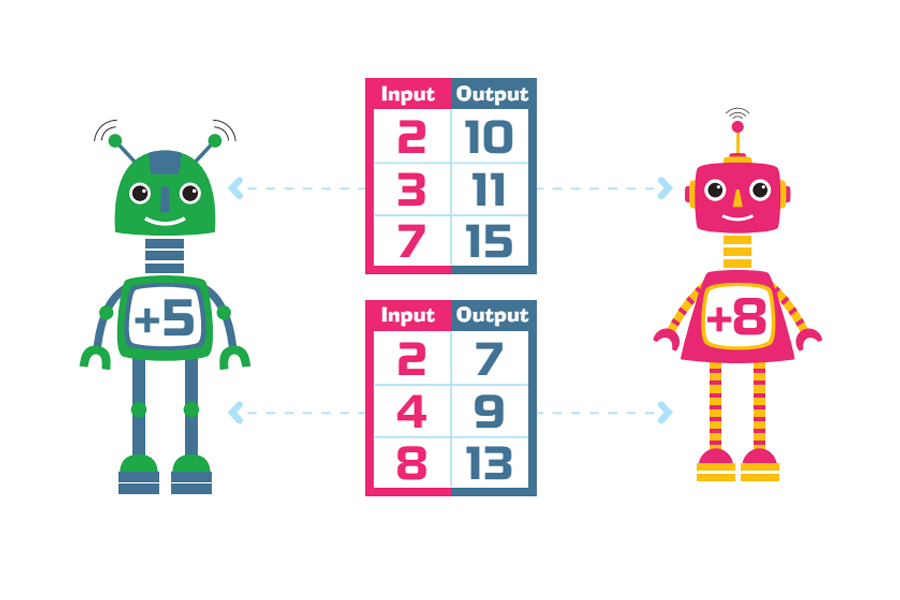

Understanding measurements is crucial for children ages 5-9 as it lays the foundation for mathematical and real-world competencies. At this age, children are naturally curious and eager to explore their environment. By engaging them in measurements, teachers and parents can nurture this curiosity while introducing essential math concepts such as length, weight, volume, and time.
First, mastering measurements enhances children's problem-solving skills. They begin to understand how to compare items, analyze data, and make informed decisions based on quantitative reasoning. For instance, when children measure ingredients for a recipe, they learn about precision and the importance of following instructions, which ties in to critical thinking and sequencing.
Moreover, measurement activities often involve hands-on experiences, fostering engagement. These interactions not only make learning fun but also help strengthen fine motor skills and spatial awareness.
Additionally, early exposure to measurements contributes to a child’s confidence in math, reducing anxiety about the subject as they grow. This fluency is vital as mathematics becomes increasingly complex in higher grades. When parents and teachers prioritize measurement in early education, they equip children with vital skills for lifelong learning and daily life challenges, enabling them to interpret and interact with the world more effectively.








