Understanding number relationships Math Worksheets for Ages 5-9
9 filtered results
-
From - To
Explore our "Understanding Number Relationships" math worksheets, designed specifically for children aged 5-9! These engaging worksheets help young learners develop essential math skills through enjoyable activities that cover basic concepts of numbers, counting, and relationships. With a focus on visual learning, the worksheets feature colorful illustrations that captivate kids and make learning fun. Our carefully crafted exercises cater to various proficiency levels, ensuring each child grasps the foundations of number relationships effectively. Ideal for classroom use or homework, these worksheets inspire curiosity and build confidence in math. Dive into the world of numbers and watch your child's skills flourish!
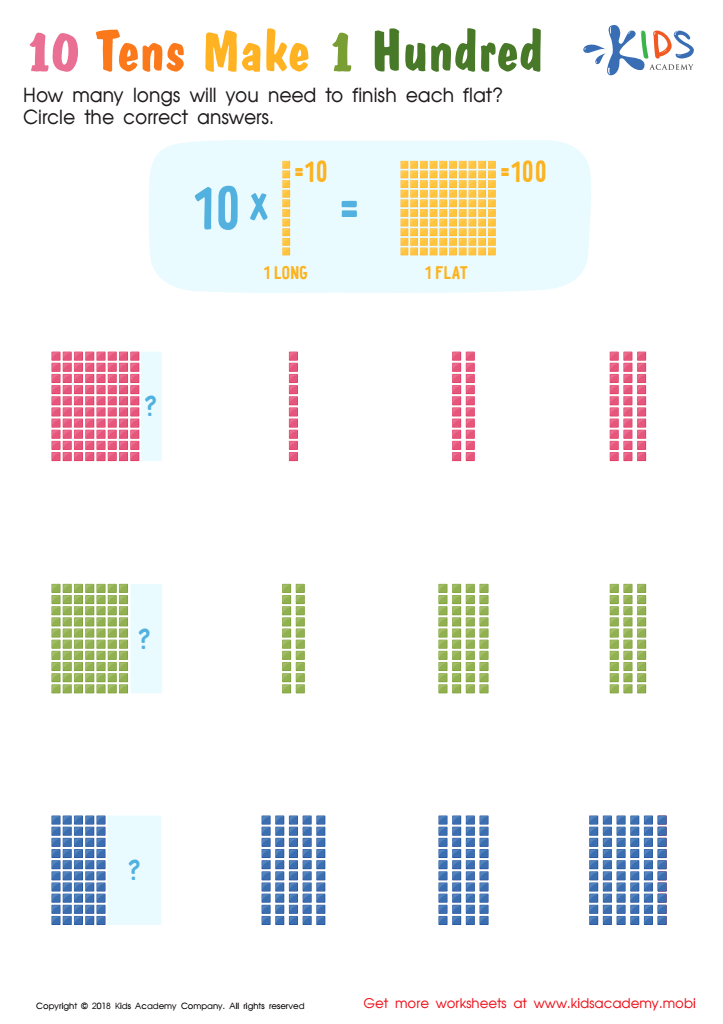
10 Tens Make 1 Hundred Worksheet
 Assign to My Students
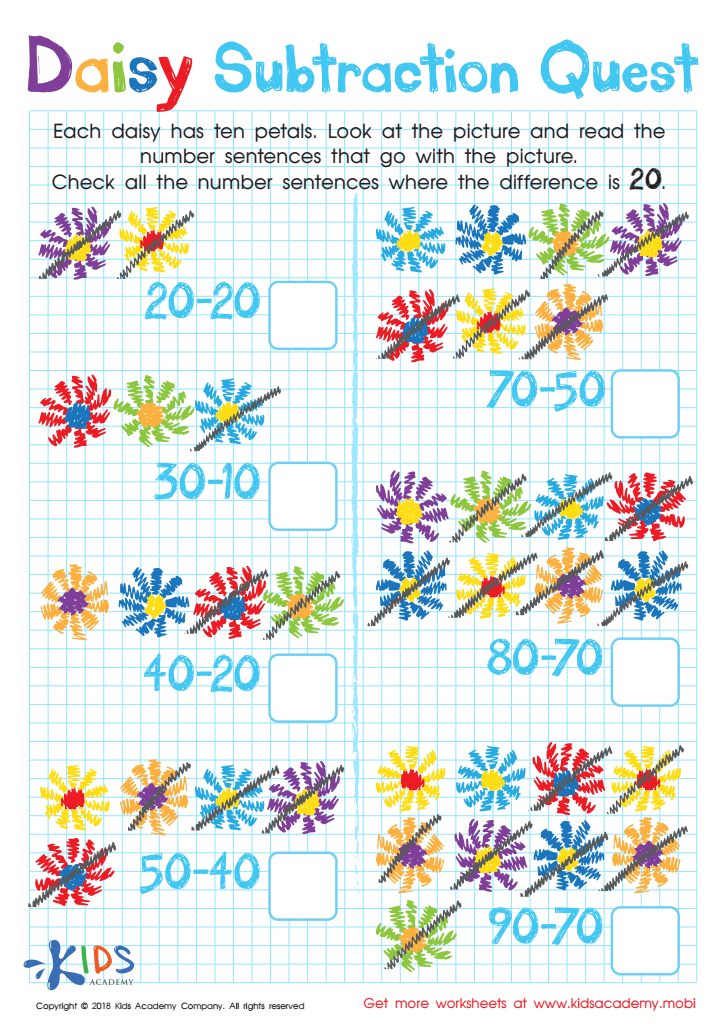
Daisy Subtraction Quest Worksheet
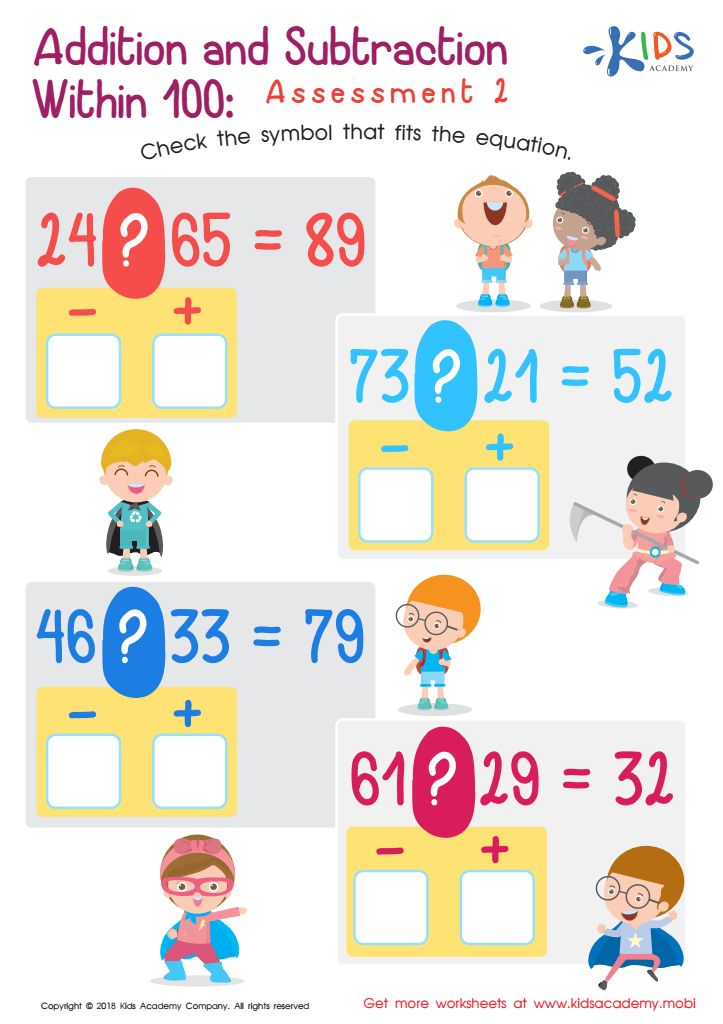
Addition and Subtraction Within 1: Assessment 2 Worksheet
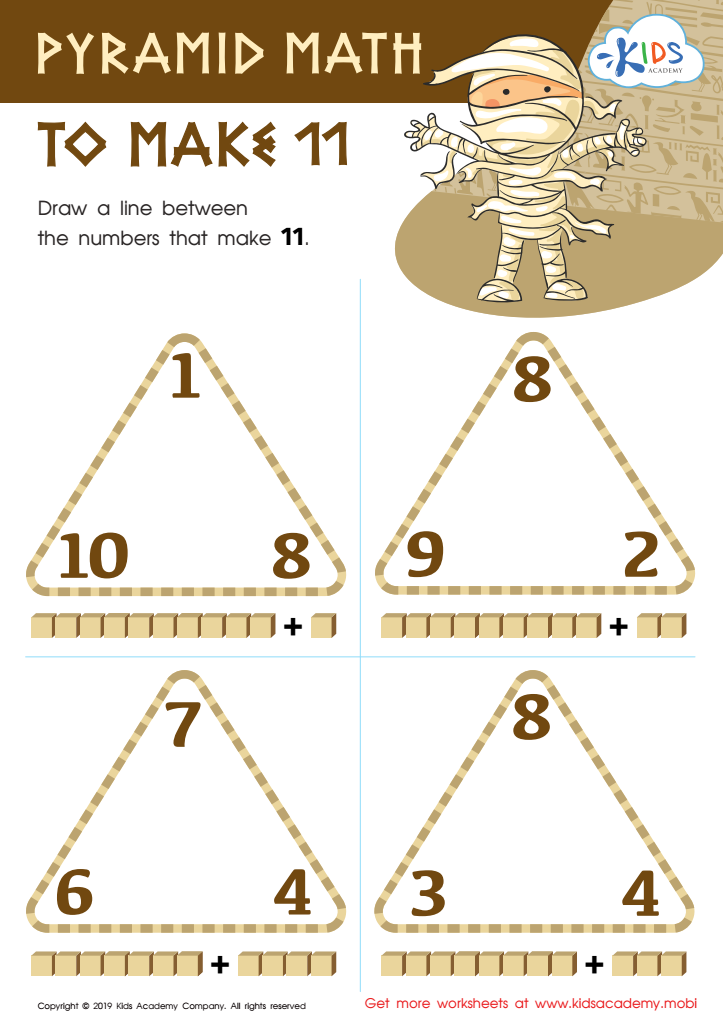
Pyramid Math to Make 11 Worksheet




.jpg)



Understanding number relationships is crucial for children aged 5-9 as it lays a strong foundation for their mathematical reasoning. At this early stage, children begin to explore how numbers interact and relate to each other. This comprehension fosters critical thinking and problem-solving skills, essential for more complex math concepts they will encounter later.
Parents and teachers should care about this focus because it enhances children’s confidence and enjoyment in mathematics. When kids grasp the connections between numbers, such as addition and subtraction being inverse operations, they develop a deeper conceptual understanding rather than relying on rote memorization. This engagement with numbers encourages curiosity and persistence, which are vital traits for lifelong learning.
Furthermore, understanding number relationships supports the development of mental math skills, allowing children to manipulate numbers flexibly and efficiently. This ability not only aids in academic success but also in real-life situations, from managing finances to logically approaching everyday problems.
Ultimately, nurturing this vital skill set empowers children to approach mathematics with a positive mindset, making them more prepared to tackle challenges both in school and in everyday life. Investing in their mathematical understanding is an investment in their overall cognitive development and future educational successes.








