Understanding quantity Math Worksheets for Ages 5-9 - Page 2
30 filtered results
-
From - To
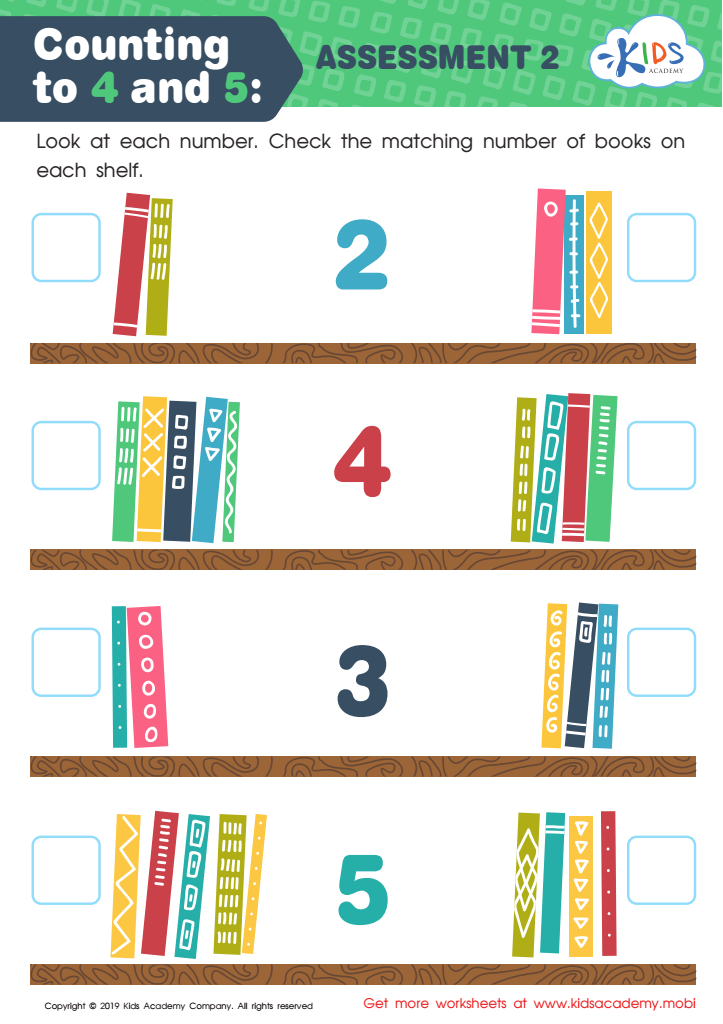
Counting to 4 and 5: Assessment 2 Worksheet
 Assign to My Students
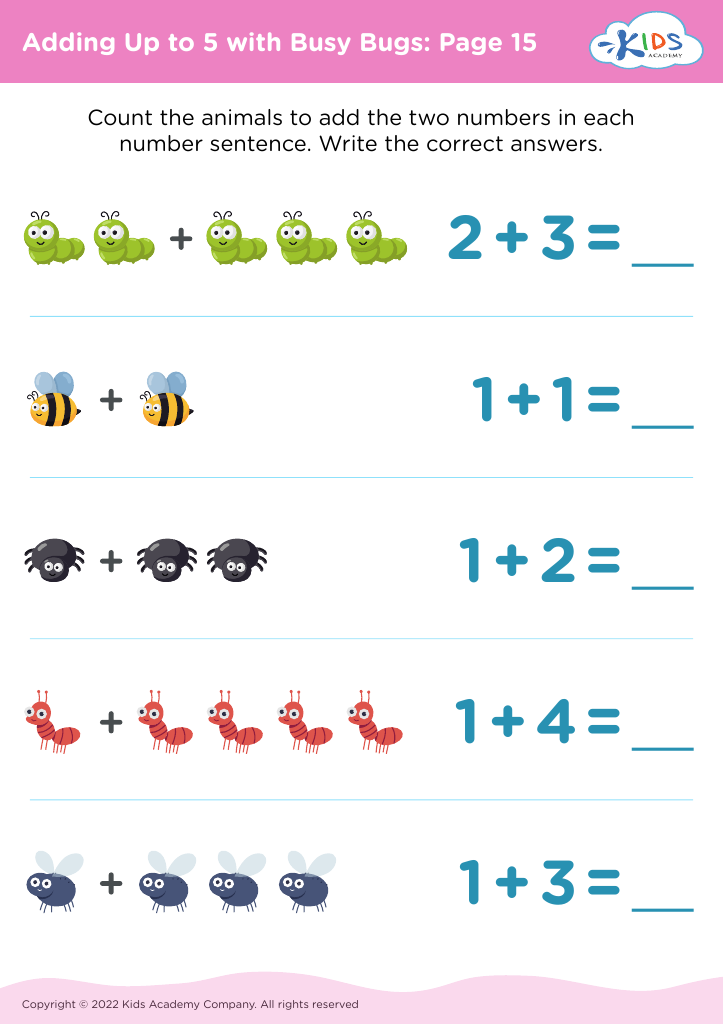








Understanding quantity in mathematics is crucial for children ages 5-9, as it forms the foundation for their future learning and cognitive development. At this stage, children are beginning to grasp basic concepts such as counting, number recognition, and the relationship between numbers and quantities. Engaging with these concepts not only helps enhance their mathematical skills, but also boosts critical thinking and problem-solving abilities.
Parents and teachers should care about fostering a strong understanding of quantity during these formative years because early math skills are directly linked to later academic success. Children who do not develop number sense may struggle with more complex math concepts in the future, leading to a cycle of frustration and lack of confidence. Moreover, early exposure to quantity helps children make connections to real-world situations, such as measuring ingredients in cooking or understanding time and money.
By creating a supportive and rich environment for exploring quantity, parents and educators can encourage a love for math and ensure children develop the foundational skills they need. This investment in early math literacy not only prepares children for more advanced mathematics but also equips them for everyday challenges as adults. Investing in this understanding nurtures lifelong learners capable of critical thought.








