Data interpretation Measurement Worksheets for Ages 5-9
10 filtered results
-
From - To
Enhance your child's data interpretation skills with our comprehensive Measurement Worksheets for Ages 5-9! These engaging worksheets are designed to help young learners grasp essential concepts like comparing lengths, weighing objects, and reading graphs. With vibrant visuals and age-appropriate tasks, kids can effortlessly develop their analytical abilities. Perfect for home or classroom use, these materials support learning in a fun, interactive way. Boost your child's confidence and ensure a solid foundation in math with Kids Academy’s expertly crafted worksheets. Tailored to suit early learners, these resources bring math to life and make learning enjoyable!
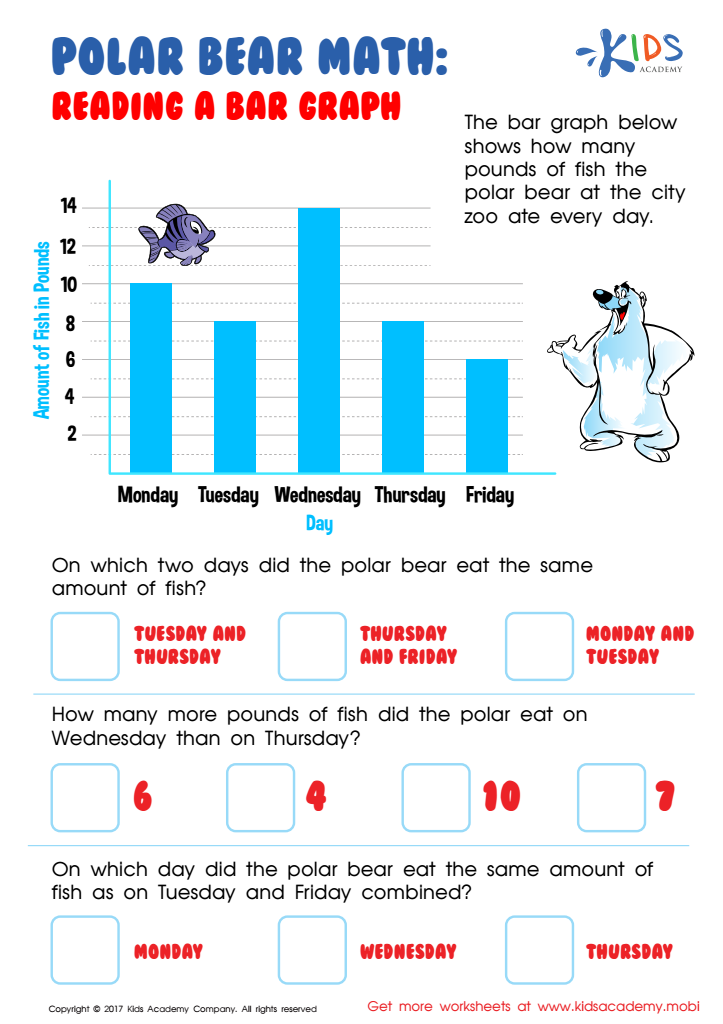
Reading Bar Graph Worksheet
 Assign to My Students
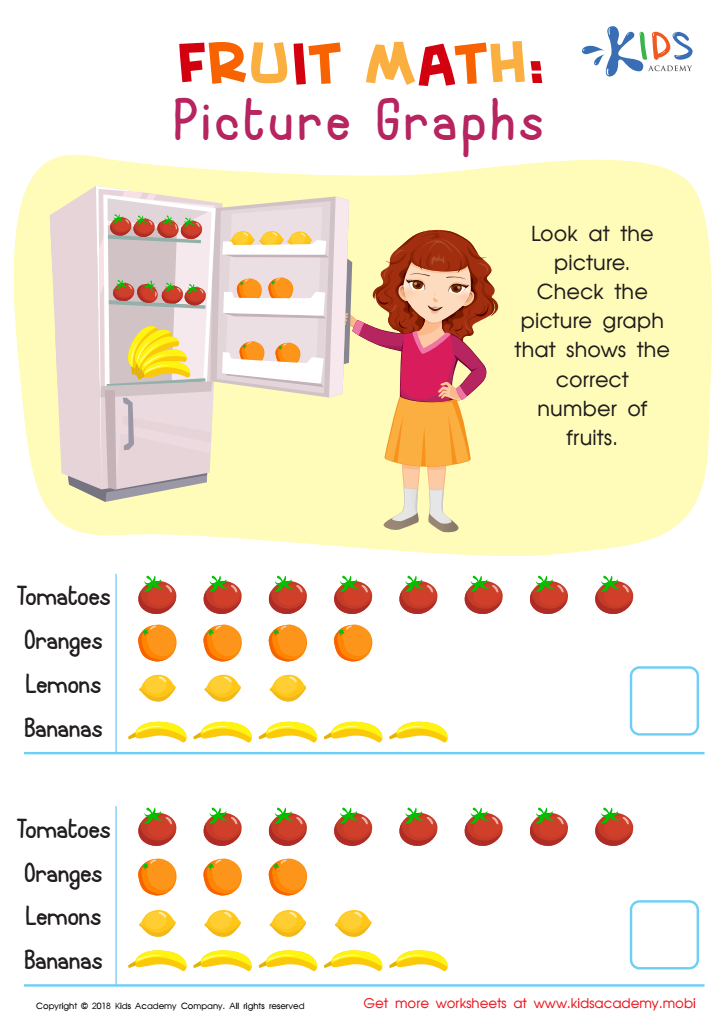
Fruit Math: Picture Graphs Worksheet
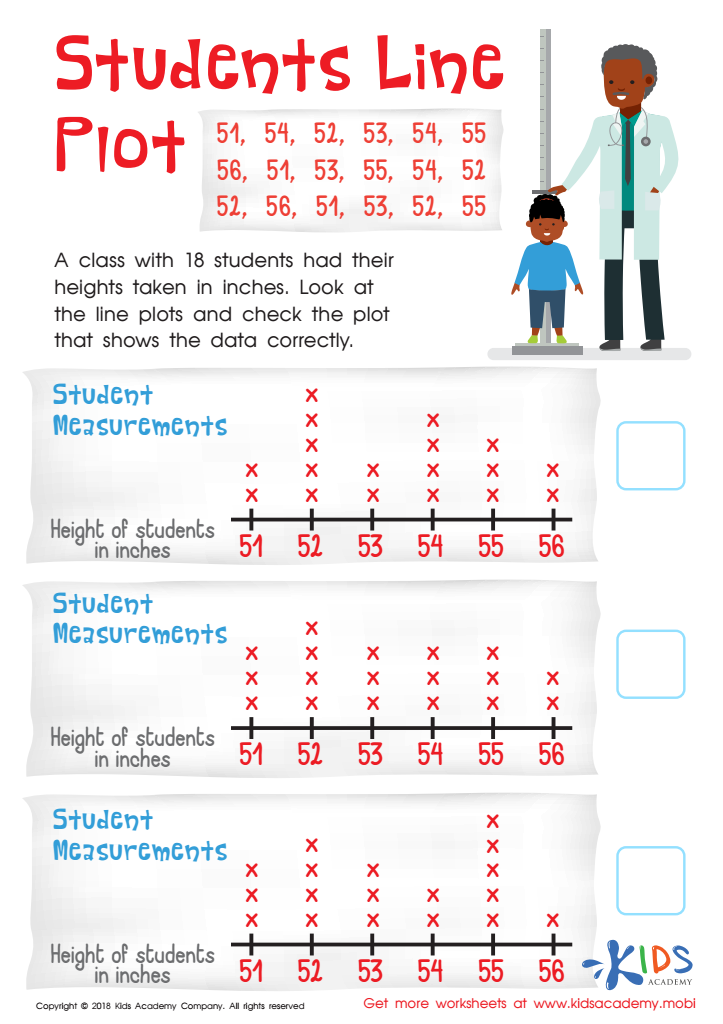
Students Line Plot Worksheet
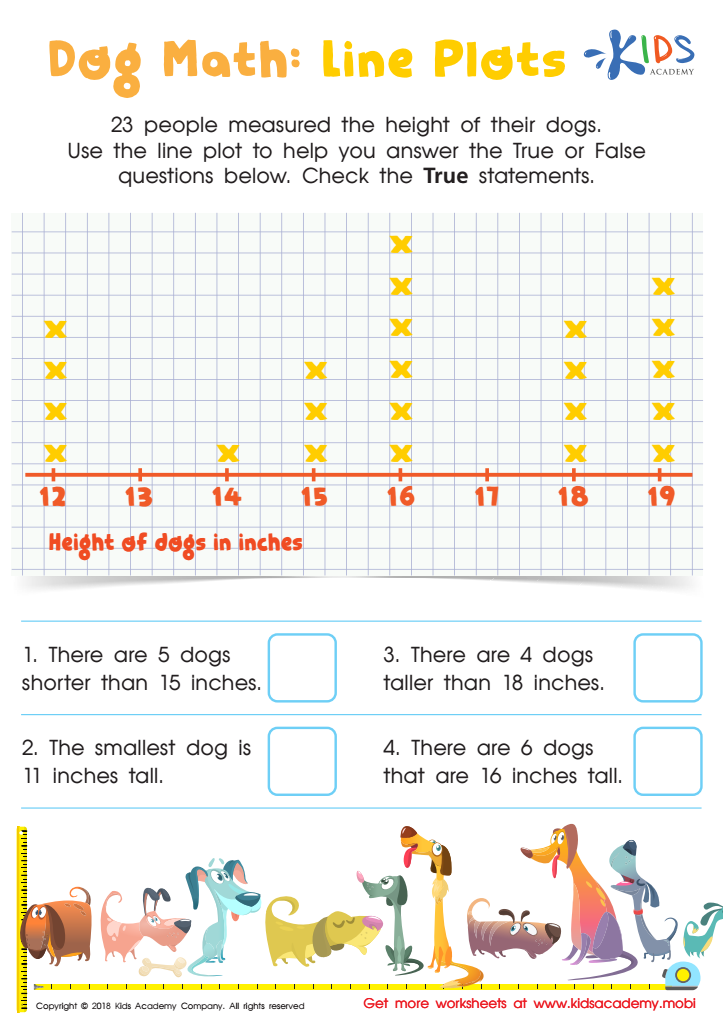
Dog Math: Line Plots Worksheet
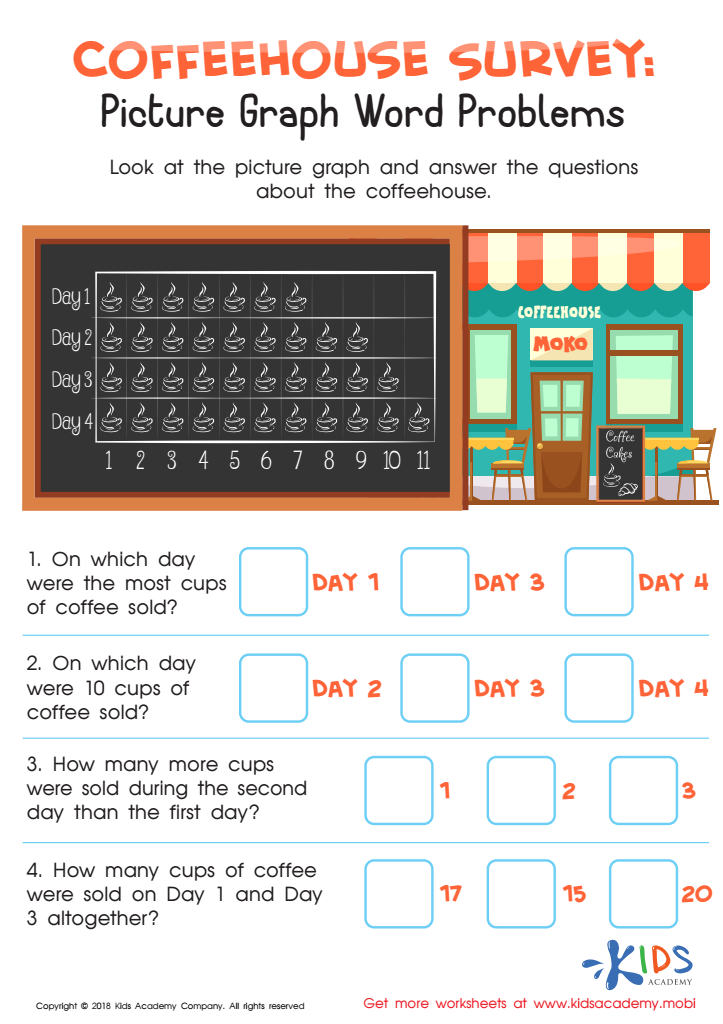
Coffeehouse Survey: Picture Graph Word Problems Worksheet
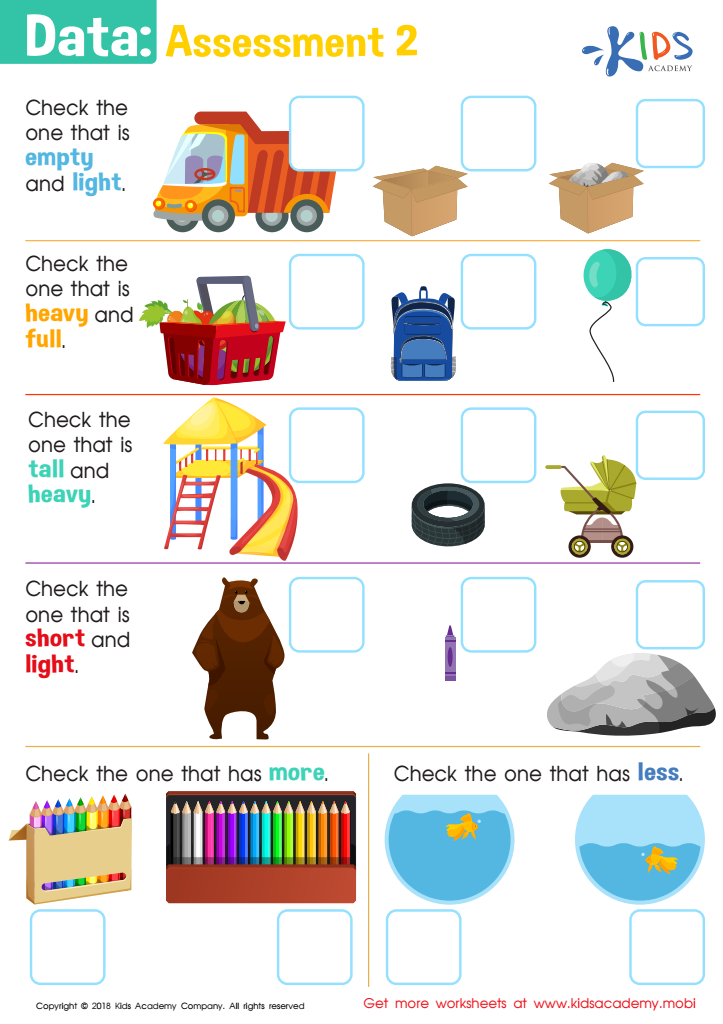
Data: Assessment 2 Worksheet
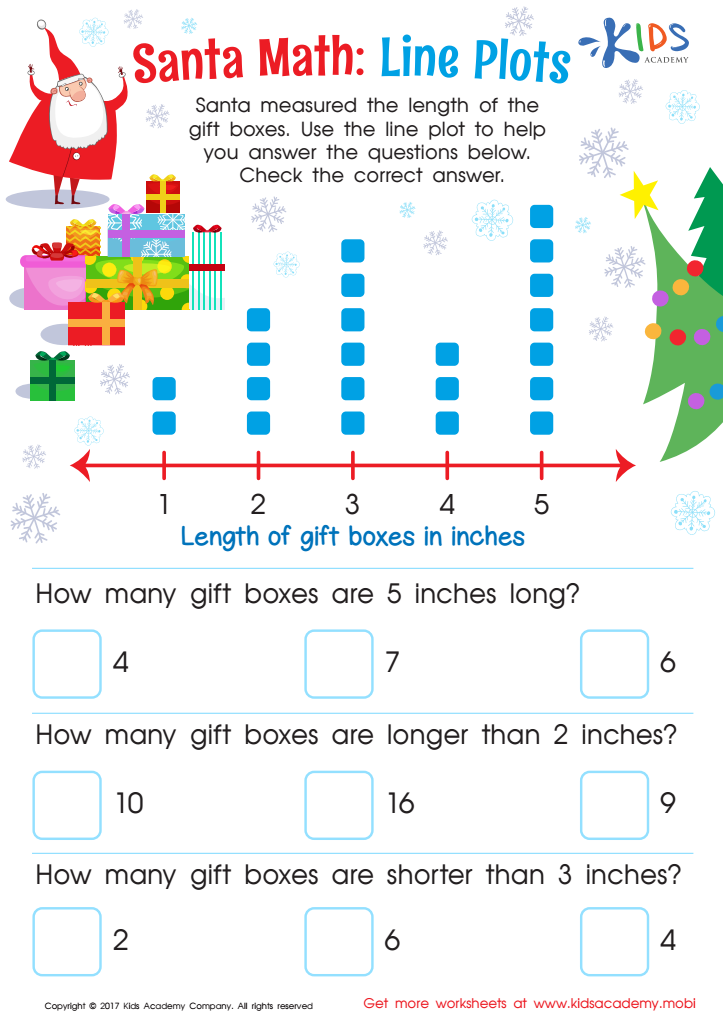
Line Plot Worksheet
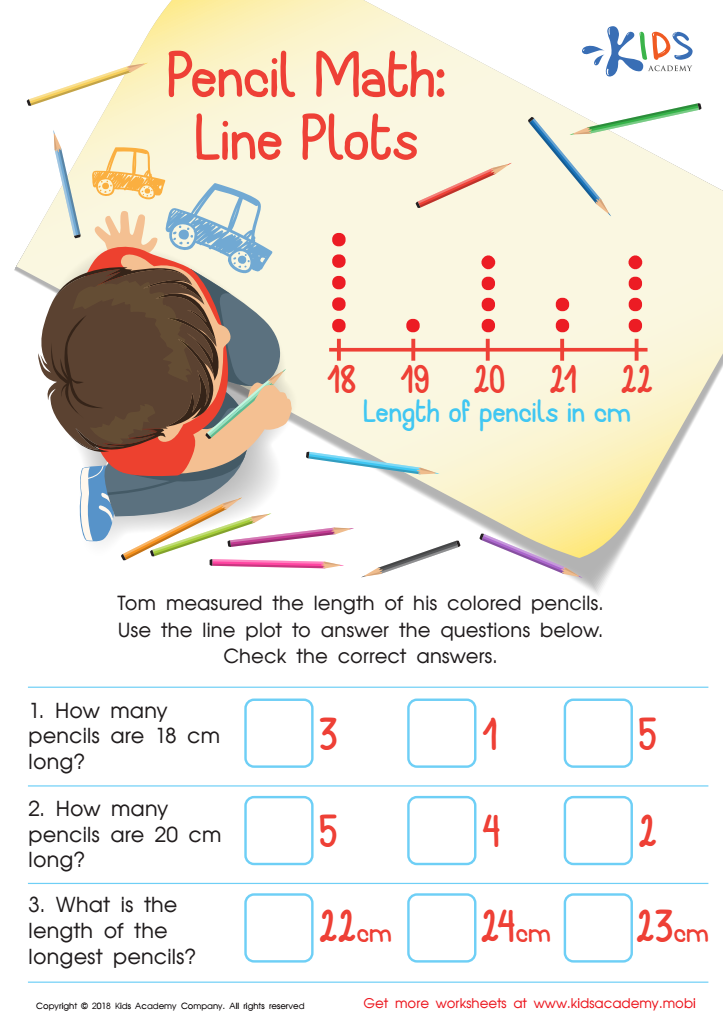
Pencil Math: Line Plots Worksheet
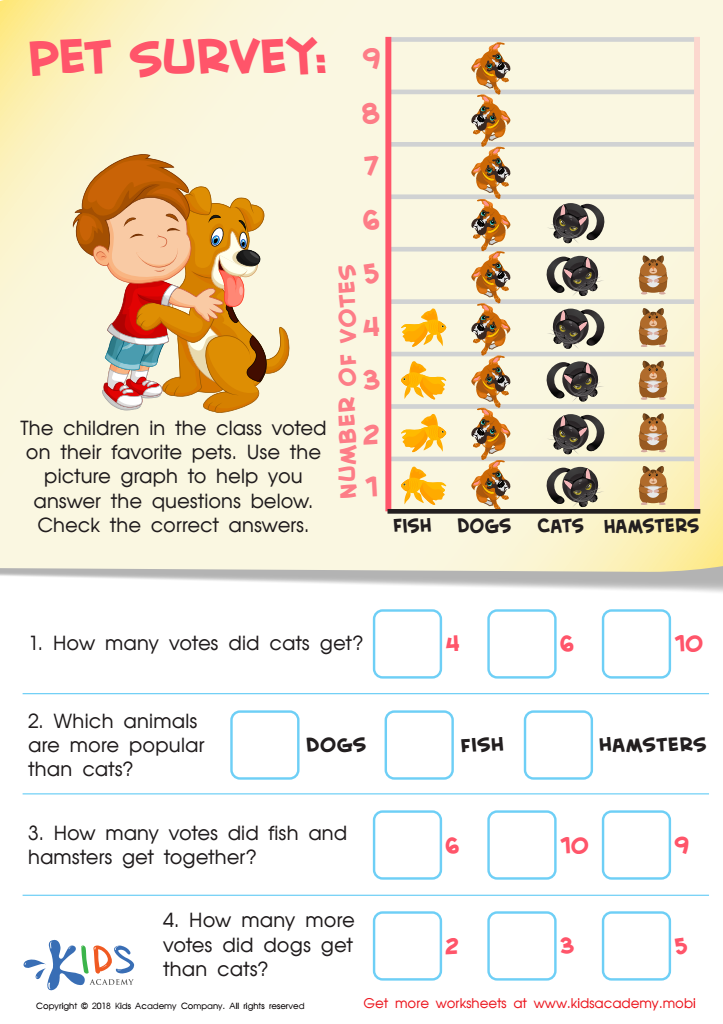
Pet Survey Worksheet
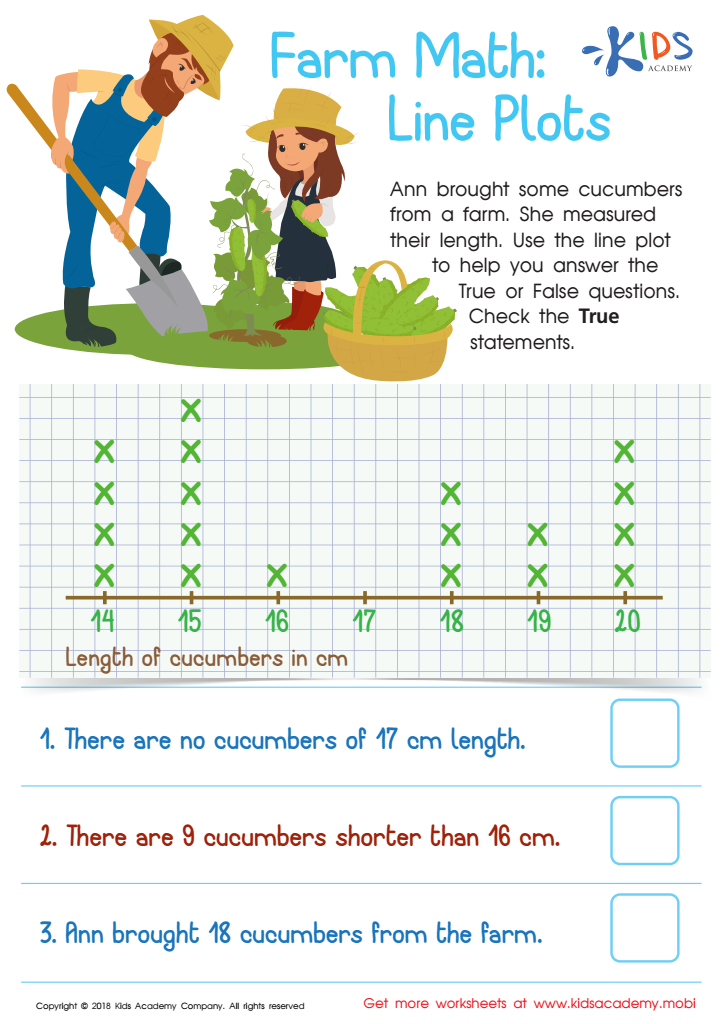
Farm Math: Line Plots Worksheet








Data interpretation and measurement skills are foundational elements in a child's education, particularly between the ages of 5 and 9. During these formative years, children develop critical thinking and problem-solving abilities that will benefit them throughout their academic and daily lives.
First, understanding data interpretation enables young learners to make sense of information presented in various formats like charts, graphs, and tables. This skill is not only essential for mathematics but also for subjects like science and social studies. It helps children to identify patterns, draw conclusions, and make informed decisions based on evidence.
Secondly, measurement skills are integral in helping children grasp important concepts related to size, volume, weight, and time. These fundamentals are useful not just academically, but also in everyday activities such as cooking, sports, and time management. Knowledge of measurement also encourages a child's spatial awareness and fine motor development.
Moreover, cultivating these skills early sets a groundwork for advanced mathematical concepts encountered in later grades. It enhances logical reasoning and analytical thinking, which are vital for future personal and professional success.
Therefore, parents and teachers should prioritize data interpretation and measurement skills in early education, recognizing them as essential tools that support broader learning objectives and foster a lifetime of curiosity and competence.








