Rounding numbers Rounding Worksheets for Ages 5-9
6 filtered results
-
From - To
Discover our engaging Rounding Numbers Worksheets designed for ages 5-9! These carefully crafted resources help young learners grasp the concept of rounding numbers through fun activities and colorful visuals. Ideal for both classroom and home use, our worksheets foster essential math skills while keeping students entertained. From simple rounding to the nearest ten or hundred, each sheet is tailored to reinforce understanding and remove math-related anxiety. Encourage your child's confidence in math with our interactive rounding exercises. Explore our collection today and watch your little ones master rounding in a playful and effective way! Perfect for early educators and parents alike!
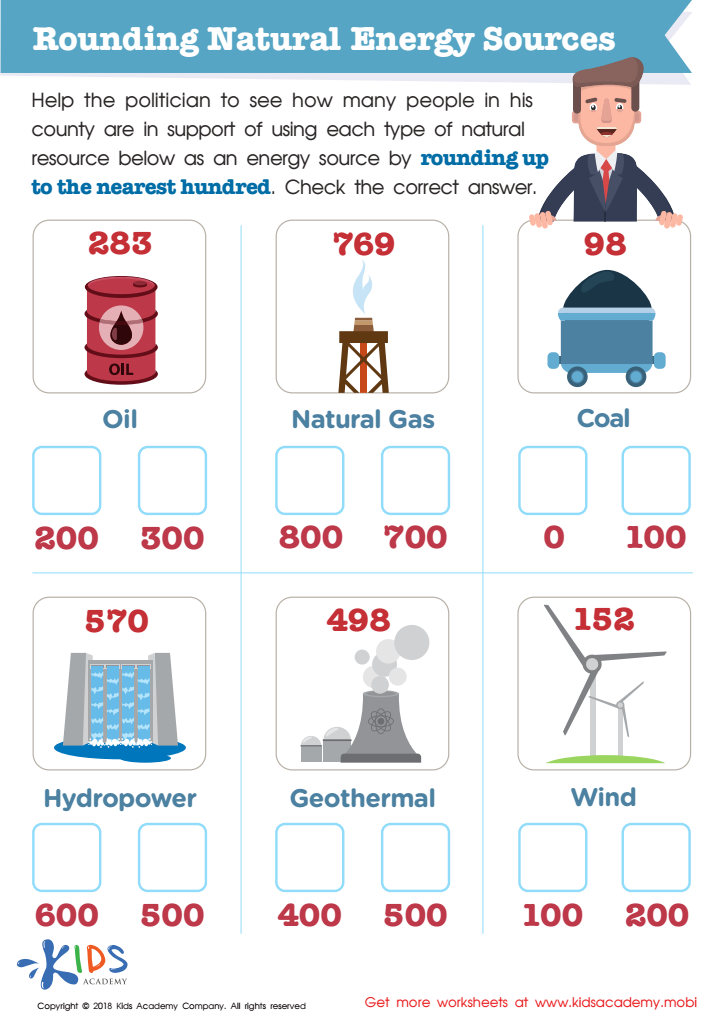
Rounding Natural Energy Sources Worksheet
 Assign to My Students
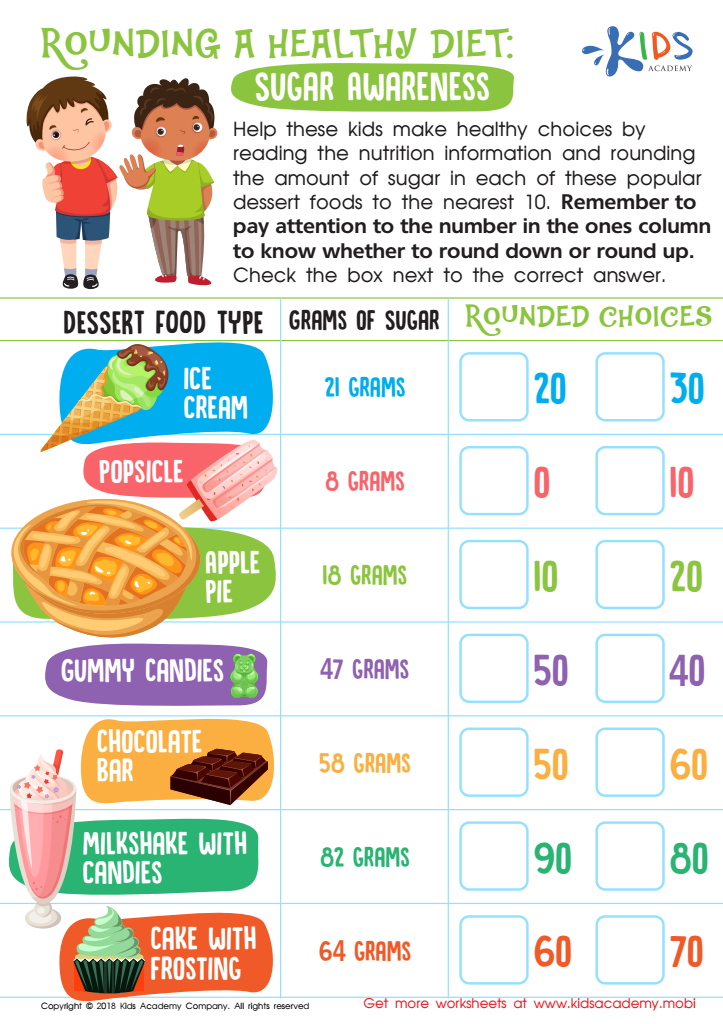
Rounding Healthy Diet Worksheet
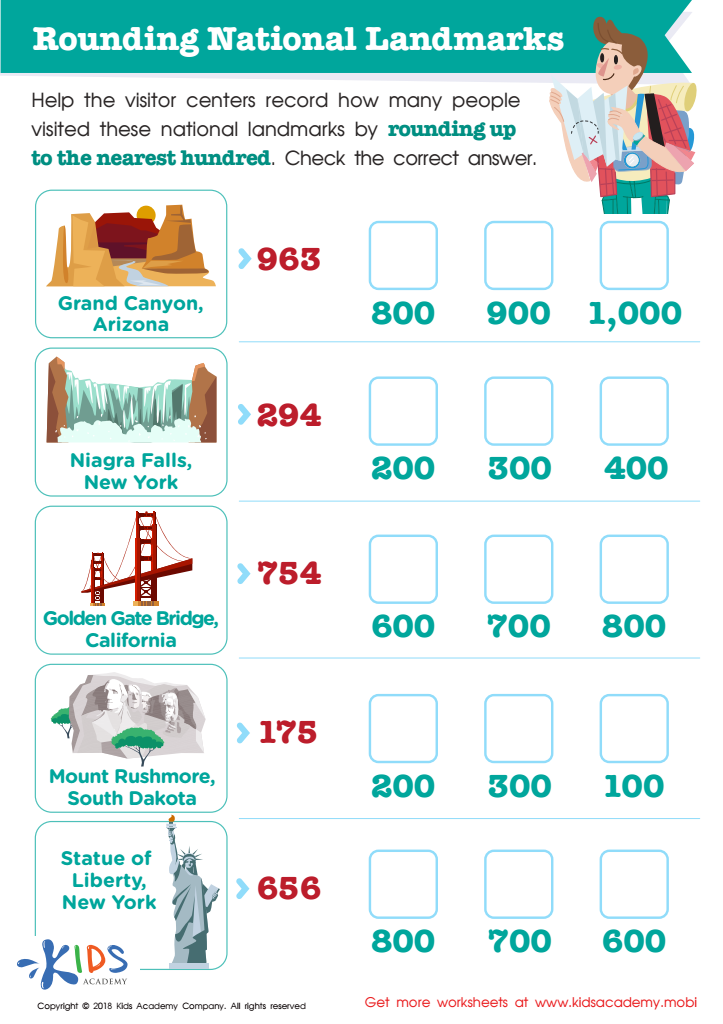
Rounding National Landmarks Worksheet
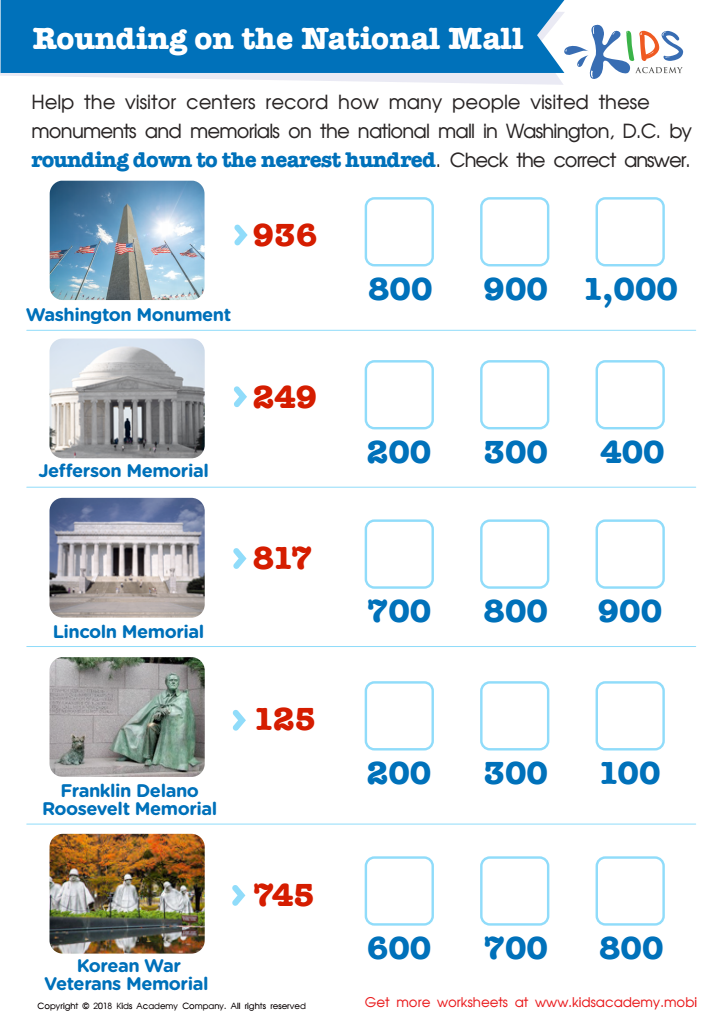
Rounding on the National Mall Worksheet
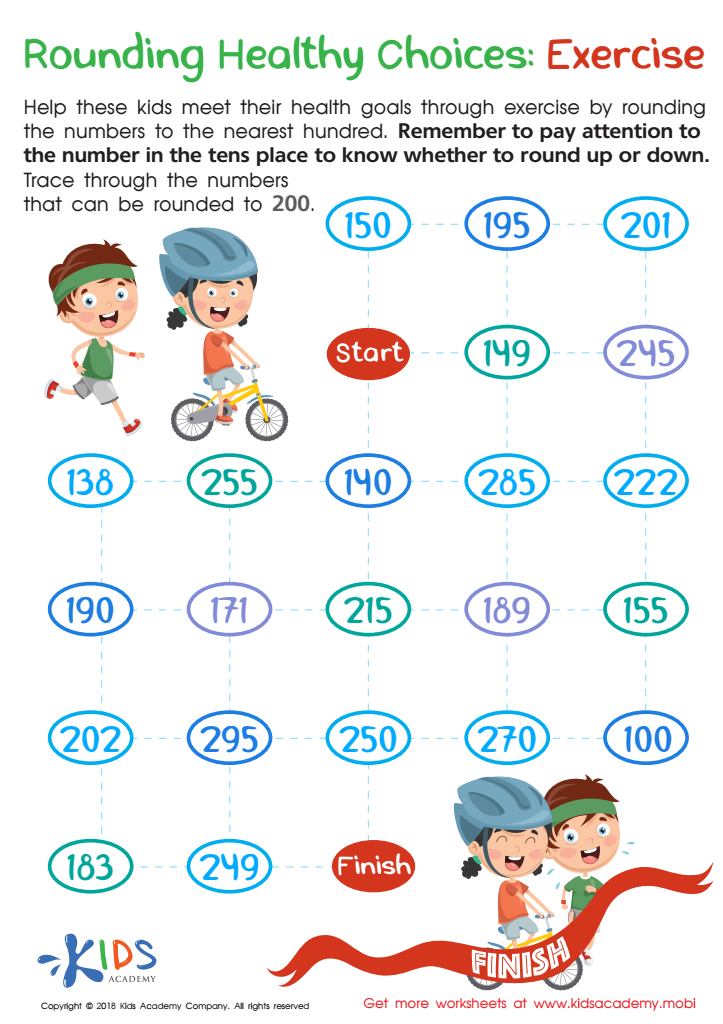
Rounding Healthy Choices Exercise Worksheet
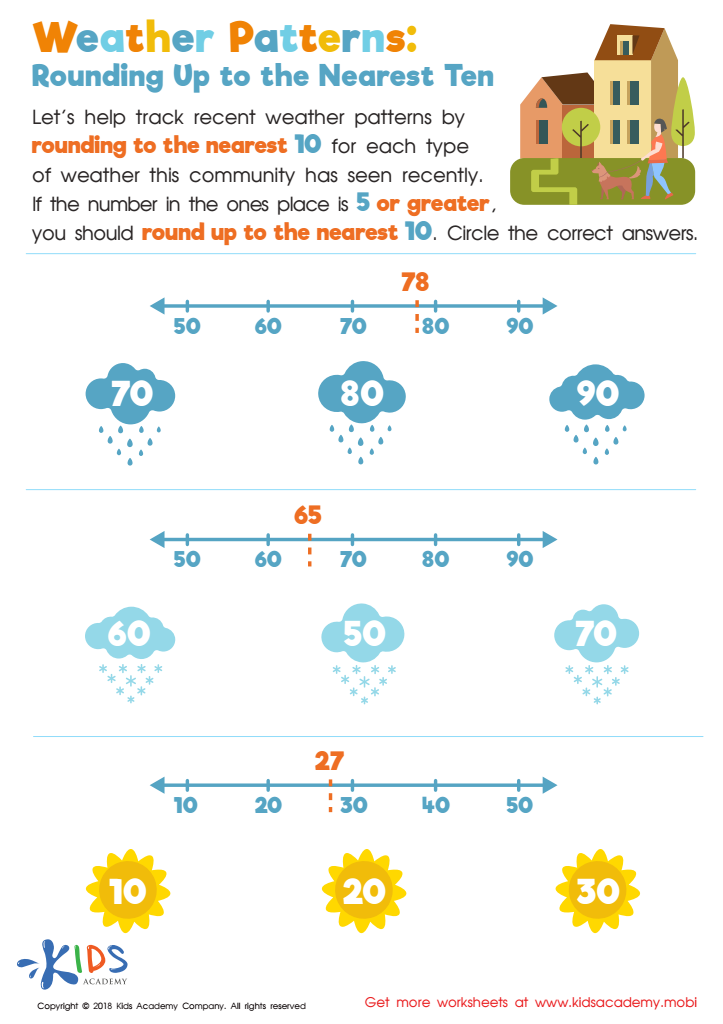
Weather Patterns Worksheet






Rounding numbers is an essential skill for children aged 5-9, as it develops their number sense and mathematical reasoning. Understanding rounding helps young learners simplify complex numbers, making them easier to work with in everyday life. For instance, when estimating costs while shopping or determining the total time for activities, rounded numbers provide a quick way to assess the situation.
Moreover, rounding fosters mental math skills, enhancing children’s ability to perform calculations without relying heavily on calculators. It encourages them to think critically about numbers by recognizing their values and identifying which digits can be altered for approximation. This practice lays the groundwork for more advanced mathematical concepts, including addition, subtraction, and even eventually, algebra.
Parents and teachers should care about rounding because it promotes confidence in children’s mathematical abilities. As kids feel more comfortable with numbers, they are more likely to engage in math-related activities and discussions. It's also an opportunity to strengthen parent-child and teacher-student relations through fun rounding games and practical applications that enhance learning experiences. Overall, rounding equips children with crucial tools they will use throughout their academic journeys and daily lives, making it a fundamental focus in early education.