Problem-Solving Skills Skip Counting Worksheets for Ages 5-9
4 filtered results
-
From - To
Enhance your child's math journey with our Problem-Solving Skills Skip Counting Worksheets tailored for ages 5-9! These engaging worksheets promote critical thinking while helping young learners master skip counting techniques. Our resources are designed to stimulate cognitive development and improve problem-solving abilities through fun, interactive exercises. Children will explore various number patterns in a creative manner, working with multiples of 2, 5, and 10. With a mix of entertaining activities and clear instructions, kids will build a strong math foundation while enjoying each step of the learning process. Empower your young mathematicians and watch their confidence soar!
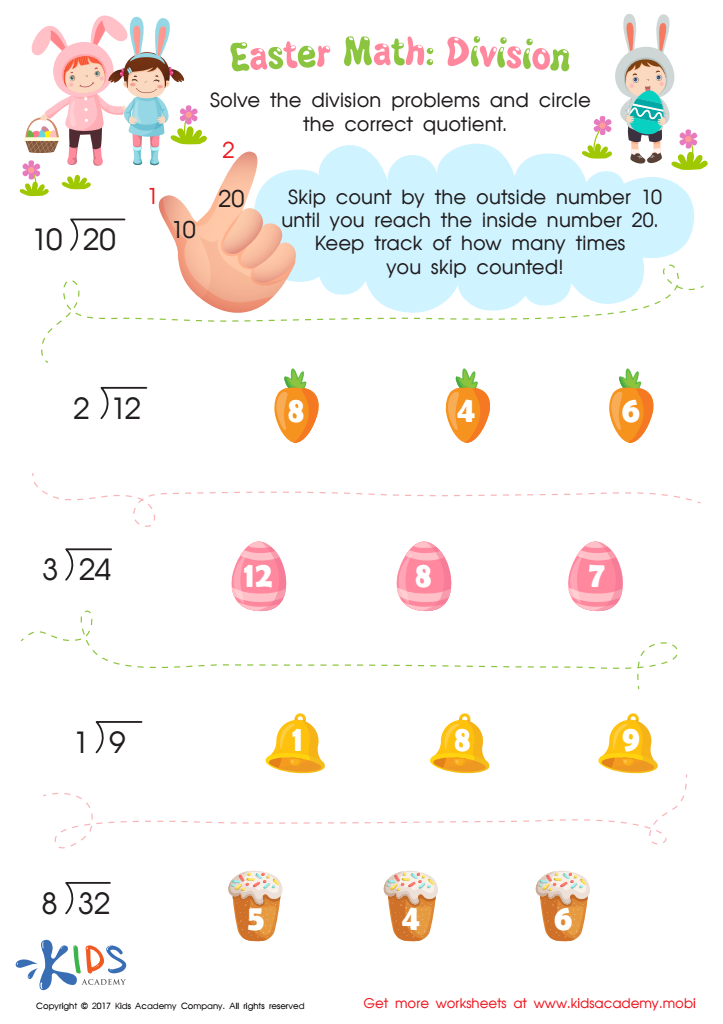
Division Worksheet
 Assign to My Students
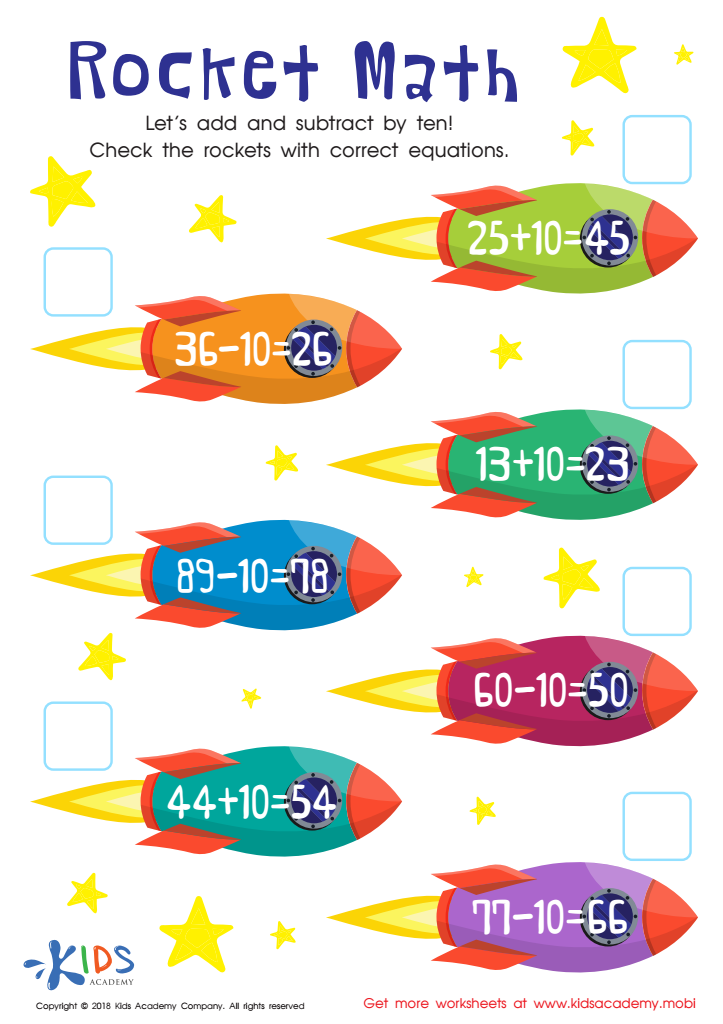
Rocket Math Worksheet
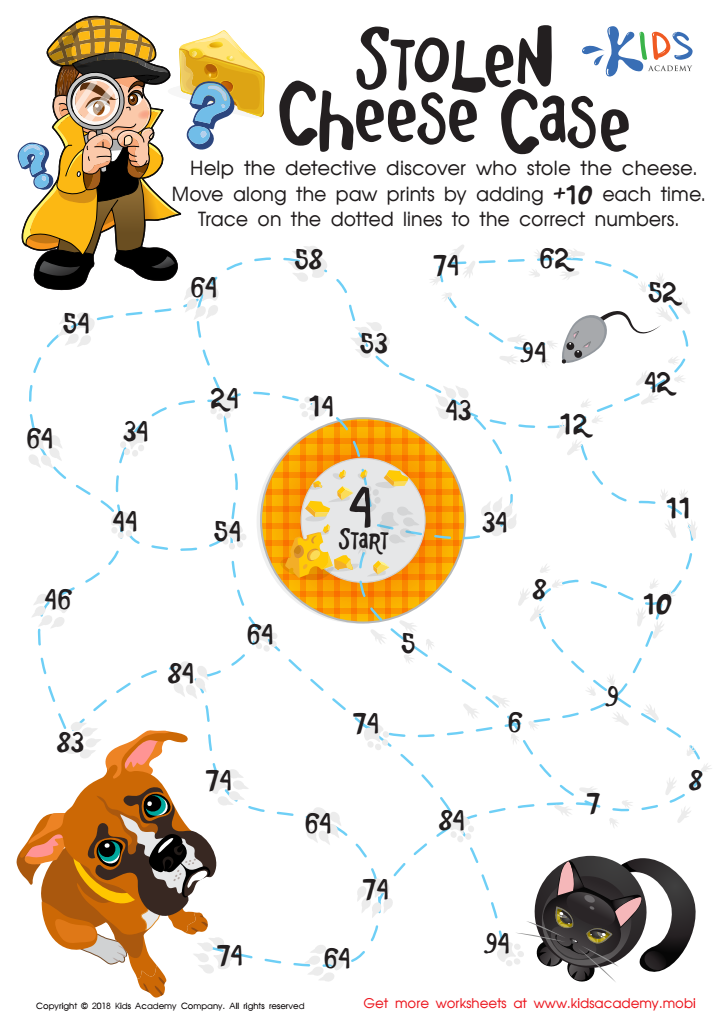
Stolen Cheese Case Maze Worksheet
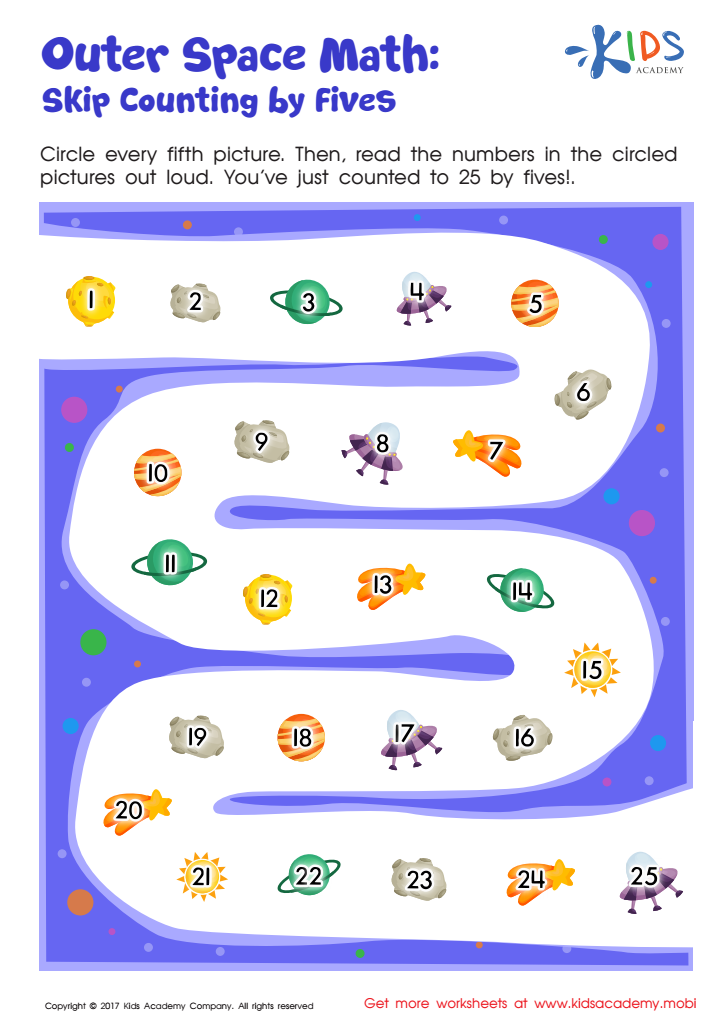
Skip Counting by 5s: Outer Space Math Printable


%20(1).jpg)





Problem-solving skills and skip counting are essential for children aged 5-9 as they lay the foundation for critical thinking and mathematical competence. During these formative years, children learn to approach challenges logically, which helps them develop resilience and an adaptable mindset. When students are proficient in problem-solving, they are better equipped to tackle complex tasks in math and daily life, leading to enhanced academic performance and confidence.
Skip counting, which involves counting by numbers other than one (like twos, fives, or tens), is a key mathematical skill that aids in understanding patterns, sequences, and arithmetic. It supports foundational concepts such as addition and multiplication, making more advanced math topics easier to grasp.
Additionally, skip counting can intertwine with problem-solving by encouraging children to think creatively about how to group items, calculate totals quickly, and predict outcomes. By emphasizing both skills, parents and teachers can enhance students’ number sense and create a more engaging learning environment. Investing time in these skills fosters curiosity and a passion for learning, preparing children for future challenges in education and life. Ultimately, strong problem-solving skills and an understanding of skip counting can cultivate lifelong learners who approach problems with confidence and competence.








