Categorization skills Sorting Worksheets for Ages 5-9
5 filtered results
-
From - To
Enhance your child's categorization skills with our engaging sorting worksheets designed for ages 5-9. These worksheets encourage young learners to organize and classify objects based on various attributes, fostering critical thinking and logical reasoning. Perfect for use at home or in the classroom, our activities cover a range of themes, from shapes and colors to animals and everyday items. By consistently practicing sorting, children can sharpen their problem-solving abilities and improve their understanding of the world around them. Visit Kids Academy to explore our diverse collection and give your child a head start in math and cognitive development.
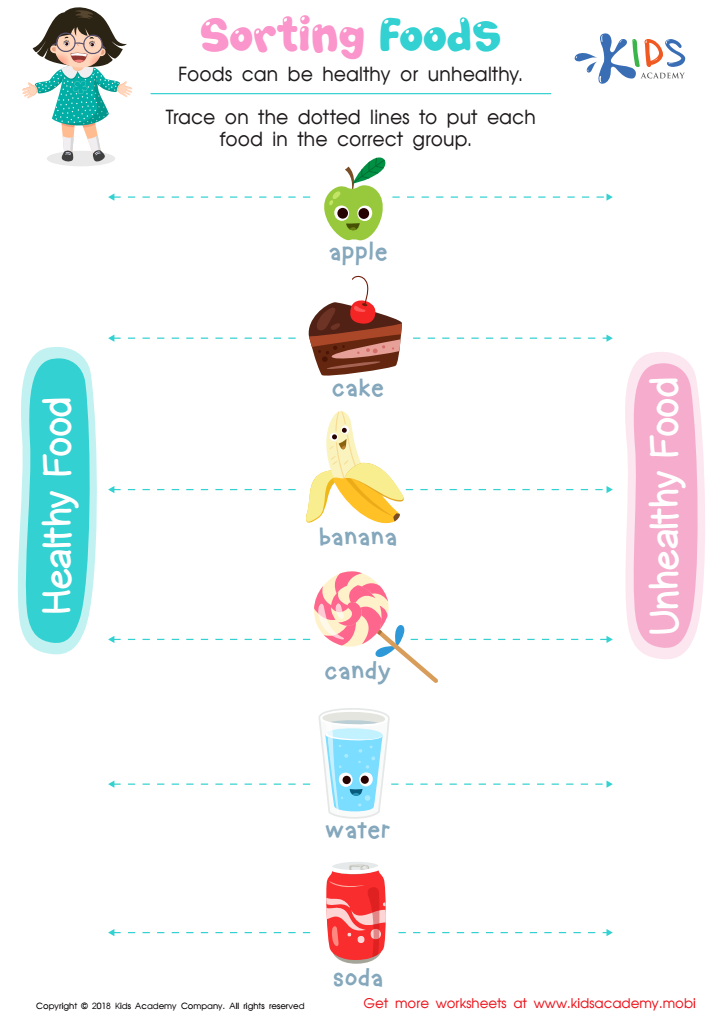
Sorting Food Worksheet
 Assign to My Students
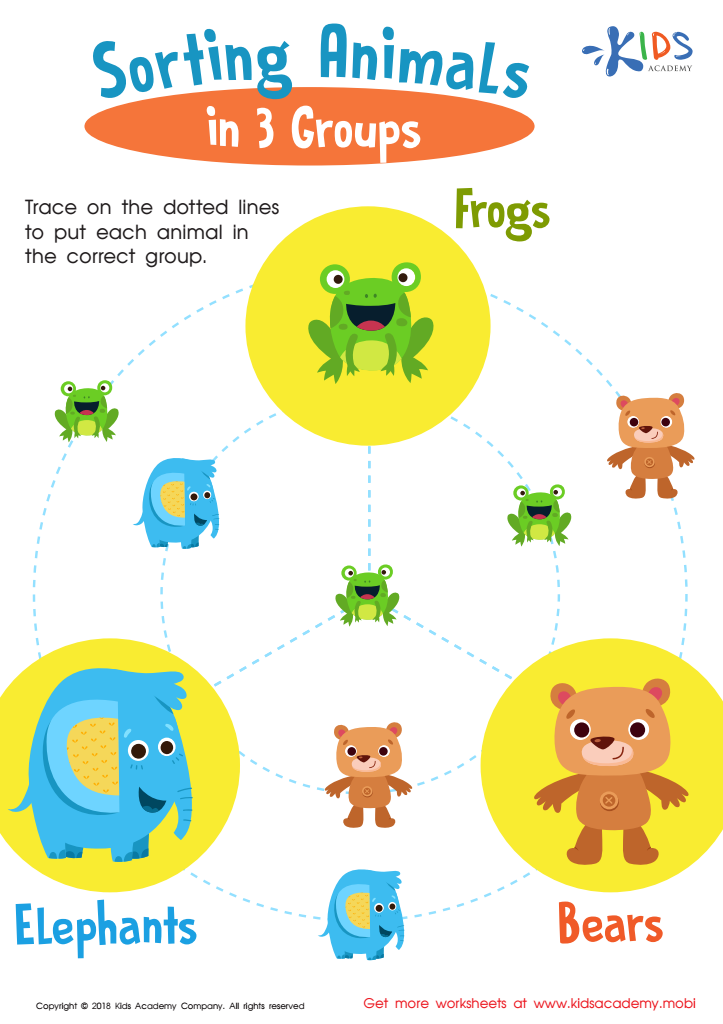
Sorting Animals in 3 Groups Worksheet
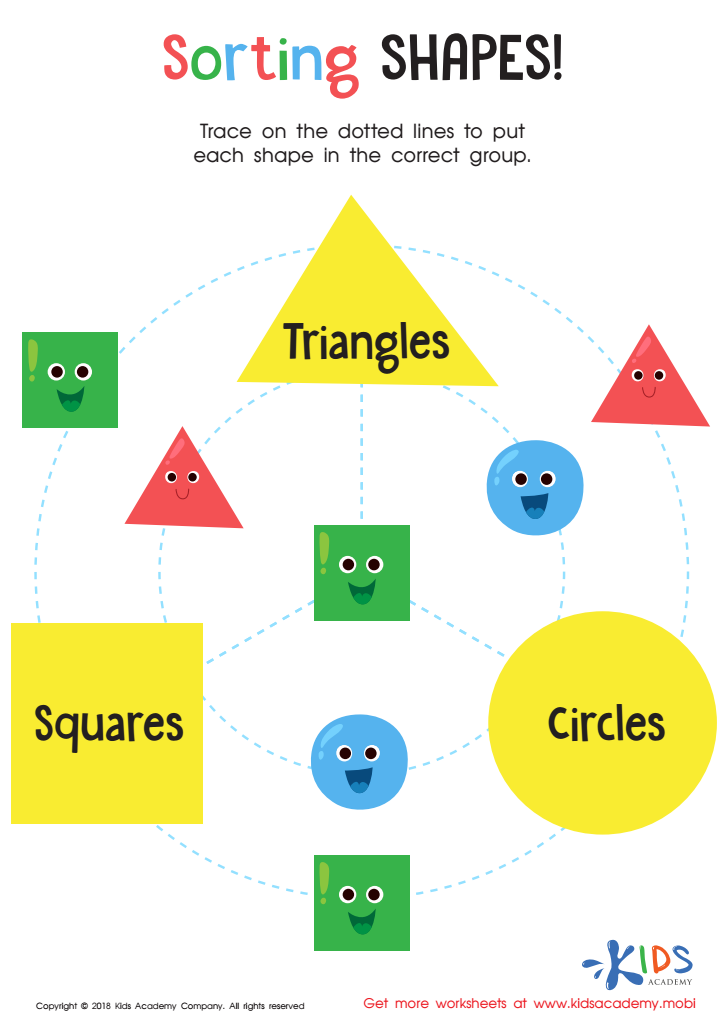
Sorting Shapes - Part 3 Worksheet
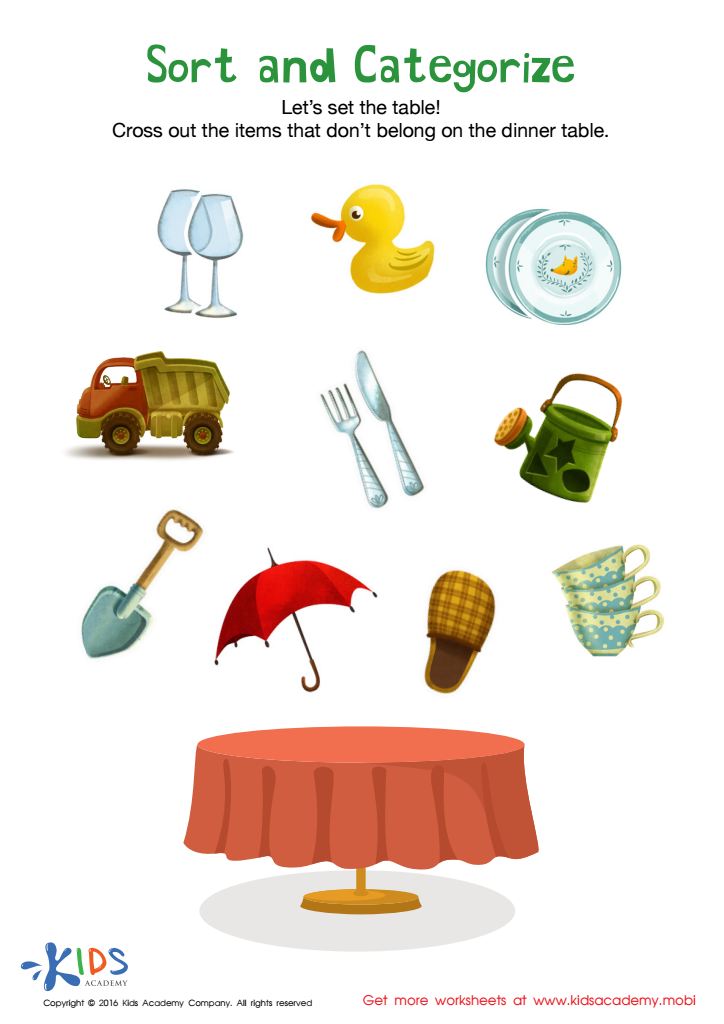
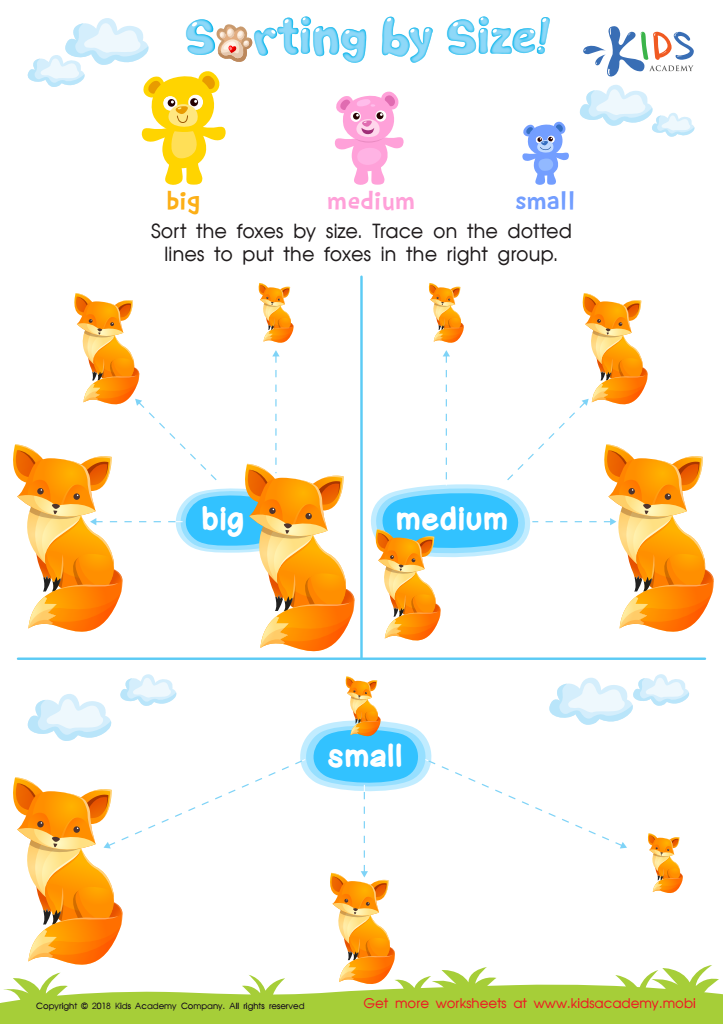
Sorting by Size Worksheet








Categorization and sorting skills are essential for young children aged 5-9, as they lay the foundational groundwork for cognitive development and higher-order thinking skills. At this developmental stage, children's brains are highly adaptable and rapidly growing, making it an ideal period to cultivate these skills.
Firstly, categorization helps children understand the world around them by organizing information into meaningful patterns. This ability to group objects or ideas based on shared attributes enables kids to make sense of their environment, thus enhancing their observational and analytical skills. For instance, sorting objects by color, shape, or size aids in recognizing patterns, which is crucial for subjects like mathematics and science.
Moreover, sorting teaches critical-thinking and problem-solving abilities. It encourages children to make decisions, such as choosing appropriate categories and placing items correctly. This decision-making process improves their logical reasoning and attention to detail.
Additionally, these skills are directly linked to language development. By categorizing objects, children expand their vocabulary, learning specific terms related to groups and concepts. For example, grouping fruits fosters the acquisition of names and characteristics of various fruits.
Lastly, categorization plays a significant role in social and emotional development. It enhances self-regulation and organizational skills, contributing to a child's ability to navigate daily routines, schoolwork, and social interactions effectively. Thus, fostering categorization and sorting skills in children aged 5-9 lays a robust cognitive and emotional foundation for lifelong learning.








