Problem-solving abilities Subtraction Worksheets for Ages 5-9
6 filtered results
-
From - To
Enhance your child's problem-solving abilities with our engaging Subtraction Worksheets designed for ages 5-9! These worksheets transcend traditional subtraction practice, encouraging critical thinking and application of math skills in real-life scenarios. With a variety of fun visuals and relatable problems, children will learn to approach subtraction challenges creatively while building confidence in their mathematical understanding. Ideal for at-home learning, tutoring, or classroom activities, our resources support your child's journey to becoming a confident problem solver. Explore our selection to boost enthusiasm for math and ensure your child develops essential skills for academic success! Achieve results—start their problem-solving adventures today!
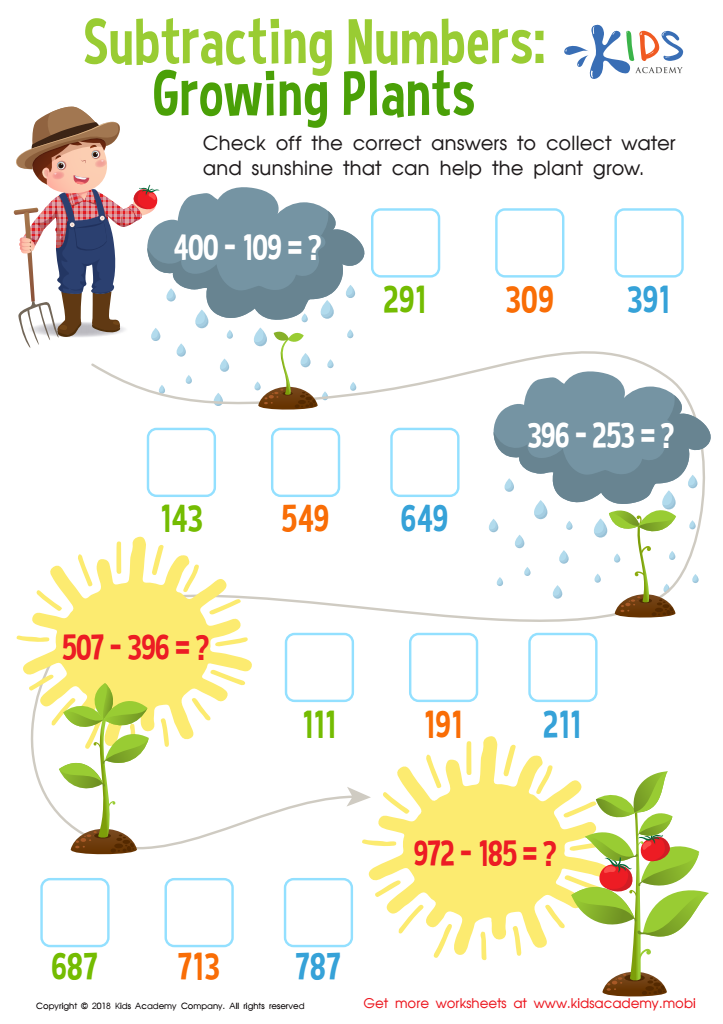
Subtracting Numbers: Growing Plants Worksheet
 Assign to My Students
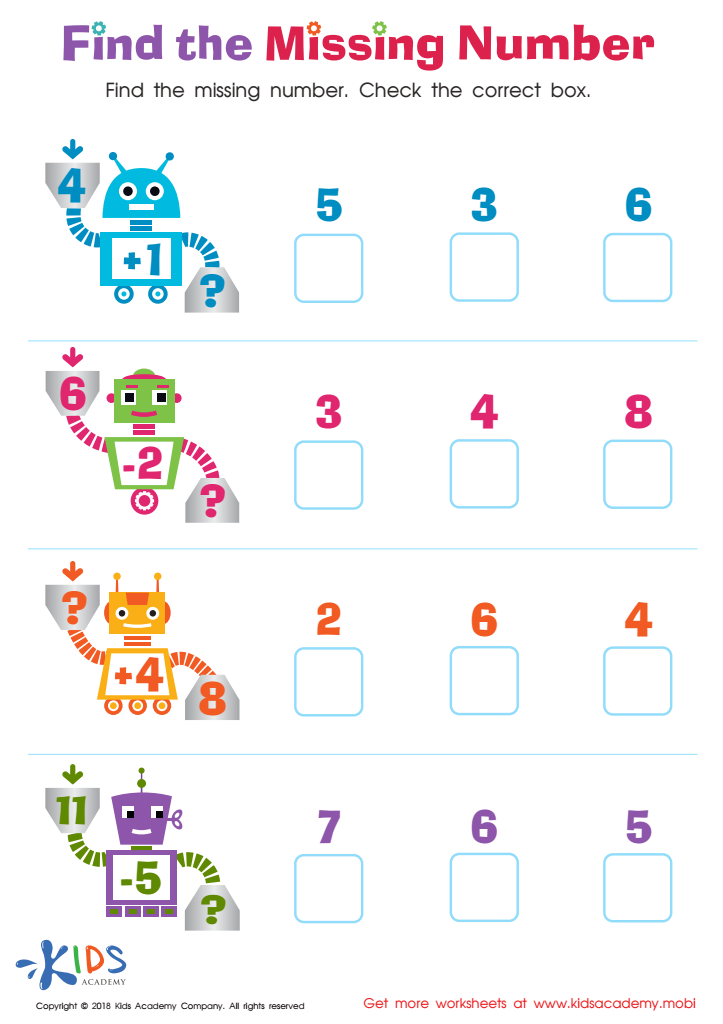
Find the Missing Number Worksheet
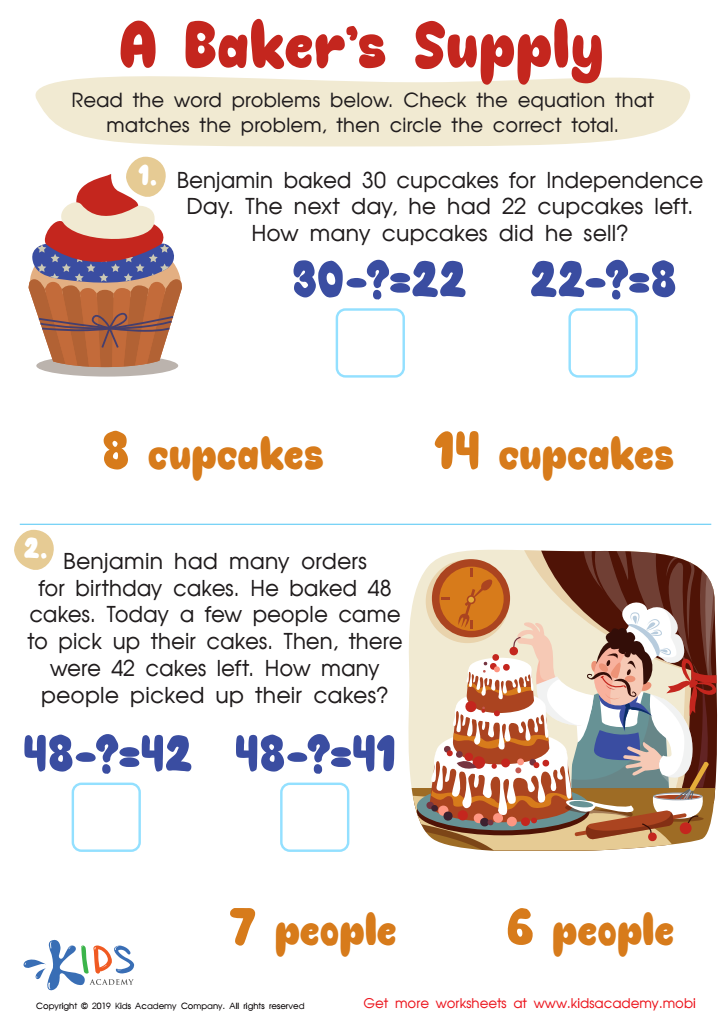
A Baker's Supply Worksheet
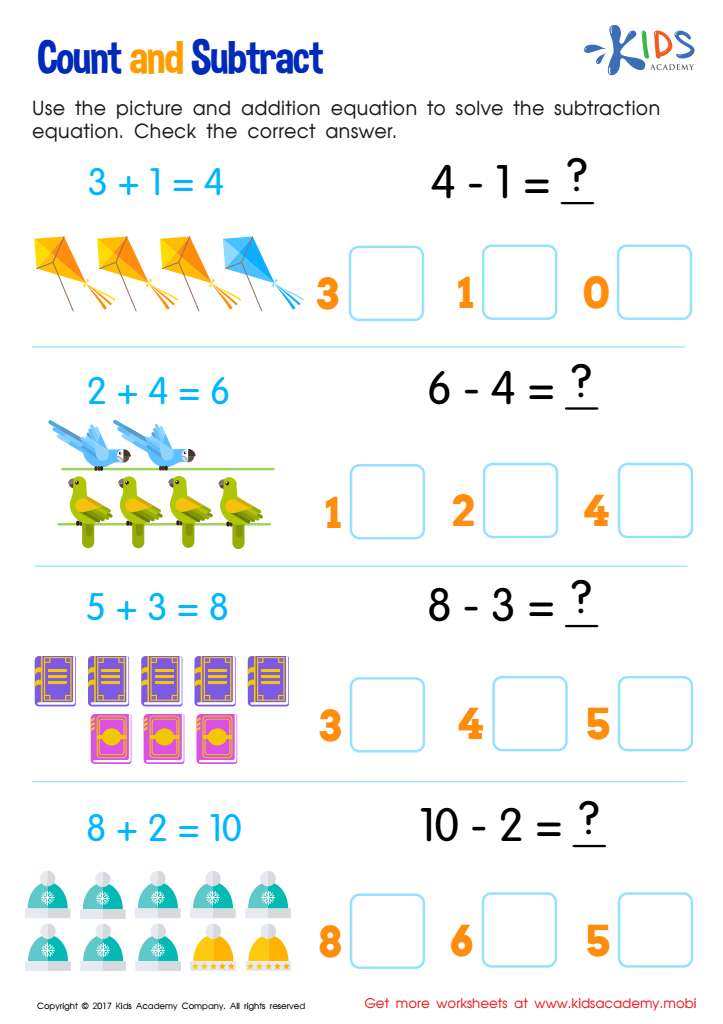
Count and Subtract Worksheet
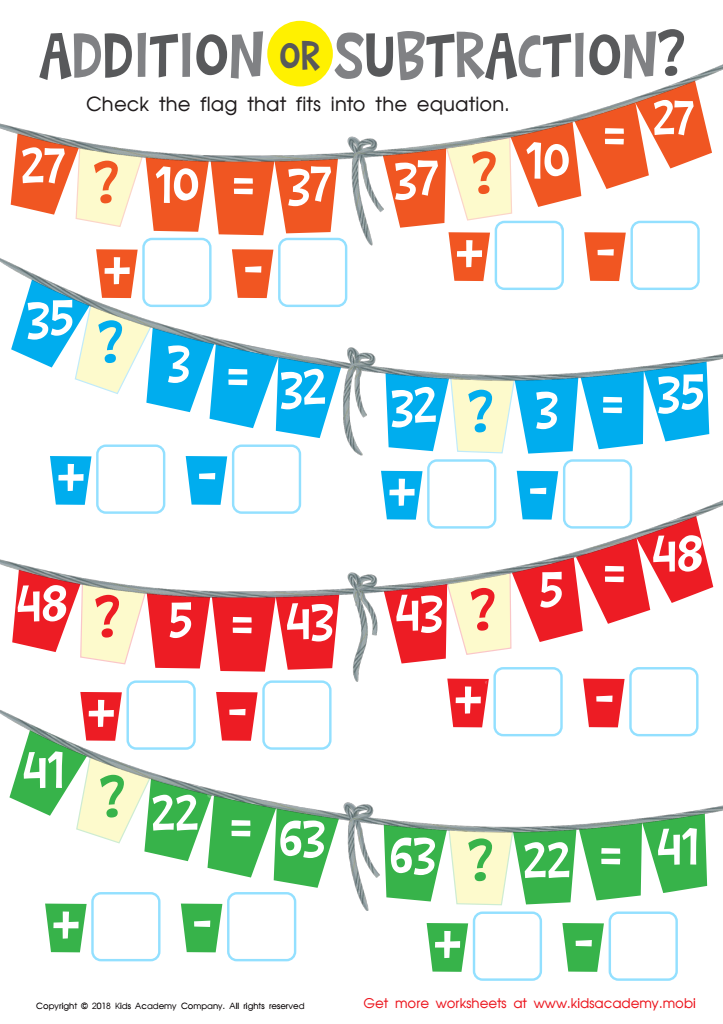
Addition or Subtraction? Worksheet
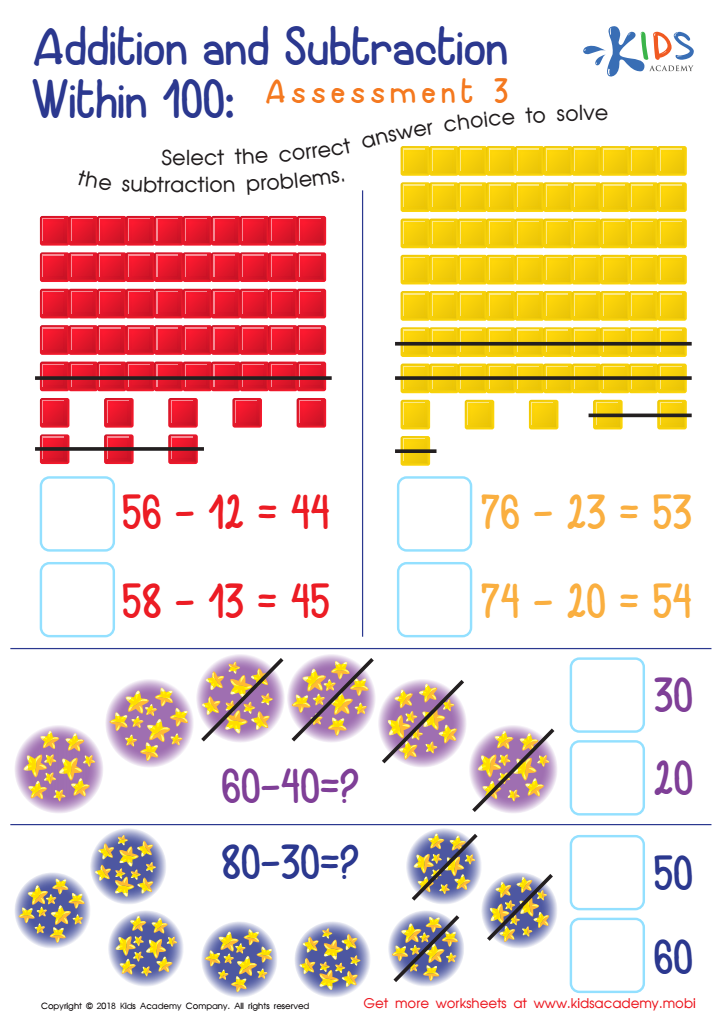
Addition and Subtraction Within 1: Assessment 3 Worksheet








Problem-solving abilities, especially in subtraction for children ages 5-9, are vital for several reasons. First, subtraction is foundational in mathematical understanding. It is the basis for more advanced concepts, making proficiency in this area essential for future success in mathematics. When children learn to subtract effectively, they develop critical thinking skills and the ability to approach problems methodically, which is applicable beyond math.
Additionally, problem-solving in subtraction fosters resilience and perseverance. When students encounter challenges, learning to analyze and work through them strengthens their confidence and equips them with strategies for tackling difficulties in other subjects and real-life situations.
Moreover, subtraction teaches children about missing parts, comparisons, and quantity, engaging their cognitive skills and helping them make sense of the world around them. It encourages logical reasoning and boosts their motivation and engagement in learning.
Parents and teachers play an essential role in nurturing these abilities by providing supportive, understanding environments and opportunities for practice. By prioritizing subtraction as a problem-solving skill, adults help children cultivate a strong mathematical foundation while also set them on a path toward lifelong learning and analytical thinking. This investment in their early academic experience can have lasting positive effects.








