Writing practice Tracing Numbers Worksheets for Ages 5-9
6 filtered results
-
From - To
Boost your child's math skills with our engaging Tracing Numbers Worksheets for Ages 5-9! Designed to enhance writing practice, these worksheets provide a fun way for young learners to master number formation and develop fine motor skills. Each worksheet features easy-to-follow tracing paths that guide children in writing numbers accurately. Our colorful, interactive designs capture kids' attention, making learning enjoyable and effective. Ideal for homeschooling or classroom use, these worksheets are perfect for helping children gain confidence in their numerical abilities while fostering a love for learning. Explore educational fun with our comprehensive tracing resources today!
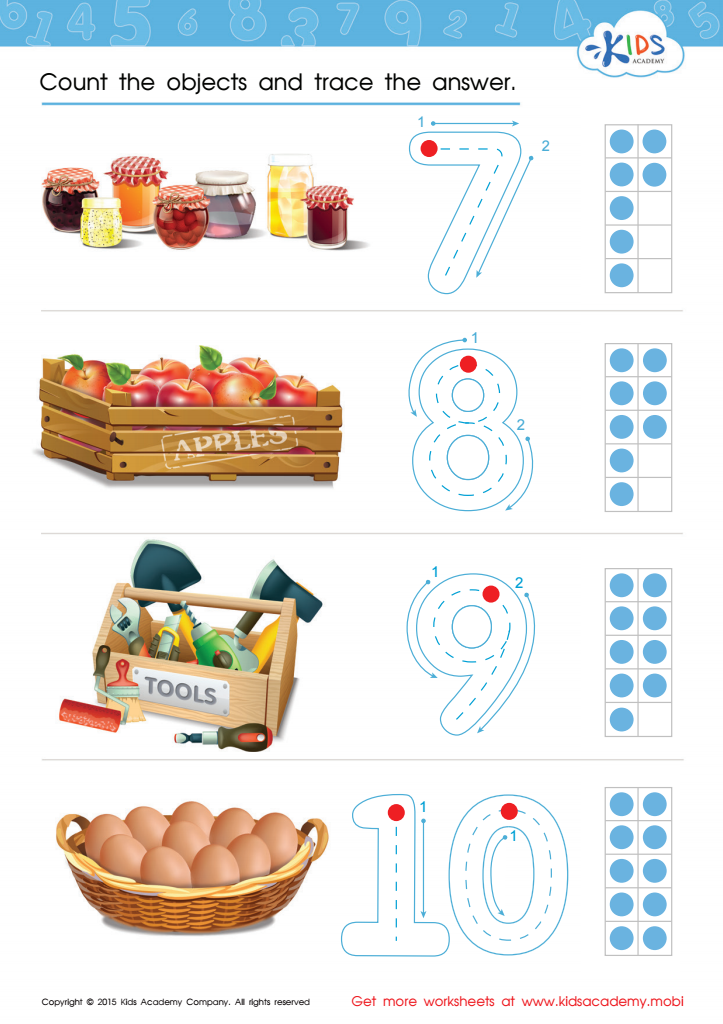
Count and Trace 7 – 10 Worksheet
 Assign to My Students
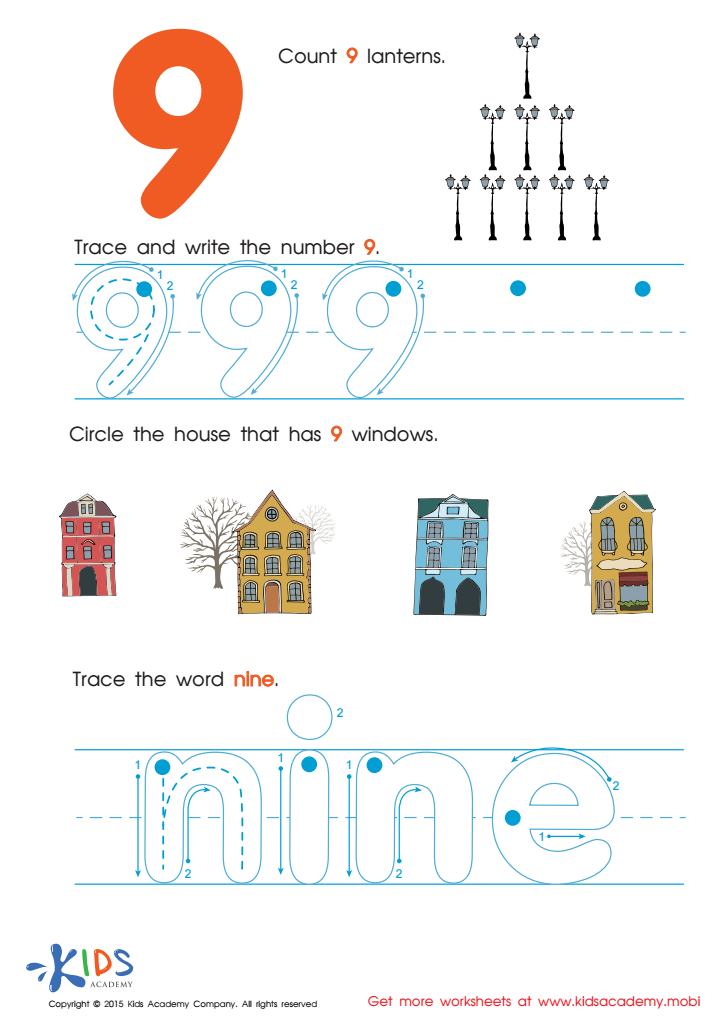
Tracing And Learning to Write Number 9 Worksheet
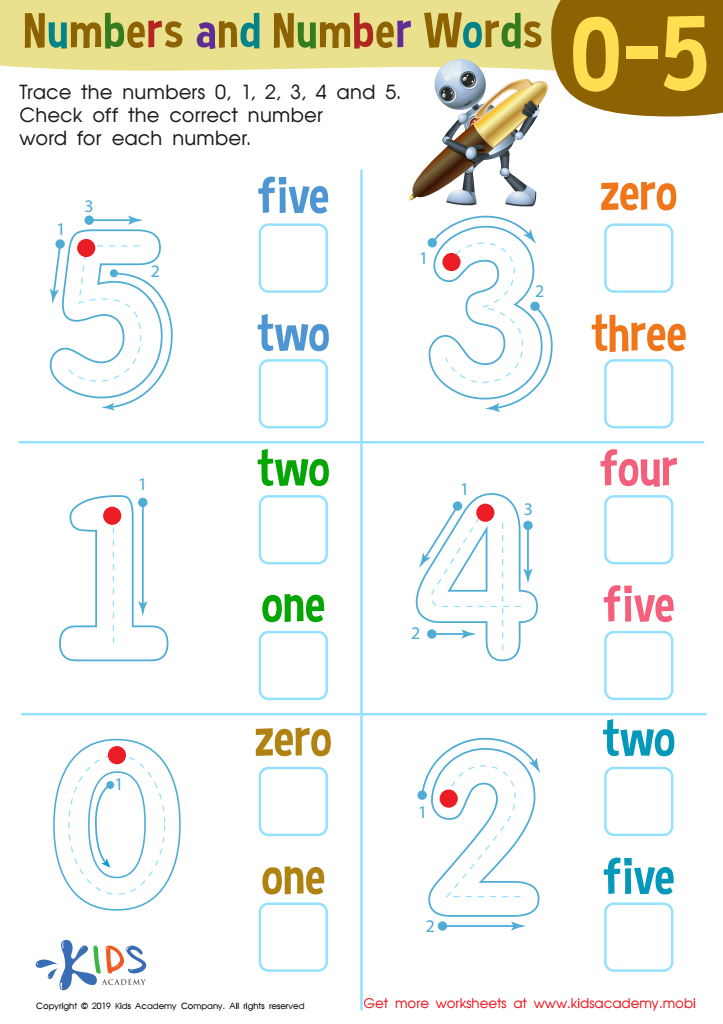
Numbers and Number Words Worksheet
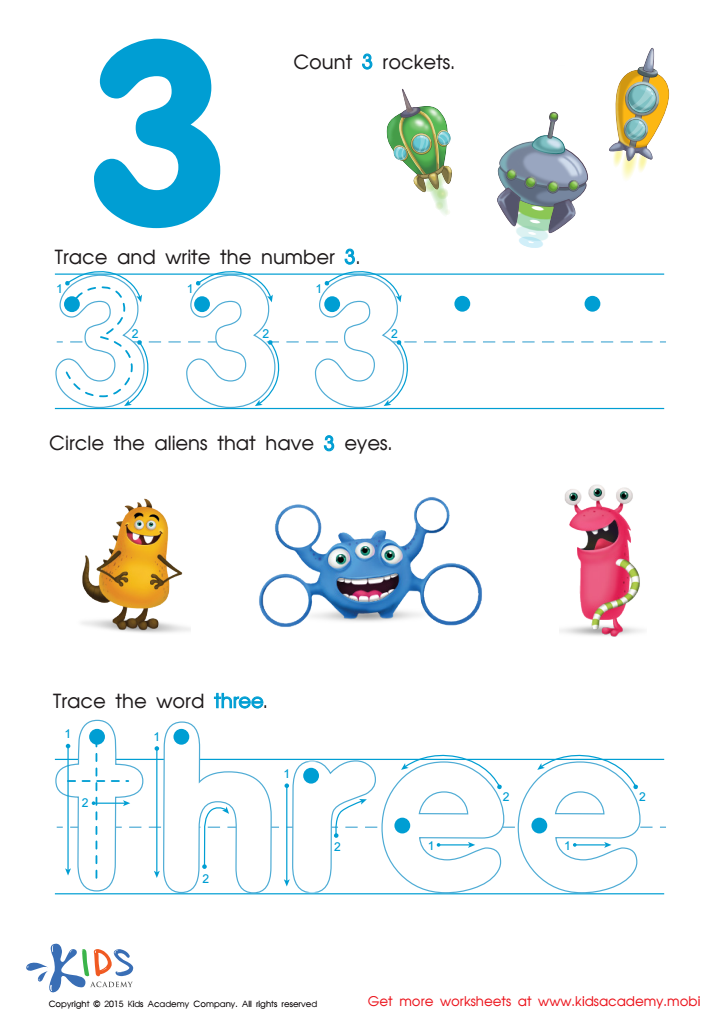
Learning Number Three Worksheet
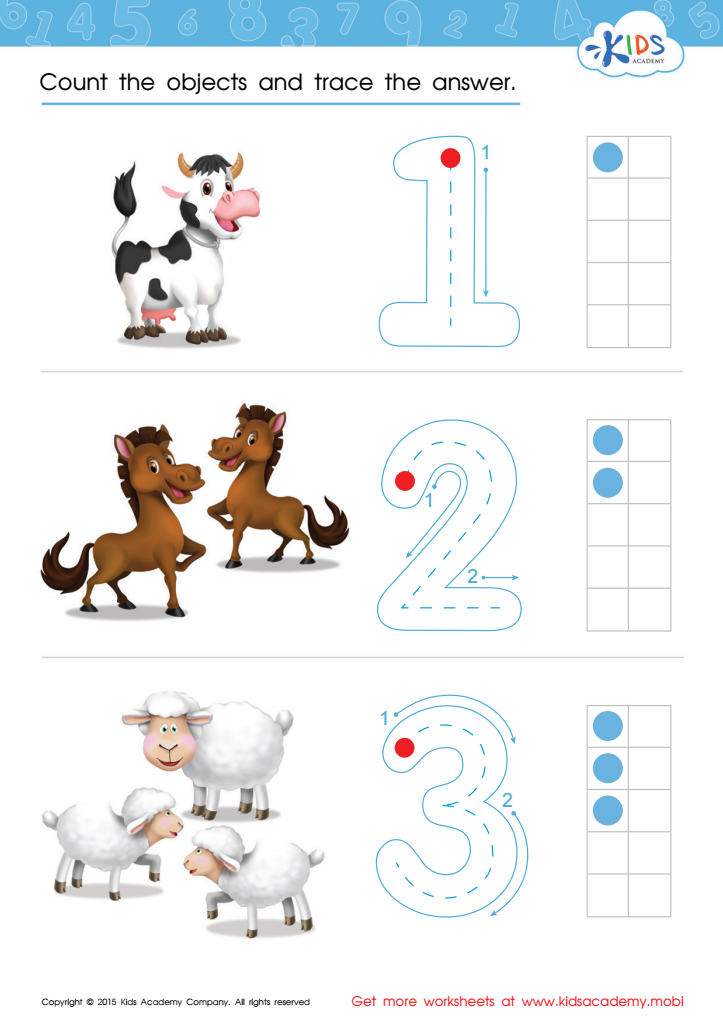
Count and Trace 1 – 3 Worksheet
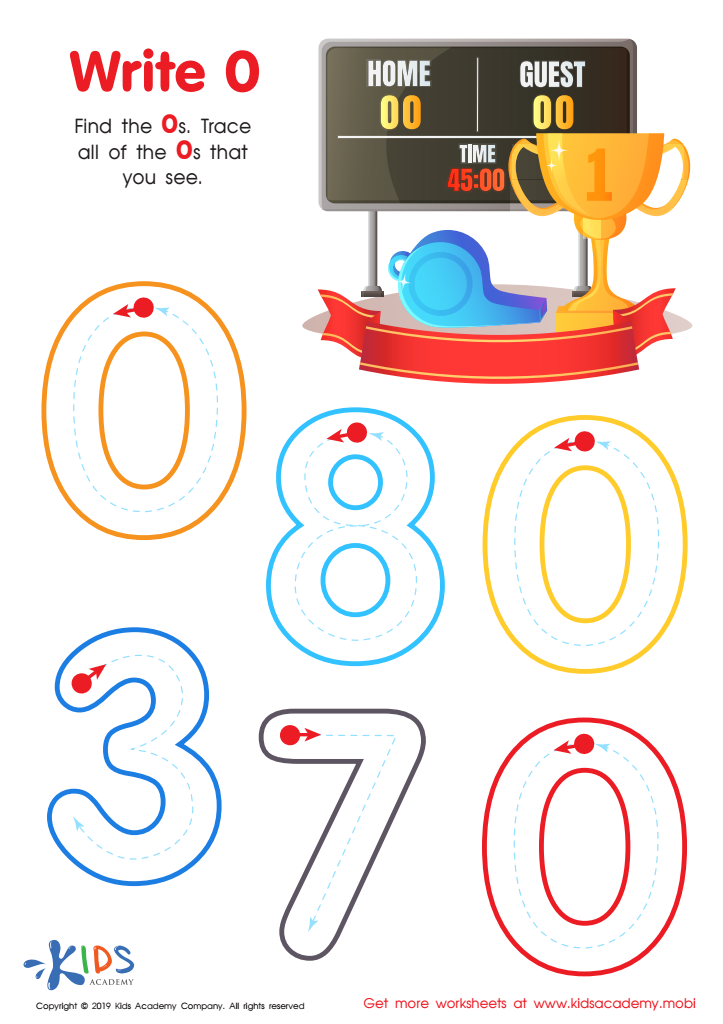
Write 0 Worksheet








Writing practice, particularly tracing numbers, is crucial for children aged 5-9 as it lays the foundation for both mathematical understanding and fine motor development. Firstly, tracing numbers helps children familiarize themselves with numeral shapes and formations, which are essential for accurate number writing. This practice not only promotes correct number recognition but also prepares them for mathematical concepts such as addition and subtraction later on.
Additionally, tracing fosters crucial fine motor skills. As children move their pencils or markers along designated shapes, they develop hand-eye coordination and grip strength—skills that benefit them in various tasks beyond writing, such as drawing and crafting. Moreover, writing activities can significantly enhance a child's focus and concentration, qualities that are paramount for successful learning throughout their educational journey.
From a cognitive perspective, engaging with numbers helps children understand the sequencing of numbers and enhances their problem-solving skills. By providing structured tracing activities, parents and teachers can introduce concepts of quantity and numerical relationships in an engaging manner. Ultimately, prioritizing writing practice through tracing numbers sets children on a path toward academic success and confidence in their abilities, making it an essential component of early education for lasting impact.