Logical Reasoning Building Vocabulary Worksheets for Ages 5-9
8 filtered results
-
From - To
Boost your child's cognitive skills with our Logical Reasoning Building Vocabulary Worksheets for ages 5-9. These engaging and age-appropriate exercises aim to enhance vocabulary while simultaneously developing analytical thinking. Each worksheet is meticulously designed to challenge young minds, fostering critical thinking and problem-solving abilities. With fun and interactive activities, kids will effortlessly learn new words, understand their meanings, and apply logical reasoning to solve various tasks. Ideal for at-home learning or classroom use, our worksheets provide a solid foundation for academic success and lifelong learning. Prepare your child for a bright future with our expertly crafted resources.
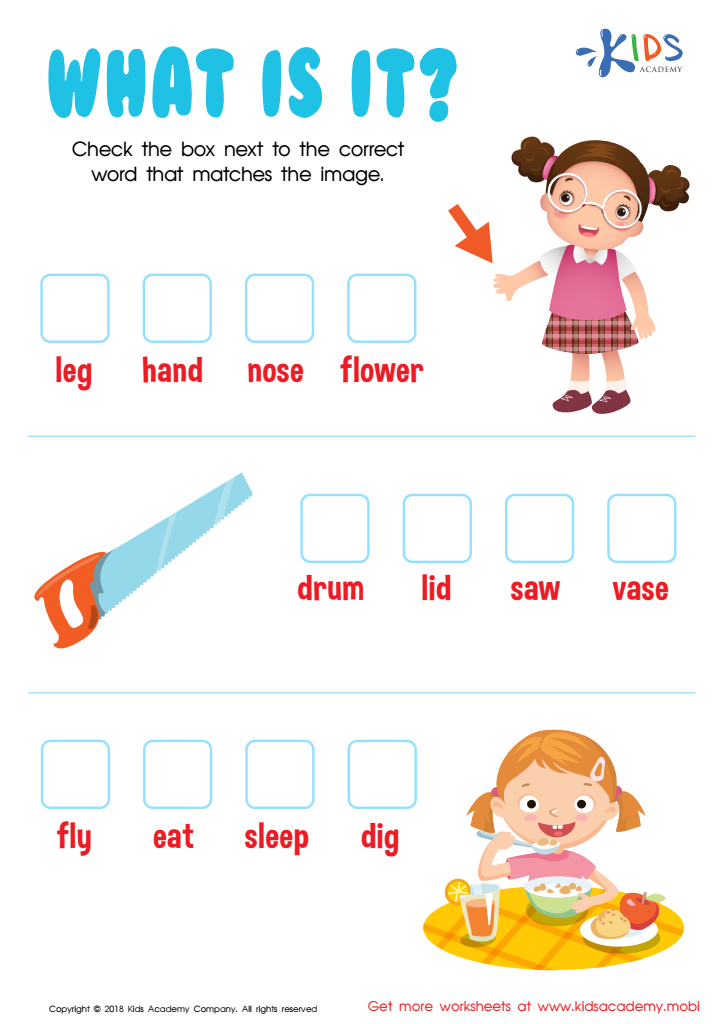
What Is It? Worksheet
 Assign to My Students











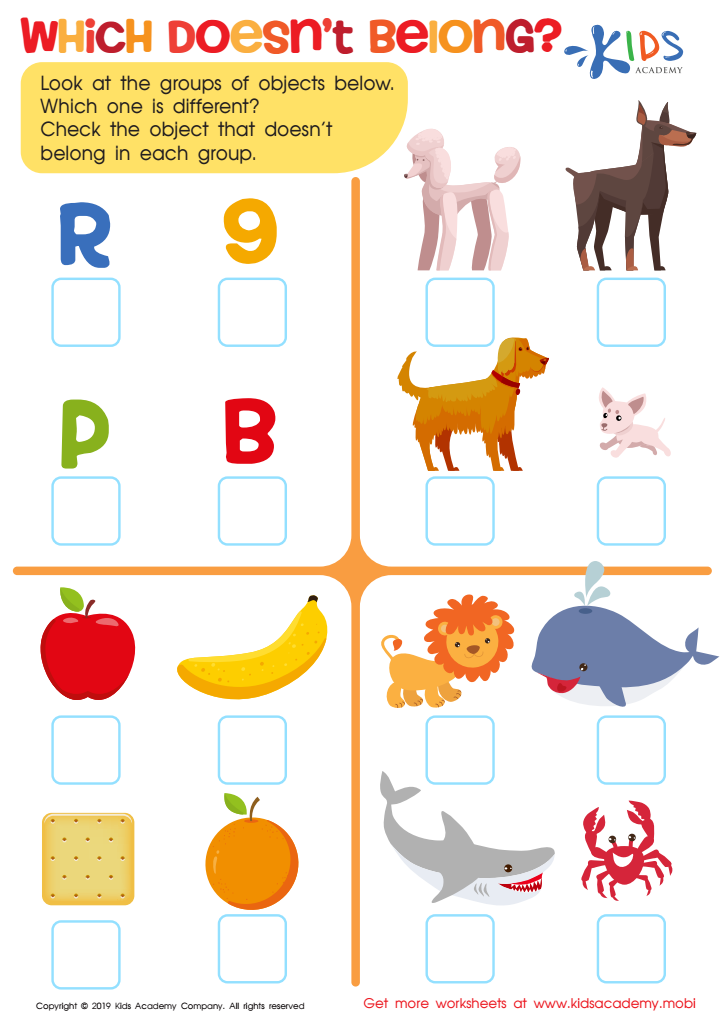
Which Doesn't Belong? Worksheet
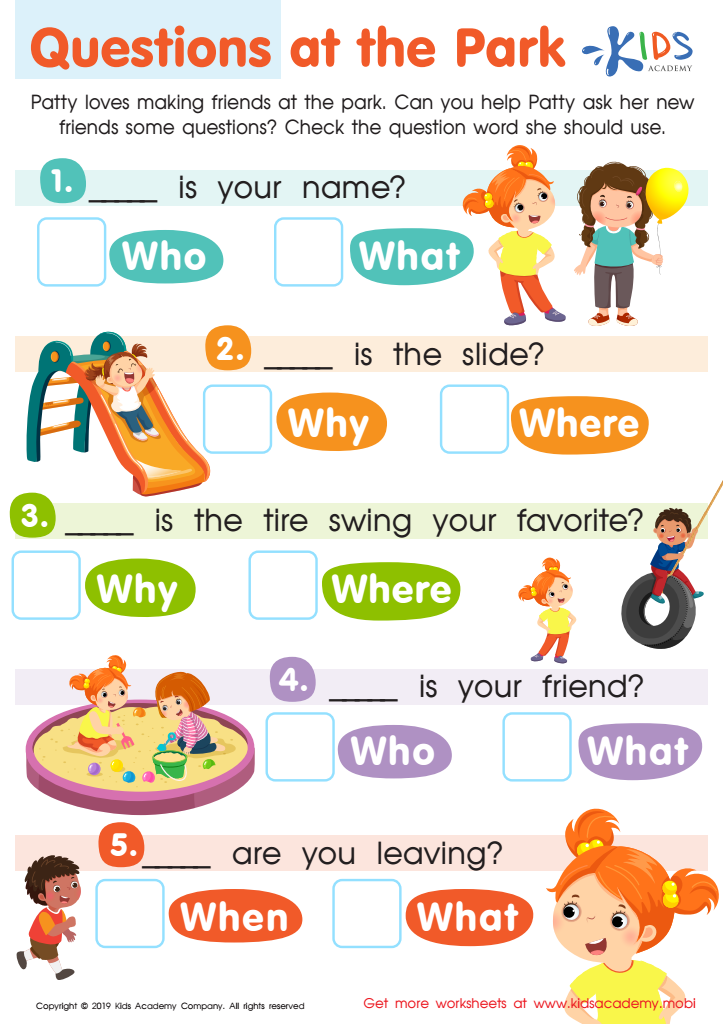
Questions at the Park Worksheet
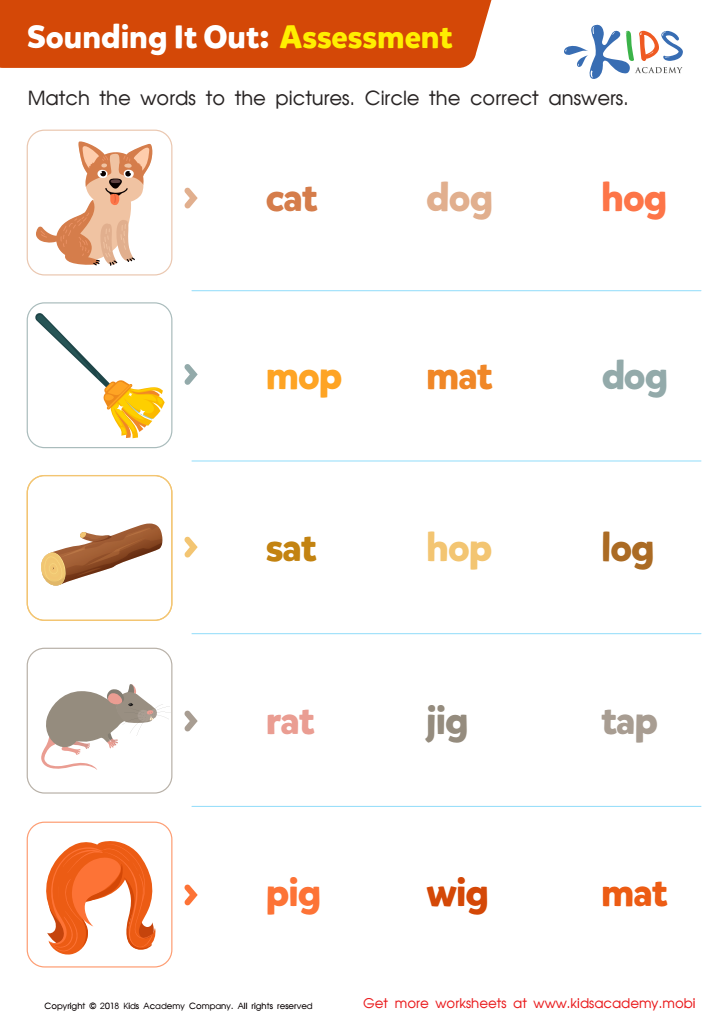
Sounding it Out: Assessment Worksheet
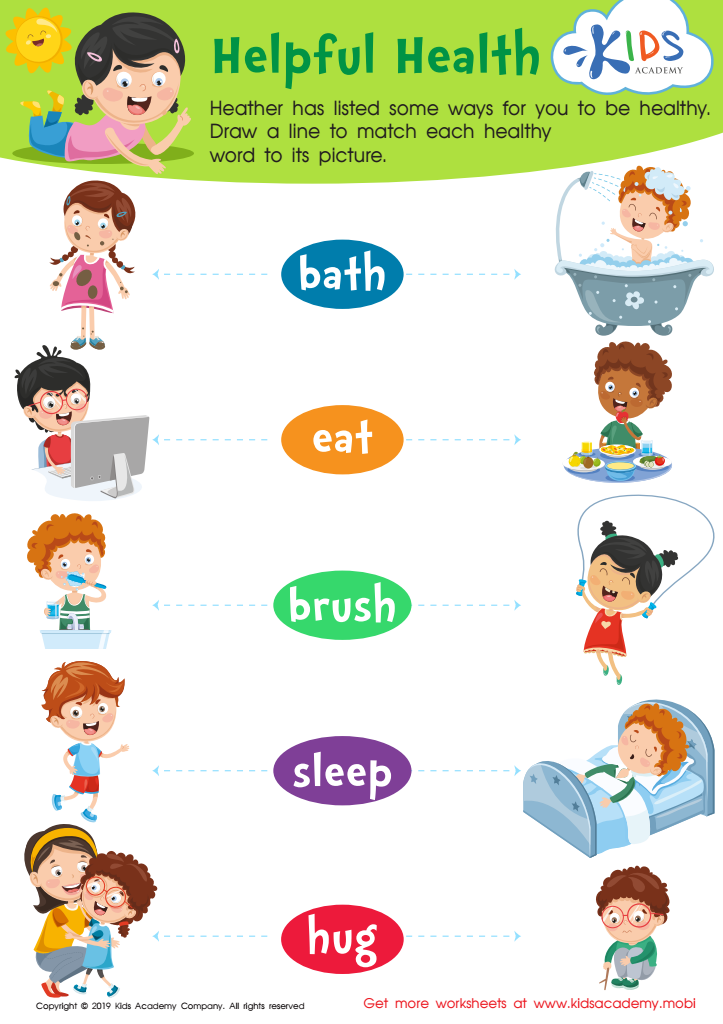
Helpful Health Worksheet


.jpg)



.jpg)

Logical reasoning and a robust vocabulary are fundamental skills that significantly impact the learning trajectory of children aged 5-9. At this developmental stage, children's brains are highly receptive, making it crucial for parents and teachers to nurture these skills early.
Logical reasoning enhances problem-solving abilities and critical thinking. As children encounter puzzles and challenges that stimulate logical thinking, they learn to make connections, follow sequences, and reason systematically. This cognitive training is vital for success in subjects like mathematics and science, thus laying a solid foundation for future academic achievements.
Building vocabulary, on the other hand, is essential for communication and comprehension. A rich vocabulary allows children to express their thoughts and ideas clearly, ask insightful questions, and understand complex instructions. Moreover, exposure to a broad range of words enhances reading skills and fosters a love of literature, which is directly linked to improved academic performance.
By focusing on logical reasoning and vocabulary building, parents and teachers equip children with the tools necessary for analytical thinking and effective communication. These skills not only pave the way for educational success but also build confidence and empower children to navigate the world around them with curiosity and competence. Investing time and effort in these areas during the formative years is invaluable.








