Verb identification Building Vocabulary Worksheets for Ages 5-9
3 filtered results
-
From - To
Explore our engaging Verb Identification Building Vocabulary Worksheets, designed specifically for children aged 5-9! These interactive resources help young learners master essential verb recognition skills, enhancing their language foundation. With a variety of fun activities and exercises, kids can practice identifying verbs in sentences, expanding their vocabulary, and boosting their reading comprehension. Our worksheets cater to different learning styles, ensuring that every child can participate and enjoy their learning journey. Perfect for classroom use or at-home education, these worksheets are an excellent way to promote confidence in language arts. Empower your child's language skills today with our fun and effective verb identification worksheets!
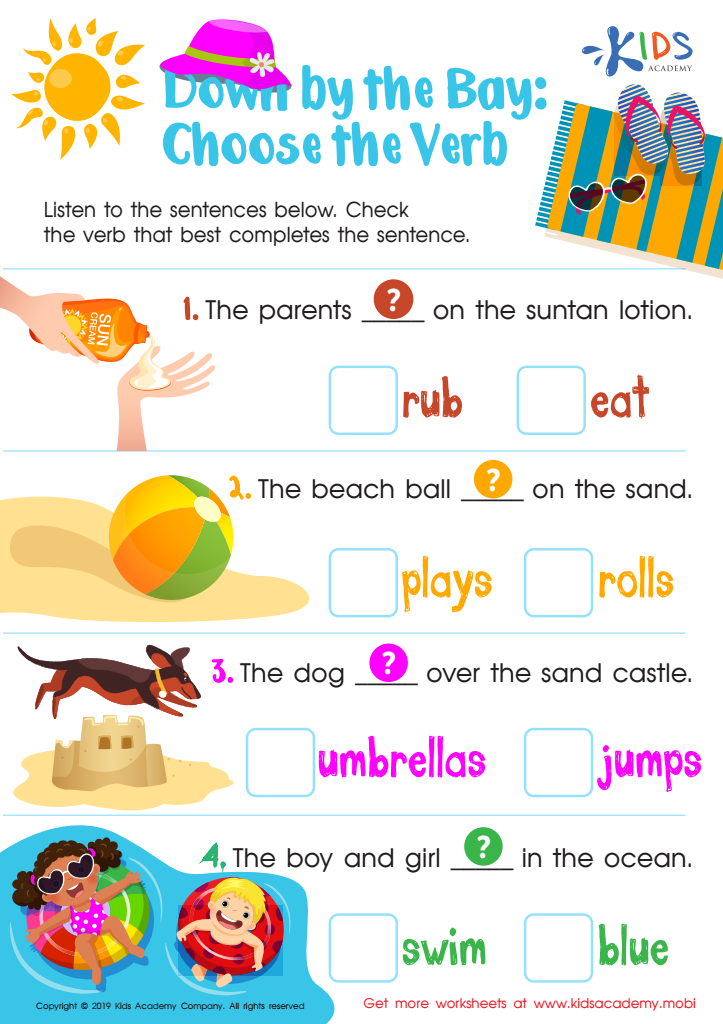
Down by the Bay: Choose the Verb Worksheet
 Assign to My Students











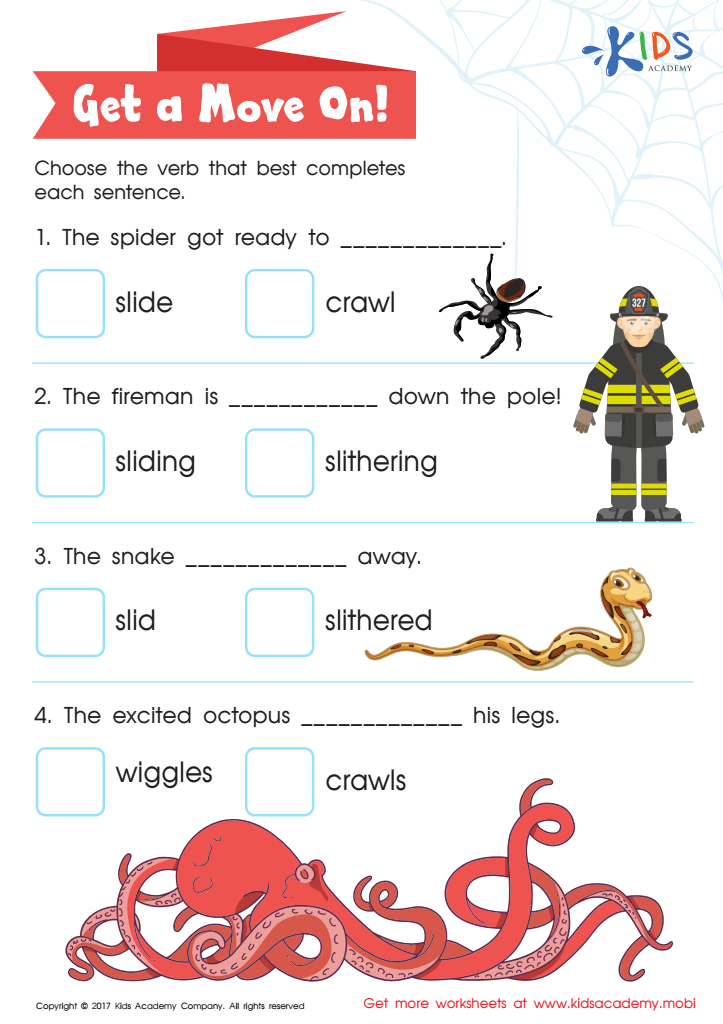
Verb Worksheet
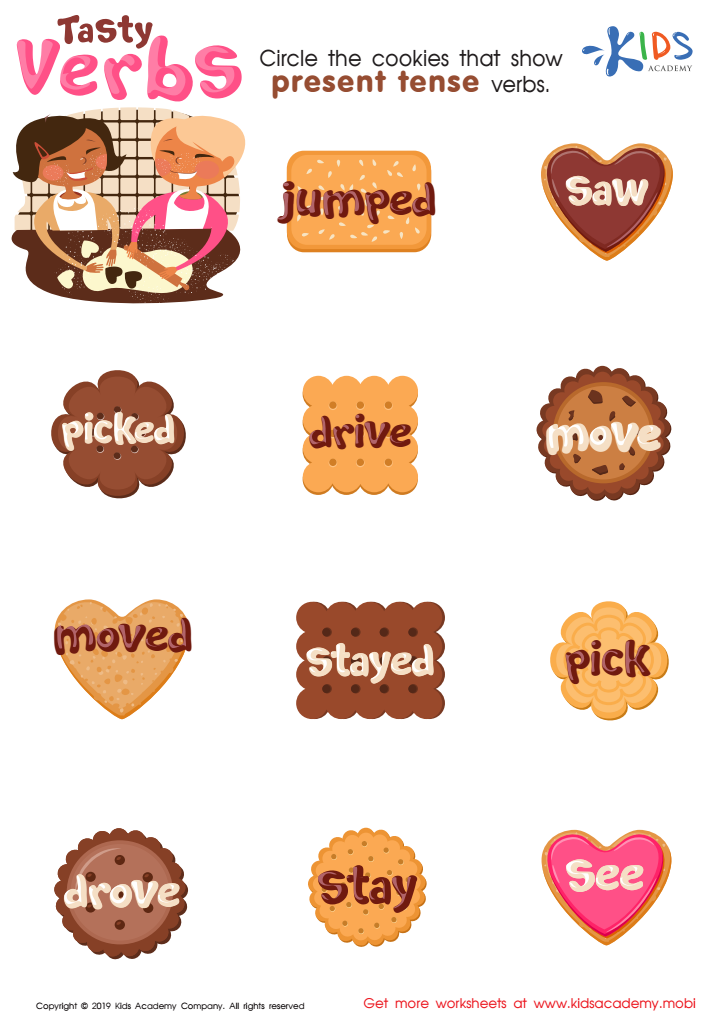
Tasty Verbs Worksheet








Verb identification is a critical component of language development for children aged 5-9. At this stage, children are not only learning to communicate effectively, but they are also beginning to grasp the foundational elements of grammar that will support their literacy skills. Verbs are action words, and their identification helps children understand the structure of sentences and how thoughts are conveyed.
By focusing on verb identification, parents and teachers can enhance children’s vocabulary. A strong vocabulary is linked to reading comprehension, writing fluency, and overall academic success. Engaging young learners in activities that promote verb recognition—like action-based games or storytelling—makes learning interactive and enjoyable. This approach also encourages them to express their thoughts and ideas more clearly.
Moreover, understanding verbs aids in developing critical thinking skills. As children analyze sentences and explore various verbs, they learn how to describe actions, emotions, and thoughts, boosting their creative thinking. In summary, nurturing verb identification at this early stage not only enriches children's vocabulary but also lays the groundwork for effective communication and lifelong learning. Investing time in this aspect of literacy fosters confidence in children as they navigate both academic environments and social interactions.








