
Word association Building Vocabulary Worksheets for Ages 5-9
3 filtered results
Difficulty Level
Grade
Age
-
From - To
Subject
Activity
Standards
"Word Association Building Vocabulary Worksheets for Ages 5-9" are ideal tools to enhance your child’s language skills through interactive learning. Designed for young learners, these worksheets promote cognitive connections between words, expanding their vocabulary in a fun, engaging way. By highlighting the relationships between different words, children develop a deeper understanding of language patterns, improve their reading comprehension, and creatively express their thoughts. Available in varying difficulty levels, these worksheets cater to growing vocabularies and are perfect for classroom or at-home practice. Boost your child’s word knowledge effortlessly, making learning an exciting adventure. Explore now to inspire a lifelong love of words!
Favorites
With answer key
Interactive
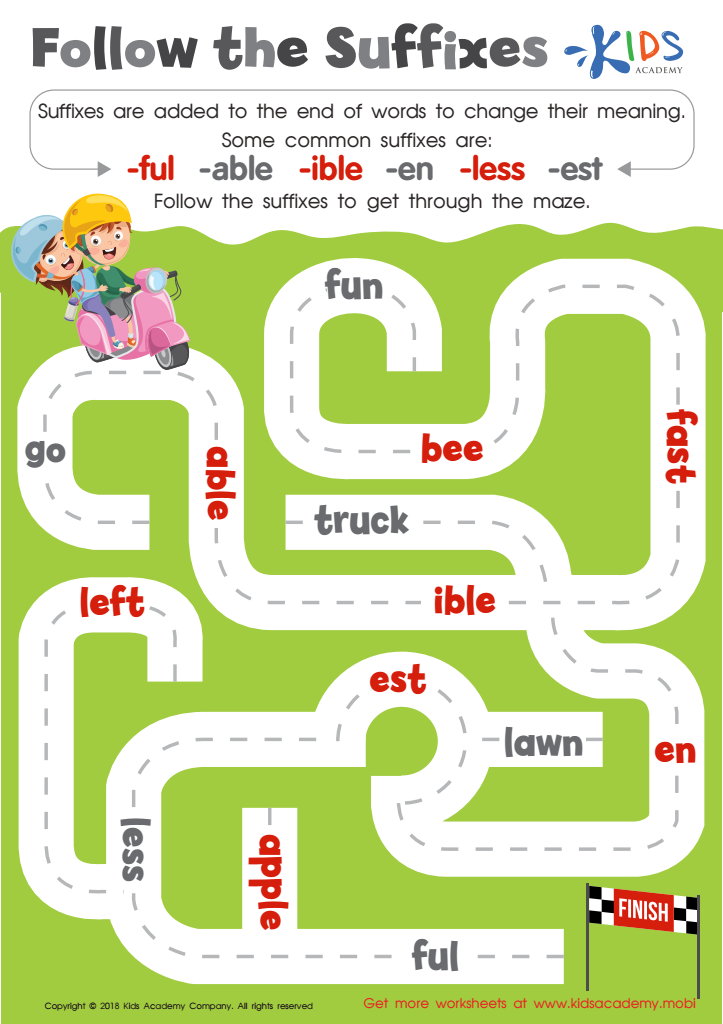
Reading: Follow the Suffixes Worksheet
Students use suffixes to find the right way through a maze in this enjoyable activity! Understanding suffixes helps kids decode and comprehend more words, leading to better reading fluency. A great addition to your reading classes, keep this printable close!
 Assign to My Students
Reading: Follow the Suffixes Worksheet
Worksheet











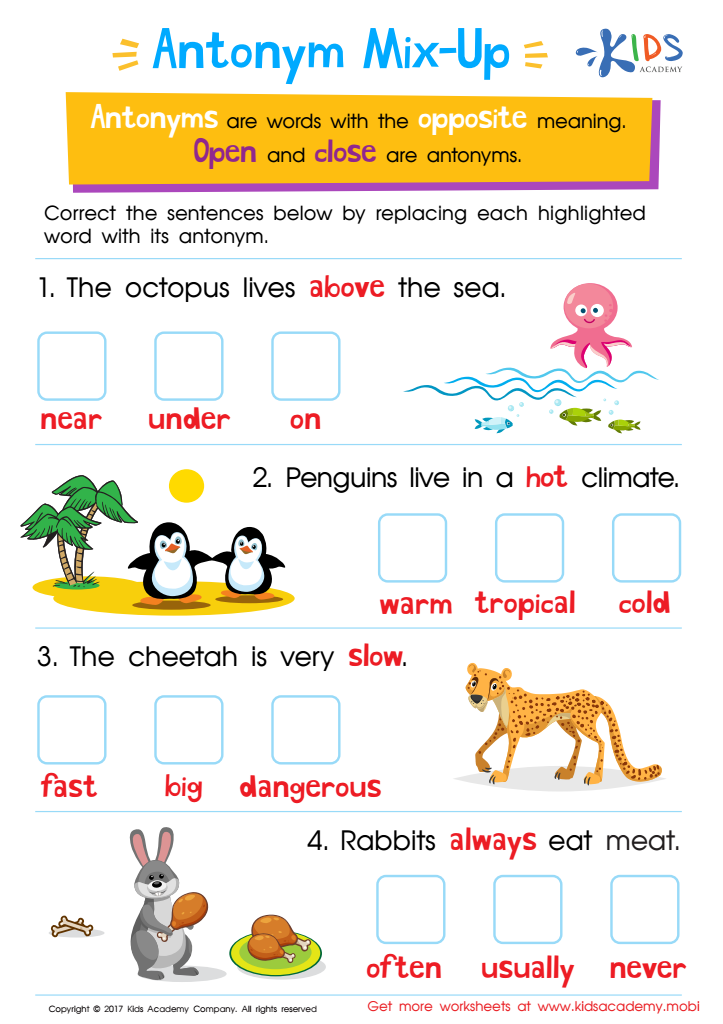
Vocabulary Antonyms Worksheet
Learning antonyms can be enjoyable and effortless! They are words that express the contrary of their meanings. This worksheet offers your kid a new word for words with contradictory interpretations, with vibrant pictures and fun phrases for an enjoyable learning experience.
Vocabulary Antonyms Worksheet
Worksheet
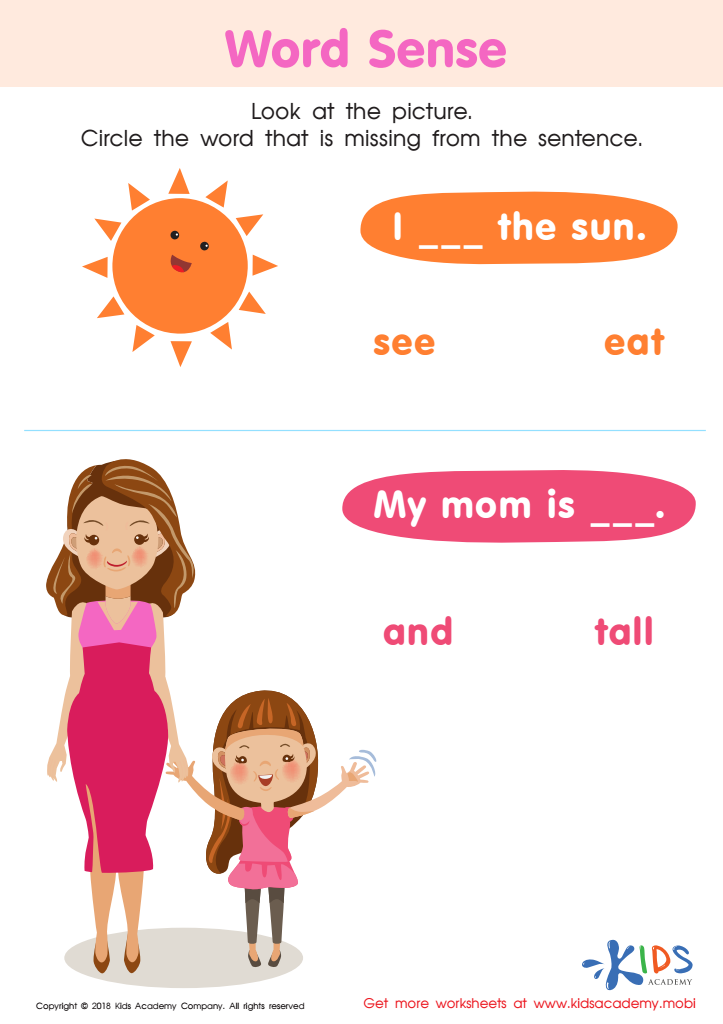
Word Sense Worksheet
Expose your child to common high-frequency words with this free and colorful worksheet. It will help them use picture clues to choose the correct word for each phrase. The more they're exposed, the stronger their fluency will become when reading. This process is an important part of the emerging reader's learning-to-read journey.
Word Sense Worksheet
Worksheet
Join Kids Academy for Free
Who is primarily going to use this learning content?



.jpg)

.jpg)

Building vocabulary through word association is critically important for children ages 5-9, a pivotal period for language development. Vocabulary is the foundation of communication, reading, and writing skills, which are essential for academic success and overall cognitive development. Enhancing vocabulary at this age helps children understand and express complex ideas, follow instructions, and engage more meaningfully in conversations.
Word association helps solidify these new words in a child’s memory by connecting them to known concepts, creating a web of related terms. For example, associating the word "apple" with "fruit," "red," and "sweet" creates multiple retrieval cues, increasing the likelihood that the child will remember and use the word correctly.
Furthermore, a robust vocabulary is linked to improved reading comprehension. When children encounter new words in texts, having a broad vocabulary allows them to infer meanings from context, making reading more enjoyable and less frustrating.
Socially, a rich vocabulary enhances a child's ability to interact and collaborate with peers, contributing to their emotional and social development. Encouraging word association through games, reading, and everyday conversation can make learning fun and accessible, fostering a lifelong love of language. Parents and teachers should prioritize this to give children the best tools for future success.








