
Enhance Vocabulary Reading Worksheets for Ages 5-9
3 filtered results
Difficulty Level
Grade
Age
-
From - To
Subject
Activity
Standards
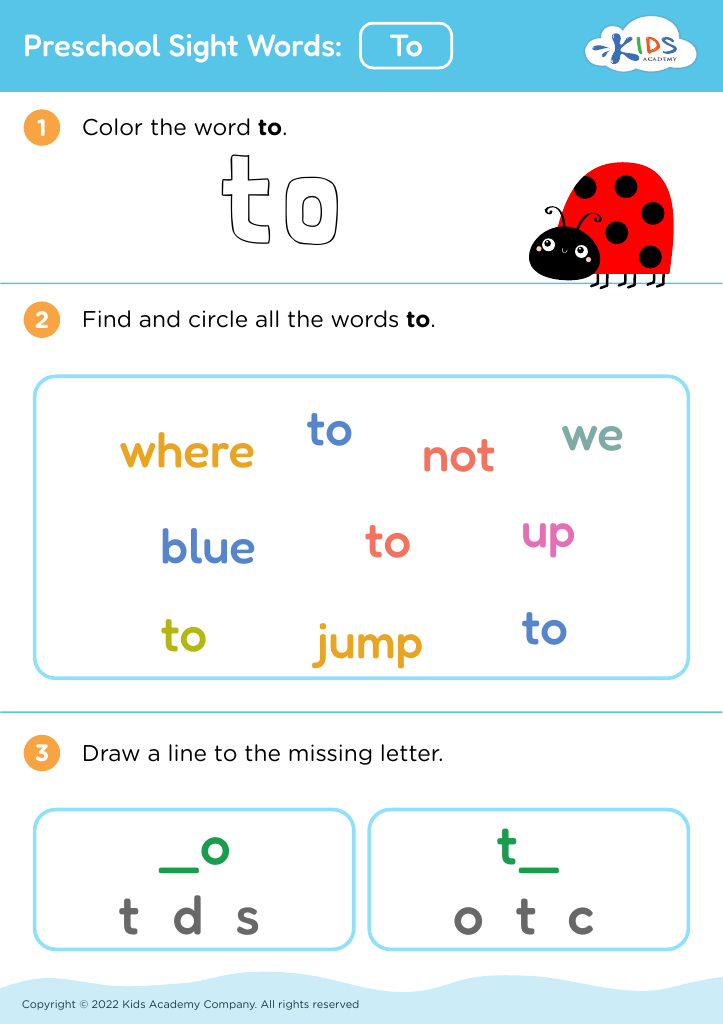
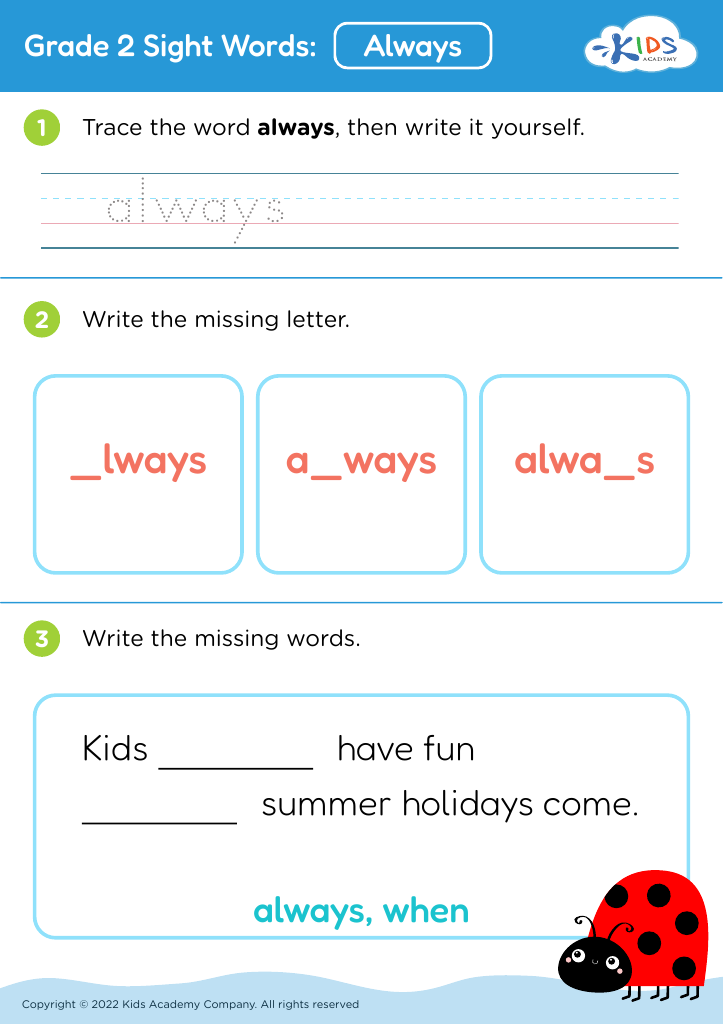
Discover our engaging "Enhance Vocabulary Reading Worksheets" designed for children ages 5-9! These worksheets provide a fun and interactive way for young learners to expand their vocabulary through reading. Packed with colorful illustrations and age-appropriate exercises, they encourage comprehension, word recognition, and contextual understanding. Each worksheet features a variety of activities, including fill-in-the-blanks, word searches, and matching games that foster a love for language while developing essential reading skills. Perfect for home or classroom use, our worksheets make vocabulary building an enjoyable adventure! Explore our collection today and empower your child’s literacy journey.
Favorites
With answer key
Interactive

Where Does It Happen? Worksheet
This worksheet helps kids give better descriptions of events and their locations. Look at the illustration with them, then help them check the box next to the relevant picture. This will help them explain where stories are happening or have happened.
 Assign to My Students
Where Does It Happen? Worksheet
Worksheet
Join Kids Academy for Free
Who is primarily going to use this learning content?








Enhancing vocabulary reading for children aged 5-9 is crucial for their overall academic and personal development. During these formative years, children are not only learning to read but also reading to learn. A robust vocabulary directly impacts their ability to comprehend more complex texts, making it easier for them to absorb concepts across subjects, from science to social studies.
When children are exposed to a rich vocabulary in reading, it helps them articulate their thoughts and feelings more effectively, fostering better communication skills. Moreover, a larger vocabulary enhances their writing abilities, allowing for more expressive and nuanced work as they progress in their education.
Additionally, building vocabulary can spark curiosity and a love for learning. Engaging children with diverse words can encourage them to ask questions and seek knowledge, setting the foundation for lifelong learning habits.
For parents and teachers alike, prioritizing vocabulary enhancement creates a supportive environment where children feel confident in their abilities. It facilitates discussions around new words and ideas, fostering a love for books. Ultimately, helping children develop a solid vocabulary at an early age empowers them with the tools they need for academic success and a broader understanding of the world around them.








