Moral lesson understanding Reading Worksheets for Ages 5-9
5 filtered results
-
From - To
Our "Moral Lesson Understanding Reading Worksheets for Ages 5-9" are crafted to engage young minds with captivating stories while instilling essential moral values. Perfect for early readers, these worksheets focus on developing comprehension skills and understanding core ethical lessons. Each worksheet pairs an engaging story with thoughtful questions and activities to reinforce learning. Ideal for teachers and parents, our resources provide a fun and educational approach to help children discern right from wrong. Nurture your child's reading skills and moral development with our expertly designed materials tailored to inspire and educate.
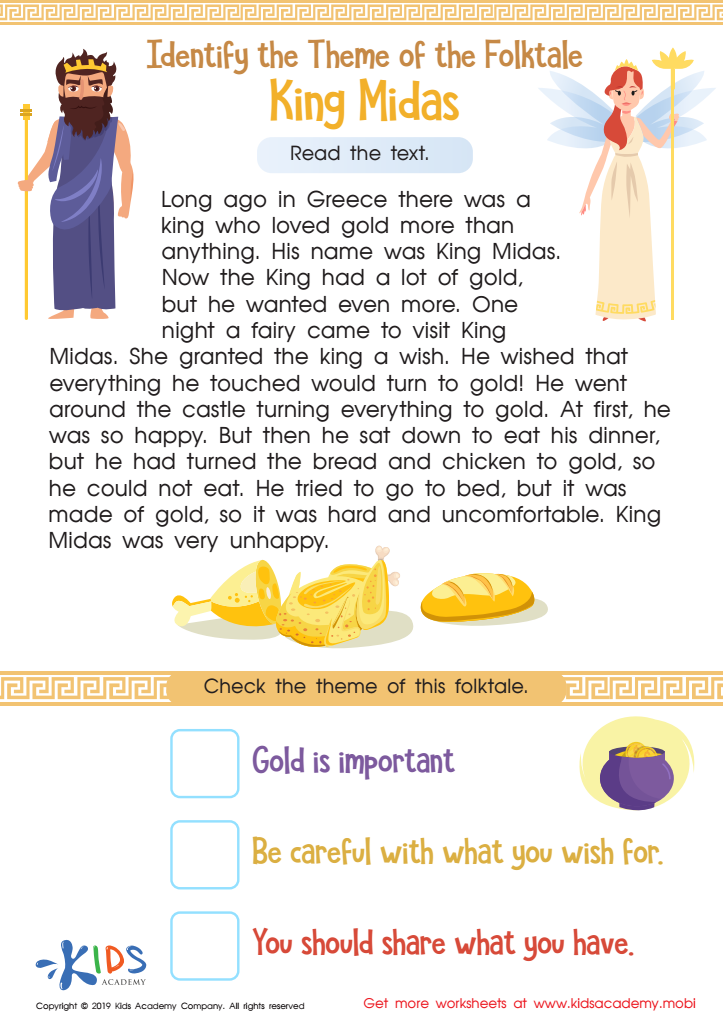
King Midas Worksheet
 Assign to My Students
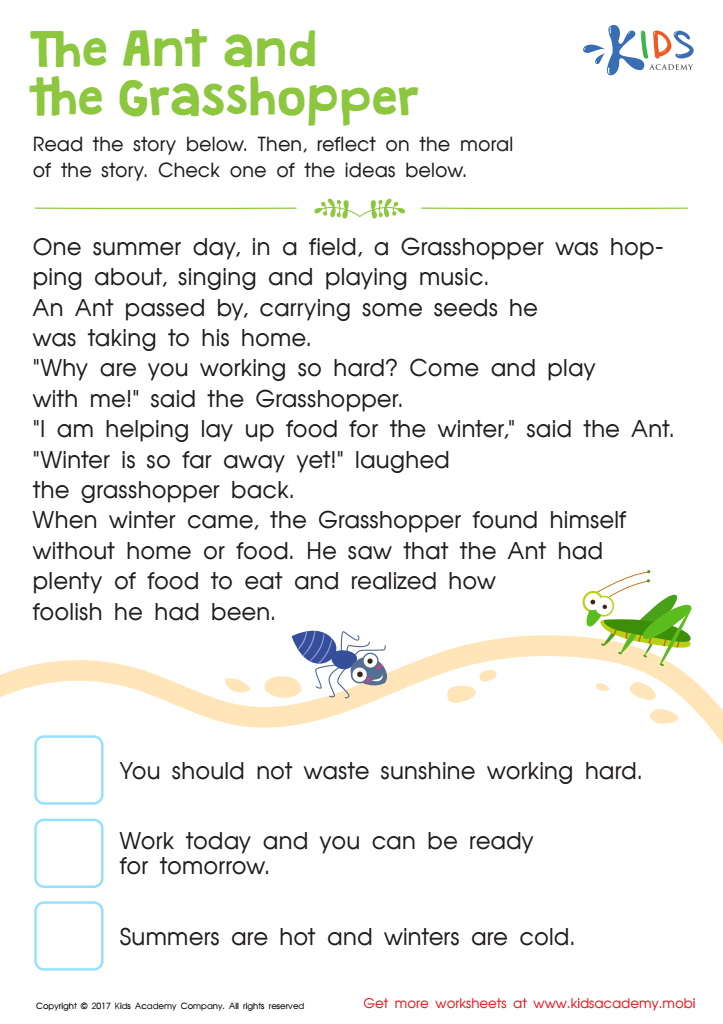
The Ant and The Grasshopper Printable
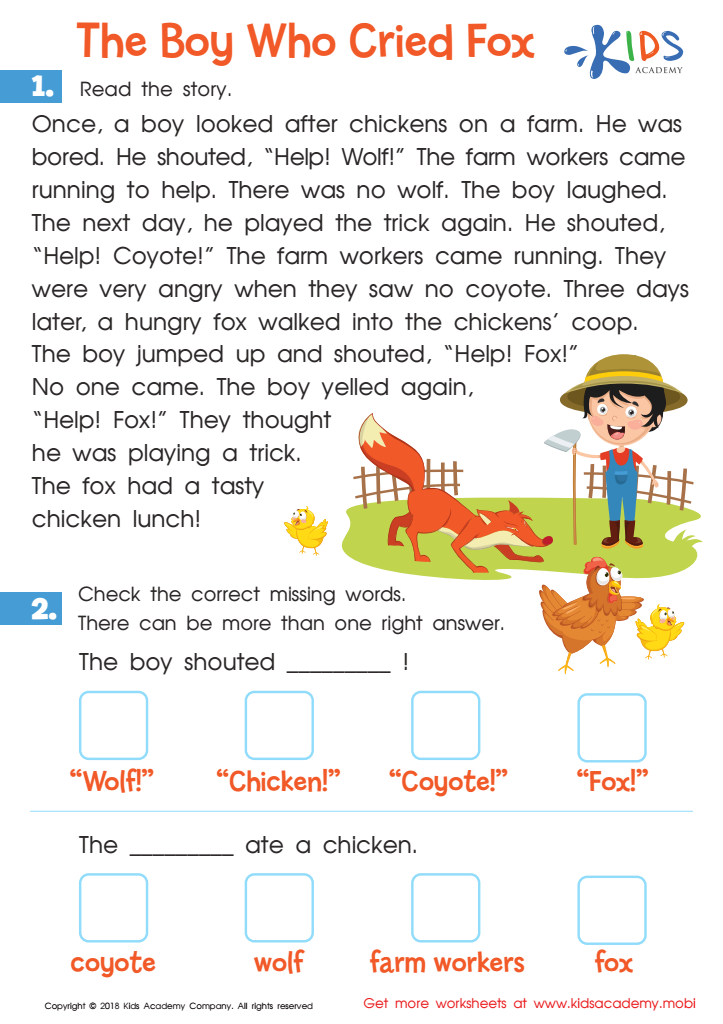
The Boy Who Cried Fox Worksheet
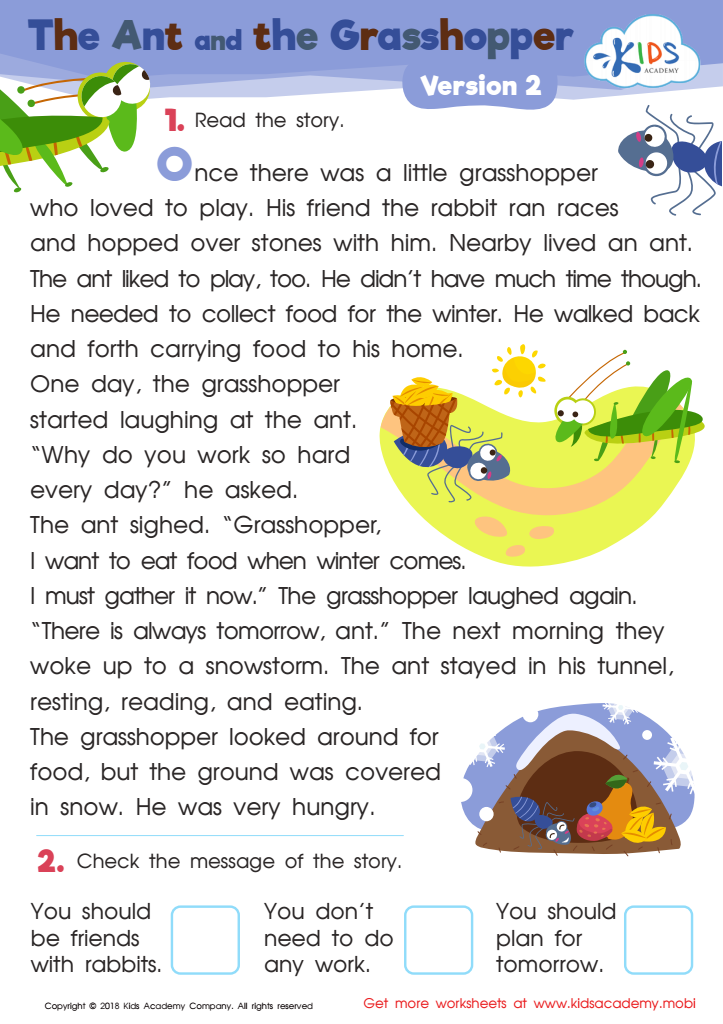
The Ant and The Grasshopper Version 2 Worksheet
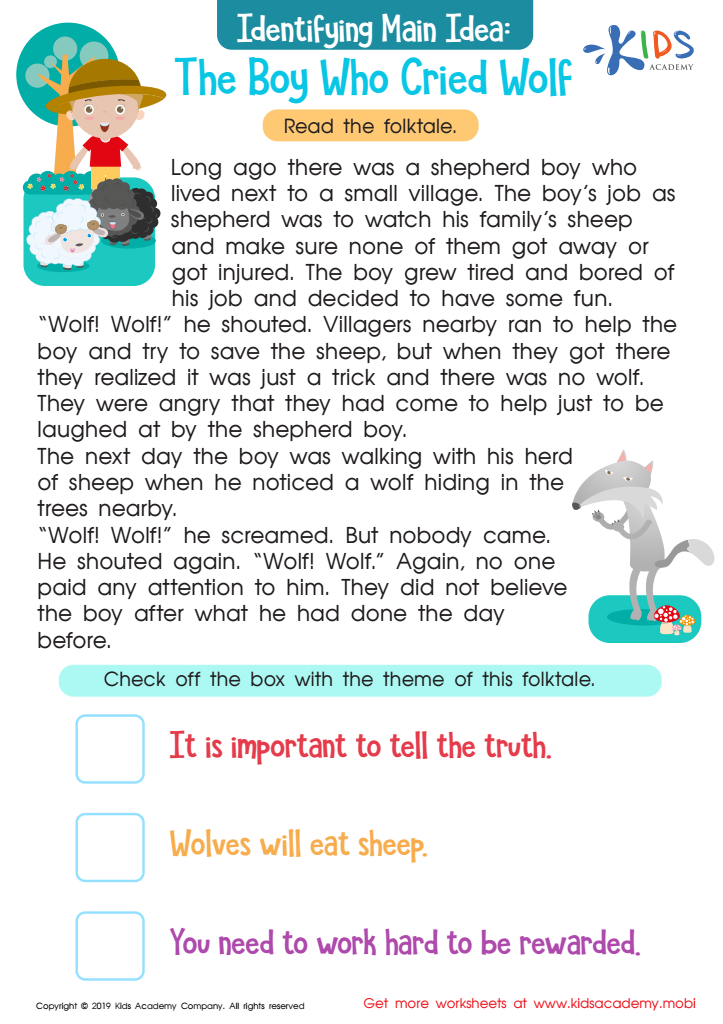
The Boy Who Cried Wolf Part 2 Worksheet








Parents and teachers should place a high value on introducing moral lesson understanding in reading for children aged 5-9 because it serves as a cornerstone for their overall development. At this formative stage, children's cognitive, emotional, and social skills are rapidly evolving, making it an ideal time to instill core values and ethical principles. Engaging stories with moral lessons allow children to easily grasp complex concepts like honesty, kindness, and empathy through relatable characters and situations. This early exposure helps them differentiate between right and wrong and understand the consequences of their actions.
Additionally, moral lesson reading contributes to character building and critical thinking skills. When children encounter moral dilemmas within stories, they learn to reflect on various perspectives and consider the implications of different choices. This encourages the development of empathy and helps them become thoughtful, compassionate individuals.
Beyond the immediate moral lessons, these readings also enhance language skills and imaginative thinking. As children enjoy these stories, they build their vocabulary, improve comprehension, and cultivate a lifelong appreciation for reading. By prioritizing moral lessons in reading, parents and teachers provide children with essential tools to navigate social interactions and challenges, laying a strong foundation for becoming responsible, ethical adults.








