
Reading Improvement Reading Worksheets for Ages 5-9
5 filtered results
Difficulty Level
Grade
Age
-
From - To
Subject
Activity
Standards
Boost your child's reading skills with our engaging Reading Improvement Worksheets designed for ages 5-9! These printable resources focus on enhancing phonics, comprehension, and vocabulary through fun and interactive activities. Tailored to meet the needs of early learners, our worksheets provide exercises that make reading enjoyable and effective. By incorporating games, stories, and worksheets, children can develop essential literacy skills at their own pace. Whether you're a teacher or a parent, these resources are perfect for supplementing classroom learning or providing extra practice at home. Start your child’s reading journey today and watch their confidence soar with every page they turn!
Favorites
With answer key
Interactive
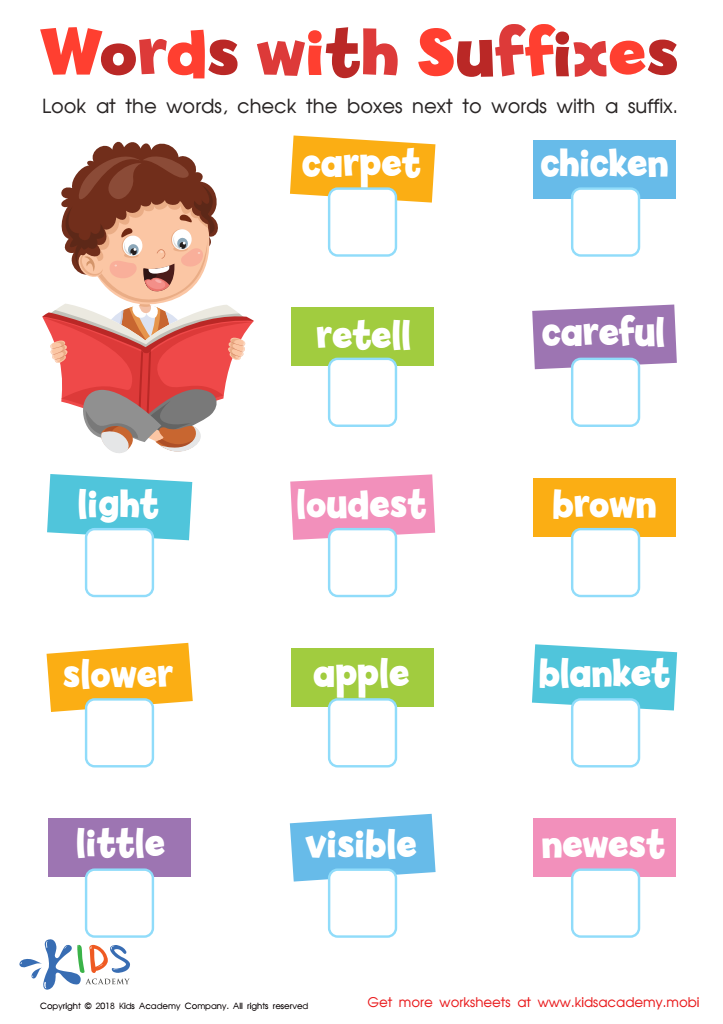
Reading: Words With Suffixes Worksheet
Help your students understand suffixes and build reading fluency with this worksheet. Have them read each word, then choose the ones with a suffix. Practicing this will lead to better comprehension and more confident reading. Save it for future use in language and reading classes.
 Assign to My Students
Reading: Words With Suffixes Worksheet
Worksheet
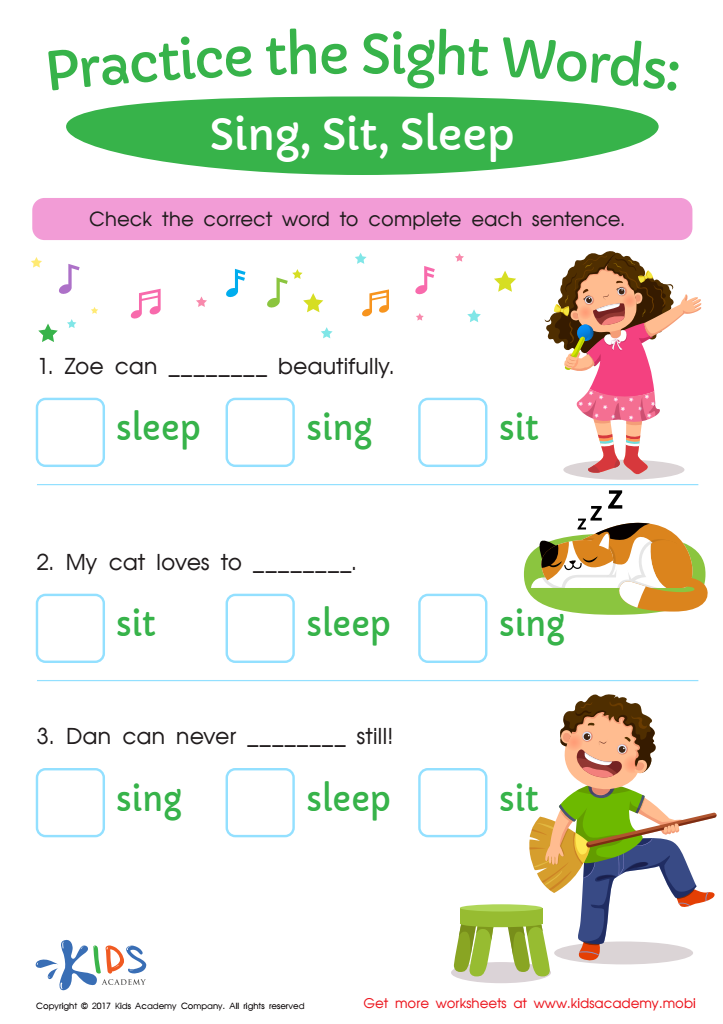
Sing, Sit, Sleep Sight Words Worksheet
Practice sight words with this printable worksheet featuring sing, sit, sleep! Confusing at first, these words can be mastered with the help of simple sentences and fun illustrations.
Sing, Sit, Sleep Sight Words Worksheet
Worksheet
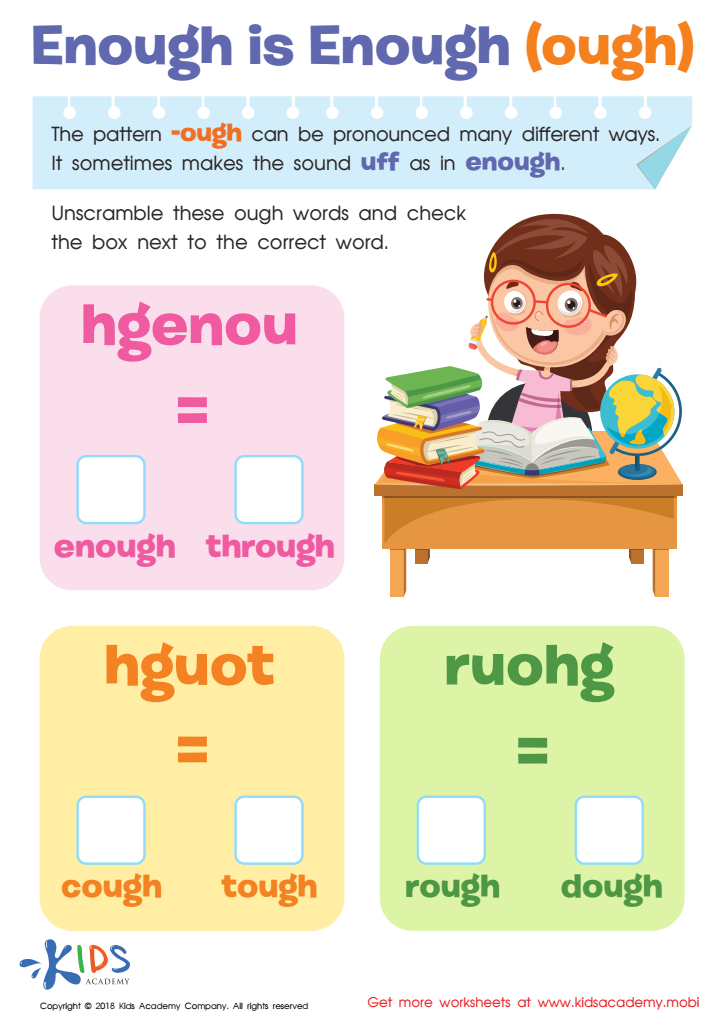
Enough Is Enough (ough) Worksheet
As your students learn more about reading and pronouncing words, they can explore how some word patterns can be said differently. The 'ough' pattern, for instance, can be pronounced several ways. 'Enough' has the 'uff' sound. Provide your students with examples of words pronounced similarly and help them unscramble 'ough' words on this worksheet, ticking the box for the correct word.
Enough Is Enough (ough) Worksheet
Worksheet
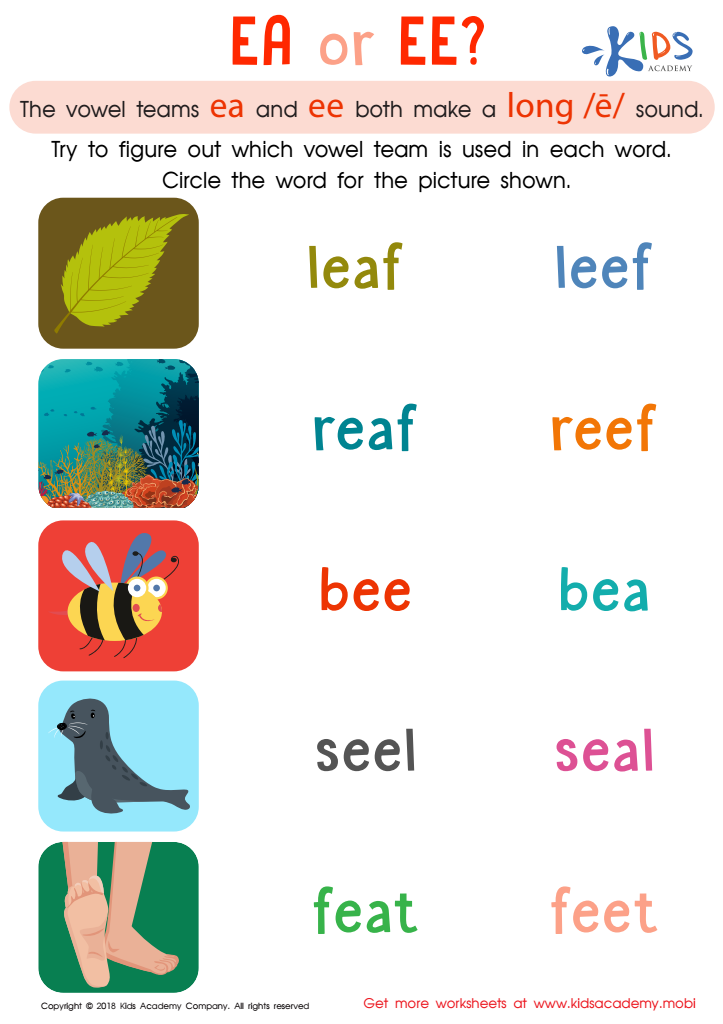
Reading: EA and EE Worksheet
Confused by the long E sound's varying spellings? Give students practice with this printable. It will improve their reading and spelling skills by helping them identify the correct spellings for words with the /ee/ and /ea/ vowel teams. Clear up the confusion and sharpen their skills.
Reading: EA and EE Worksheet
Worksheet
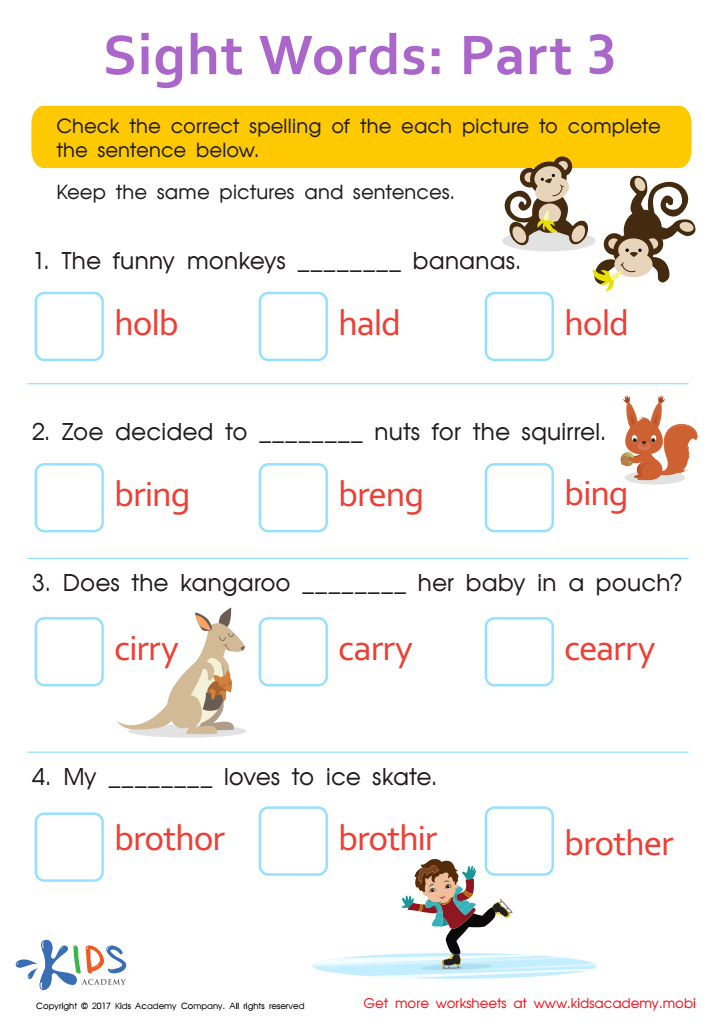
Hold, Bring, Carry, Brother Sight Words Worksheet
This sight words worksheet has fun illustrations to engage kids. They must read each sentence, then fill in the missing word, selecting from: hold, bring, carry, brother!
Hold, Bring, Carry, Brother Sight Words Worksheet
Worksheet
Join Kids Academy for Free
Who is primarily going to use this learning content?








Reading improvement for children aged 5-9 is crucial for their academic success, social development, and overall well-being. During these formative years, children are developing foundational literacy skills that will support their learning throughout life. By fostering reading proficiency, parents and teachers can enhance vocabulary, comprehension, and critical thinking skills, which are essential for navigating complex ideas and texts later on.
Moreover, reading is not just about academics; it also boosts self-confidence and encourages a love for learning. When children experience success in reading, they are more likely to engage in literature and develop empathy through stories, understanding varying perspectives. This can foster social skills and improve communication.
Additionally, partnering in a child’s reading journey can strengthen the bond between parents and teachers and promote a positive learning environment. Teachers who support reading improvement create classrooms where every child has the opportunity to thrive, while engaged parents can reinforce these skills at home.
In summary, reading improvement in early childhood lays the groundwork for lifelong learning, creating well-rounded individuals equipped to face future challenges, succeed in school, and contribute positively to society. It is a shared responsibility that requires commitment from both parents and educators.








