Understanding prepositions Reading Worksheets for Ages 5-9
6 filtered results
-
From - To
Explore our engaging "Understanding Prepositions" reading worksheets designed for children aged 5-9. These interactive resources help young learners grasp the concept of prepositions, enhancing their reading and comprehension skills. Featuring colorful illustrations and relatable examples, our worksheets make learning fun and approachable. Children will identify prepositions in sentences, complete exercises, and reinforce their understanding through playful activities. Perfect for both classroom and at-home use, these worksheets support early literacy development and encourage communication skills. Dive into a world of language exploration and help your child master prepositions with our carefully crafted worksheets, fostering a strong foundation for future learning.
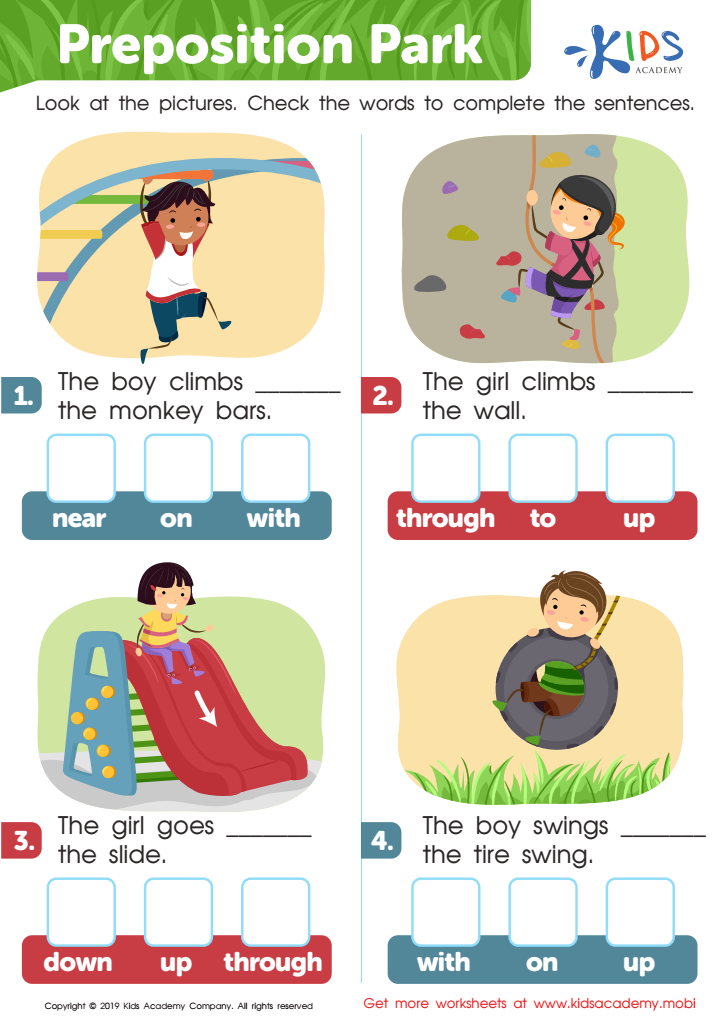
Preposition Park Worksheet
 Assign to My Students
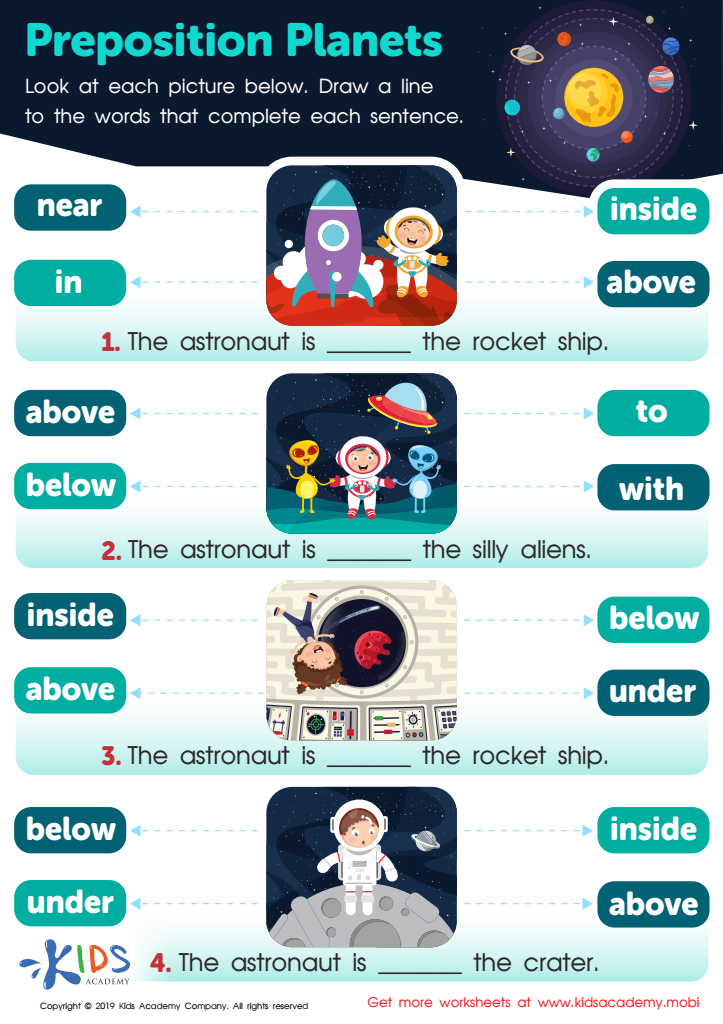
Preposition Planets Worksheet
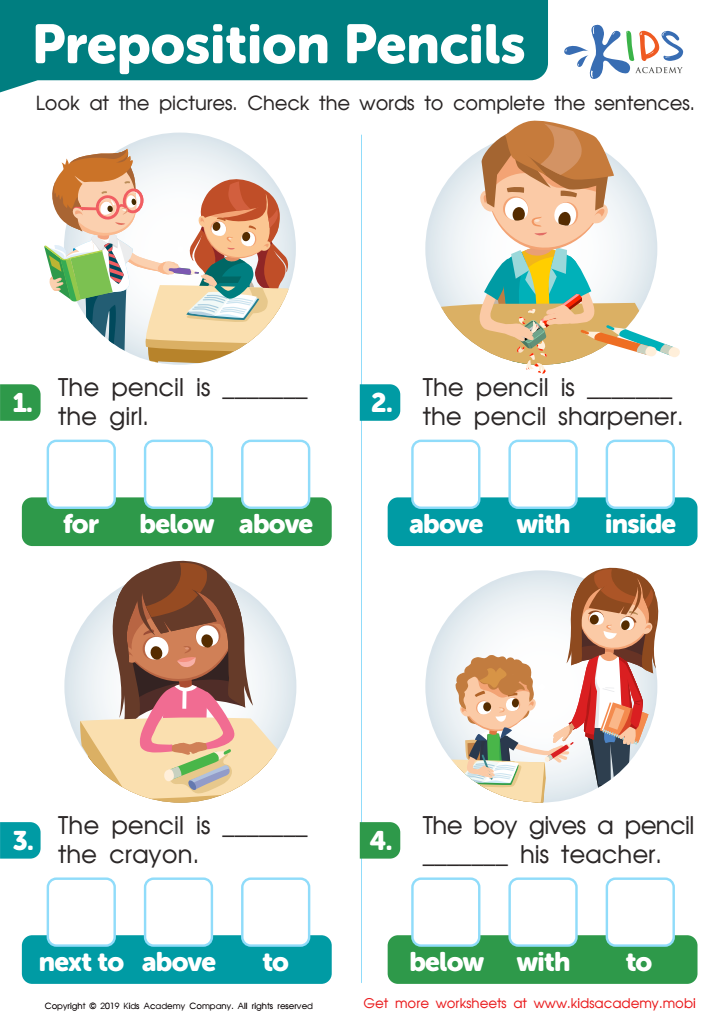
Preposition Pencils Worksheet
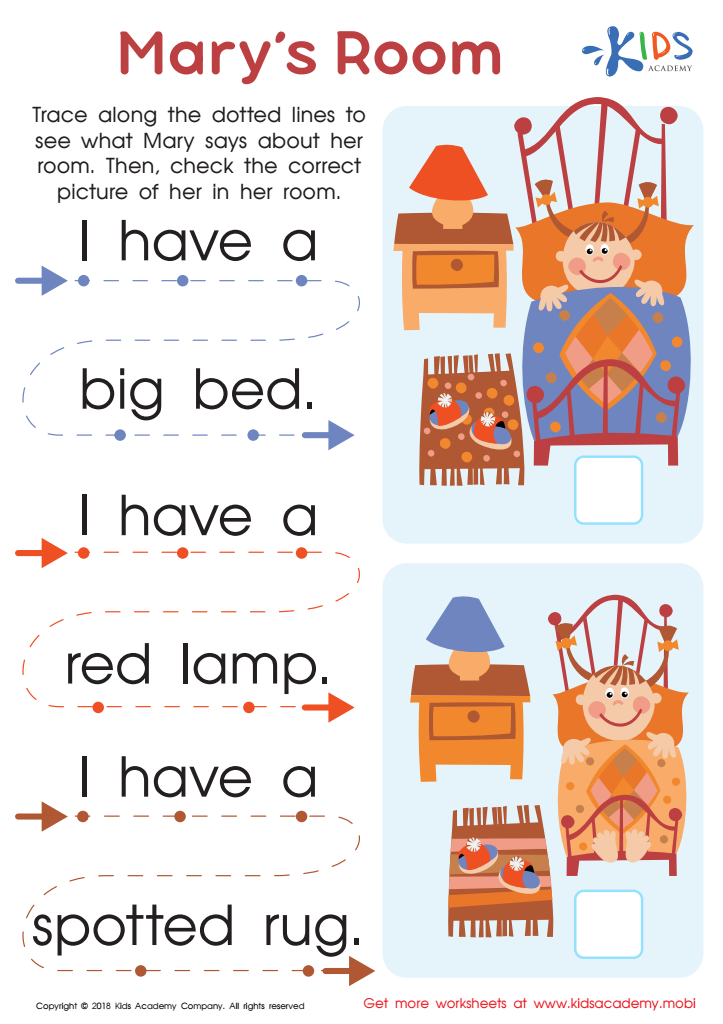
Mary's Room Worksheet





.jpg)


Understanding prepositions is crucial for children aged 5-9, as these small yet significant words form the backbone of effective communication and comprehension. Prepositions help children specify relationships between objects, places, and ideas, enhancing their ability to describe and understand their surroundings. For instance, mastering prepositions like "under," "over," "next to," and "through" enables children to articulate their thoughts clearly and accurately, laying the groundwork for both spoken and written expression.
Moreover, reading comprehension during these formative years heavily relies on prepositional understanding. Children who grasp prepositions can follow directions within stories, visualize characters’ movements, and make sense of the context. This skill directly impacts their ability to answer questions and engage in discussions about texts.
Additionally, strong prepositional knowledge fosters confidence in young learners, boosting their linguistic abilities and encouraging them to express themselves more freely. Parents and teachers play a critical role in reinforcing this learning by integrating prepositions into daily conversations, storytelling, and reading activities. By doing so, they help cultivate a solid foundation for lifelong literacy skills, ensuring children can communicate effectively as they navigate their education and social interactions.








