Moral lesson understanding Reading Comprehension Worksheets for Ages 5-9
5 filtered results
-
From - To
Discover our engaging Moral Lesson Understanding Reading Comprehension Worksheets designed specifically for children ages 5-9. These interactive worksheets not only enhance reading skills but also instill important moral values in young learners. Kids will explore age-appropriate stories that convey powerful lessons about honesty, kindness, and empathy. By answering questions related to the text, students will develop critical thinking and comprehension abilities while reflecting on the characters' choices and consequences. Perfect for home or classroom use, these worksheets foster a love for reading while helping children become thoughtful and compassionate individuals. Equip your child with essential moral understanding through reading today!
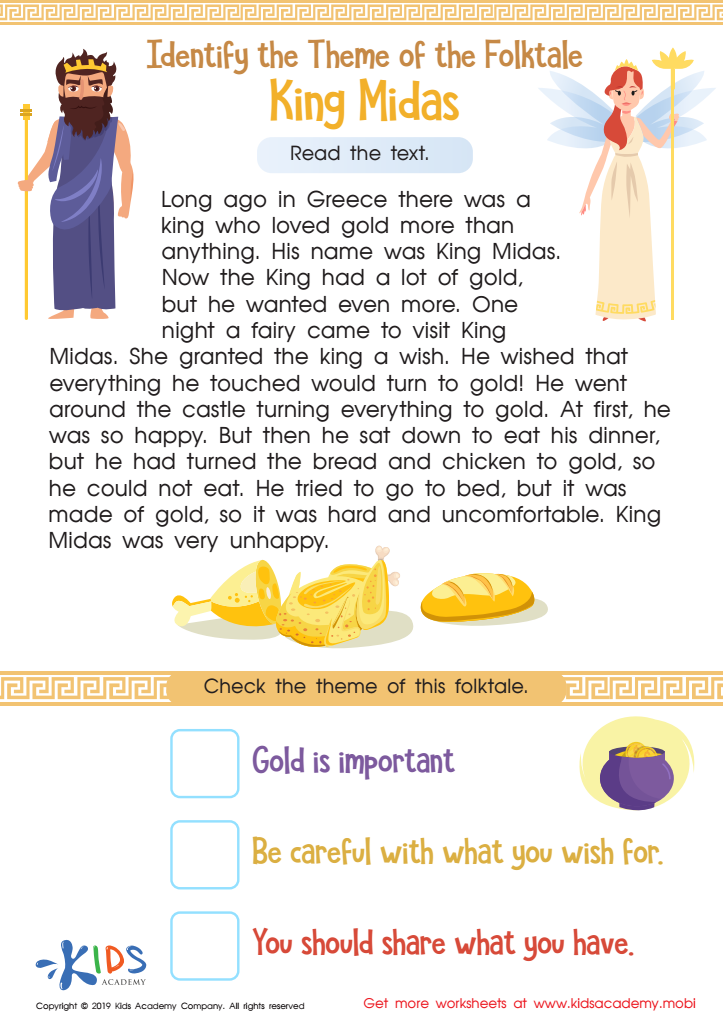
King Midas Worksheet
 Assign to My Students
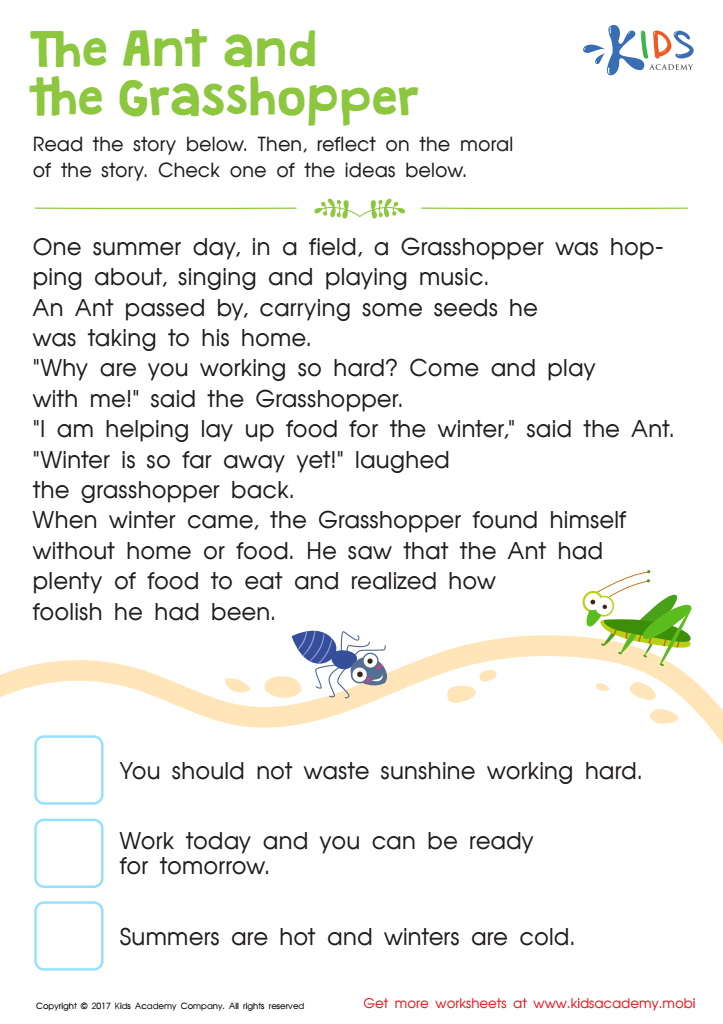
The Ant and The Grasshopper Printable
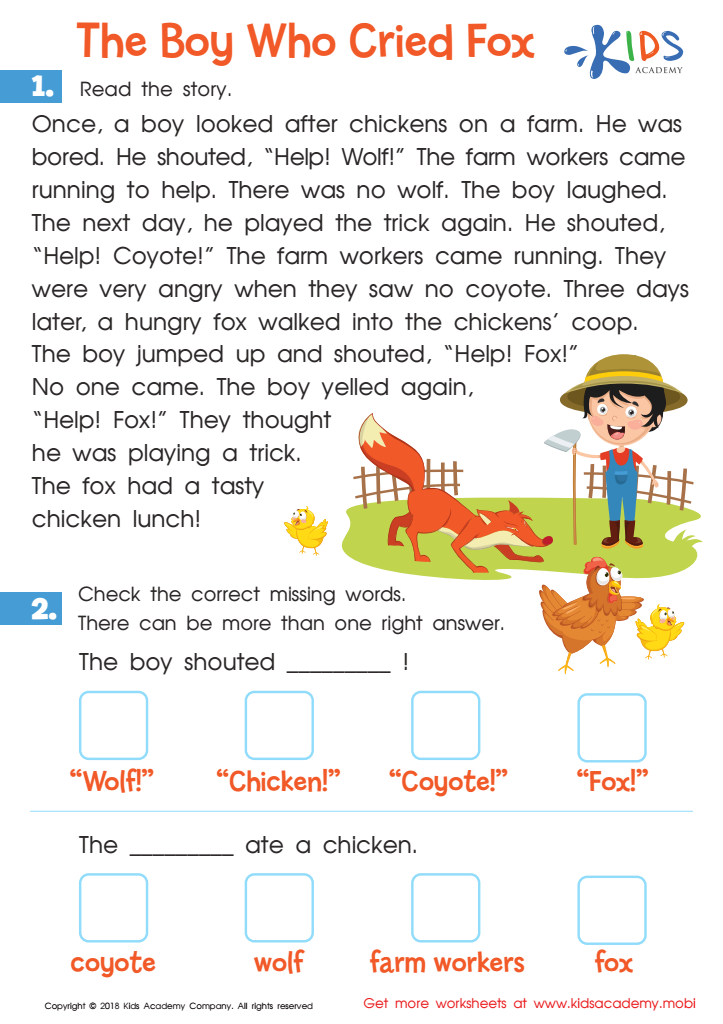
The Boy Who Cried Fox Worksheet
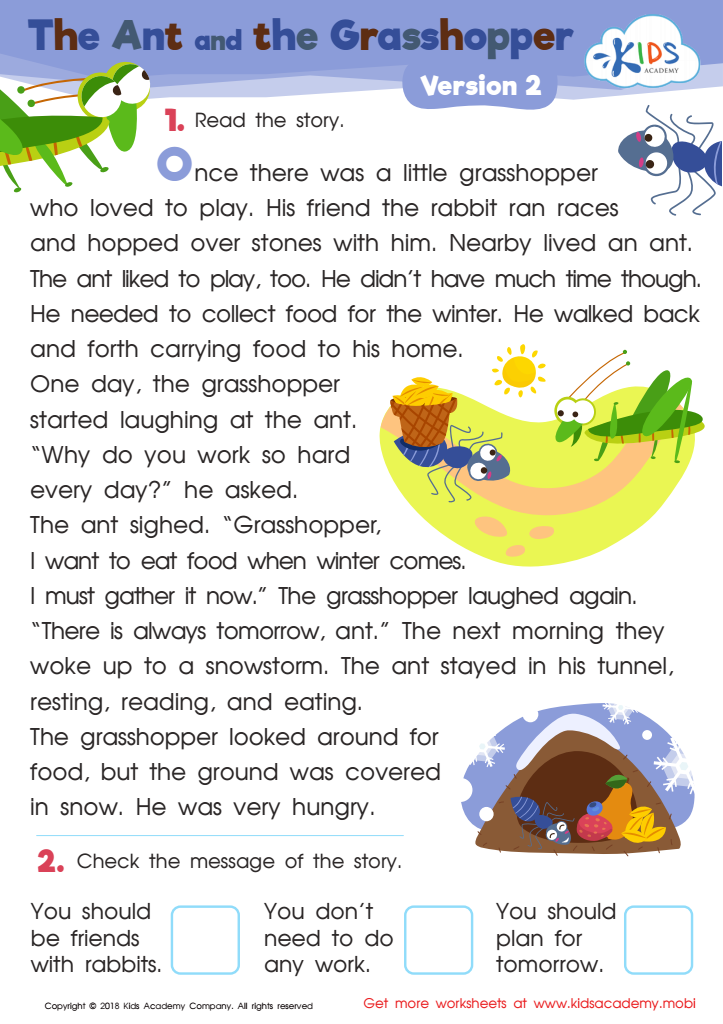
The Ant and The Grasshopper Version 2 Worksheet
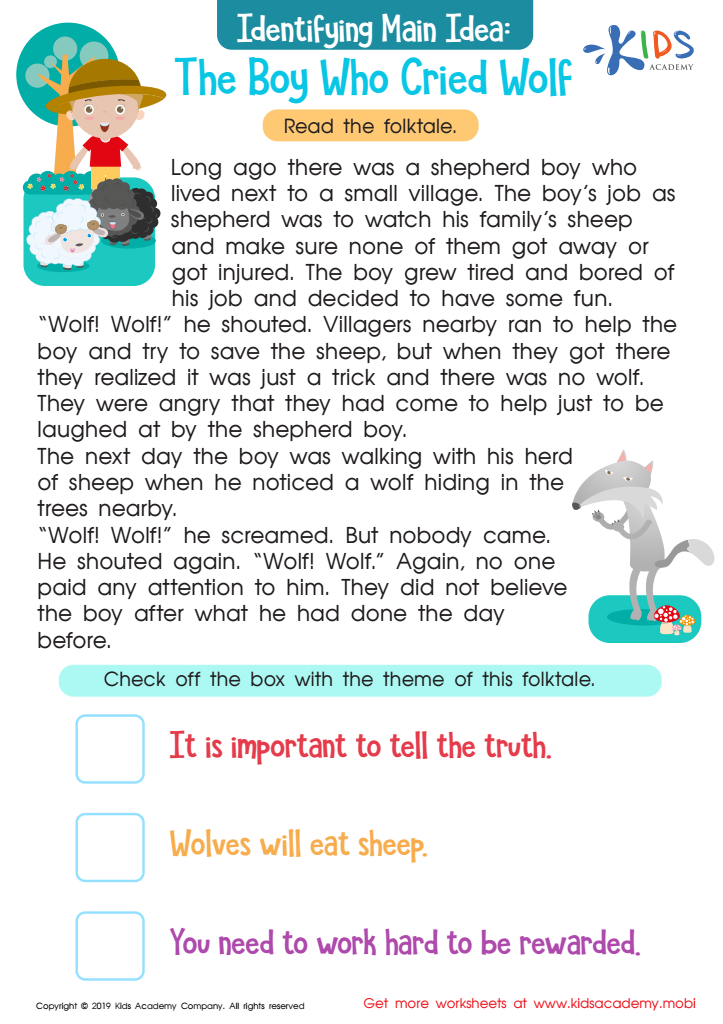
The Boy Who Cried Wolf Part 2 Worksheet






.jpg)

Understanding moral lessons within reading comprehension is crucial for children aged 5-9 as it lays the foundation for their social and emotional development. At this age, children are highly impressionable, and the stories they engage with can shape their values, ethics, and interpersonal skills. By grasping moral lessons, young readers can develop empathy, learning to understand perspectives and emotions different from their own.
Parents and teachers play pivotal roles in guiding children through these narratives. When they discuss the underlying morals of stories, they foster critical thinking and reflection, helping children to connect the lessons to their own lives. This deeper engagement not only enhances comprehension skills but also promotes a sense of accountability and moral reasoning.
Moreover, lessons from stories can serve as conversation starters, encouraging relationship building among peers, promoting kindness, and reducing behavioral issues. Children who understand and internalize moral lessons are likely to become more considerate, resilient, and responsible individuals. In summary, focusing on moral lessons within reading comprehension enriches children's learning experiences, prepares them for real-life situations, and cultivates a more empathetic and socially aware generation.








