Character recognition Reading Fiction Worksheets for Ages 5-9
4 filtered results
-
From - To
Enhance your child's reading skills with our "Character Recognition Reading Fiction Worksheets for Ages 5-9." These engaging and educational resources focus on helping young readers identify and analyze fictional characters, fostering a deeper understanding of narratives. Ideal for ages 5-9, these worksheets encourage children to explore different personalities, motivations, and roles within stories. By practicing character recognition, kids will improve their comprehension, critical thinking, and imagination. Perfect for classroom use or at-home learning, our fun and interactive worksheets are designed to make reading an enjoyable and enriching experience. Discover the joy of reading fiction with our expertly crafted character recognition activities.
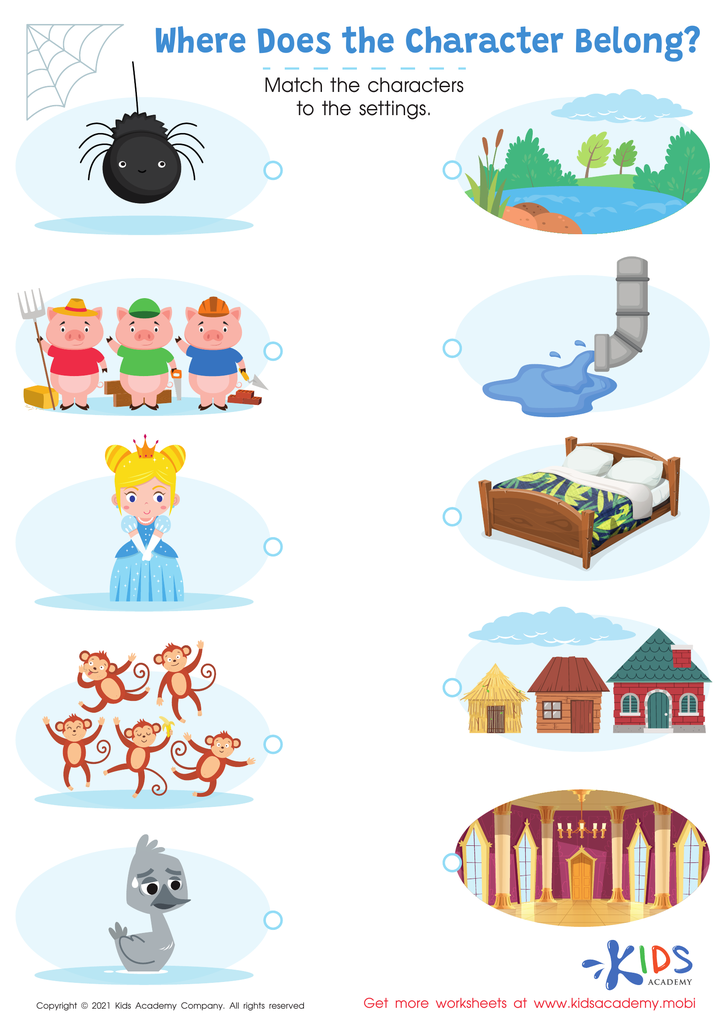
Where Does the Character Belong? Worksheet
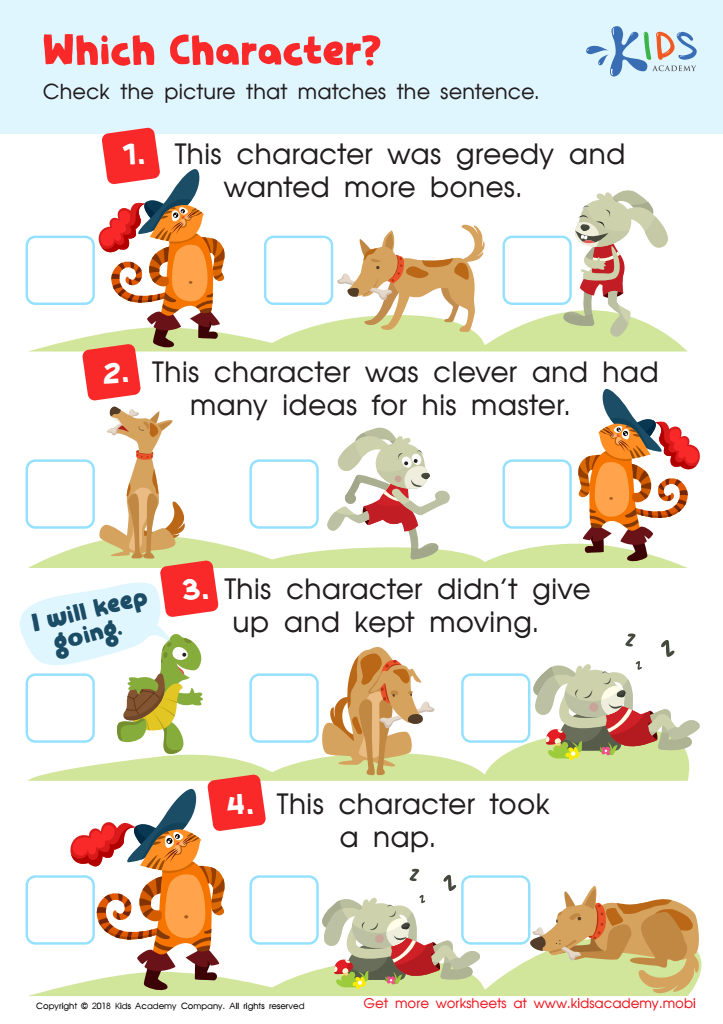
Which Character Worksheet
 Assign to My Students
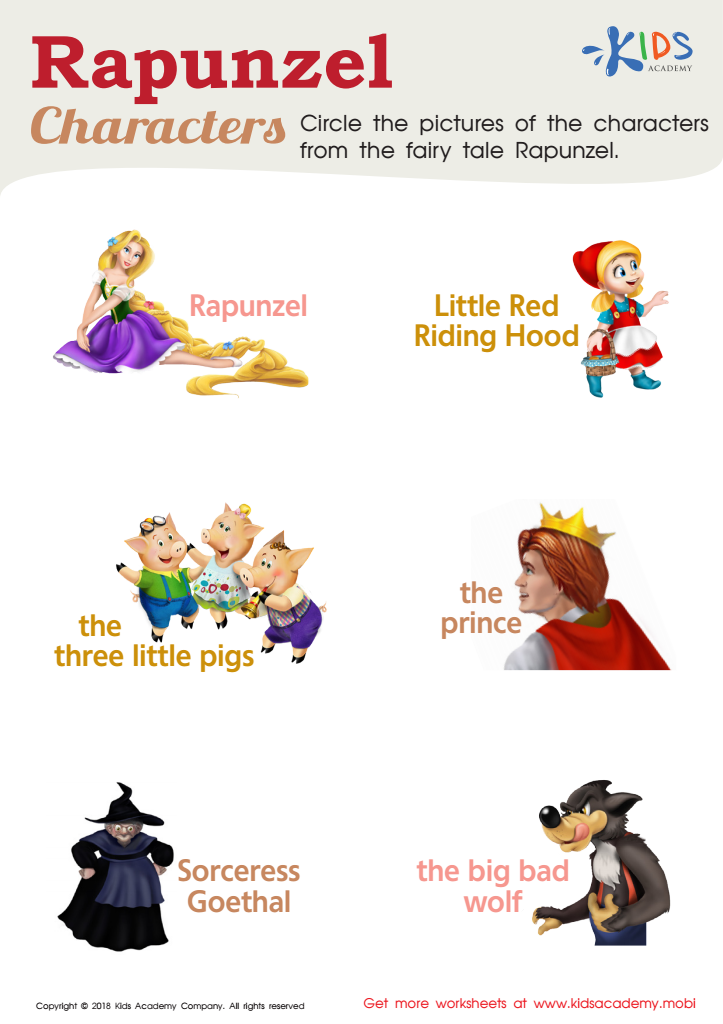
Rapunzel Characters Worksheet
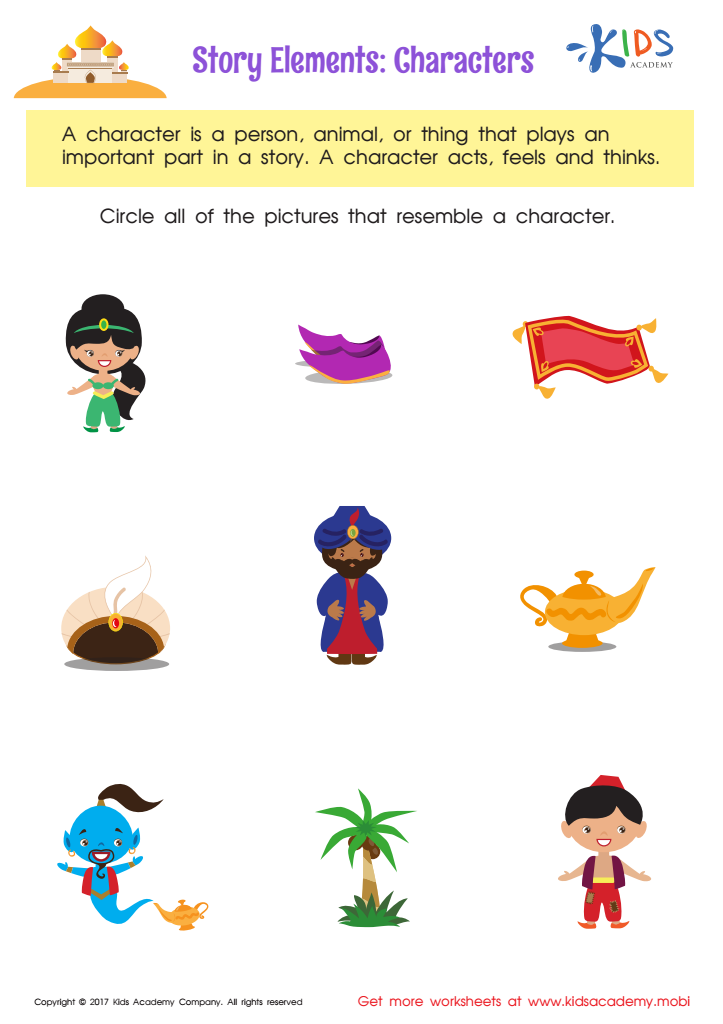
Story Elements Printable








Character recognition in reading fiction is a crucial skill for children aged 5-9 because it underpins their overall reading comprehension and enjoyment. At this stage, children are transitioning from learning to read to reading to learn. Recognizing and understanding characters—their traits, motivations, and actions—helps young readers engage more deeply with the story, enhancing their comprehension and retention. This skill facilitates empathy by allowing children to see the world through different perspectives, fostering social-emotional development.
Moreover, distinguishing characters embedded in engaging fiction promotes cognitive skills like critical thinking and memory. By following a character’s journey, children learn to make predictions, infer meanings, and recall events, which are foundational for academic success across subjects. Good character recognition aids in vocabulary development as children often encounter and decode new words within the context of a character’s experiences.
Parents and teachers who prioritize character recognition not only enhance literacy but also encourage a lifelong love of reading. Watching characters face challenges and learn lessons can teach values like resilience, kindness, and cooperation, which are crucial for personal growth. Investing in this skill thus fosters better readers and more empathetic, thoughtful individuals.








