Moral understanding Reading Fiction Worksheets for Ages 5-9
5 filtered results
-
From - To
Explore our engaging Moral Understanding Reading Fiction Worksheets designed for children ages 5 to 9. These resources help young learners develop critical thinking skills while delving into age-appropriate stories. Each worksheet encourages students to identify moral lessons, values, and character motivations, fostering empathy and emotional intelligence. As they read, children will engage in thought-provoking questions and activities that enhance their comprehension and analytical skills. Perfect for classroom use or at-home learning, our worksheets promote a love for reading while preparing children to navigate complex themes of right and wrong. Empower your child’s understanding of morals through the magic of fiction!
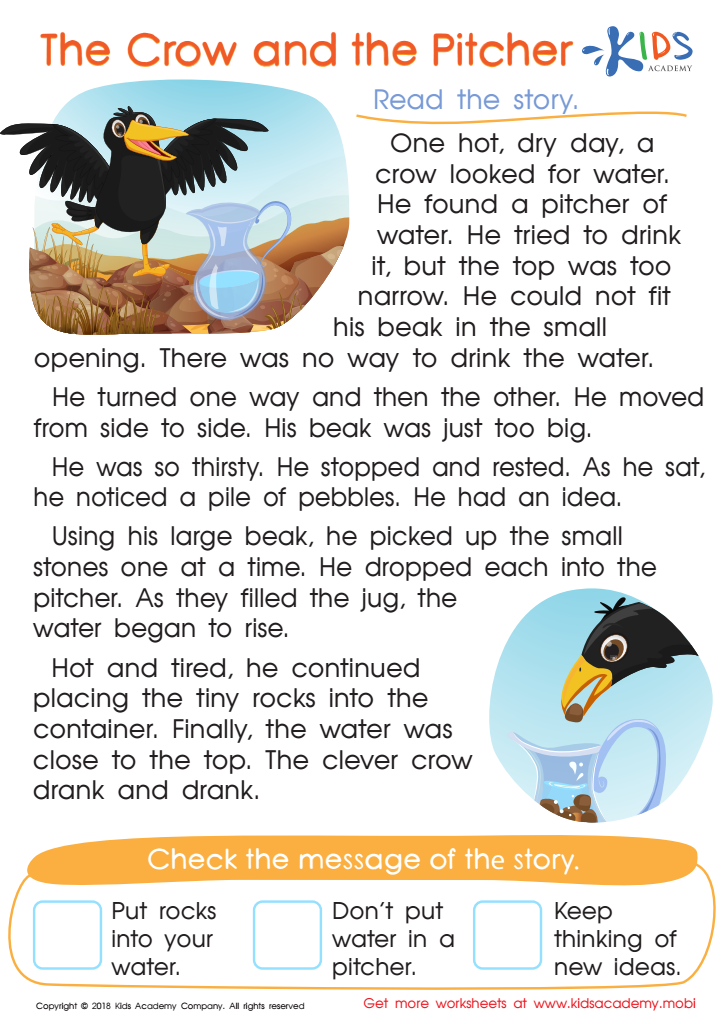
The Crow and the Pitcher Worksheet
 Assign to My Students
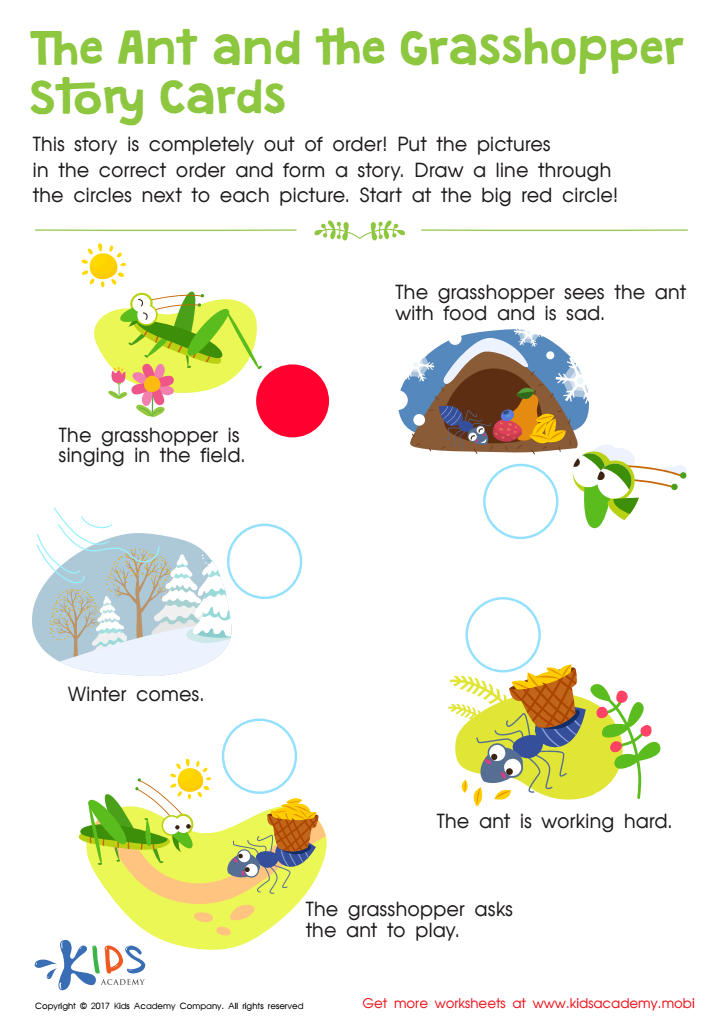
The Ant and The Grasshopper Worksheet
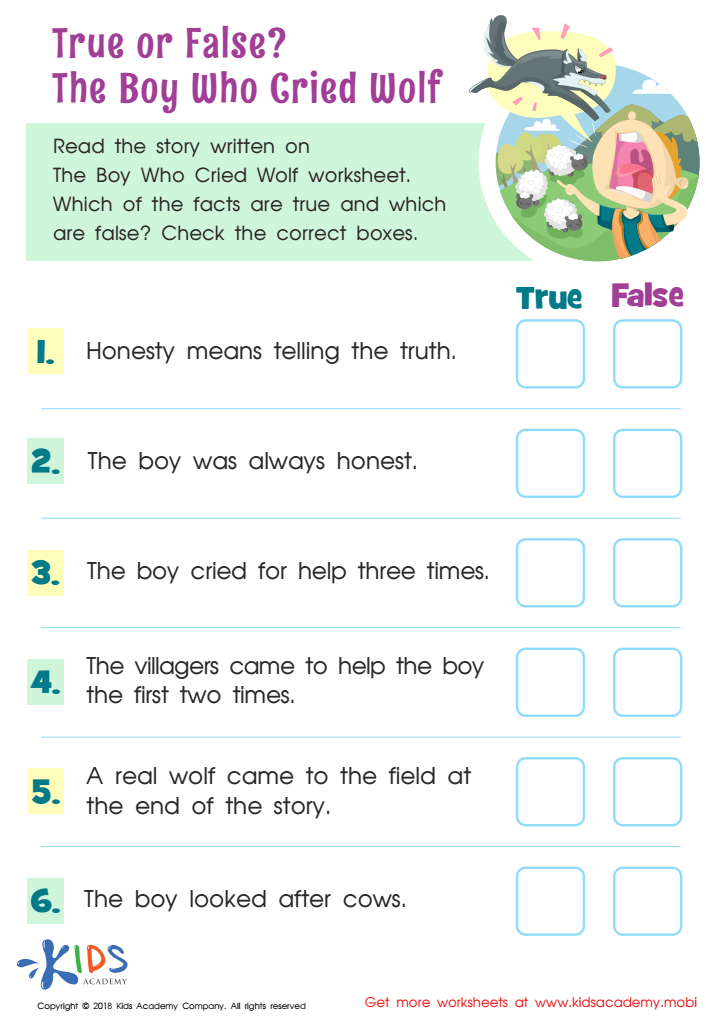
True or False? The Boy Who Cried Wolf Worksheet
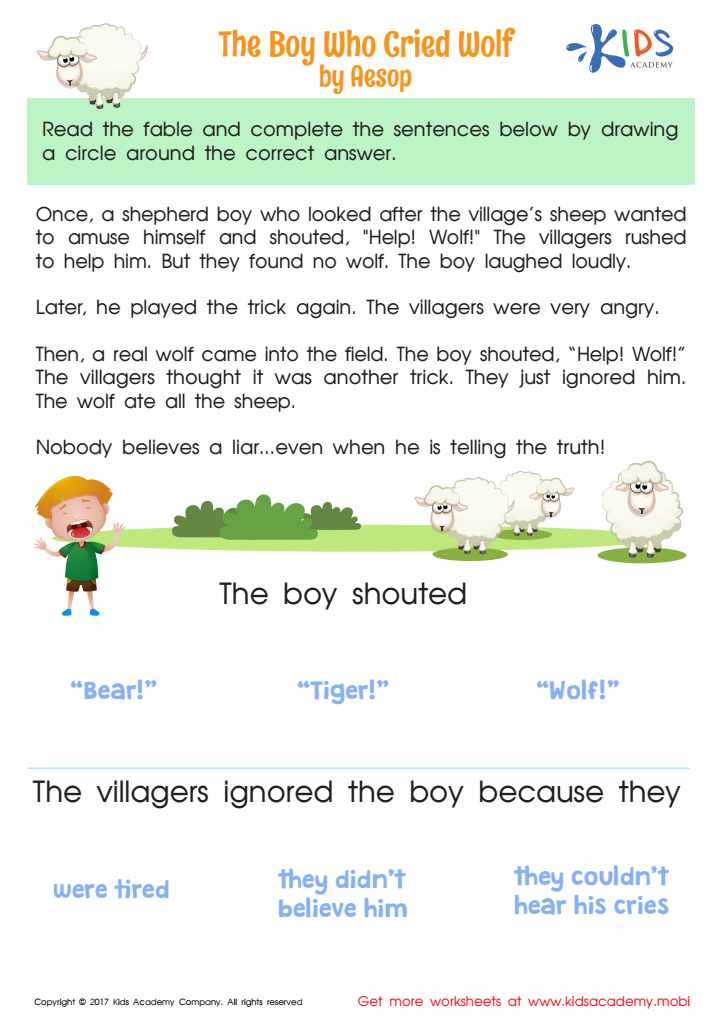
The Boy Who Cried Wolf Worksheet
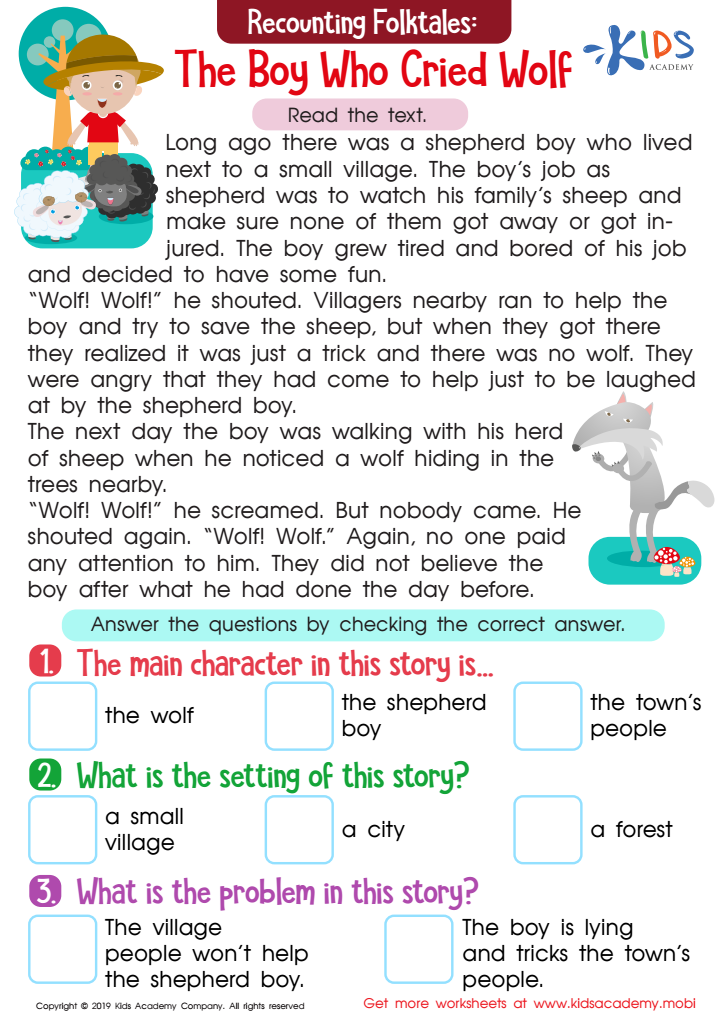
The Boy Who Cried Wolf Part 1 Worksheet







Parents and teachers should care about moral understanding through reading fiction for children aged 5-9 because it plays a crucial role in their emotional and social development. At this age, children are forming their sense of right and wrong, and fiction provides a safe space for them to explore moral dilemmas and different perspectives. Engaging with stories that highlight virtues such as empathy, kindness, and fairness helps young readers internalize these values in real-life situations.
Fiction also enables children to experience scenarios they might not encounter in their primary environments. Through characters and plots, they can learn to articulate feelings, understand the consequences of actions, and navigate relationships. This enhances critical thinking and problem-solving skills, which are vital for emotional intelligence.
Moreover, shared reading experiences foster conversations between children and adults about moral choices, allowing for rich discussions that reinforce understanding. These dialogues can strengthen the bond between parents or teachers and children, providing guidance in a developmentally relevant way.
By prioritizing moral lessons in fiction, caregivers contribute to creating empathetic, responsible individuals who are better equipped to interact positively with others and contribute to a compassionate society.








