Reading comprehension Rhyming Words Worksheets for Ages 5-9
10 filtered results
-
From - To
Boost your child's reading skills with our engaging Rhyming Words Worksheets designed for ages 5-9! These worksheets provide a fun and interactive way to improve reading comprehension through the enchanting world of rhymes. Perfect for early learners, each activity encourages phonemic awareness and vocabulary development while enhancing understanding of word relationships. By identifying and matching rhyming words, children will strengthen their reading fluency and accuracy. Our worksheets are tailored to create a love for reading, making learning both enjoyable and effective. Explore our collection today and watch your child's confidence and literacy skills soar!
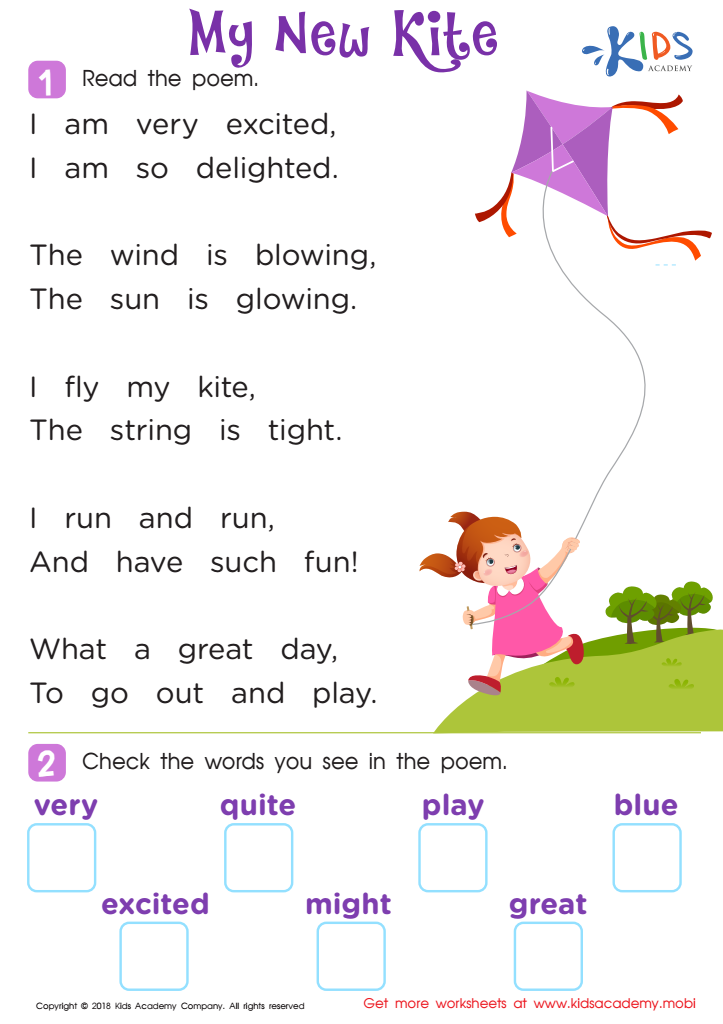
Poem: My New Kite Worksheet
 Assign to My Students
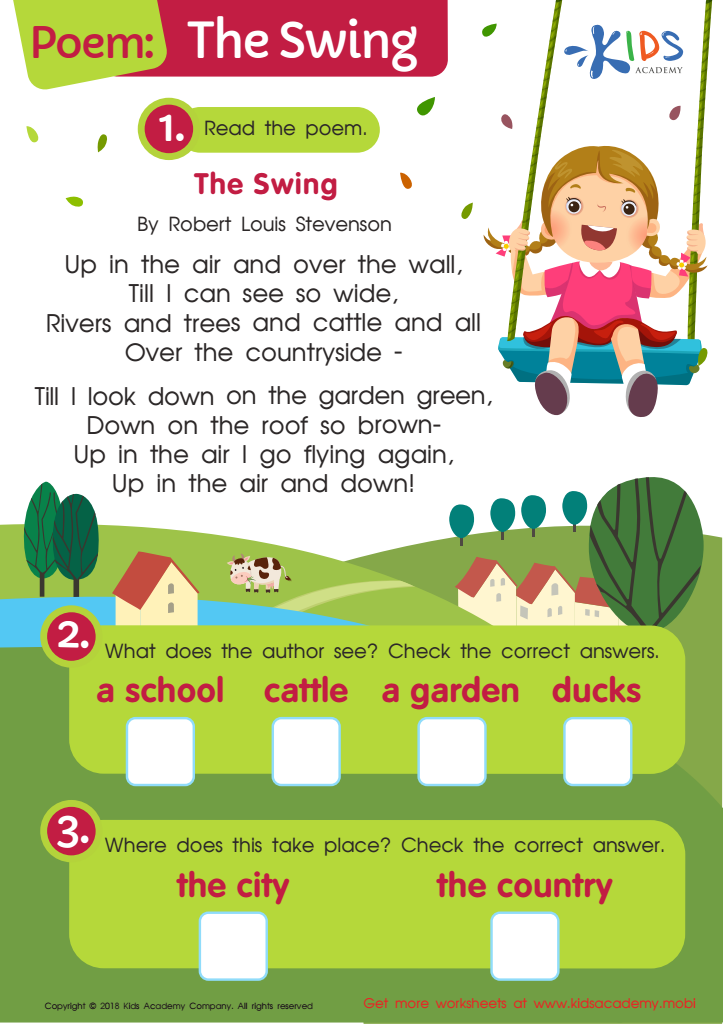
Poem: The Swing Worksheet
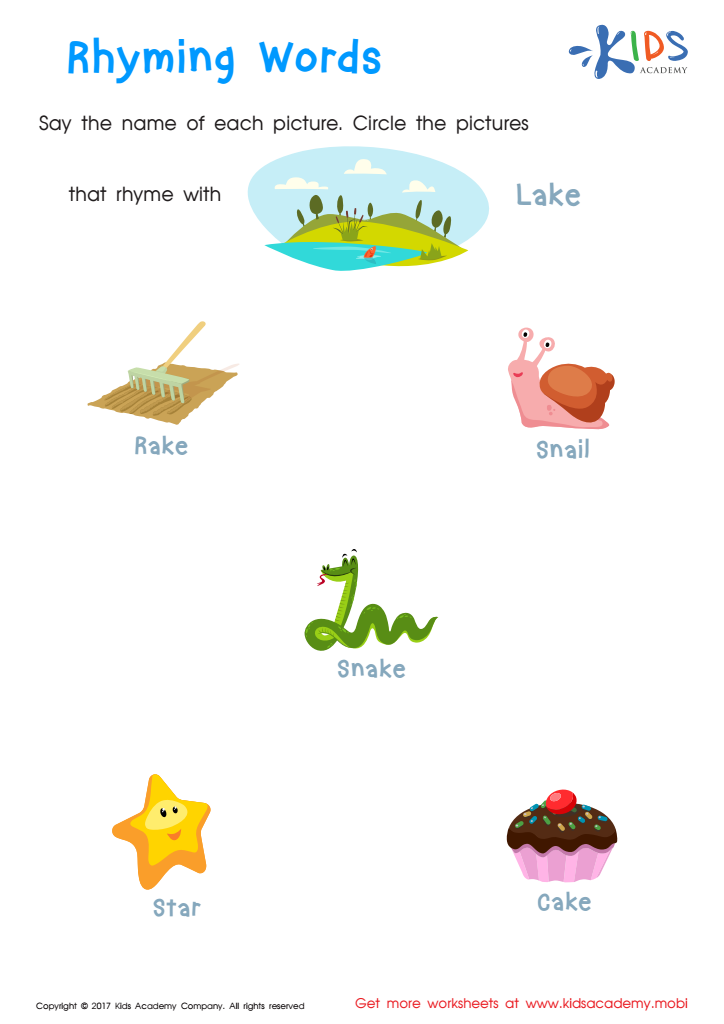
Rhyming Words Rhyming Worksheet
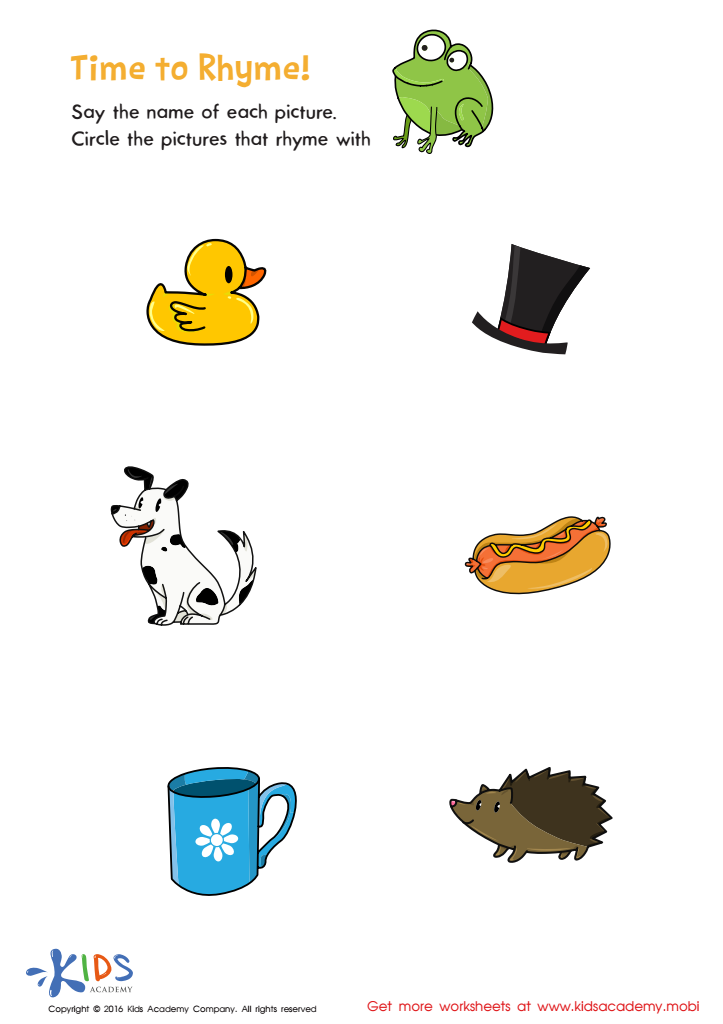
Rhyming Worksheet: Time to Rhyme Rhyming Worksheet
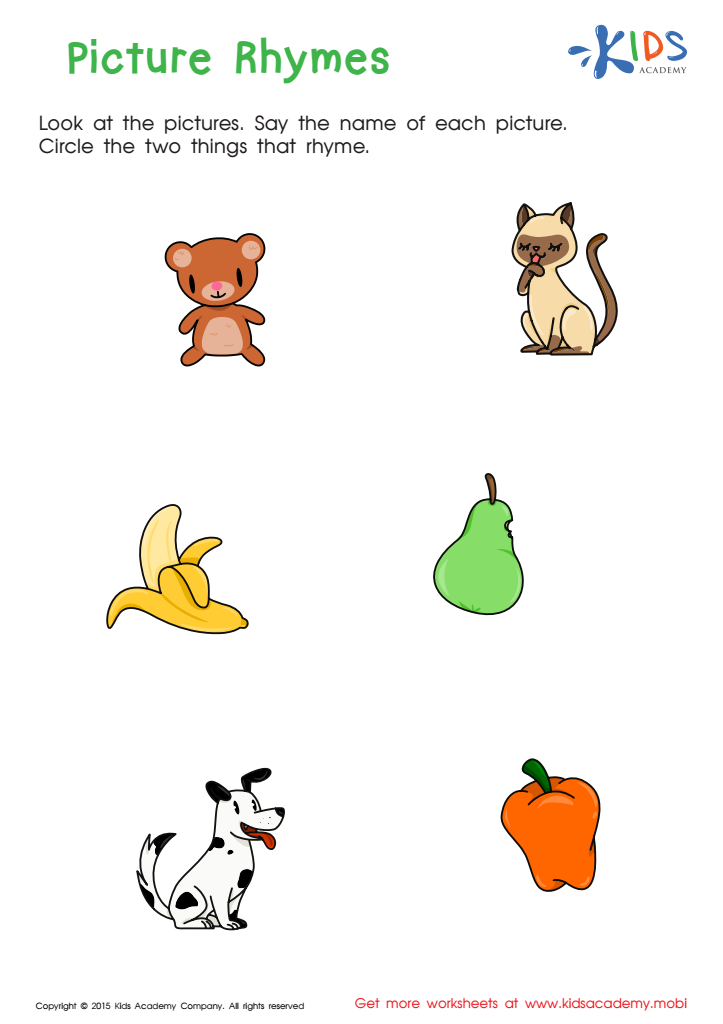
First Words: Picture Rhymes Worksheet
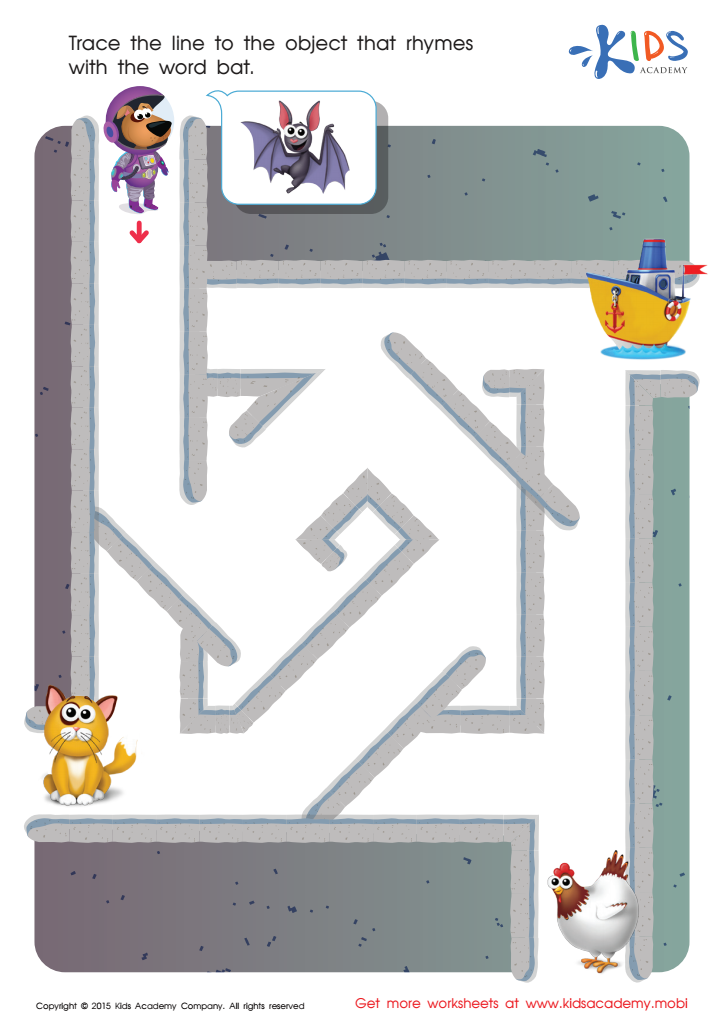
Bat Rhyming Words Worksheet
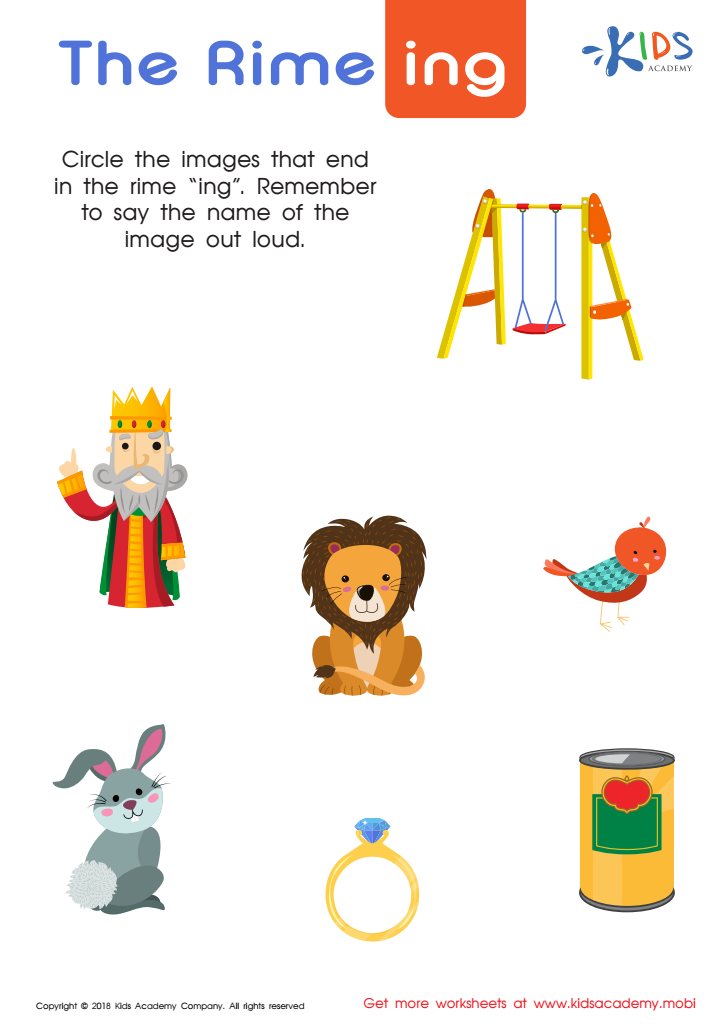
The Rime "ing" Worksheet
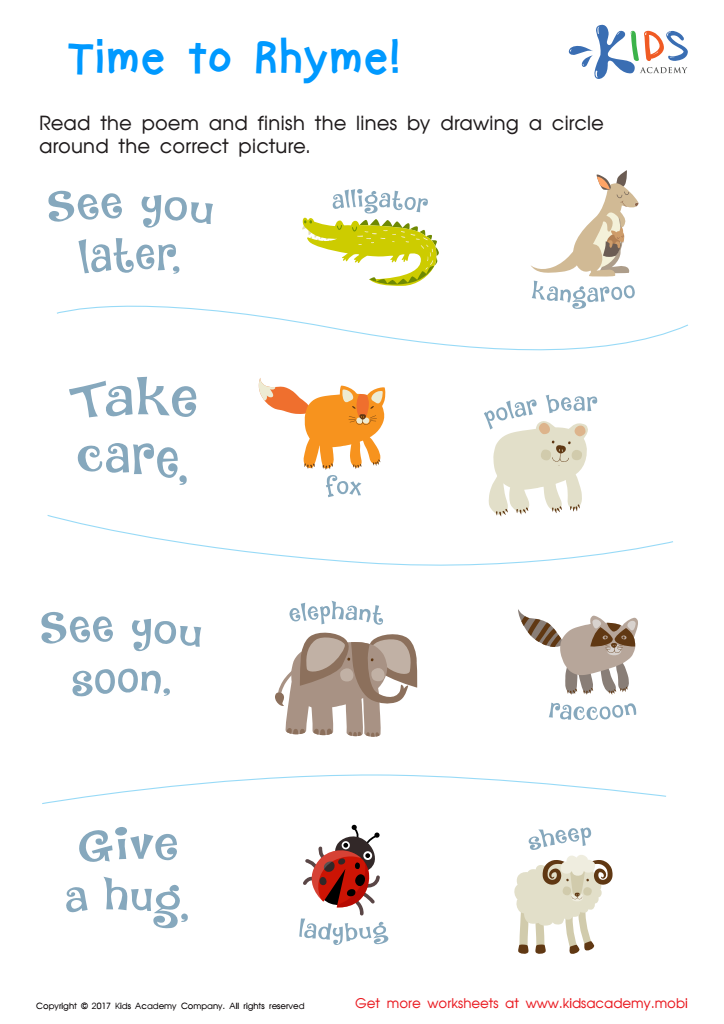
Time to Rhyme Rhyming Worksheet
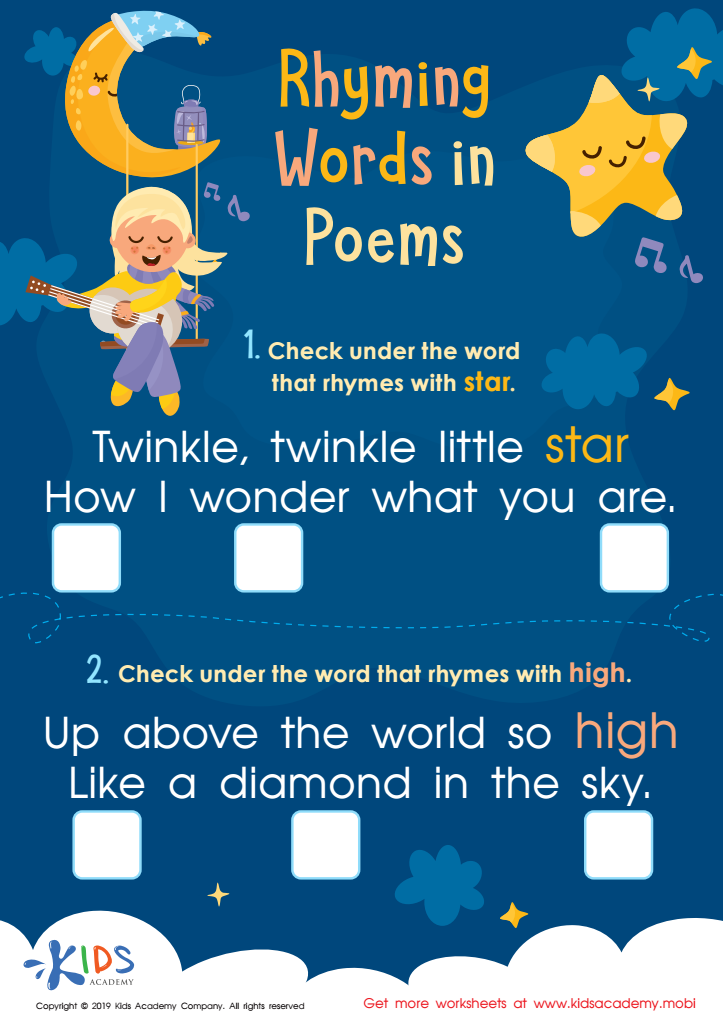
Rhyming Words in Poems Worksheet
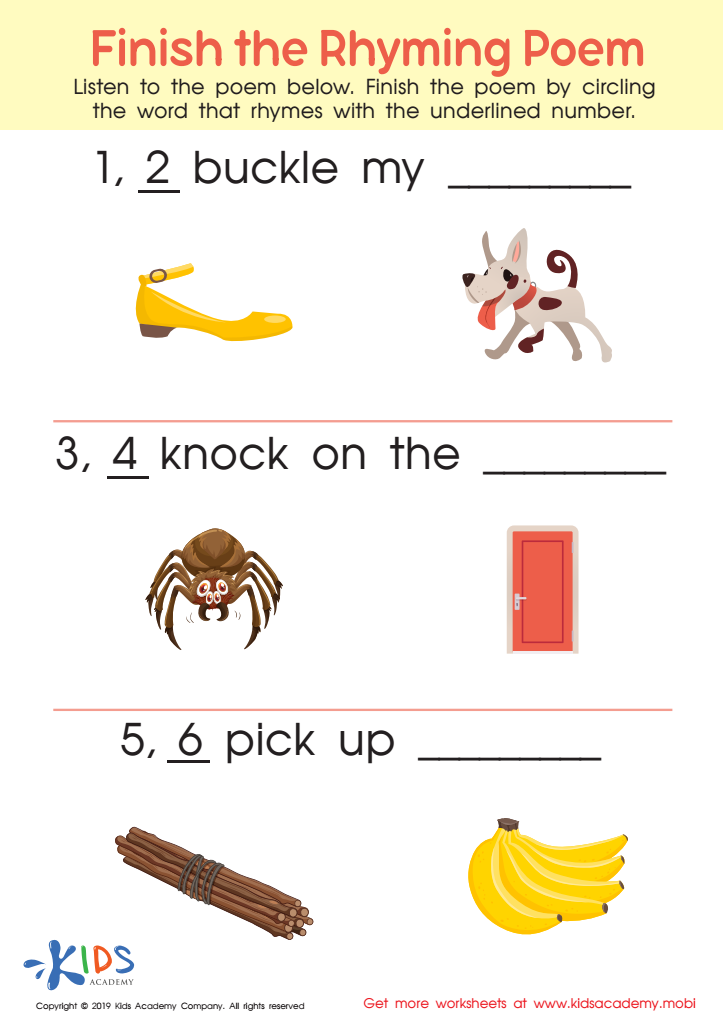
Finish Rhyming Poem Worksheet







Reading comprehension and rhyming skills are critical components of early literacy development for children aged 5-9. Understanding how to rhyme enhances phonemic awareness, which helps children break down and manipulate sounds in words, leading to improved reading and writing abilities. When kids can recognize rhyming patterns, they build a foundational skill that makes it easier for them to decode unfamiliar words and complexities in texts, fostering better comprehension.
Moreover, engaging with rhyming words makes reading enjoyable and interactive. Rhymes often capture children's attention, sparking their imagination and encouraging a love for language. This joy in reading is essential, as motivated readers are more likely to explore a variety of texts, enriching their vocabulary and critical thinking skills.
For parents and teachers, fostering a focus on reading comprehension and rhyming from an early age helps children develop not only their linguistic competencies but also their confidence. Early literacy skills are linked to greater academic success later on, making it crucial for figures in a child's life to encourage and support activities that promote these skills, such as reading aloud, singing songs, and engaging in playful word games. In closing, caring about these aspects of literacy lays a strong foundation for lifelong learning.








