Vocabulary Building Rhyming Words Worksheets for Ages 5-9
3 filtered results
-
From - To
Enhance your child's language skills with our engaging "Vocabulary Building Rhyming Words Worksheets for Ages 5-9." Perfectly crafted to make learning fun, these worksheets help children grasp the concept of rhyming, expand their vocabulary, and improve their reading skills. Designed for young learners, each activity encourages creativity and critical thinking, making education enjoyable. From matching pairs to fill-in-the-blank exercises, our worksheets cater to various learning styles. Empower your child to succeed in their reading journey by integrating these effective, well-structured resources into their daily learning routine.
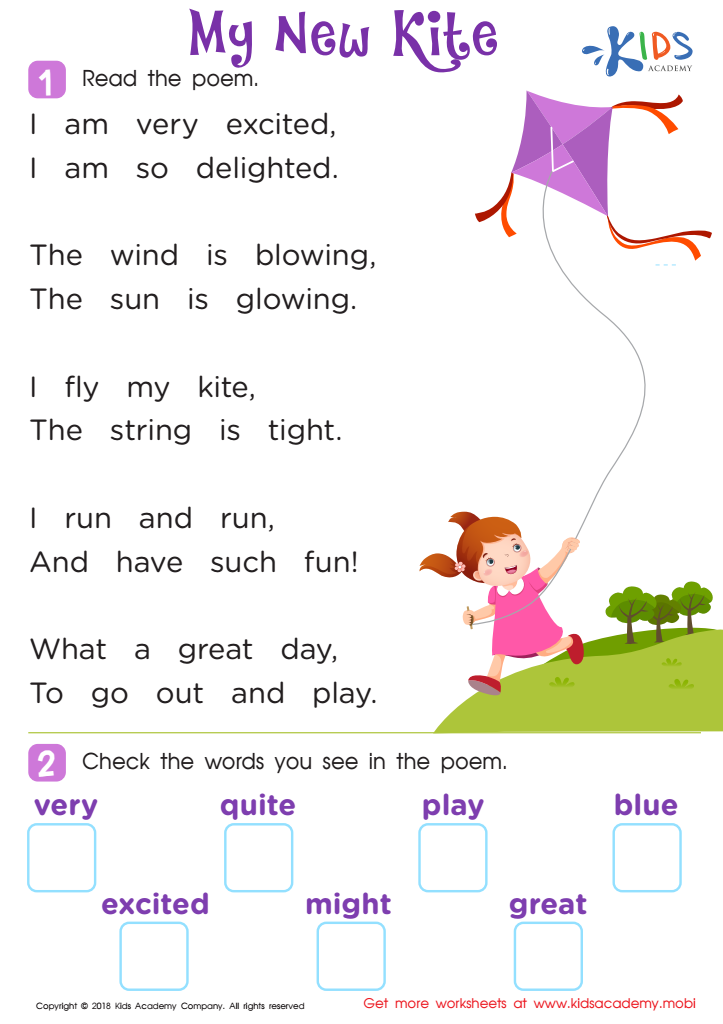
Poem: My New Kite Worksheet
 Assign to My Students
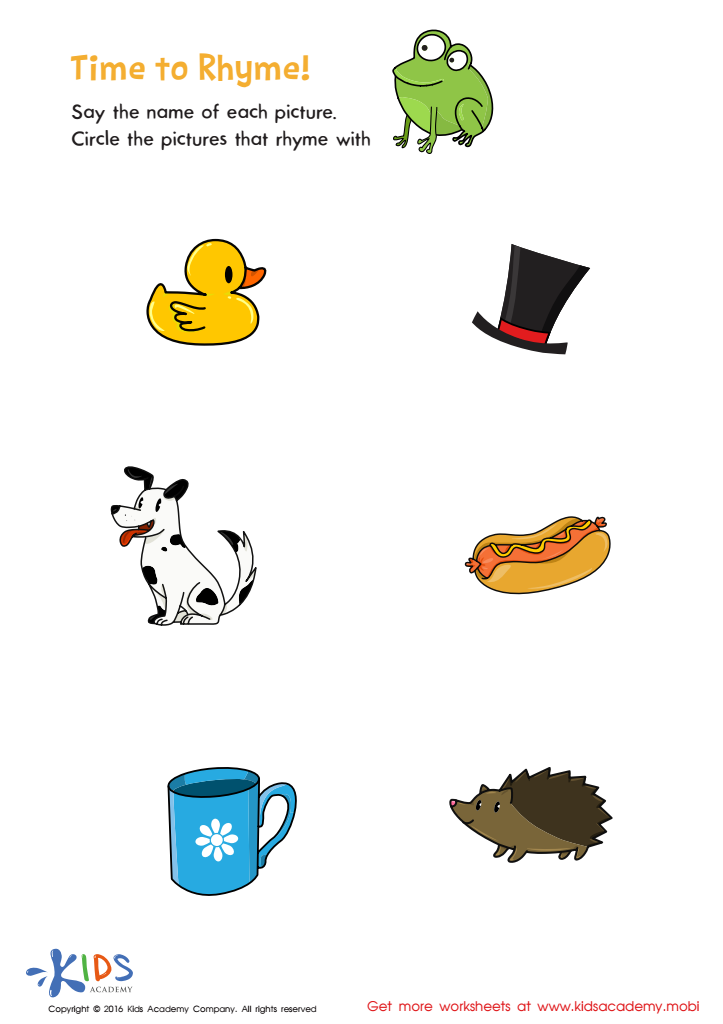
Rhyming Worksheet: Time to Rhyme Rhyming Worksheet
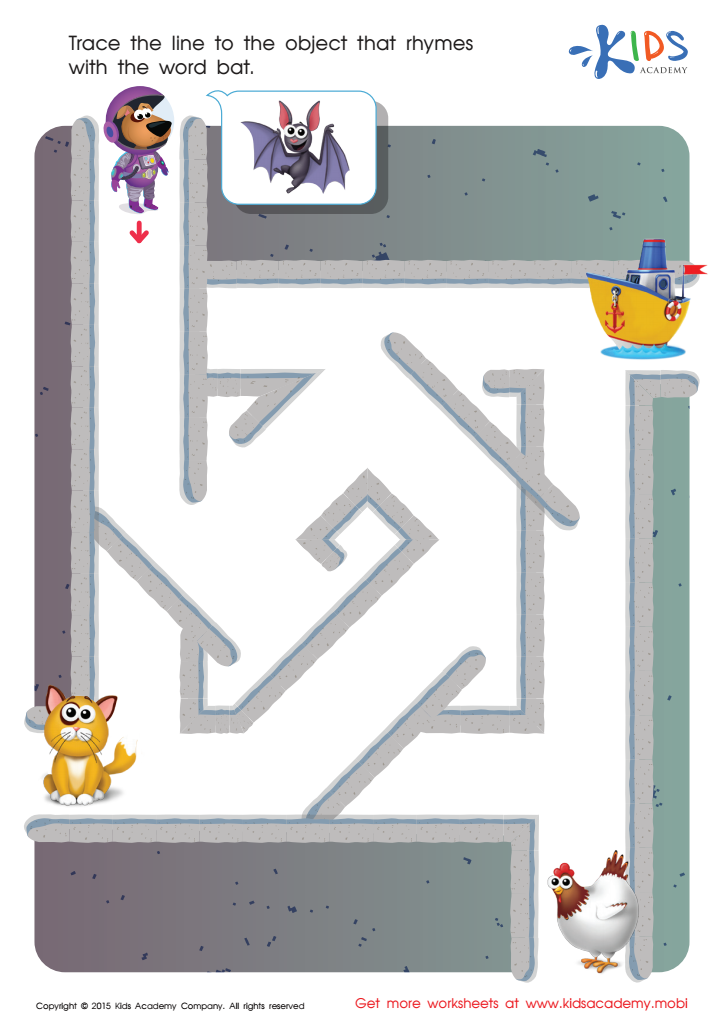
Bat Rhyming Words Worksheet


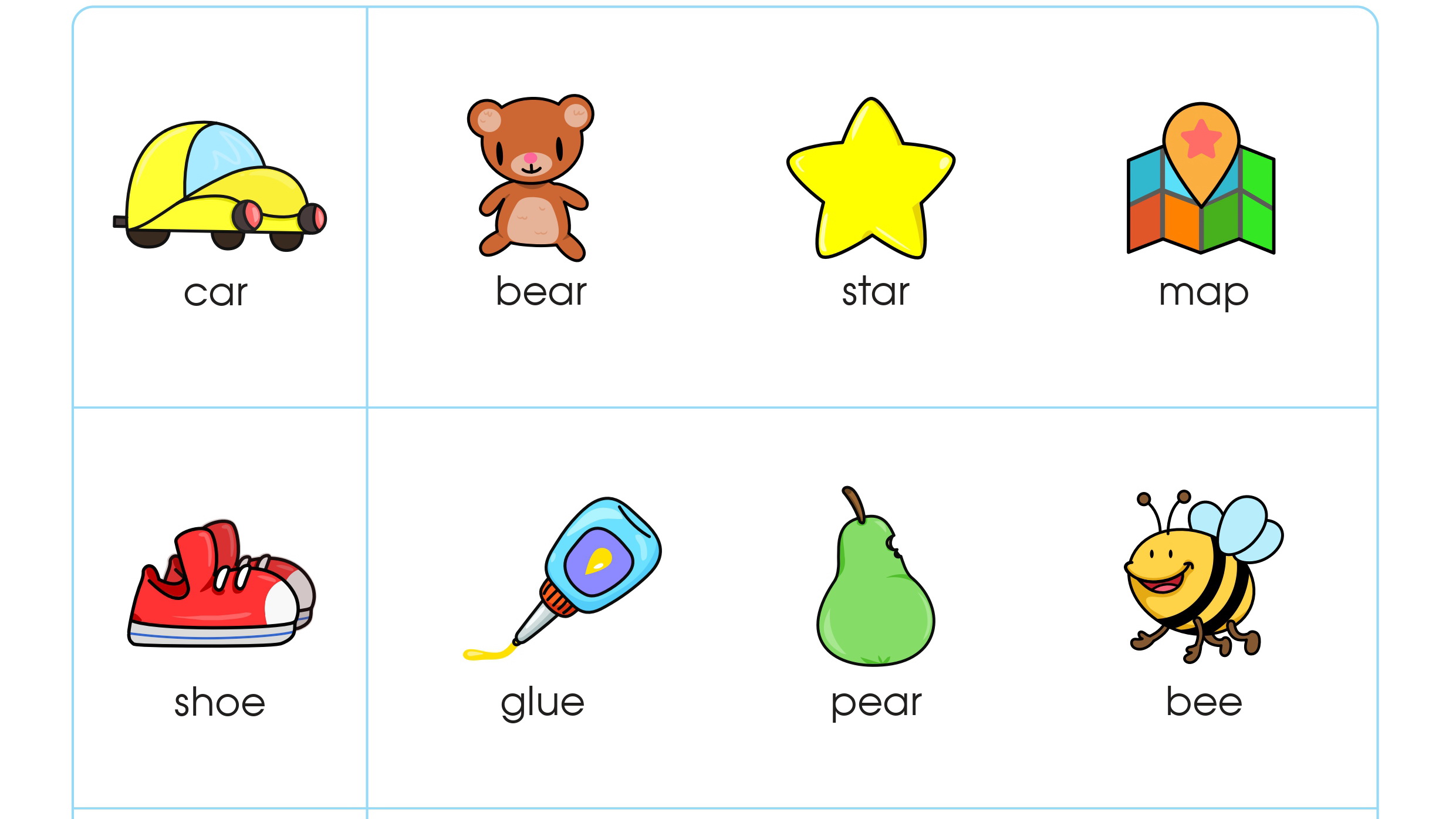





Vocabulary building with rhyming words is a crucial educational practice for children ages 5-9. This technique supports cognitive development in several meaningful ways. First, learning rhyming words enhances phonological awareness, an essential skill for reading. By recognizing and manipulating sounds, children can more easily decode and understand new words, laying a strong foundation for future literacy skills.
Secondly, rhyming activities make learning engaging and enjoyable. Rhymes and songs capture children's attention and make it easier for them to remember words. This emotional engagement facilitates better retention and helps build a positive attitude towards learning.
Moreover, a robust vocabulary aids in improving communication skills. As children learn new words, they become more equipped to express their thoughts and emotions, benefiting both social interactions and academic performance. Rich vocabulary also supports reading comprehension, which is critical for grasping new concepts across various subjects.
Additionally, playful use of rhyming words encourages creativity and helps children see patterns in language, fostering critical thinking skills. Therefore, vocabulary building through rhymes isn't just about memorizing words; it’s a comprehensive approach that aids in overall cognitive development, emotional well-being, and academic success. As such, both parents and teachers should incorporate rhyming activities into their educational practices.








