Enhancing observation skills Physical Science Worksheets for Ages 5-9
3 filtered results
-
From - To
Discover our "Enhancing Observation Skills Physical Science Worksheets" designed specifically for children ages 5-9! These engaging worksheets help young learners cultivate essential observation skills through hands-on activities and interactive exercises. By exploring concepts such as matter, energy, and physical properties, children will develop a deeper understanding of their surroundings. Our thoughtfully crafted activities encourage critical thinking and foster a love for science while making learning fun. Perfect for both classroom and home use, these printable resources provide educators and parents with valuable tools to support children's scientific growth. Enhance your child's observational abilities today—let the exploration begin!
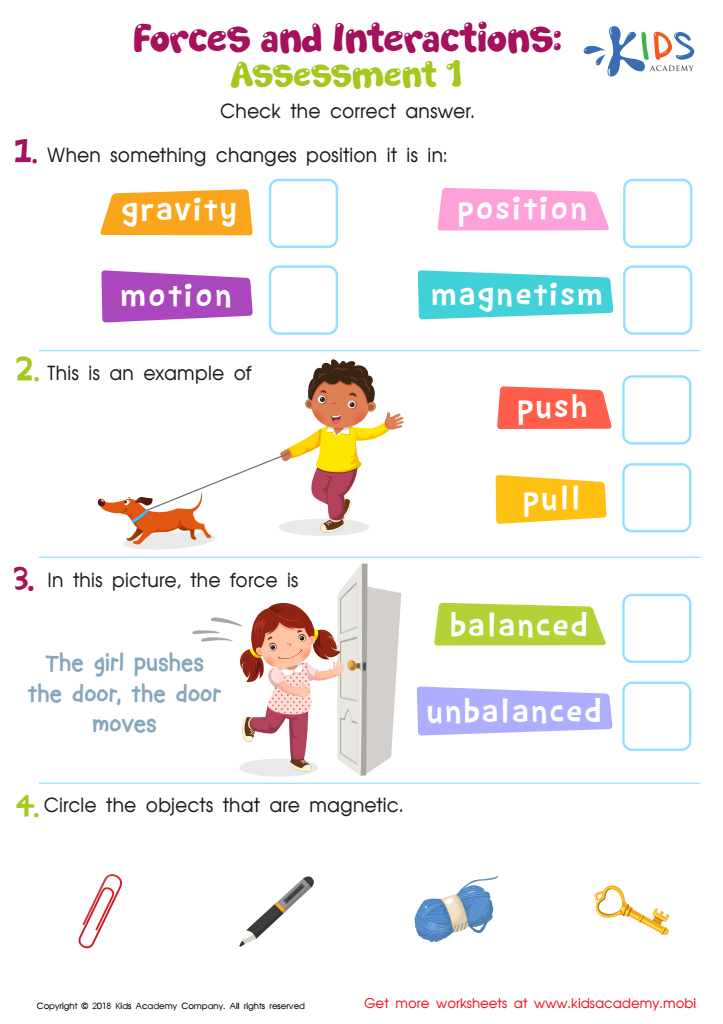
Forces and Interactions Printable
 Assign to My Students
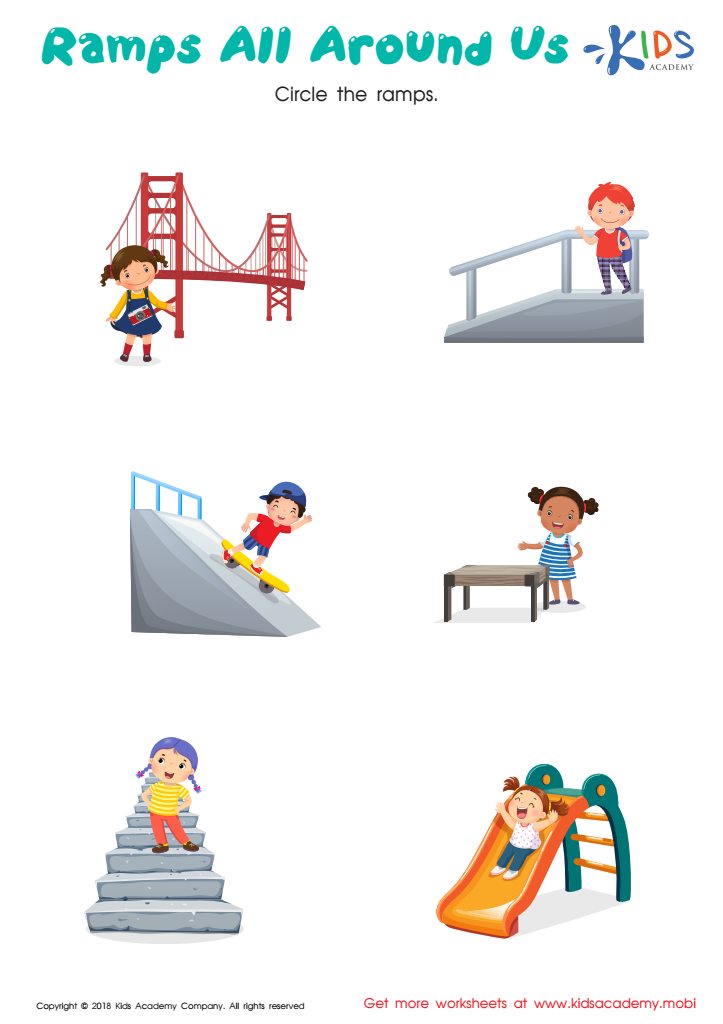
Ramps All Around us Worksheet
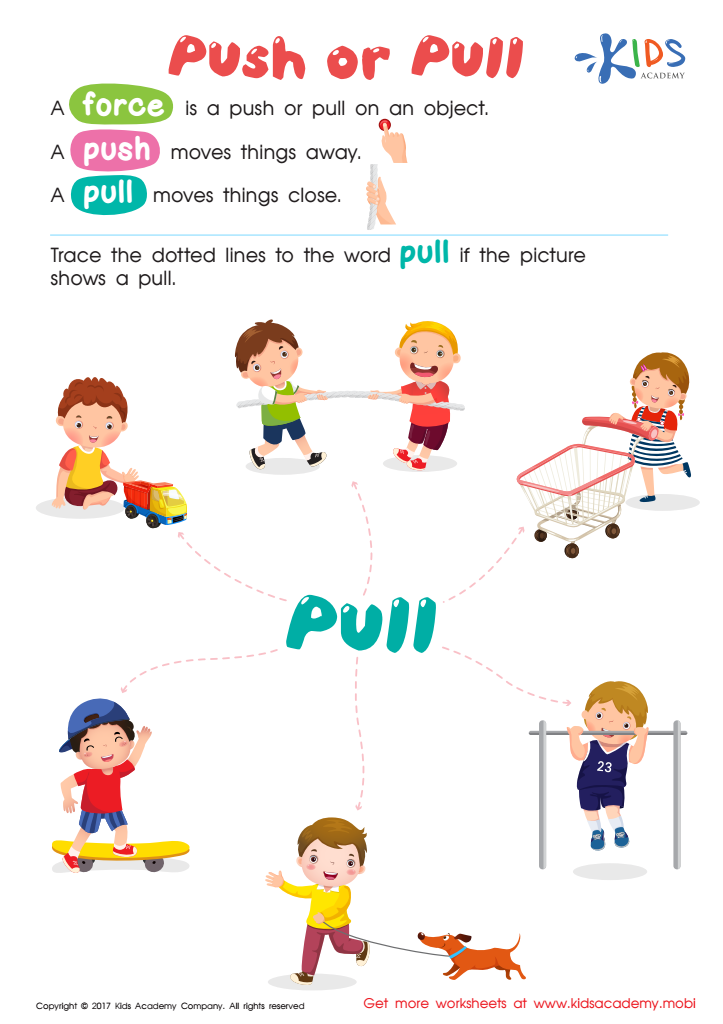
Pull or Push Worksheet








Enhancing observation skills in Physical Science for ages 5-9 is crucial for several reasons. First, young children are naturally curious about the world around them; fostering their observation skills encourages this curiosity, leading to a deeper understanding of scientific concepts. By teaching children how to carefully observe their surroundings, teachers and parents can help them develop critical thinking skills and the ability to analyze data – foundational attributes for scientific inquiry.
Furthermore, observation is a fundamental aspect of the scientific method. Children who learn to observe effectively will find it easier to formulate hypotheses, conduct experiments, and draw conclusions. In turn, this foundational skill can boost their confidence in problem-solving and make them more engaged learners.
Moreover, enhancing observation skills supports cross-curricular learning, tying in language development, art, and mathematics. When children describe their observations, out loud or in writing, they enhance verbal and communicative abilities.
Lastly, instilling these skills at a young age promotes a lifelong love of science and learning, nurturing informed individuals who can make sense of complex information, contribute to discussions on scientific issues, and develop a more profound respect for the environment and the world around them.







