Understanding light sources Physical Science Worksheets for Ages 5-9
6 filtered results
-
From - To
Discover the fascinating world of light with our "Understanding Light Sources" Physical Science Worksheets designed for ages 5-9. These engaging and educational printables help young learners explore different sources of light and understand their importance in everyday life. With fun activities, children will differentiate between natural and artificial light, enhancing their scientific curiosity. Perfect for classroom use or at-home learning, our worksheets align with educational standards, nurturing critical thinking, and observational skills. Spark your child's interest in science with these illuminating resources from Kids Academy and bring the wonder of light into their learning journey.
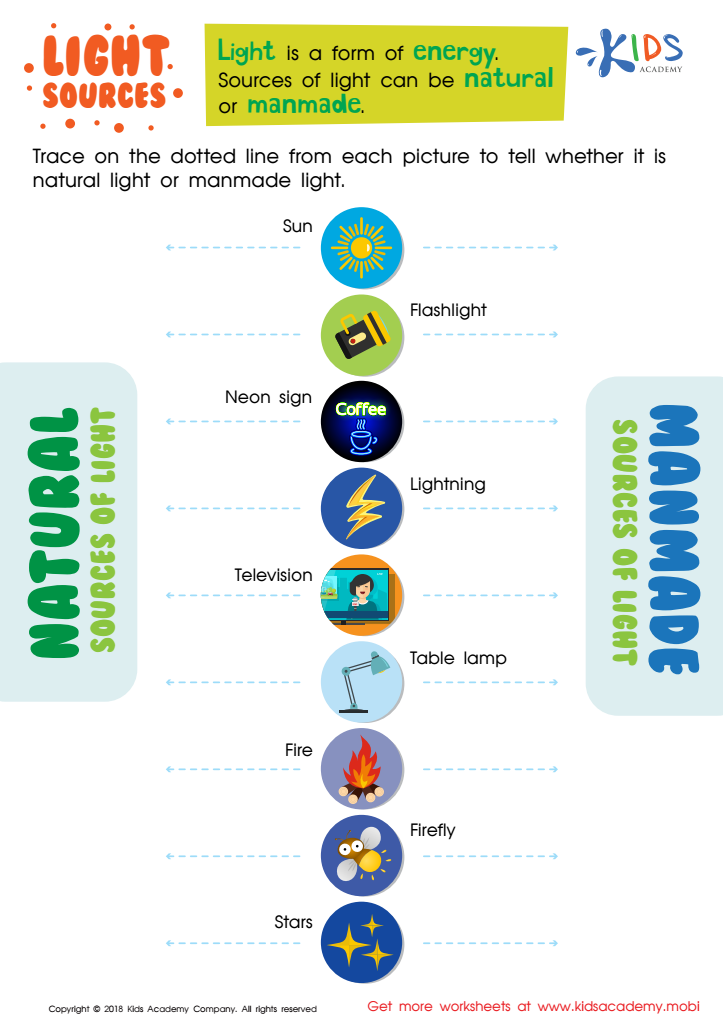
Natural and Manmade Light Sources Worksheet
 Assign to My Students
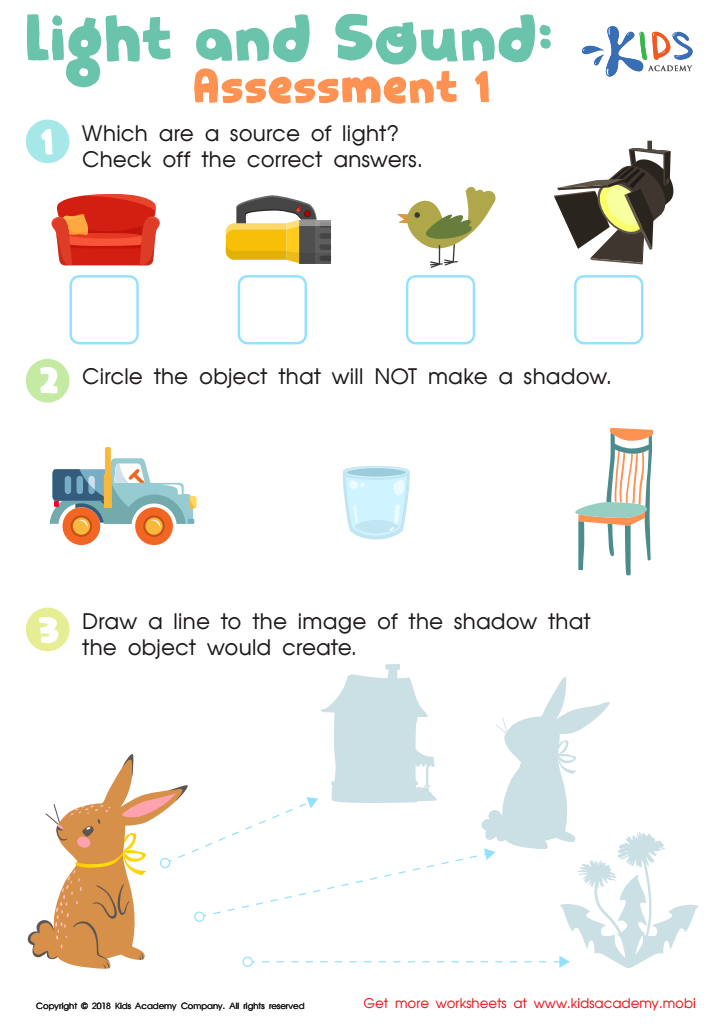
Light and Sound: Assessment 1 Worksheet
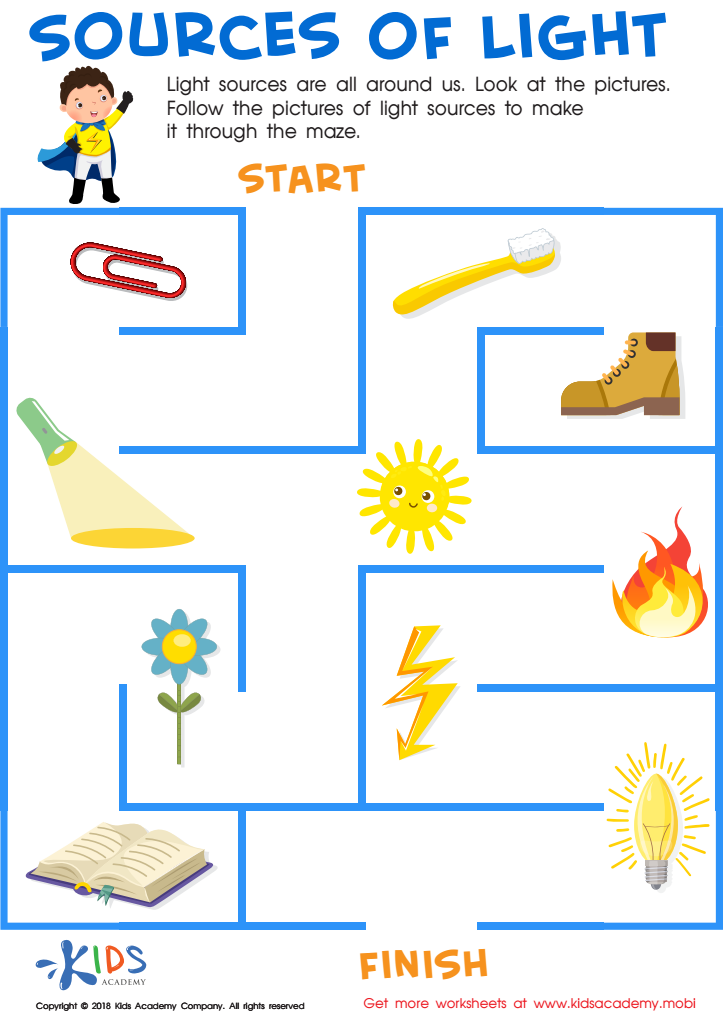
Sources of Light Worksheet
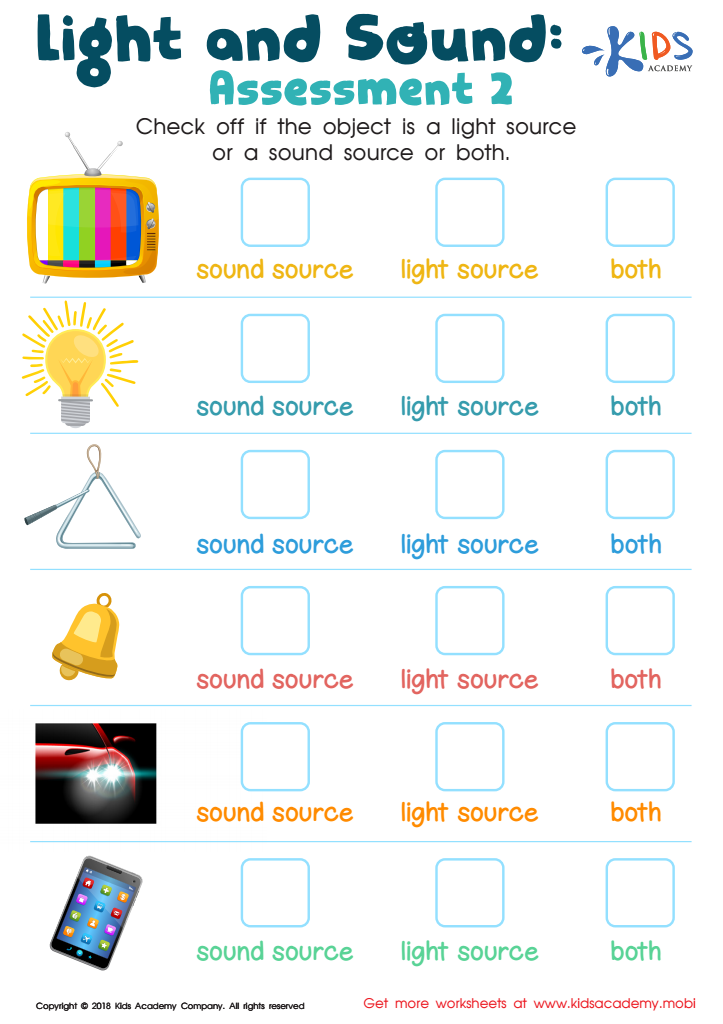
Light and Sound: Assessment 2 Worksheet
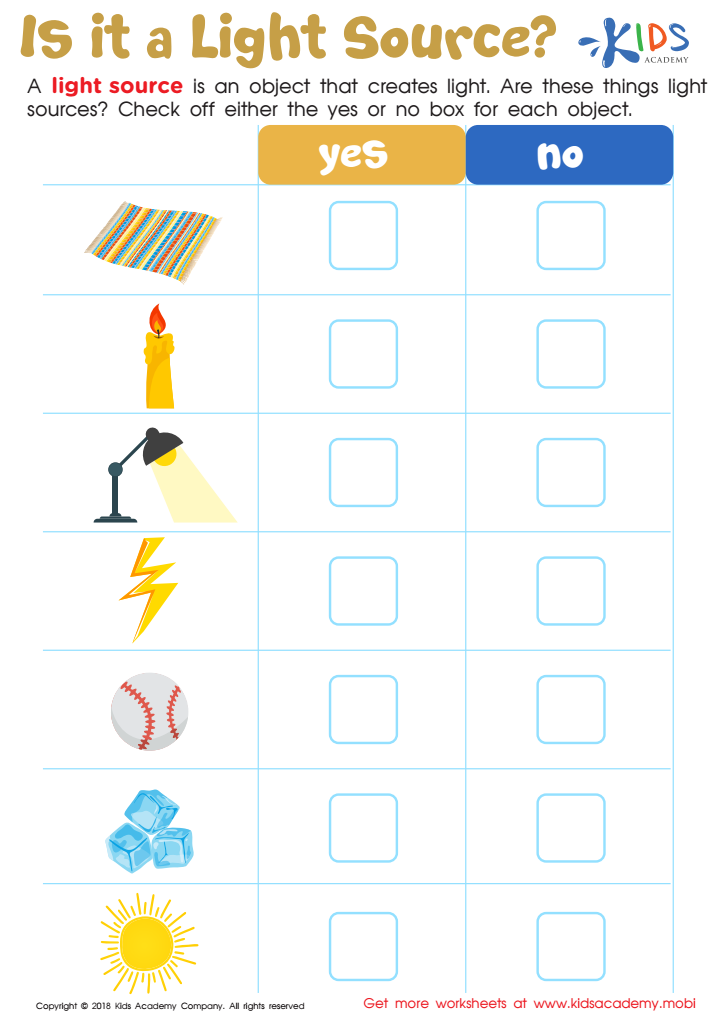
Is It a Light Source? Worksheet
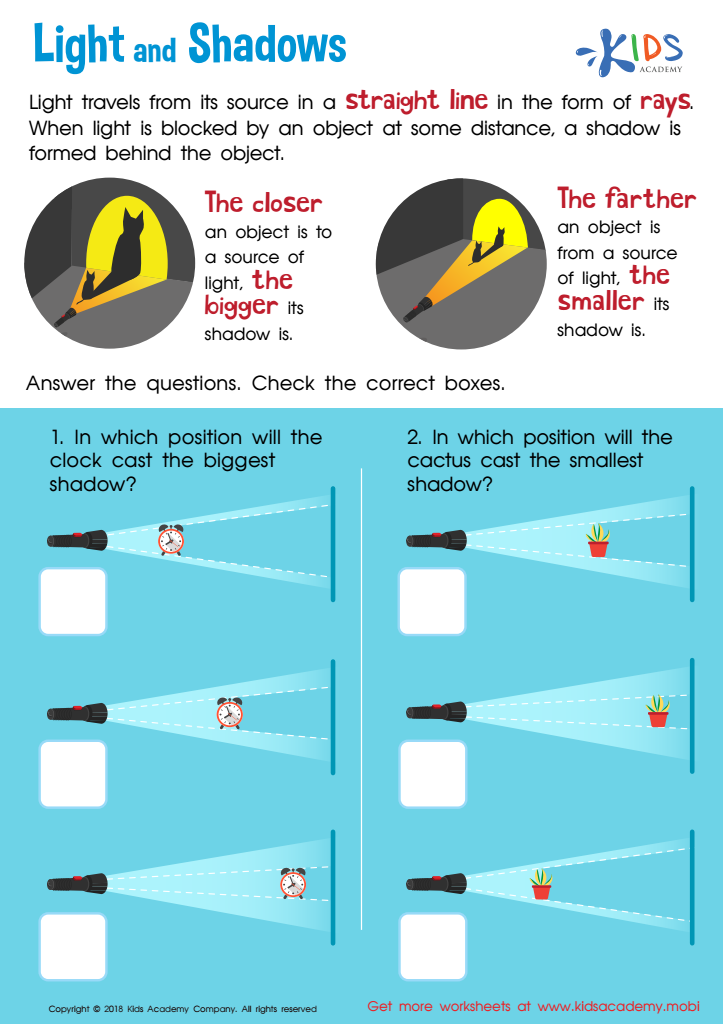
Light and Shadow Worksheet for Grade 3





Understanding light sources in physical science offers foundational knowledge that benefits young children in multiple ways. For parents and teachers, fostering an interest in this area can significantly enhance a child's cognitive and observational skills. Firstly, learning about different light sources—natural like the sun or artificial like a lamp—helps kids grasp essential concepts about the world around them. This understanding aids their comprehension of daily phenomena, such as why daylight changes or how a flashlight works.
Secondly, these lessons encourage critical thinking and curiosity. Children become natural investigators as they explore questions like why some objects glow in the dark or how shadows form. Engaging in simple experiments, such as using prisms to break light into colors or creating shadow puppets, make abstract concepts tangible and exciting.
Moreover, knowledge of light has practical safety implications. Understanding that staring directly at the sun can harm their eyes, or knowing why reflective gear is important in low light, fosters safety awareness.
Lastly, this early exposure to physical science lays the groundwork for future STEM learning. The basic principles they learn now will serve as building blocks for more complex scientific and technological concepts later on.
In essence, by incorporating light source education into early learning, parents and teachers can ignite a lifelong interest in science, ensure safety, and develop essential cognitive skills.







