
Understanding moon phases Space Worksheets for Ages 5-9
3 filtered results
Difficulty Level
Grade
Age
-
From - To
Subject
Activity
Standards
Discover an engaging, educational resource with our "Understanding Moon Phases Space Worksheets for Ages 5-9." Perfect for young learners, these worksheets make learning about the moon phases fun and interactive. Through hands-on activities and colorful diagrams, kids will grasp concepts like new moon, full moon, and everything in between. Designed to boost observational skills and scientific understanding, these worksheets cater to different learning styles and ensure a comprehensive exploration of lunar cycles. Ideal for classroom use or homeschooling, our moon phases series sparks curiosity and fosters a love for space science among children.
Favorites
With answer key
Interactive
Moon Journal Worksheet
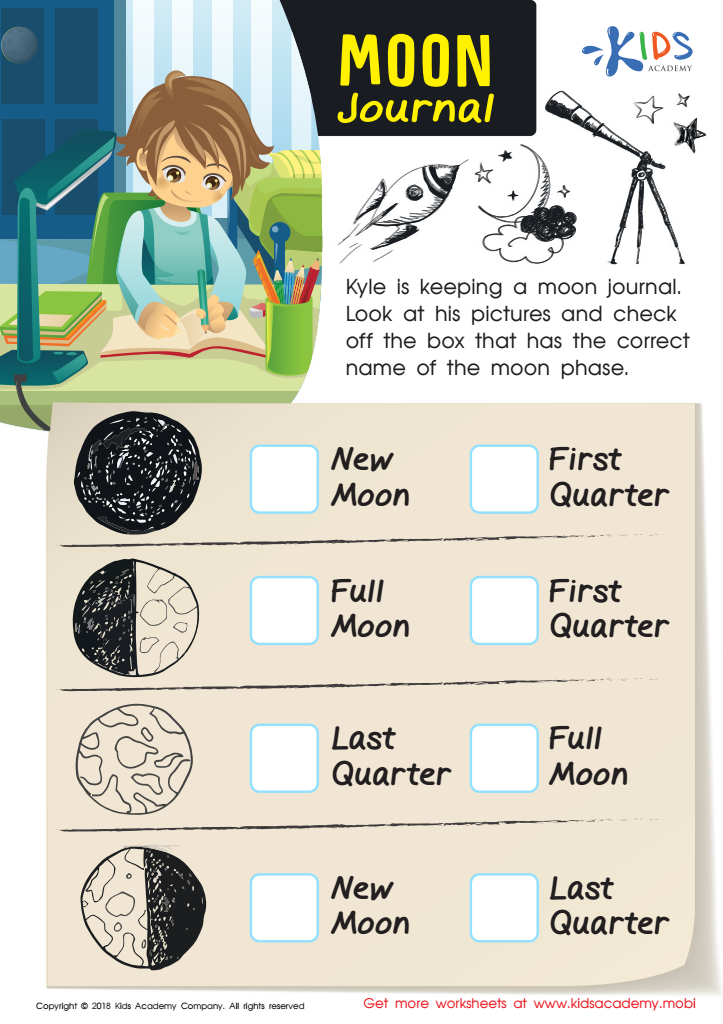
Observe the moon and its 8 phases with your child by downloading this free PDF worksheet from Kids Academy! Review the moon phases with them then help them label Kyle's moon journal. Select the right moon phase for each picture to complete the page!
 Assign to My Students
Moon Journal Worksheet
Worksheet
Phases of The Moon Worksheet
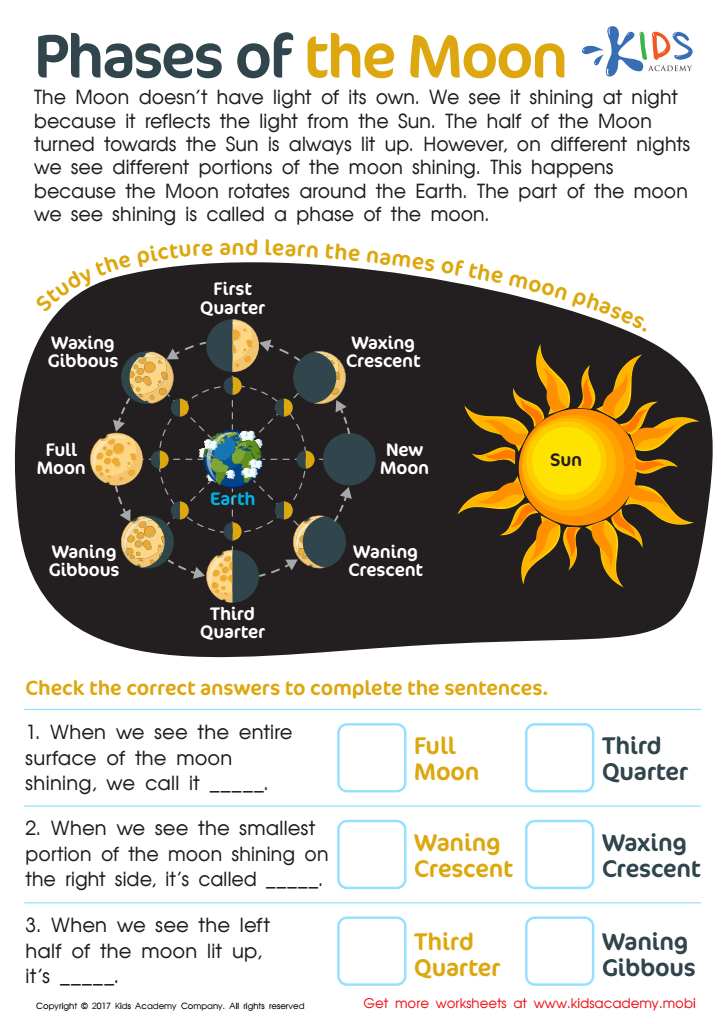
It'll show kids the fascinating phases and journey the moon takes around Earth. They'll be amazed to learn it's not always shining!
Phases of The Moon Worksheet
Worksheet
Moon Phases Worksheet
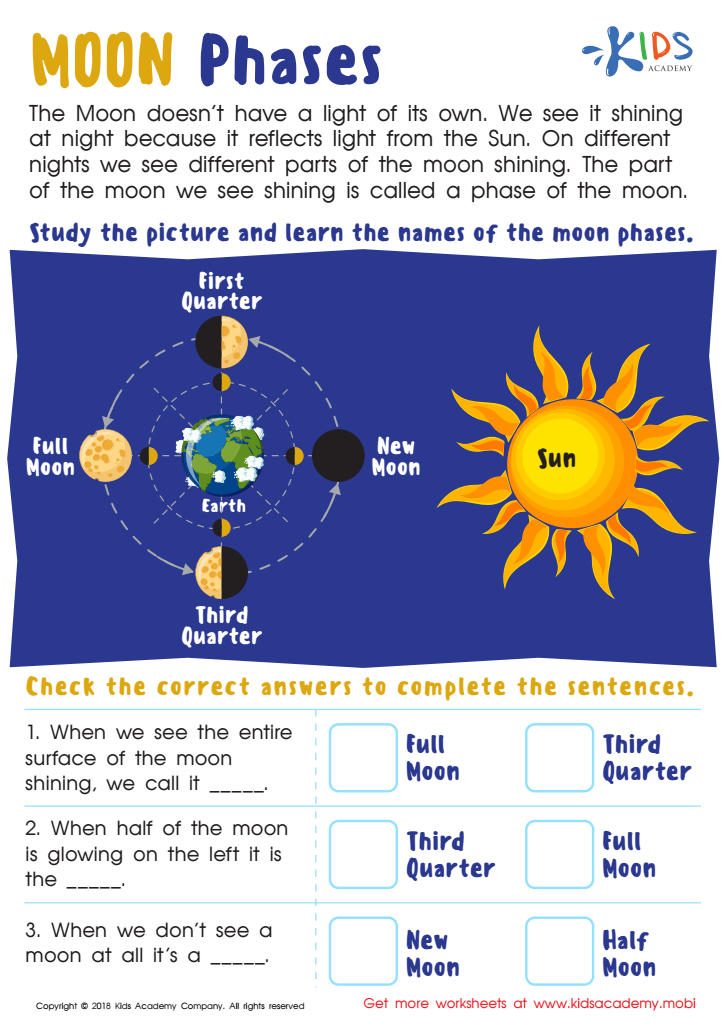
Gaze up at the night sky and the moon's appearance may change from night to night. Encourage your child to learn more about the sun, the moon, and space with this science worksheet. Have them read the text then study the picture. Finally, read the sentences and check the answers to identify the moon's phases.
Moon Phases Worksheet
Worksheet
Join Kids Academy for Free
Who is primarily going to use this learning content?






Understanding moon phases is important for children ages 5-9 because it helps spark curiosity and foster a love for learning about the natural world. At this age, children are naturally inquisitive and tend to have vivid imaginations. Learning about the moon and its phases connects them to real, observable astronomical phenomena, making science tangible and exciting.
From an educational perspective, discussing moon phases can enhance various academic skills. For example, it offers a practical way to introduce basic concepts of science, such as observation, cycles, and patterns. This foundational knowledge encourages critical thinking and inquiry-based learning.
Furthermore, understanding moon phases can also integrate with subjects like math and literacy. Children can count days, mark calendar cycles, and even improve their descriptive vocabulary by discussing the appearance of the moon. Art activities like drawing or crafting moon phases can nurture creativity and fine motor skills.
Moreover, these lessons encourage outdoor activities, like moon-gazing, fostering a connection with nature and promoting family bonding. Parents and teachers who invest time in teaching this subject help build a holistic educational experience that blends cognitive skills with social-emotional learning. Such comprehensive engagement prepares children to be observant, knowledgeable, and appreciative of the world around them.







