Map reading skills Geography Worksheets for Ages 5-9
7 filtered results
Difficulty Level
Grade
Age
-
From - To
Subject
Activity
Standards
Enhance your child's geographical knowledge with our engaging map reading skills geography worksheets designed for ages 5-9. These interactive worksheets make learning fun by teaching young learners how to interpret maps, recognize symbols, identify cardinal directions, and understand scales. Our resource empowers kids to develop critical thinking and spatial awareness while exploring different types of maps, from local to world maps. Perfect for both classroom and home use, each worksheet comes with colorful illustrations and easy-to-follow instructions to support your child's educational journey. Start navigating the world of maps today and watch your child’s confidence grow!
Favorites
With answer key
Interactive
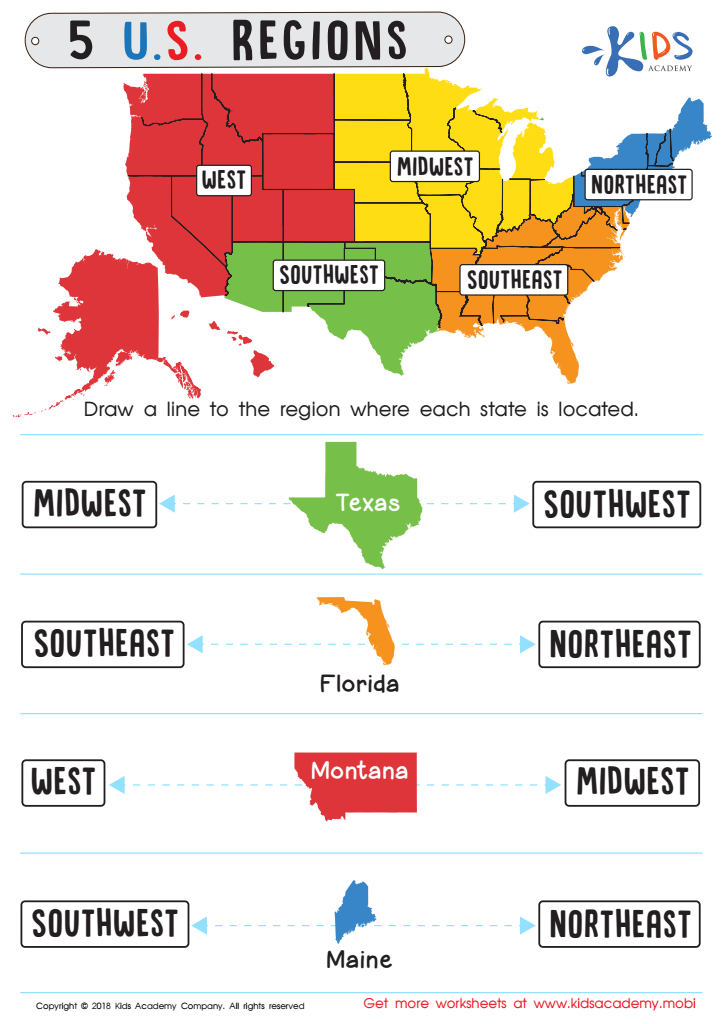
5 U.S. Regions Worksheet
Familiarize students with states & capitals in your country before starting. Look at the map and ask kids to name some states. Then have them draw a line to the region each state is located in. This'll help them recognize the different places and make the exercise easier.
5 U.S. Regions Worksheet
Worksheet
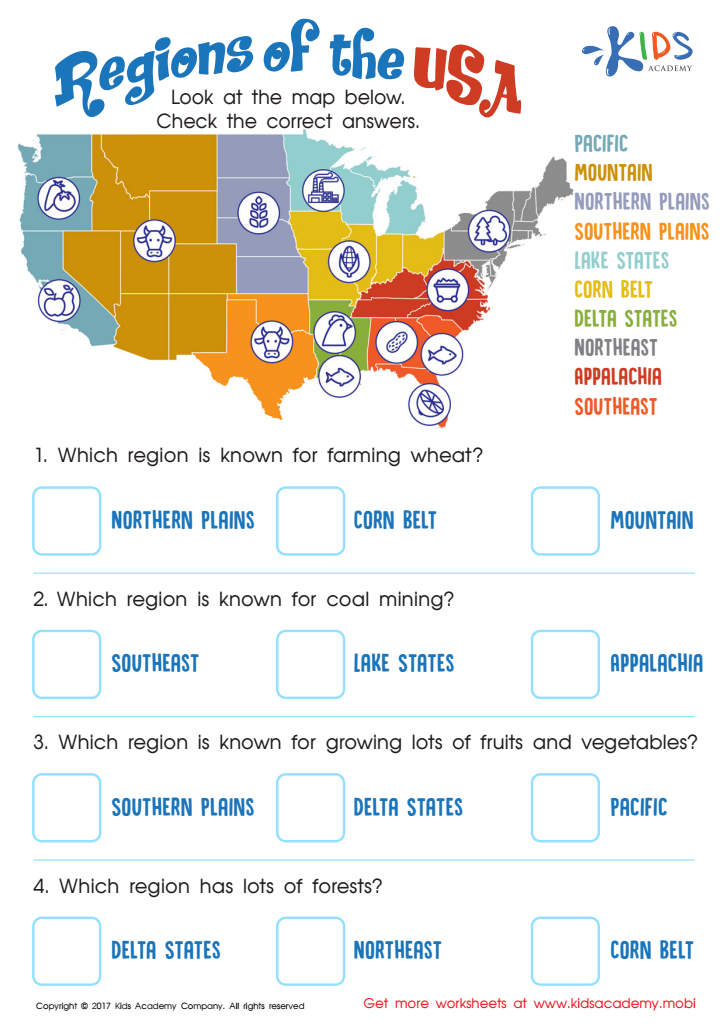
Regions of the USA Worksheet
Help your child explore the US with this regions of the United States worksheet! They'll learn about the diverse cultures, climates and purposes of each region. Make geography and US history fun with this educational exercise!
Regions of the USA Worksheet
Worksheet
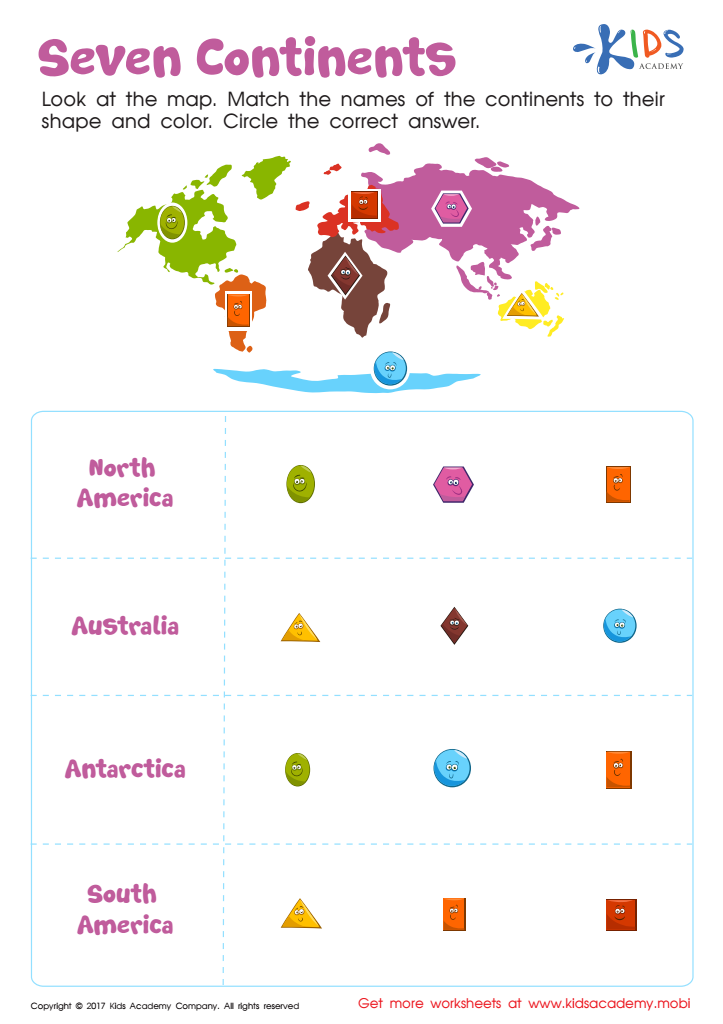
Seven Continents Worksheet
Geography teaches kids about the world! Encourage exploration with a seven continents worksheet - it'll help your child identify each continent using fun shapes.
Seven Continents Worksheet
Worksheet
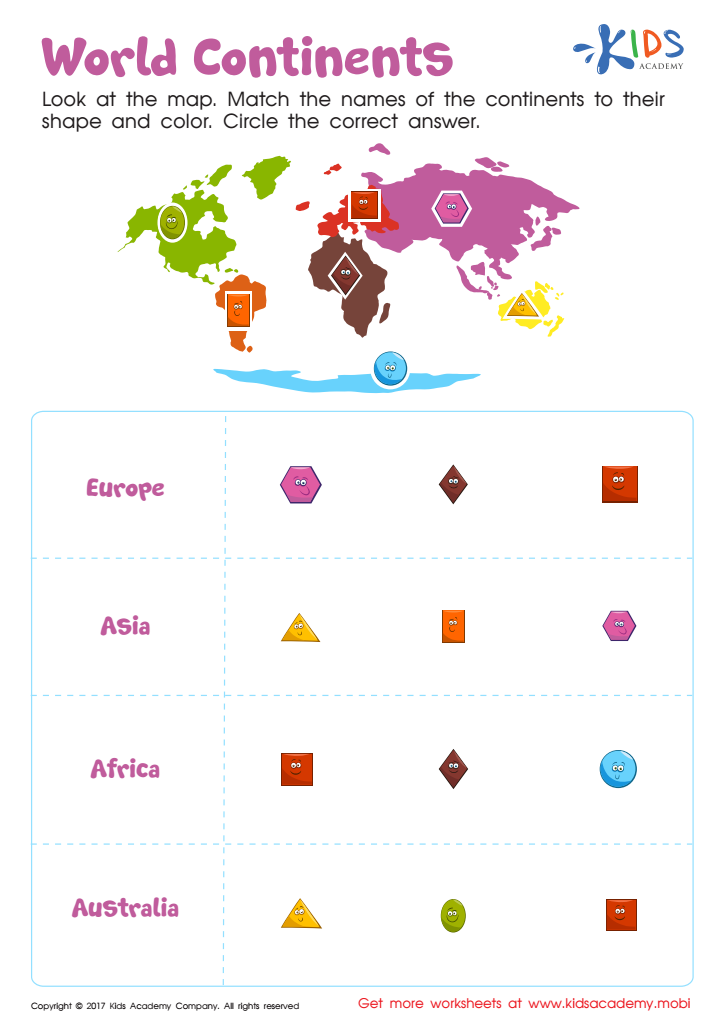
World Continents Worksheet
Help expand your child's knowledge of the world with this fun worksheet! It features goofy shapes to identify each continent, making learning the seven continents fun and memorable.
World Continents Worksheet
Worksheet
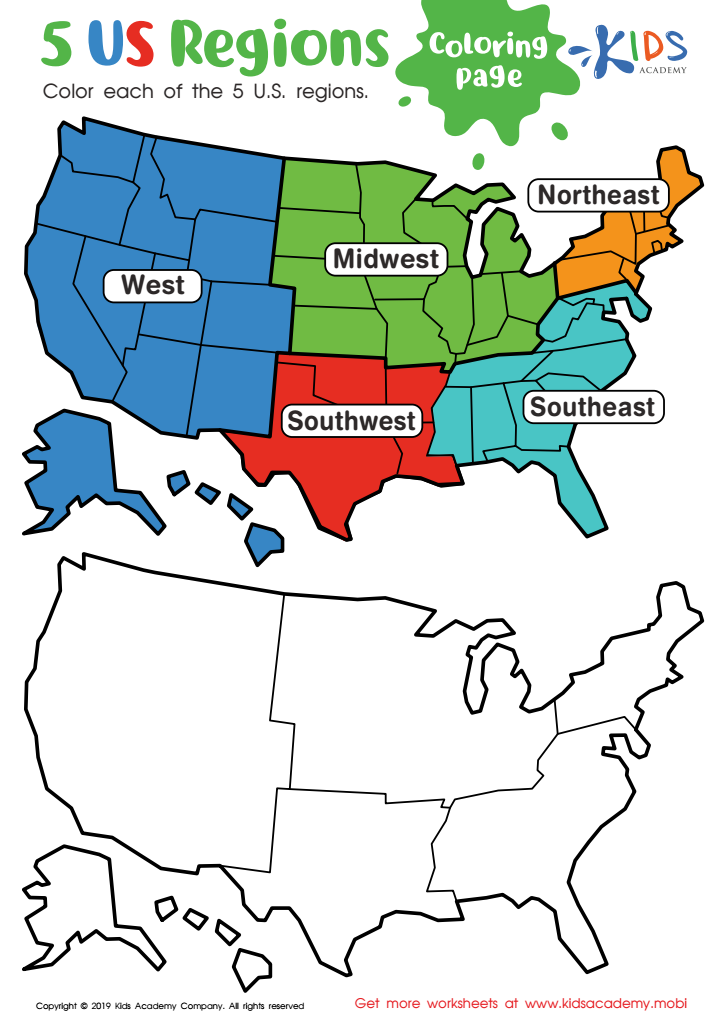
US Regions Coloring Page Worksheet
Our great nation is split into five distinct regions: Southeast, Southwest, West, Midwest, and Northeast. Each is known for its own special offerings and states. Let your kids have fun learning about the regions with a coloring activity! It's a great way for them to understand where each region stands on the map.
Download (PDF)
 Assign to My Students
Assign to My Students
US Regions Coloring Page Worksheet
Worksheet
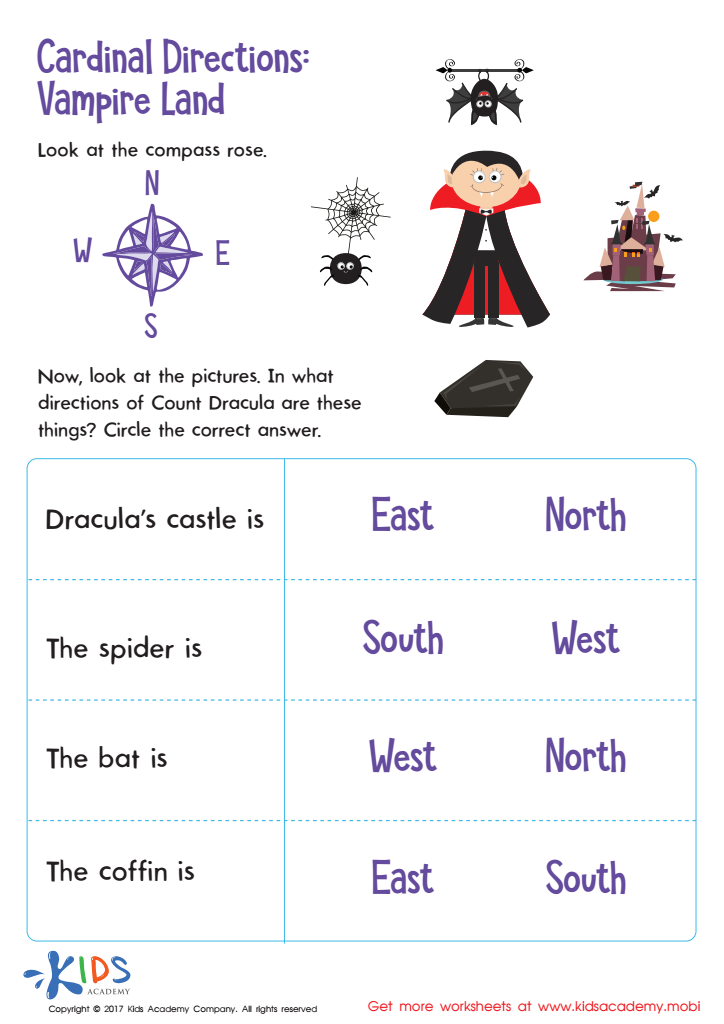
Cardinal Directions Printable
Perfect for fall, let's go to Transylvania with Count Dracula to learn cardinal directions. This printable worksheet introduces the compass rose and offers valuable practice. Kids will love the fun vampire theme! Get them motivated and help them discover the world with this spooky worksheet.
Cardinal Directions Printable
Worksheet
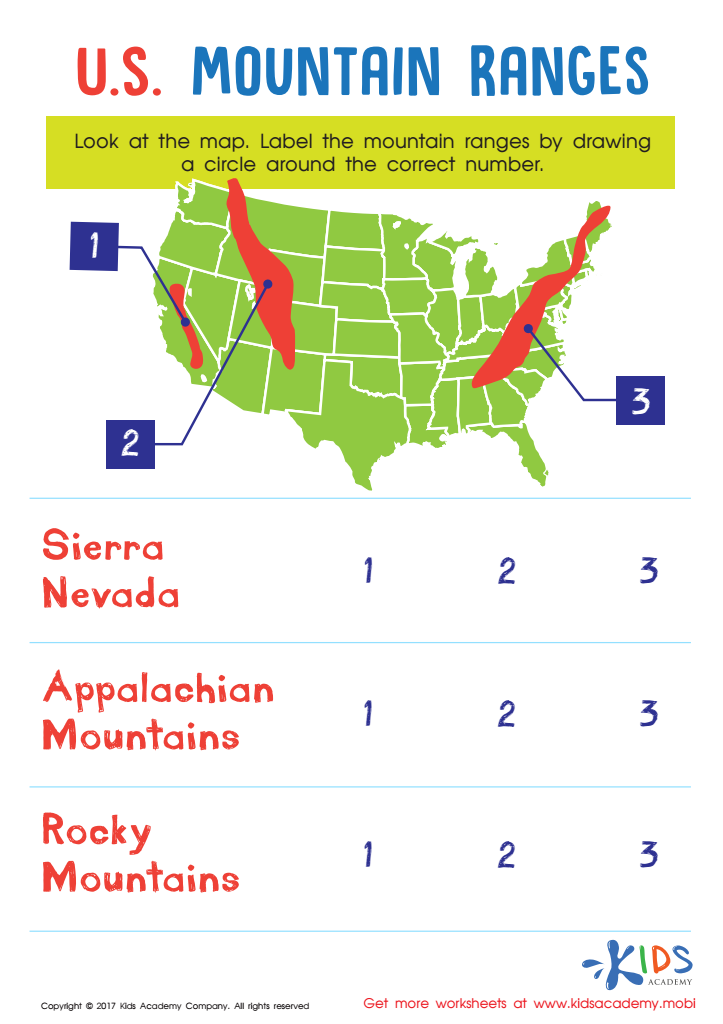
US Mountain Ranges Worksheet
Introduce your little one to the U.S. with this Mountain Ranges worksheet! It'll help them recognize the major ranges and locate them on a map, sharpening their map skills.
US Mountain Ranges Worksheet
Worksheet
Join Kids Academy for Free
Who is primarily going to use this learning content?






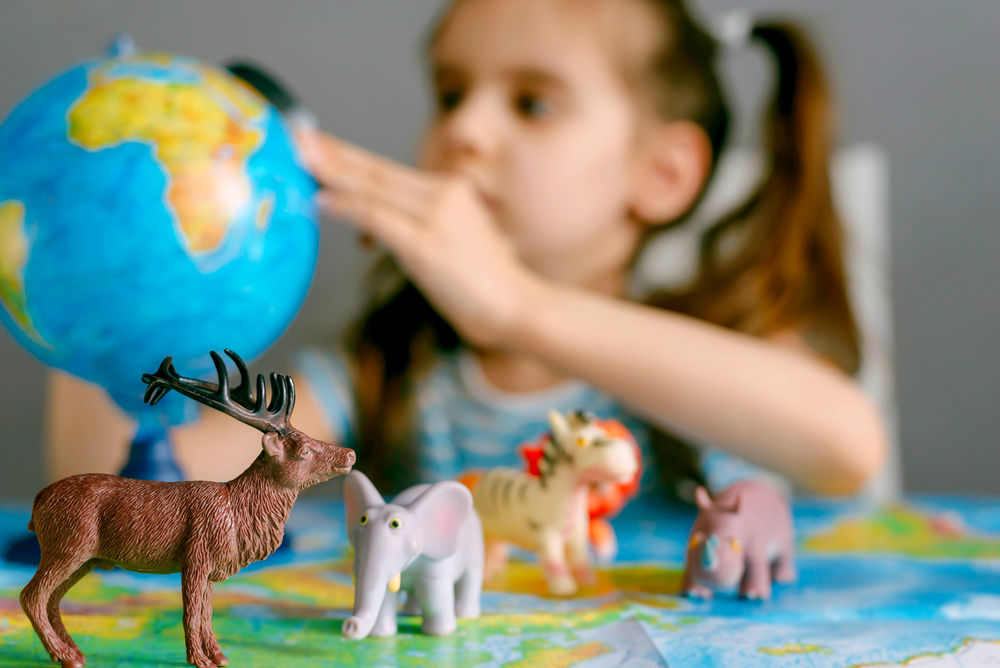
Map reading skills are crucial for young children (ages 5-9) for a variety of reasons. Firstly, these skills lay the groundwork for spatial thinking. As children learn to navigate and decipher maps, they develop comprehension of spatial relationships such as distance, direction, and relative location. These foundational abilities enhance problem-solving and analytical skills, which are useful in many life situations.
Additionally, map reading fosters a sense of curiosity and adventure. Children learn about different places, cultures, and environments, broadening their horizons and fostering a global mindset. This geographical awareness helps them appreciate diversity and understand global contexts as they grow.
Moreover, map reading integrates other critical academic skills. For instance, it enhances mathematical understanding through concepts such as scale and proportion. Reading a map also improves literacy, as children must interpret symbols and read place names. This multi-disciplinary approach enriches their overall educational experience.
Finally, proficiency in map reading ensures practical life skills. Whether it’s navigating the local community or planning trips, being able to read maps makes children more self-reliant and confident. By encouraging map reading skills, parents and teachers empower children with knowledge and abilities that are essential both academically and in everyday life.