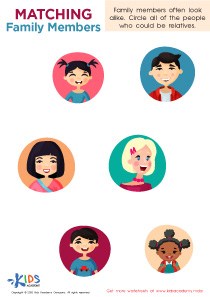
Vocabulary Building Geography Worksheets for Ages 5-9
3 filtered results
-
From - To
Explore our vocabulary building geography worksheets designed specifically for children ages 5-9! These fun and engaging worksheets help young learners expand their geographical vocabulary while developing essential skills. Each worksheet includes colorful visuals and interactive activities, making geography come alive for early learners. Topics cover maps, landscapes, regions, and more, ensuring a well-rounded understanding of the world. Perfect for classroom use or at-home learning, our resources promote curiosity and foster a love for exploration. Strengthen language skills and geographical knowledge in a kid-friendly way. Start your child's adventure in learning with our exciting geography vocabulary worksheets today!
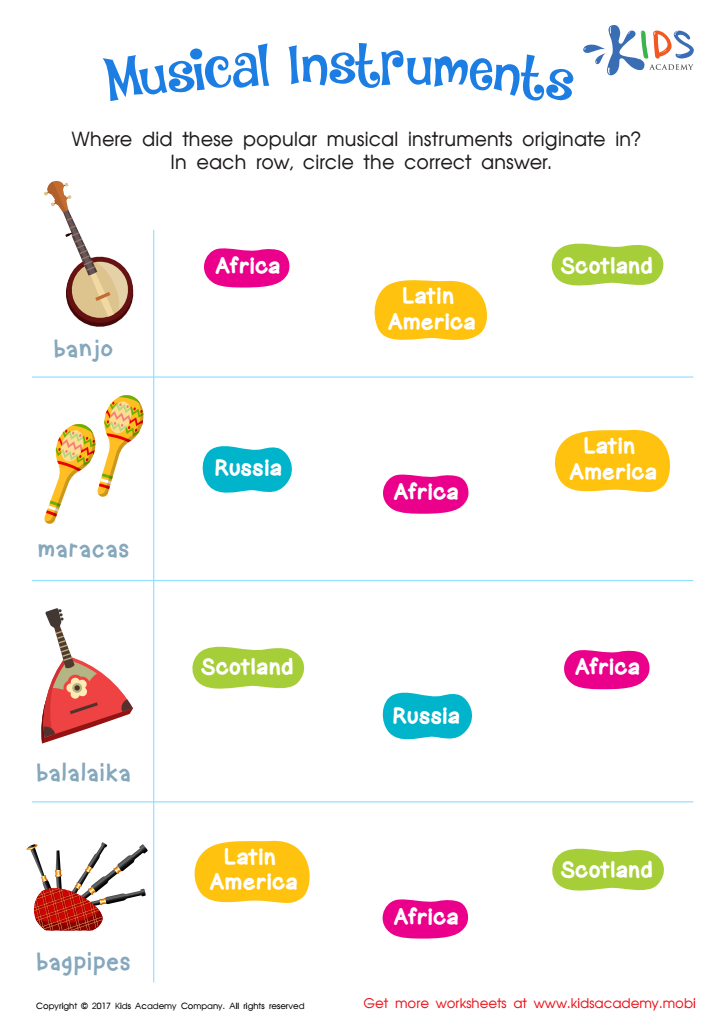
Musical Instruments Printable
 Assign to My Students
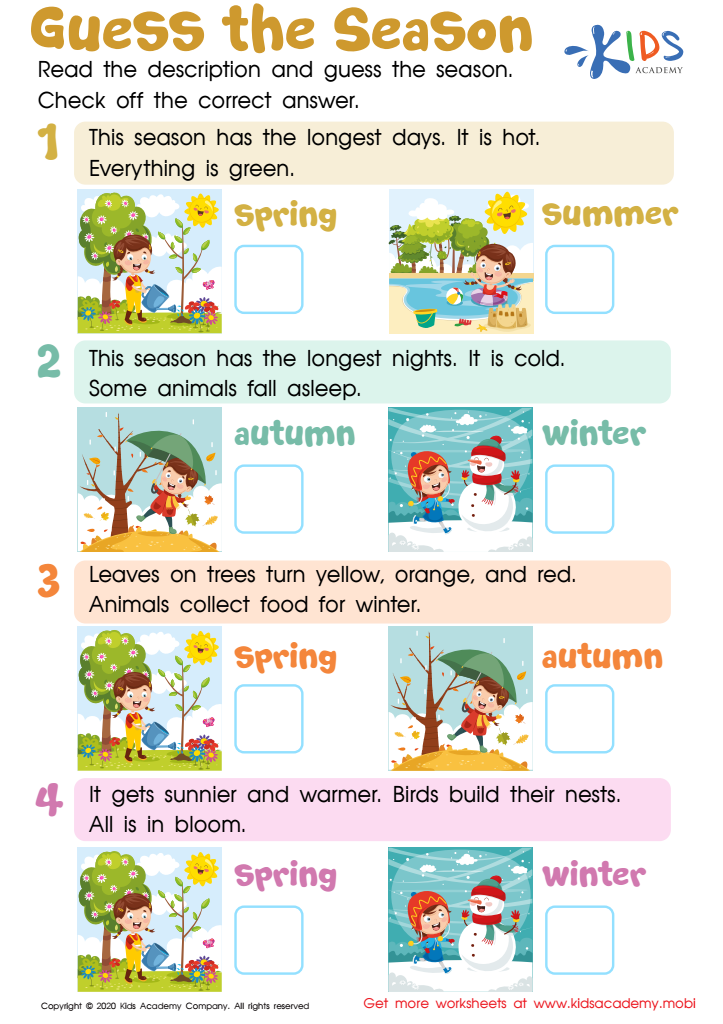
Guess the Season Worksheet
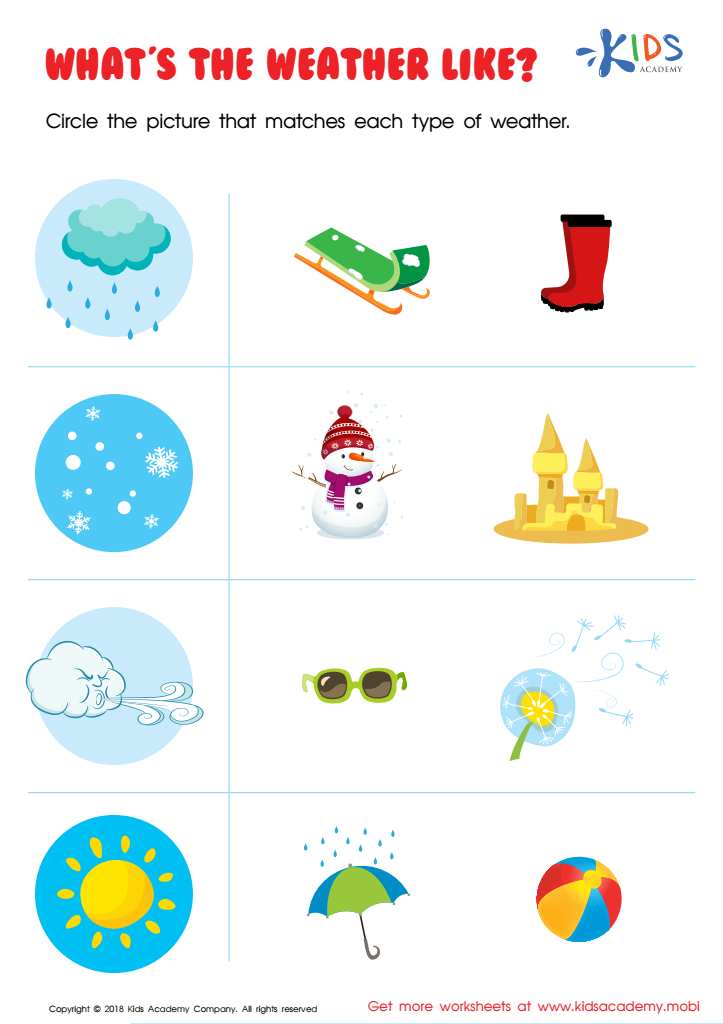
What's the Weather Like? Worksheet



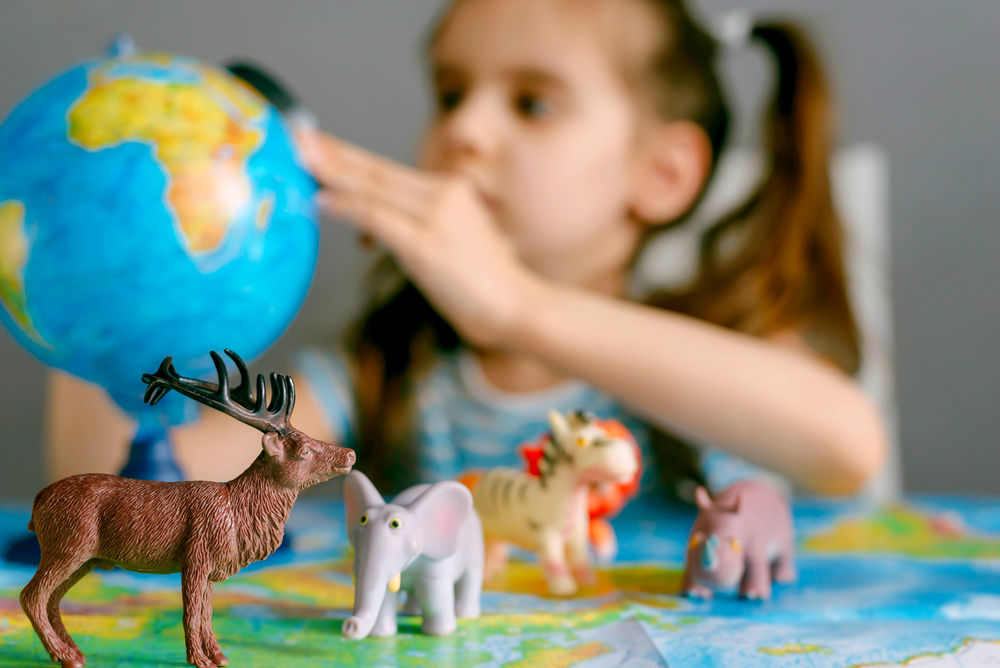



Vocabulary building in geography for children aged 5-9 is crucial for several reasons. First, robust vocabulary skills form the foundation for effective communication and comprehension. As children explore geographical concepts—such as continents, oceans, ecosystems, and cultural diversity—they need the language to articulate their thoughts and experiences. A well-developed geographical vocabulary empowers them to engage more deeply with the subject matter.
Second, early exposure to geographical terms enables students to make connections between their immediate environment and the broader world. This awareness fosters curiosity and understanding of global issues, encouraging a lifelong love for learning about different cultures and places. Teachers can utilize fun activities, stories, and games to ignite interest and reinforce vocabulary in an interactive manner.
Moreover, enhanced vocabulary skills aid academic performance across subjects. A child's ability to understand and use geographical language will translate into better reading comprehension and critical thinking skills. This can set the stage for success in higher grade levels.
Ultimately, investing effort in vocabulary building within geography not only enriches students' academic experience but also nurtures informed, empathetic citizens. For parents and teachers, supporting this learning journey helps cultivate a generation that appreciates and respects the diverse world around them.