
Problem-Solving Skills Governance and Civics Worksheets for Ages 5-9
6 filtered results
Difficulty Level
Grade
Age
-
From - To
Subject
Activity
Standards
Discover our "Problem-Solving Skills Governance and Civics Worksheets" designed for kids aged 5-9. These engaging worksheets help young learners develop critical problem-solving skills through fun, interactive activities centered around governance and civics themes. Boost your child's understanding of important social studies concepts while enhancing their logical thinking, decision-making, and analytical abilities. Perfect for both classroom and at-home learning, our resources foster curiosity and promote a deeper grasp of citizen’s roles and responsibilities. Equip your child with the skills they need to navigate and contribute to their communities effectively. Start exploring today!
Favorites
With answer key
Interactive
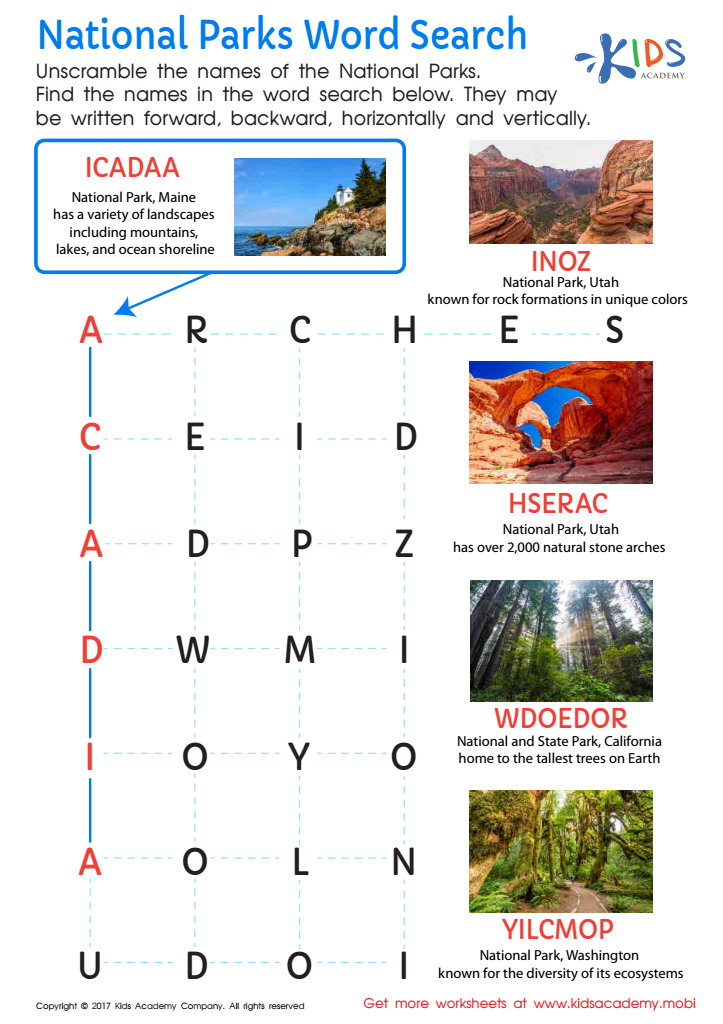
National Parks Word Search Worksheet
Explore the beauty of the USA’s national parks with this fun National Parks word search! Learn more about these majestic sites and boost your knowledge. Take a trip through the sights and sounds of our country with this motivating worksheet.
 Assign to My Students
National Parks Word Search Worksheet
Worksheet
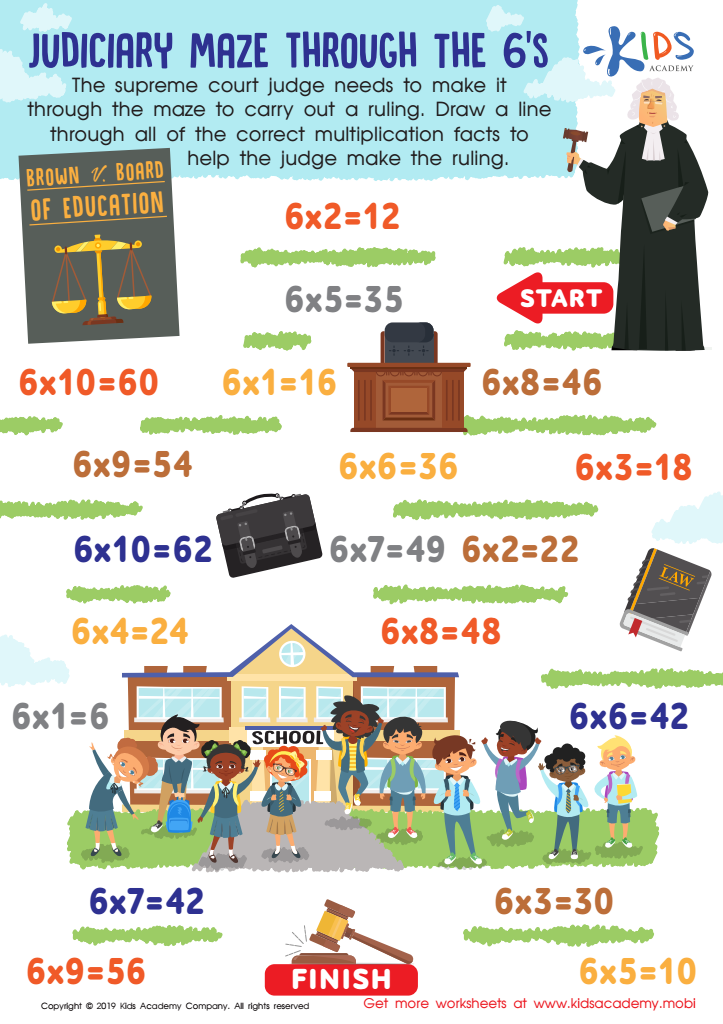
Judiciary Maze Through The 6’s Worksheet
Multiplication can be complicated for kids, with lots of numbers and a seemingly endless multiplication table. Get them interested with a fun worksheet! Have them draw a line through all the correct multiplication facts to help the judge make it through the maze and carry out a ruling.
Judiciary Maze Through The 6’s Worksheet
Worksheet
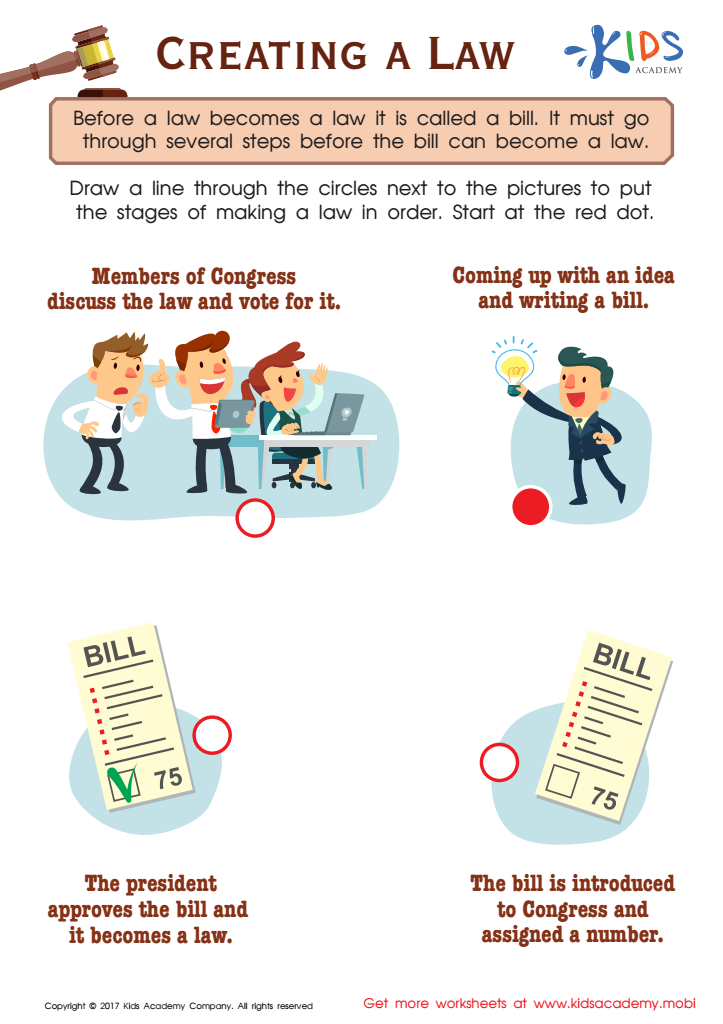
Creating a Law Worksheet
Help your child understand how laws are made with this Creating a Law Worksheet. Perfect for young learners, it covers the lawmaking process with fun pictures and simple language. Get an exciting insight into democracy and teach kids the importance of laws!
Creating a Law Worksheet
Worksheet
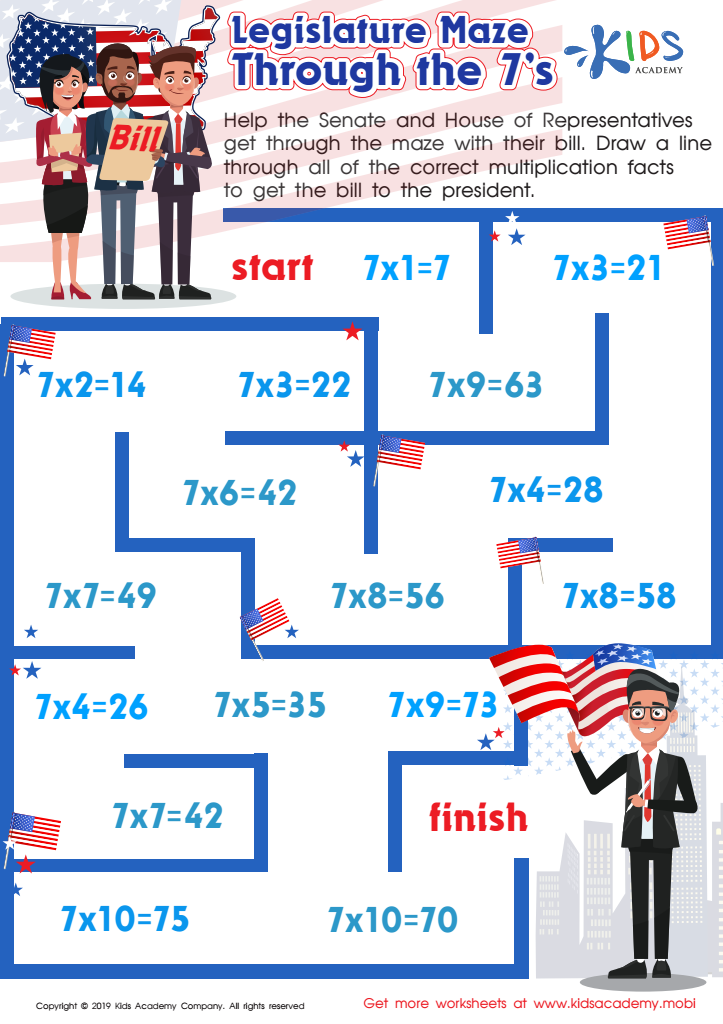
Legislature Maze Through the 7’s Worksheet
Students can review their math and social studies skills with this exciting worksheet. By drawing a line through only the correct multiplication facts in the 7x multiplication table maze, they can lead the members of Congress to the President to get the law signed and finish the puzzle.
Legislature Maze Through the 7’s Worksheet
Worksheet
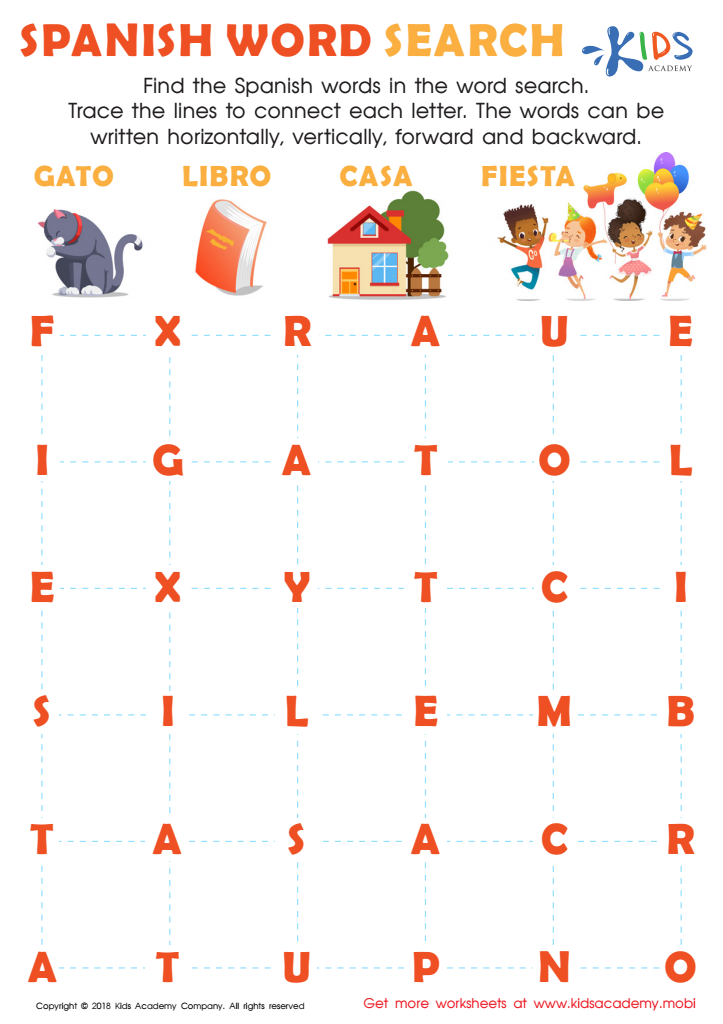
Spanish Word Search Worksheet
This free worksheet encourages students to learn Spanish words while developing visual, fine motor, and hand-eye coordination skills. Through colorful pictures and traceable lines, the task of finding words such as gato, libro, casa, and fiesta is disguised as a fun and engaging way to explore new cultures.
Spanish Word Search Worksheet
Worksheet
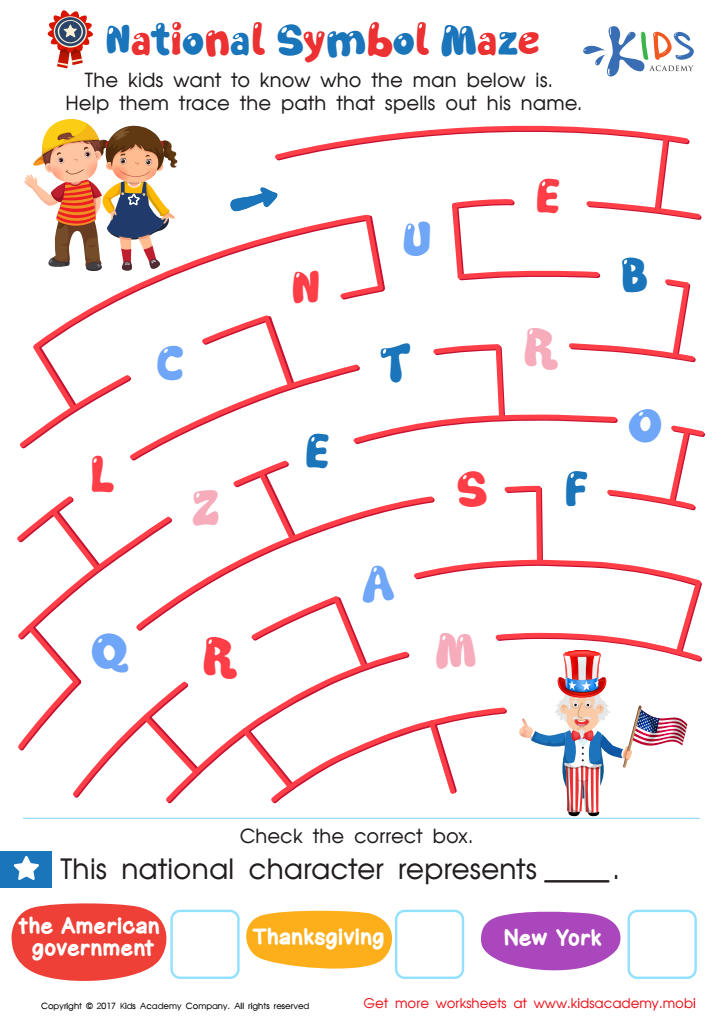
National Symbol Maze Worksheet
Introduce your child to Uncle Sam, a symbol of US history. The national symbols of the USA worksheet will help them learn about our rich culture and history.
National Symbol Maze Worksheet
Worksheet
Join Kids Academy for Free
Who is primarily going to use this learning content?


Fostering problem-solving skills and understanding governance and civics in children aged 5-9 is foundational for their development into well-rounded, effective individuals and responsible citizens. This period is crucial as kids are highly curious and develop core skills that shape their future learning and behavior.
Problem-solving skills equip children with the ability to think critically and independently, helping them navigate challenges both academic and personal. This resilience and resourcefulness are essential not only for school success but also in everyday situations where they need to make decisions, face obstacles, or address conflicts.
Teaching governance and civics at an early age instills a deep sense of community and social responsibility. When children understand the roles of rules, authority, and cooperation, they grasp the importance of participating actively and respectfully in society. Learning about governance helps them appreciate fairness, rights, and duties, fostering respect for others and understanding the impact of their actions on the community.
Additionally, early education in these areas builds a foundation for lifelong civic engagement. It nurtures informed future citizens who care about their communities and democracy, ultimately aiming for a more conscientious and proactive adult population. Therefore, integrating problem-solving, governance, and civics into early education benefits not just the individuals, but society as a whole.








