Understanding patterns History Worksheets for Ages 5-9
3 filtered results
-
From - To
Explore our "Understanding Patterns History Worksheets" designed for children ages 5-9! These engaging resources make history fun and accessible, helping young learners recognize and analyze patterns in historical events and timelines. With a focus on interactive learning, our worksheets incorporate colorful illustrations, age-appropriate activities, and thoughtful questions to stimulate curiosity and critical thinking. By connecting past events and identifying trends, children will sharpen their analytical skills while building a foundation in social studies. Ideal for both classroom use and at-home learning, these worksheets inspire young historians to discover the stories and lessons history offers. Enhance your child's learning journey today!
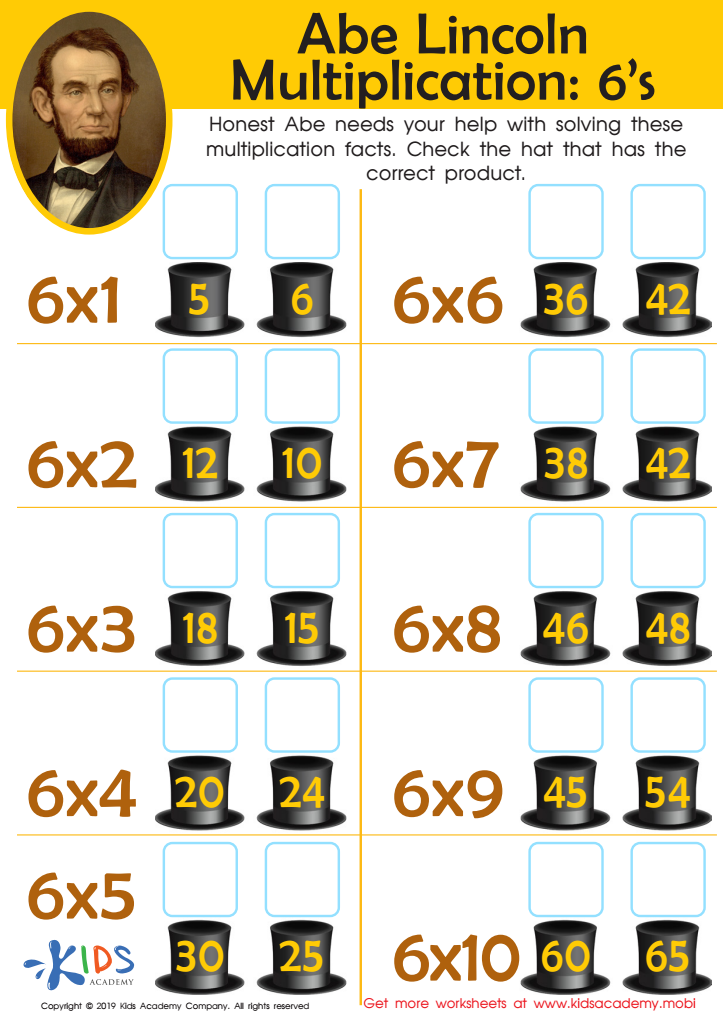
Abe Lincoln Multiplication: 6’s Worksheet
 Assign to My Students
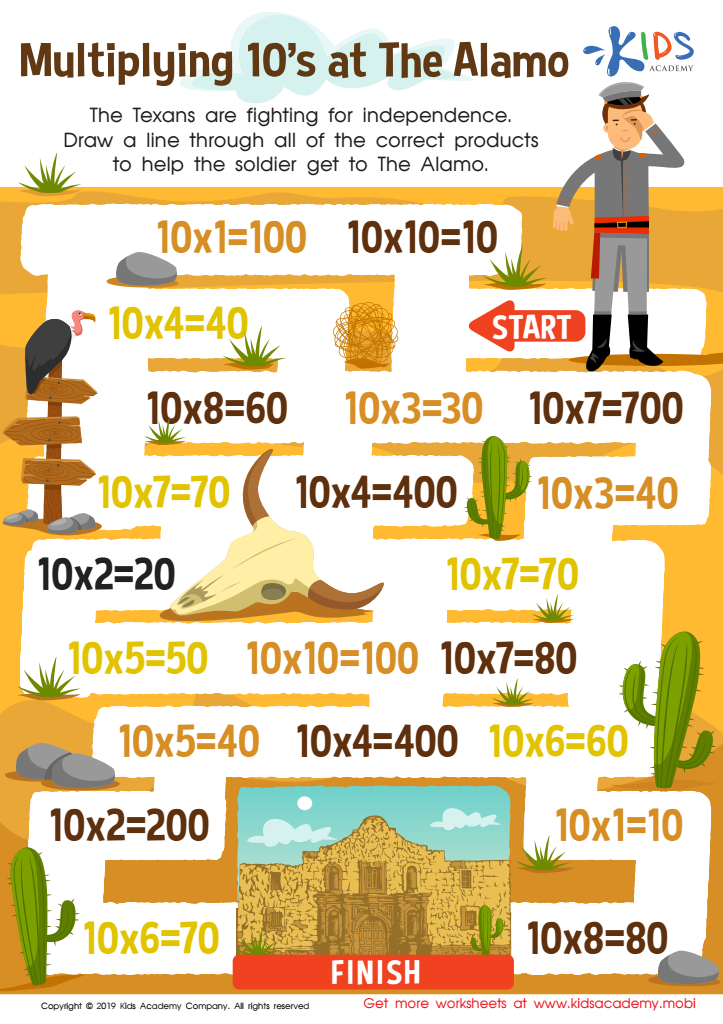
Multiplying 10’s at The Alamo Worksheet
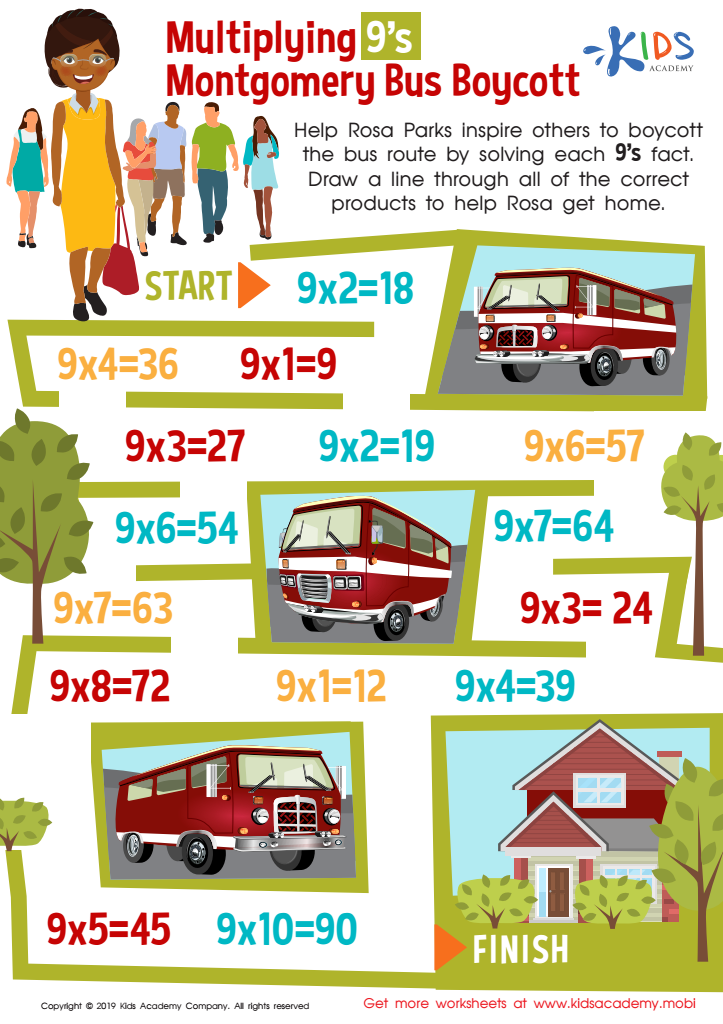
Multiplying 9’s Montgomery Bus Boycott Worksheet








Understanding patterns in history is crucial for children aged 5-9 as it serves as a foundation for critical thinking and comprehension skills. Recognizing patterns helps children identify relationships and trends, enhancing their ability to understand cause-and-effect scenarios. For example, by observing historical events, they may notice how certain behaviors or choices led to specific outcomes, which can inform their decision-making in real life.
In addition, learning about historical patterns fosters a feeling of connection to their culture and the world around them. Children who comprehend the similarities and differences across periods begin to develop empathy and awareness of diverse perspectives, important traits in our multicultural society. Engaging with history also promotes curiosity, motivating students to ask questions and seek answers, deepening their engagement with the learning process.
Furthermore, as patterns simplify complex information, they make history accessible and relatable for young learners. Teachers and parents play a vital role by incorporating storytelling, visual aids, and interactive activities that help bring these concepts to life, making learning exciting. Ultimately, understanding patterns in history not only enriches academic knowledge, but also prepares children for future challenges, nurturing informed, thoughtful individuals ready to contribute positively to society.








