Understanding timelines History Worksheets for Ages 5-9
5 filtered results
-
From - To
Introducing our "Understanding Timelines History Worksheets" designed specifically for children aged 5-9! These engaging worksheets help young learners grasp the concept of time and historical events through interactive activities. Our resources guide students in sequencing events, recognizing chronological relationships, and appreciating the importance of timelines in understanding history. With vibrant visuals and relatable examples, these worksheets make learning fun and accessible. Ideal for fostering critical thinking and enhancing social studies skills, our timelines worksheets support educators in creating a dynamic learning environment. Empower your child to explore the past and develop a strong foundation in history with our carefully crafted materials!
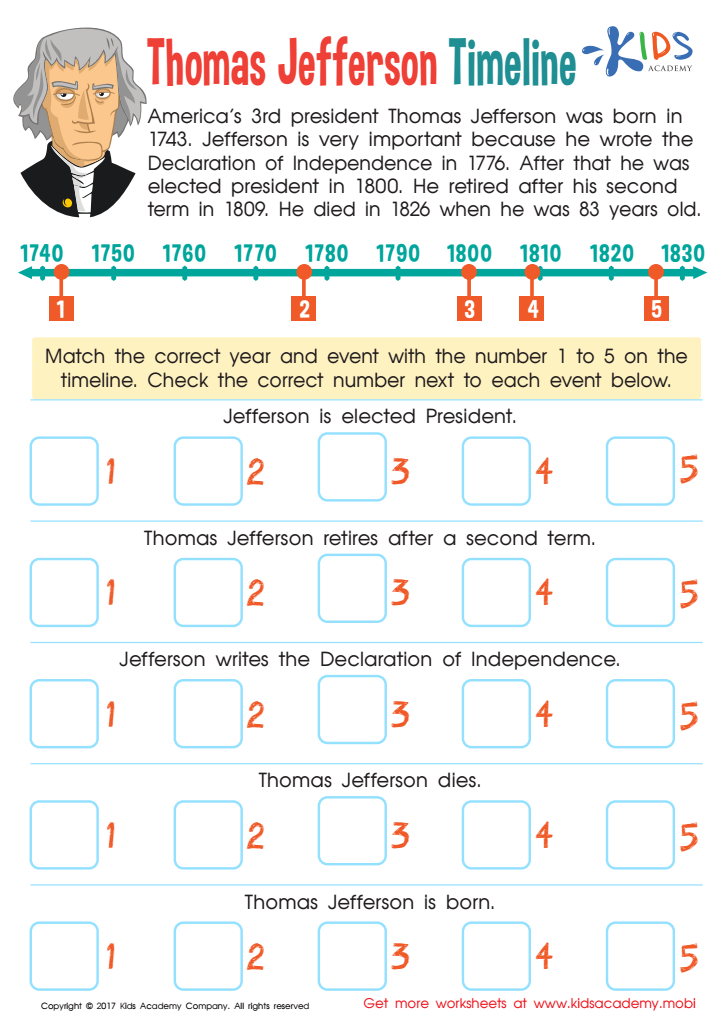
Thomas Jefferson Timeline Worksheet
 Assign to My Students
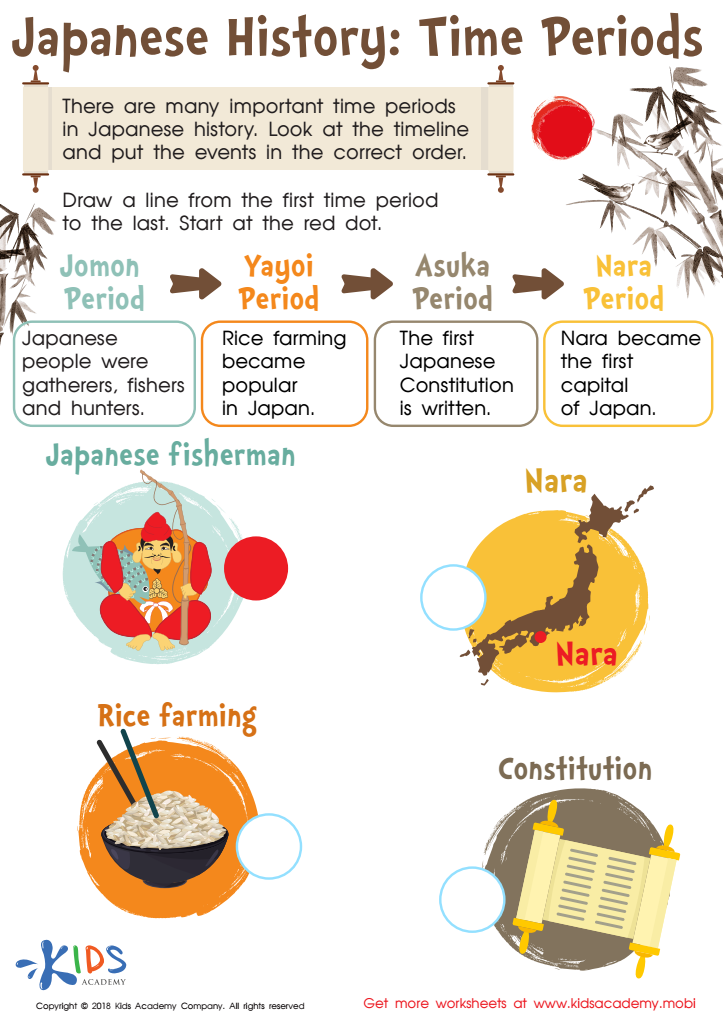
Japanese History: Time Periods Worksheet
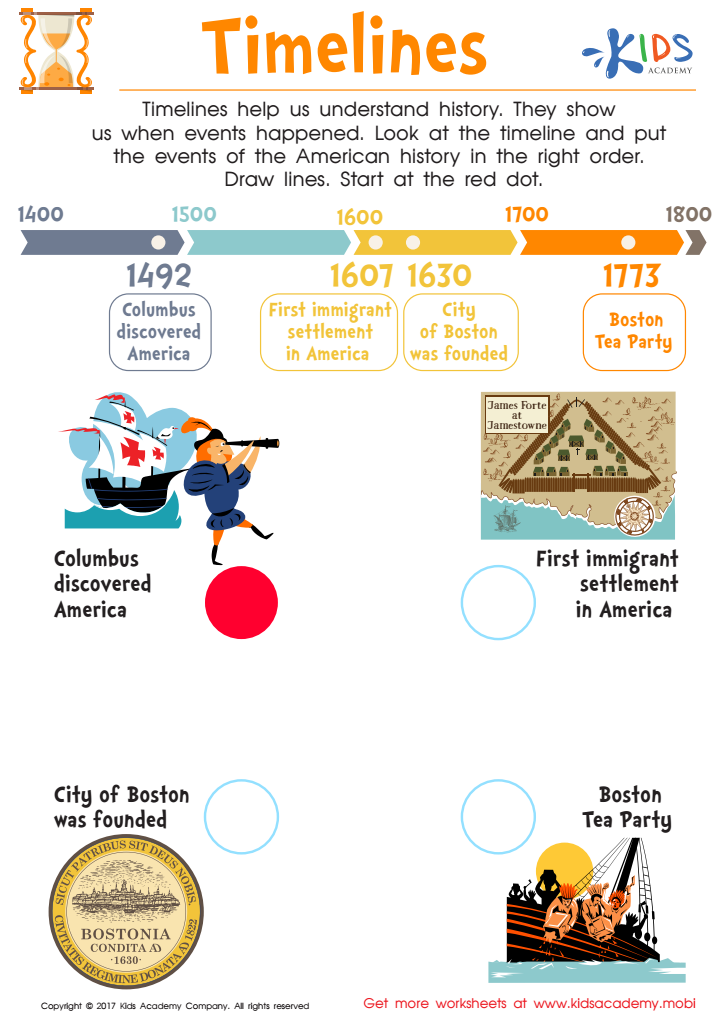
American History Timeline Worksheet
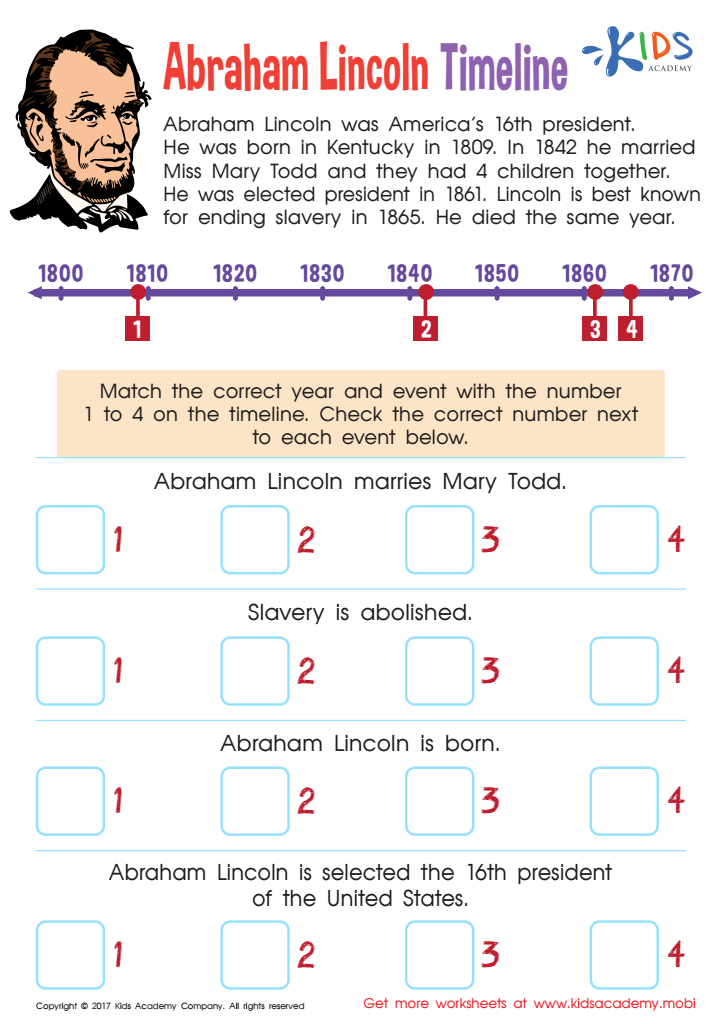
Abraham Lincoln Timeline Worksheet
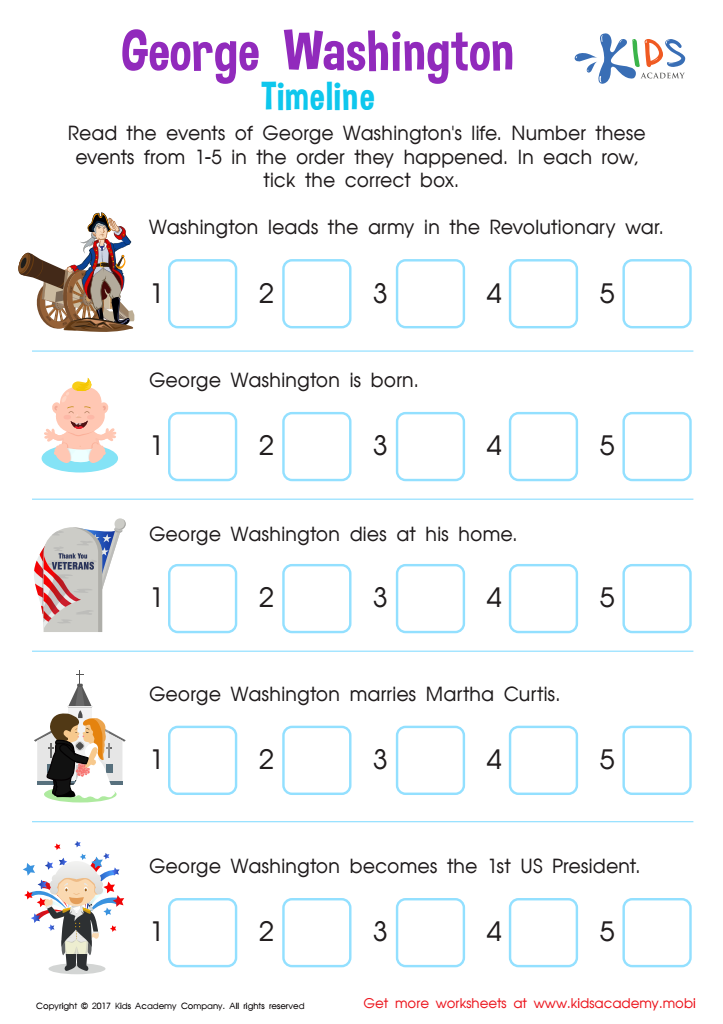
George Washington Timeline Worksheet








Understanding timelines in history is essential for children aged 5-9 as it lays the foundation for their cognitive development and comprehension of the world around them. First, timelines help children grasp the concept of time and chronology, allowing them to organize events sequentially, which is fundamental to cognitive skills. This understanding not only aids in memory retention but also enhances their ability to connect past and present events.
Additionally, exploring historical timelines fosters curiosity and engagement with history. Children learn about important events, cultures, and figures, instilling a sense of identity and belonging. They begin to appreciate the diverse experiences that have shaped their communities and the world.
Moreover, discussing timelines supports critical thinking and analytical skills. As children examine cause-and-effect relationships between events, they develop the ability to understand complexity and context. This encourages informed discussions about contemporary issues in relation to historical precedents.
Overall, encouraging children’s understanding of history through timelines nurtures their emotional and intellectual development, helping them to become informed, empathetic, and critically aware individuals. Parents and teachers play a crucial role in facilitating this learning, making it vital for them to prioritize the teaching of historical timelines.








