Basic Addition Social Studies Worksheets for Ages 5-9
3 filtered results
-
From - To
Introduce young learners to essential math and social studies skills with our "Basic Addition Social Studies Worksheets for Ages 5-9". These engaging and educational worksheets seamlessly blend basic addition practice with age-appropriate social studies content. Designed to captivate curiosity, each worksheet helps children develop arithmetic skills while exploring various topics like geography, community roles, and historical figures. Ideal for classroom use or at-home learning, our printable worksheets foster a love for learning, build foundational math skills, and enhance understanding of the world around them. Equip your child with the tools they need to excel academically and become informed citizens.
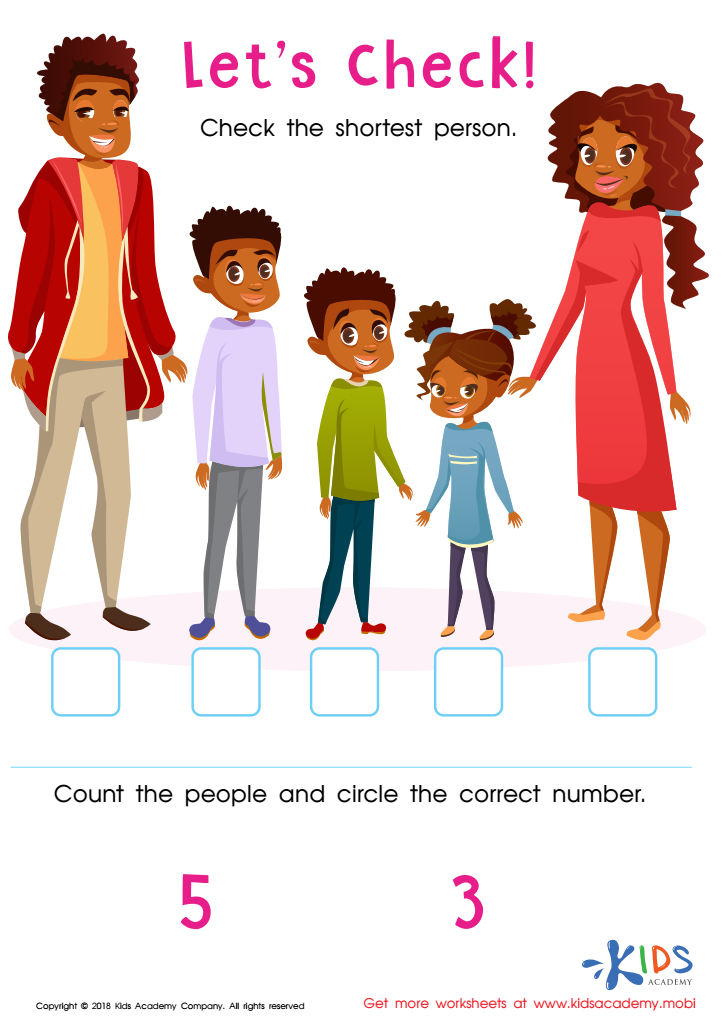
Let's Check! Assessment Worksheet
 Assign to My Students
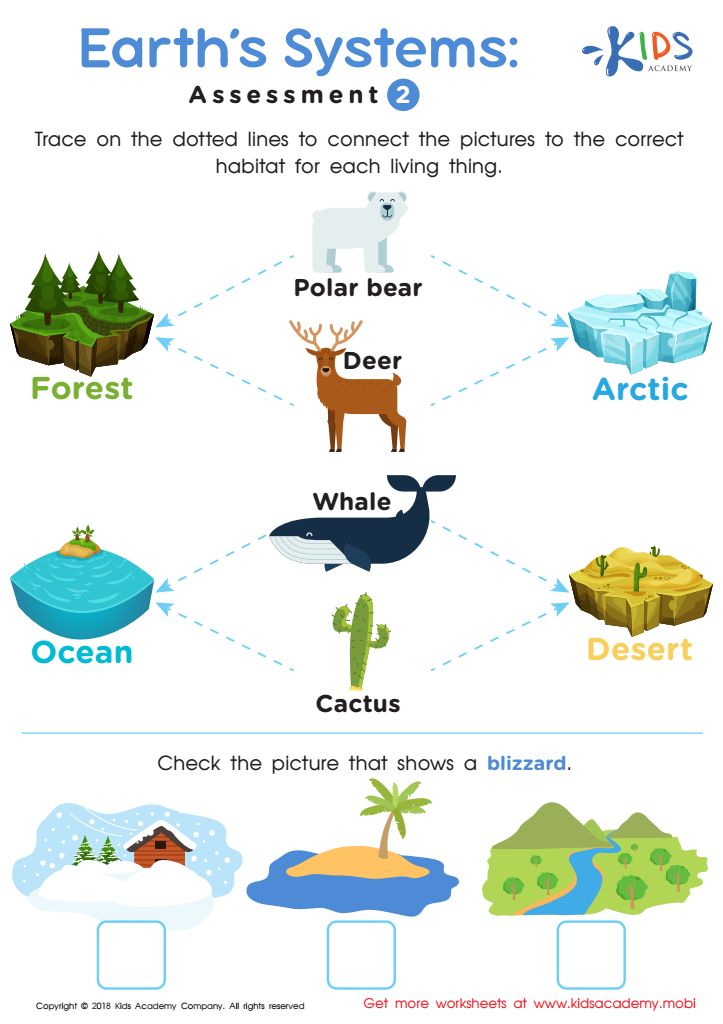
Earth's Systems: Assessment 2
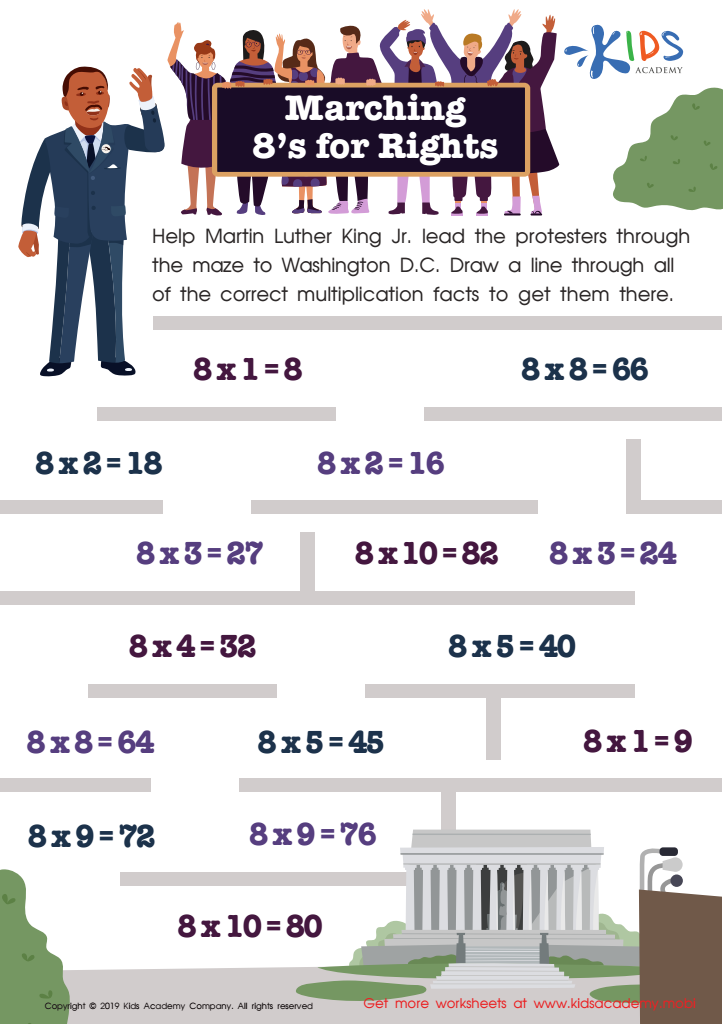
Marching 8’s for Rights Worksheet







Parents or teachers should care about introducing basic concepts in both addition and social studies to children aged 5-9 because these foundational skills promote critical aspects of overall development.
In terms of basic addition, mastering early mathematical concepts is crucial for long-term cognitive growth and academic success. Addition helps children to develop problem-solving skills, logical thinking, and numerical literacy, making it easier for them to tackle more complex mathematical concepts in later grades. It also supports cognitive abilities in other academic subjects, including sciences, by fostering precise and structured thinking patterns.
Social studies play an equally vital role by broadening children’s understanding of the world around them. Learning about community helpers, history, geography, and cultural traditions helps build their sense of identity and fosters a more balanced worldview. These lessons cultivate empathy, responsibility, and awareness of diverse perspectives, crucial traits for social interaction and citizenship.
By nurturing skills in mathematics and social studies concurrently, parents and teachers are setting children up for a holistic education. Balancing logical reasoning with social comprehension enables kids to thrive academically and socially, better preparing them for future educational endeavors and real-world experiences. Thus, this dual focus satisfies both intellectual and moral facets of early childhood education.








