Event sequencing Social Studies Worksheets for Ages 5-9
3 filtered results
-
From - To
Explore our engaging Event Sequencing Social Studies Worksheets designed for children aged 5-9! These interactive resources help young learners develop critical thinking skills by organizing events in logical order. Incorporating fun graphic organizers and relatable scenarios, our worksheets encourage kids to analyze stories and everyday situations, fostering comprehension and reasoning abilities. Ideal for both classroom settings and homeschooling environments, these printable activities support diverse learning styles and help children understand the flow of events in history, culture, and their own lives. Challenge your child’s cognitive growth while making Social Studies enjoyable with these valuable materials! Download them today to get started!
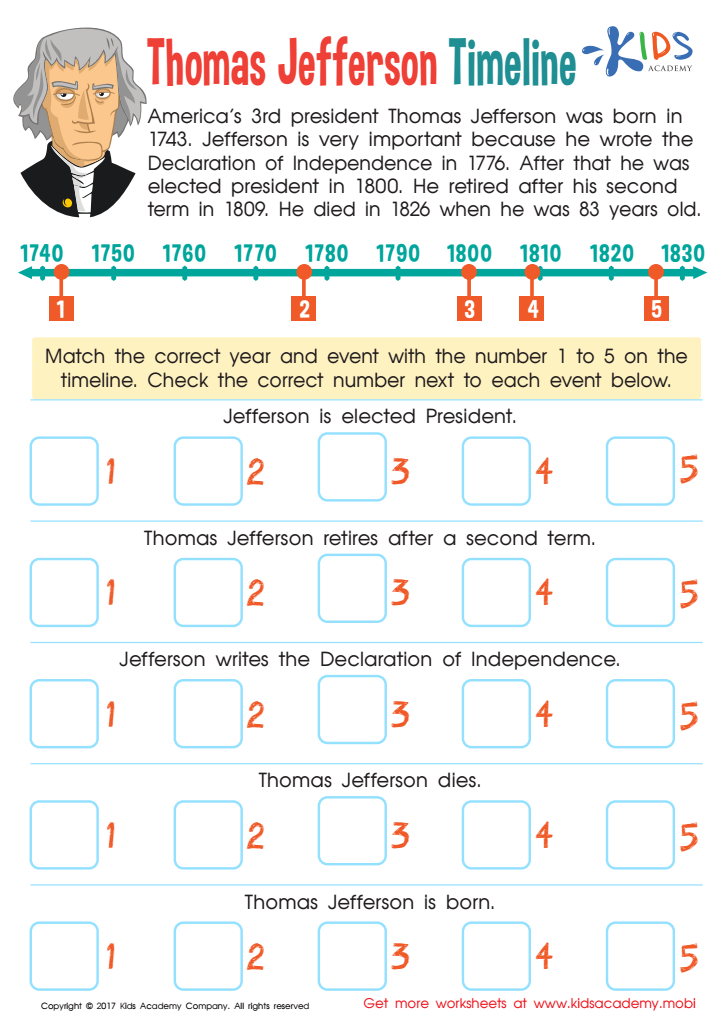
Thomas Jefferson Timeline Worksheet
 Assign to My Students
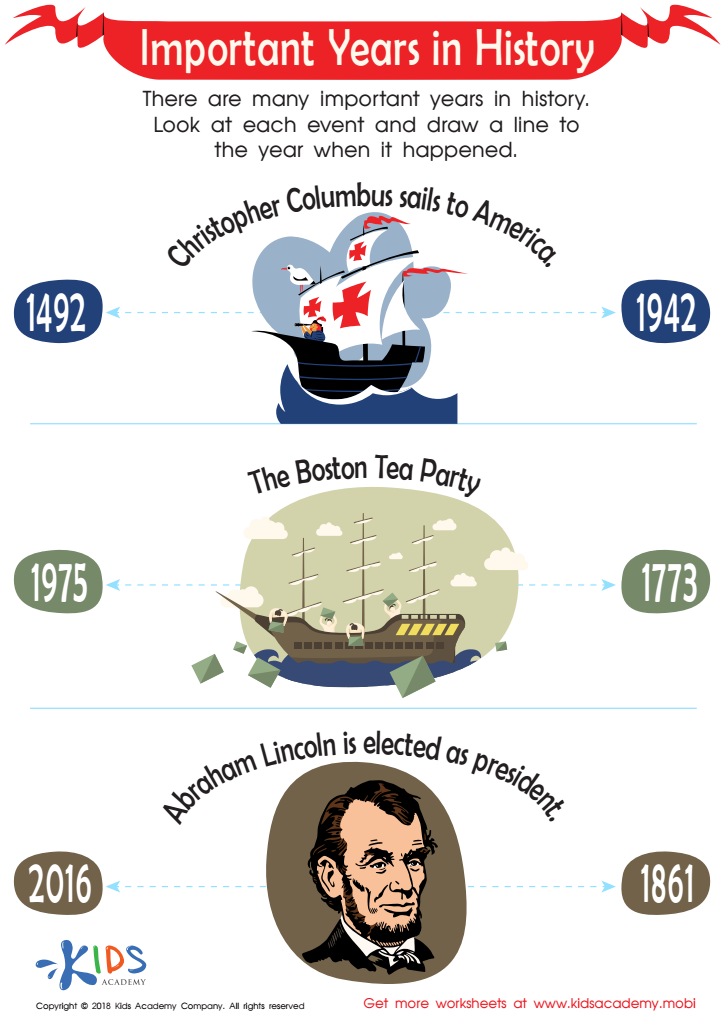
Important Years in History Worksheet
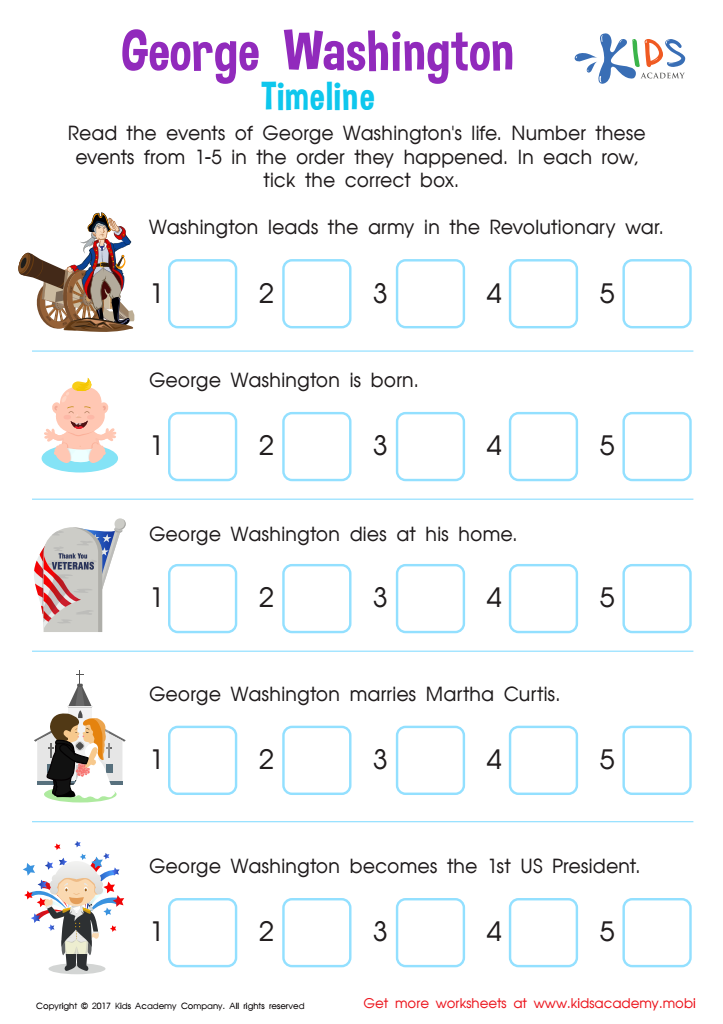
George Washington Timeline Worksheet








Event sequencing in Social Studies for ages 5-9 is vital for nurturing critical cognitive skills in young learners. This approach helps children understand the chronological order of events, fostering their ability to comprehend and organize information. By engaging in activities that promote event sequencing, students develop storytelling skills, making connections between past, present, and future while enhancing their memory.
Teachers and parents should care about this area because it lays the foundation for more complex historical and social understanding in future grades. Learning to sequence events cultivates logical thinking and critical reasoning skills, enabling children to analyze cause and effect relationships in history and geography. For instance, understanding events like lunch and recess in relation to regular classroom schedules demonstrates the practical application of sequencing.
Additionally, event sequencing enriches cultural literacy, as children explore significant historical figures or milestones relevant to their communities. This foundation not only fuels their curiosity about the world but also fosters empathy and cultural appreciation. Ultimately, investing in proper event sequencing strategies helps shape well-rounded, informed, and thoughtful individuals who can engage meaningfully with diverse narratives and contexts throughout their lives.








