
Cognitive Development Grammar Worksheets for Ages 5-9
11 filtered results
Difficulty Level
Grade
Age
-
From - To
Subject
Activity
Standards
Enhance your child’s cognitive development with our engaging Grammar Worksheets, tailored for ages 5-9. These worksheets are designed to strengthen essential grammar skills while stimulating cognitive growth. Through a variety of fun activities, including sentence building, punctuation practice, and word usage exercises, young learners can improve their language abilities. Our expertly crafted sheets not only foster grammar proficiency but also encourage critical thinking and problem-solving. Perfect for home or classroom use, these worksheets are an excellent resource to support your child’s educational journey and cognitive development. Discover the joy of learning and watch your child’s language skills flourish!
Favorites
With answer key
Interactive
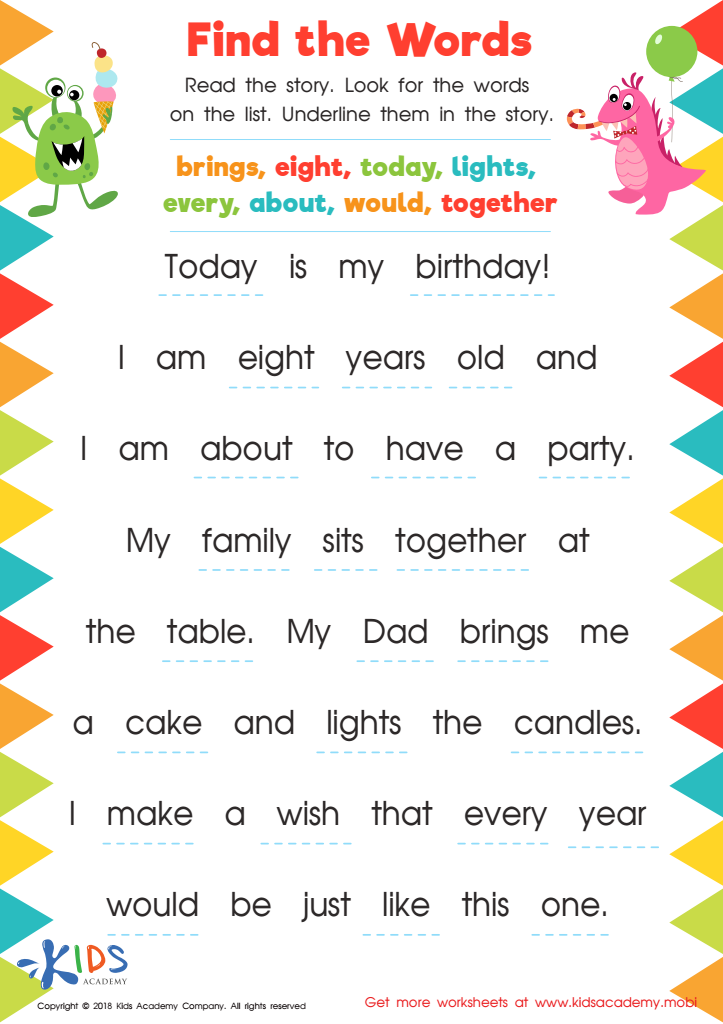
Find The Words Printable Worksheet
Hunt for words while reading this birthday story! This printable worksheet will help your child practice early reading skills as they search for words in the text. Enjoy the story and find the words!
 Assign to My Students
Find The Words Printable Worksheet
Worksheet
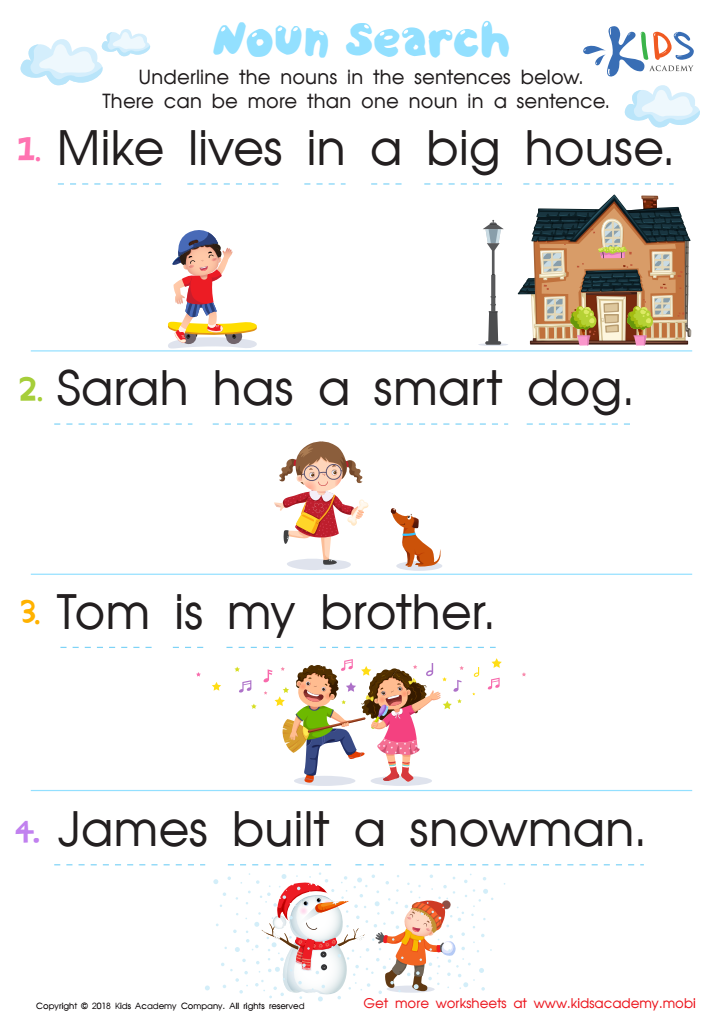
Noun Search Worksheet
To help your children learn the basics of grammar, start with nouns, verbs, adverbs and adjectives. This noun search worksheet will help your child understand the most common part of speech - the noun. Ask them to underline the nouns in each sentence. This is a great way to start learning proper grammar.
Noun Search Worksheet
Worksheet
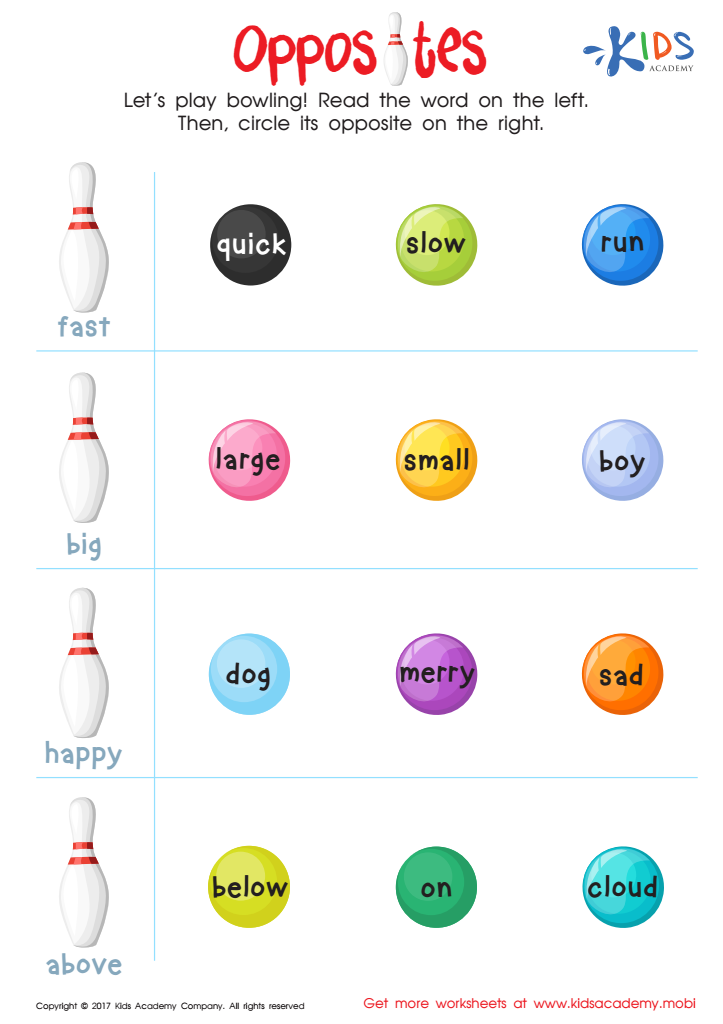
Opposites Worksheet
Have your students identify and circle the opposites of the words on the left. As a fun bowling-themed exercise, read the words and ask your kids if they know the opposites. Look through the options on the right and see if the answer is there; then, circle the correct answers.
Opposites Worksheet
Worksheet
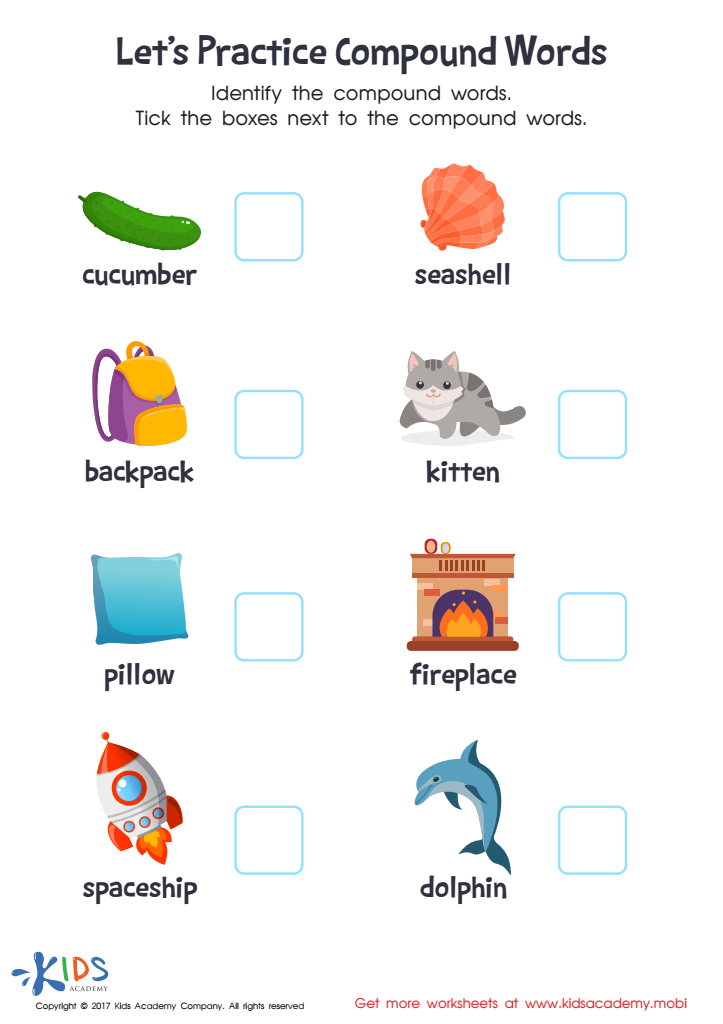
Let's Practice Compound Words Word Structure Worksheet
Test their knowledge of compound words with this fun worksheet and help them build their vocabulary. Have them say the words out loud as they work!
Let's Practice Compound Words Word Structure Worksheet
Worksheet
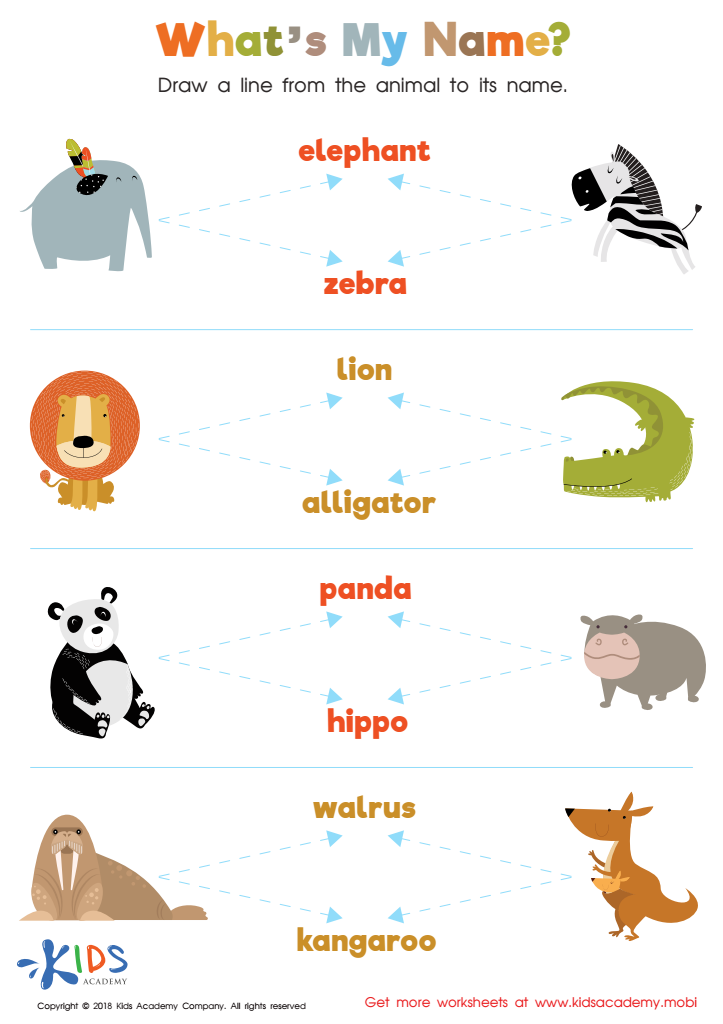
Animals and Their Names Worksheet
Match animals with their names with this worksheet! Draw a line from the word to its picture. Say the name of each animal. Later, search for these animals at the zoo - great for reinforcing learning!
Animals and Their Names Worksheet
Worksheet
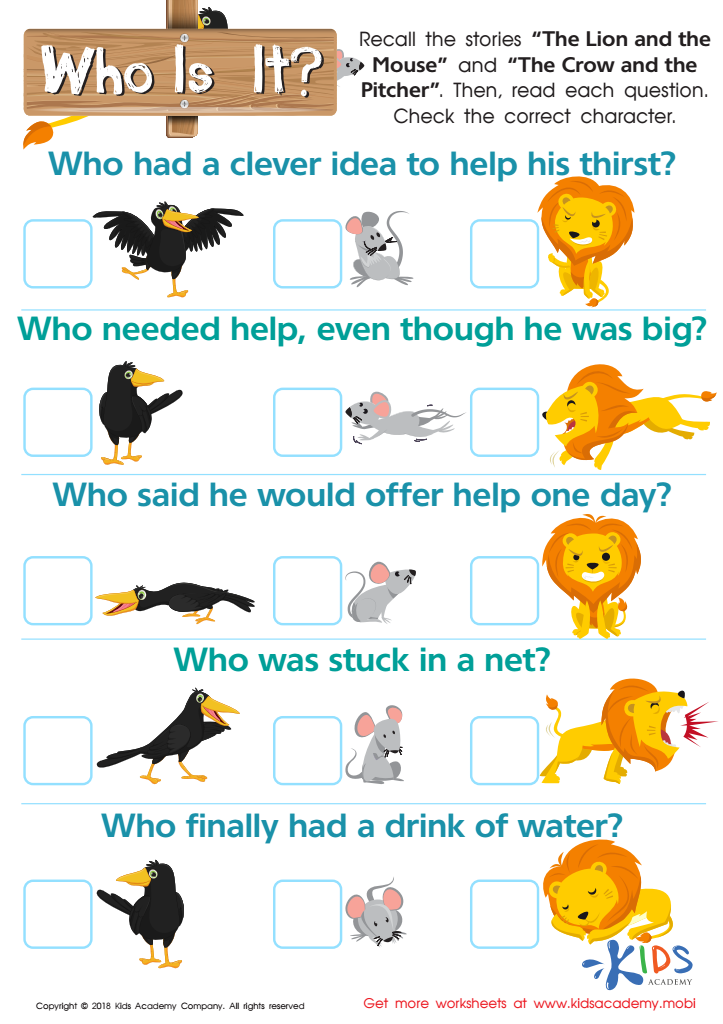
Who Is It? Worksheet
This worksheet helps students recall details from The Crow and the Pitcher and The Lion and the Mouse stories. Students will answer questions about the characters' actions. Use it to assess their understanding of both stories, as this is a key comprehension skill.
Who Is It? Worksheet
Worksheet
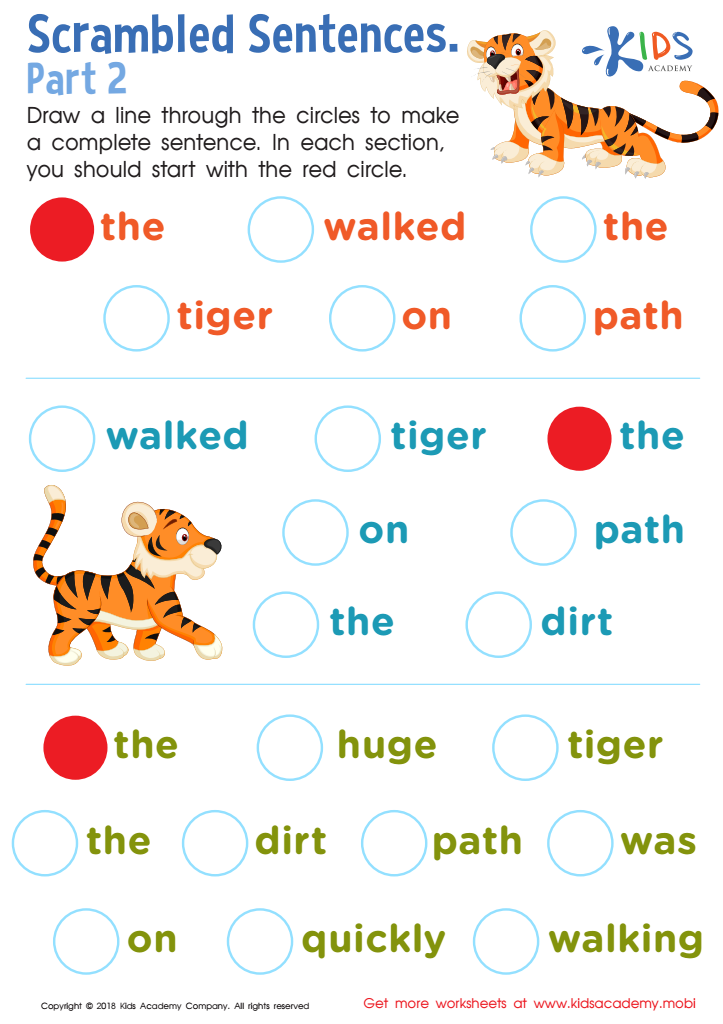
Scrambled Sentences Part 2 Worksheet
This printable worksheet helps kids construct simple, correct sentences. Introduce them to making sentences if they're new to it. Have them draw a line through the circles to form a sentence, starting with the red circle. After completing this exercise, they'll be able to craft short sentences with confidence.
Scrambled Sentences Part 2 Worksheet
Worksheet
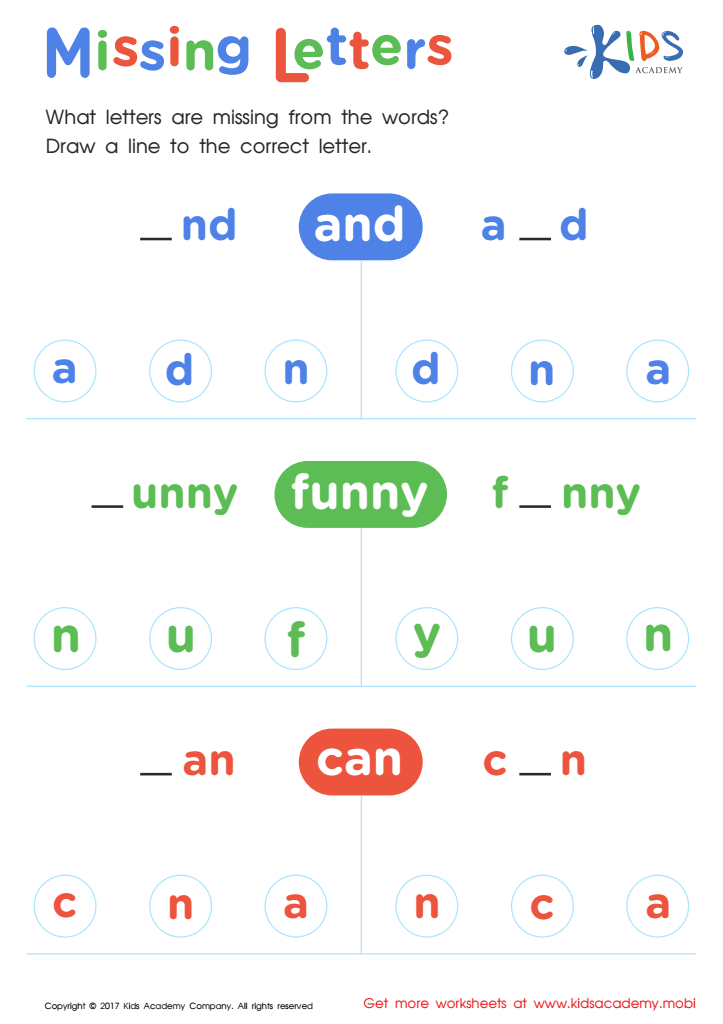
Missing Letters Worksheet
Review sight words with this fun matching worksheet from Kids Academy! Look at the sight words in the middle, read them aloud and find the missing letter on each side for each word. Draw a line to the correct letter to complete the sheet!
Missing Letters Worksheet
Worksheet
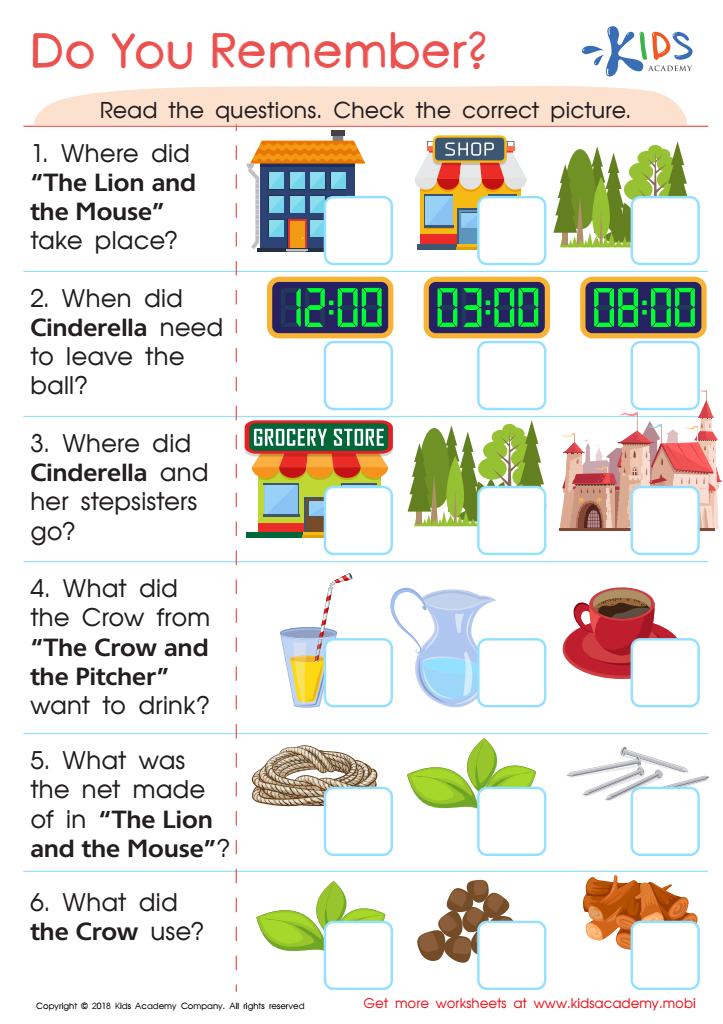
Do You Remember? Worksheet
Read "Cinderella", "The Crow and the Pitcher" and "The Lion and the Mouse" to your child. Discuss the plot and characters, and how their choices shape the story. Use this worksheet to check their comprehension and memory. Read the questions and have them select the correct picture answer.
Do You Remember? Worksheet
Worksheet
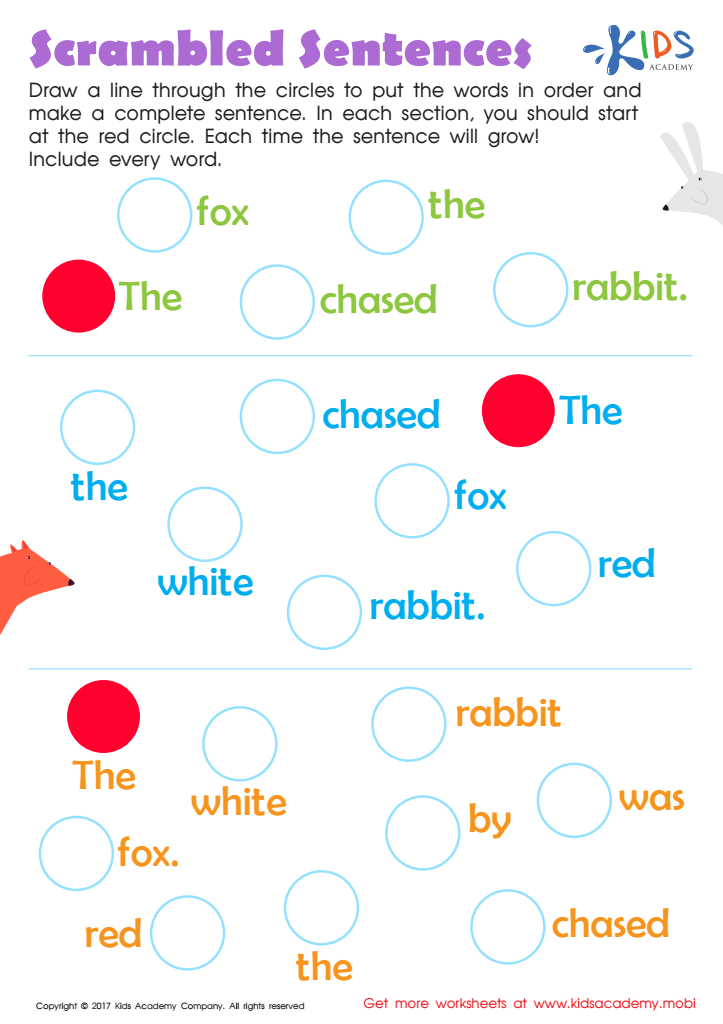
Scrambled Sentences Worksheet
Kids will have fun with the scrambled sentences worksheet: draw lines to make complete sentences. As the sentence grows, they'll learn sentence structure and word order. Easy instructions included!
Scrambled Sentences Worksheet
Worksheet
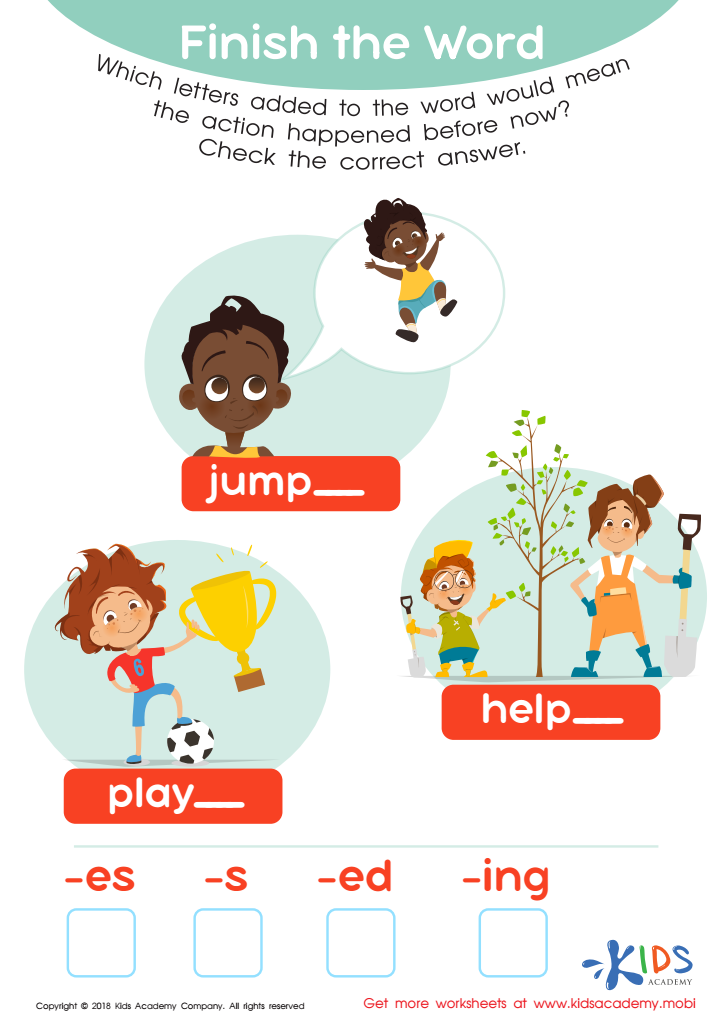
Finish the Word Worksheet
Does your kid know tenses? Listen to see if they are using words correctly. With this worksheet, your kids will learn to use the appropriate past tense forms. Ask them which letters added to words make the action past. Help them check the answers.
Finish the Word Worksheet
Worksheet
Join Kids Academy for Free
Who is primarily going to use this learning content?






Cognitive Development Grammar for children aged 5-9 is pivotal as it significantly influences language acquisition, critical thinking, and academic success. During these formative years, children's brain undergoes rapid development, making it the prime time for language learning. Understanding grammar helps kids structure their thoughts and communicate effectively.
Grasping basic grammatical rules enhances their reading and writing skills. When kids understand syntax and sentence structure, they can comprehend reading materials better, boosting their literacy. This foundation is crucial for all future learning, as language is the medium through which most subjects are taught.
Moreover, cognitive development deeply intertwines with language skills. Mastery of grammar encourages logical thinking and problem-solving capabilities. Children start understanding cause and effect, sequencing, and categorization through complex sentences. These skills are not confined to language arts but are vital for subjects like math, science, and social studies.
Attention to cognitive development grammar also promotes social interaction. Clear communication enables children to express their ideas and emotions more precisely, fostering better relationships with peers and adults.
In essence, emphasizing cognitive development grammar during the early years equips children with essential life skills. It supports their academic journey, enhances cognitive functions, and strengthens social interactions – all critical components for overall development.








