Understanding adjectives Grammar Worksheets for Ages 5-9
5 filtered results
-
From - To
Discover the fun and engaging "Understanding Adjectives" grammar worksheets designed specifically for children ages 5-9! Our resources help young learners explore the world of adjectives, enhancing their vocabulary and descriptive writing skills. Featuring colorful illustrations and interactive activities, these worksheets make mastering adjectives a playful experience. Students will practice identifying, using, and comparing adjectives through a variety of exercises that encourage creativity and critical thinking. Perfect for classrooms or at-home learning, our worksheets cater to diverse learning styles, ensuring that every child builds a strong foundation in grammar. Start exploring the exciting world of adjectives today and watch your child's writing flourish!
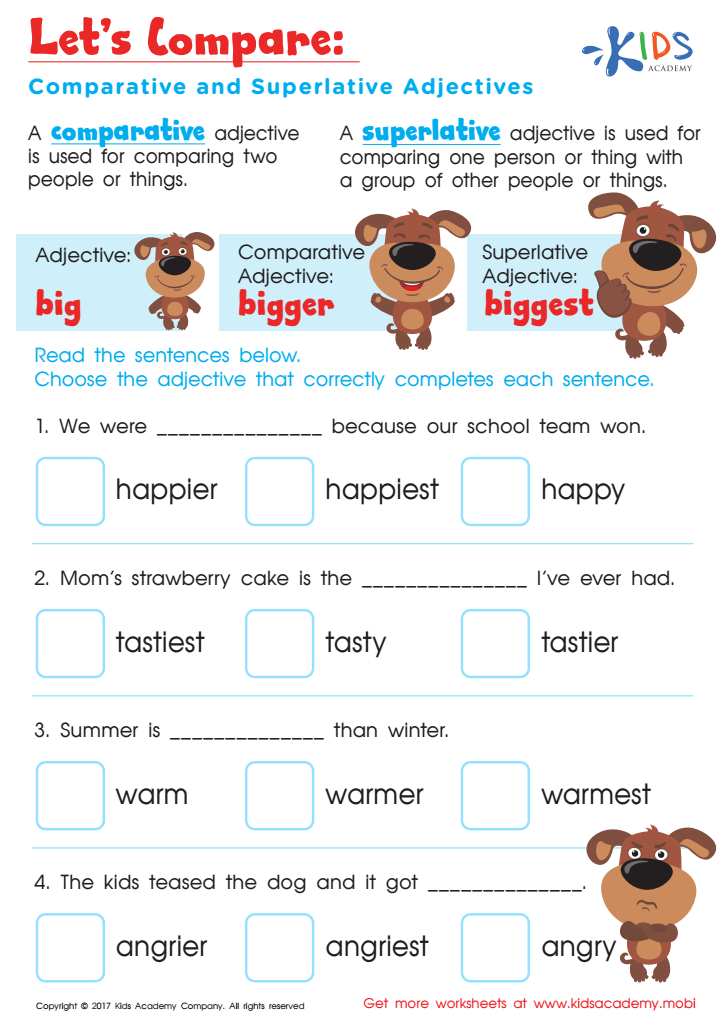
Comparative and Superlative Worksheet
 Assign to My Students
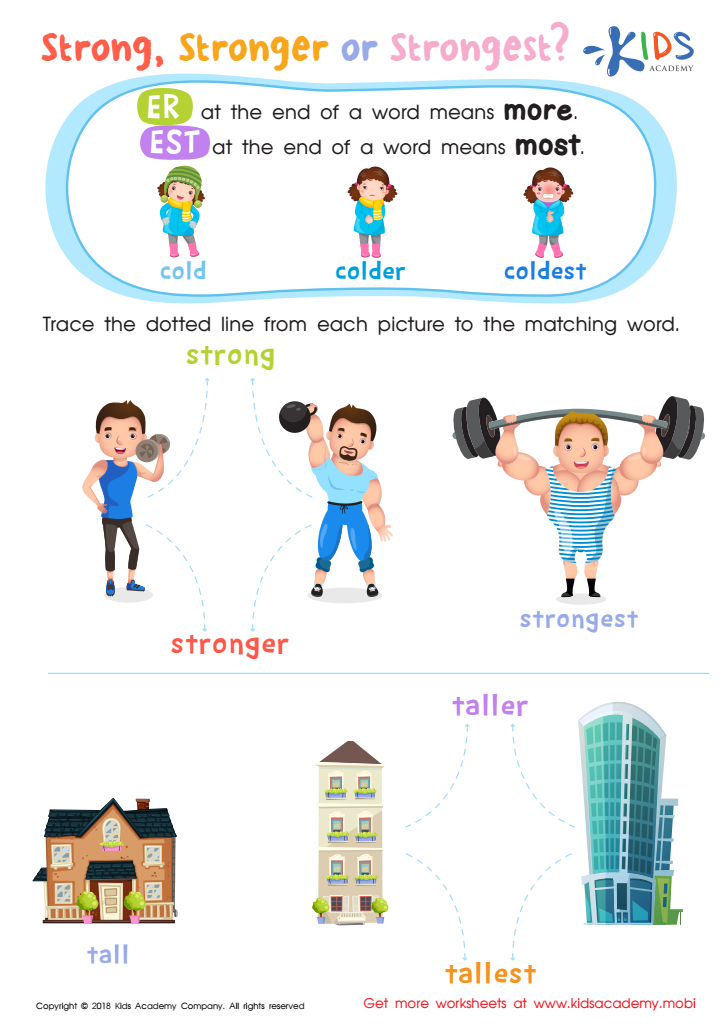
Strong or Stronger? Worksheet
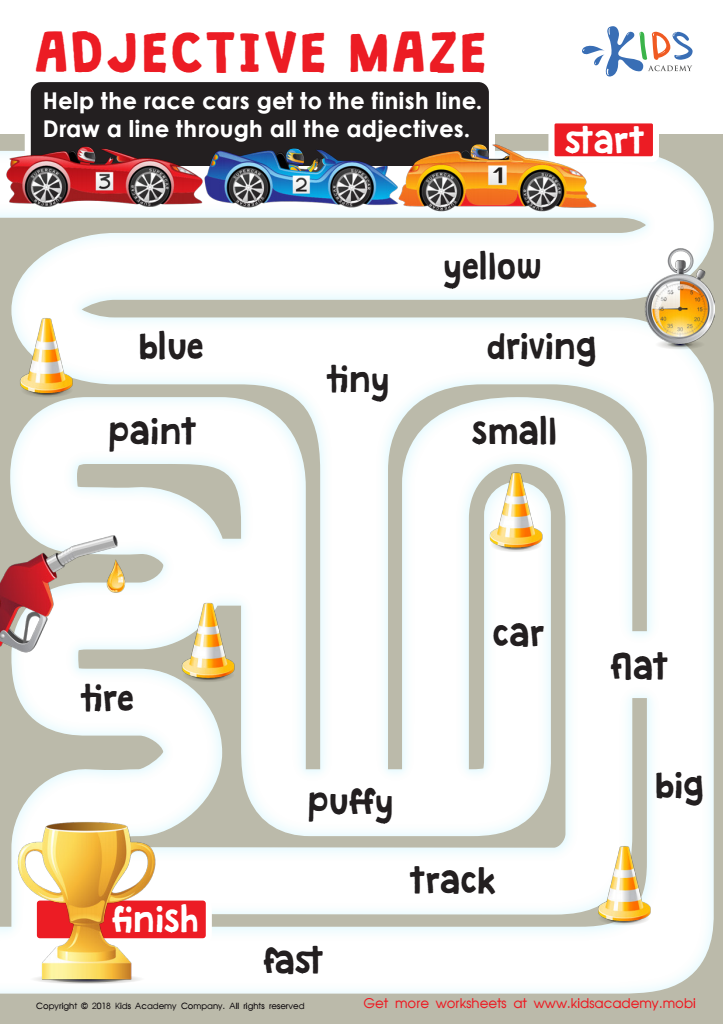
Adjective Maze Worksheet
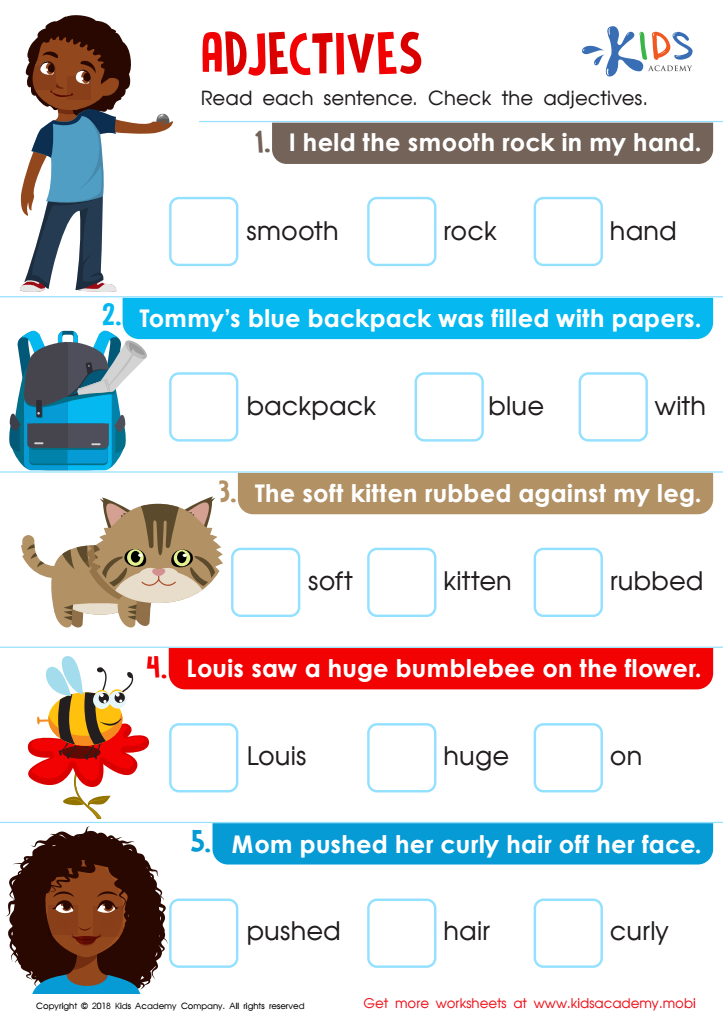
Adjectives Worksheet
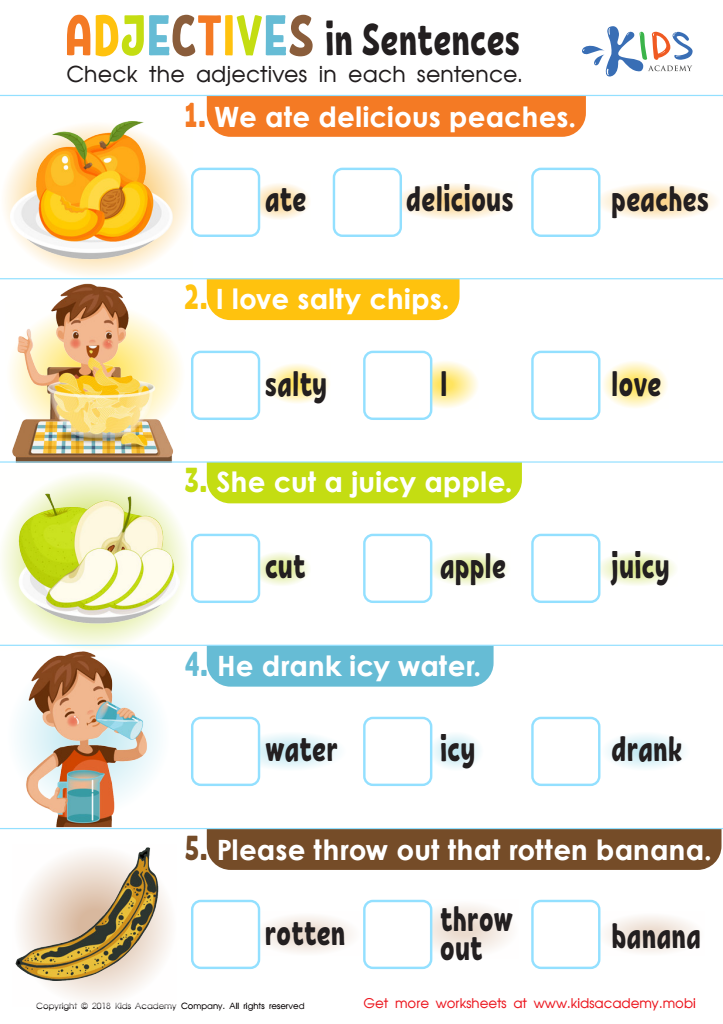
Adjectives in Sentences Worksheet


.jpg)




Understanding adjectives is crucial for children aged 5-9, as these descriptive words significantly enhance their language and communication skills. Parents and teachers should care about teaching this aspect of grammar because adjectives enrich vocabulary, helping children express their thoughts and feelings more vividly. For instance, instead of saying "the dog," a child can say "the fluffy brown dog," which adds clarity and interest to their statements.
Moreover, mastering adjectives aids reading comprehension. When children can identify and articulate what makes something unique or interesting, they become more engaged in stories and can better understand characters and settings. This also builds critical thinking skills as they learn to distinguish between different qualities and categories.
Additionally, strong grammatical foundations encourage confidence in writing. As children experiment with language, they learn to convey more complex ideas, which fosters creativity and self-expression. This skill set is invaluable as they progress academically, leading to improved performance not only in language arts but across subjects.
Ultimately, by understanding adjectives, children develop essential communication and cognitive skills that lay the groundwork for their future educational success and interpersonal relationships. Thus, both parents and teachers play a vital role in nurturing this fundamental aspect of grammar.








