Comprehension skills Writing Worksheets for Ages 5-9
4 filtered results
-
From - To
Our "Comprehension Skills Writing Worksheets for Ages 5-9" provide an engaging way for young learners to enhance their reading and writing abilities. Each worksheet is expertly designed to improve critical thinking, understanding, and retention through fun activities and exercises. Suitable for kindergarten to third-grade students, these worksheets cover various genres and topics, cultivating essential skills like main idea identification, sequencing, summarizing, and answering questions. Perfect for classroom use or at-home practice, these worksheets make learning an enjoyable and productive experience. Start building a strong foundation in comprehension skills with our age-appropriate, easy-to-use resources today!
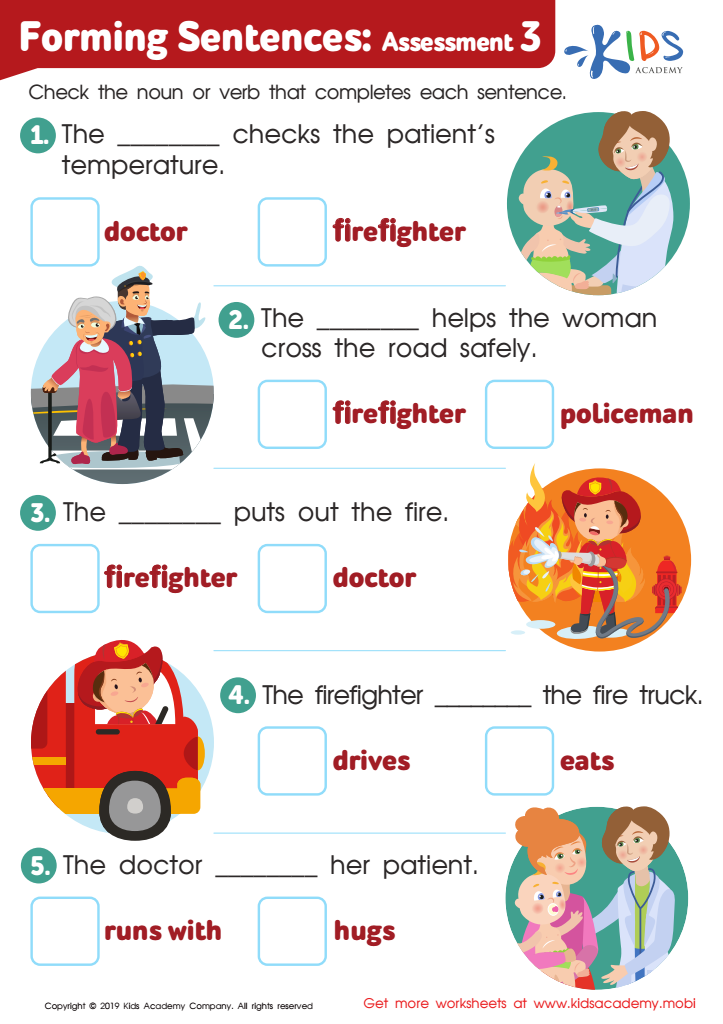
Forming Sentences: Assessment 3 Worksheet
 Assign to My Students
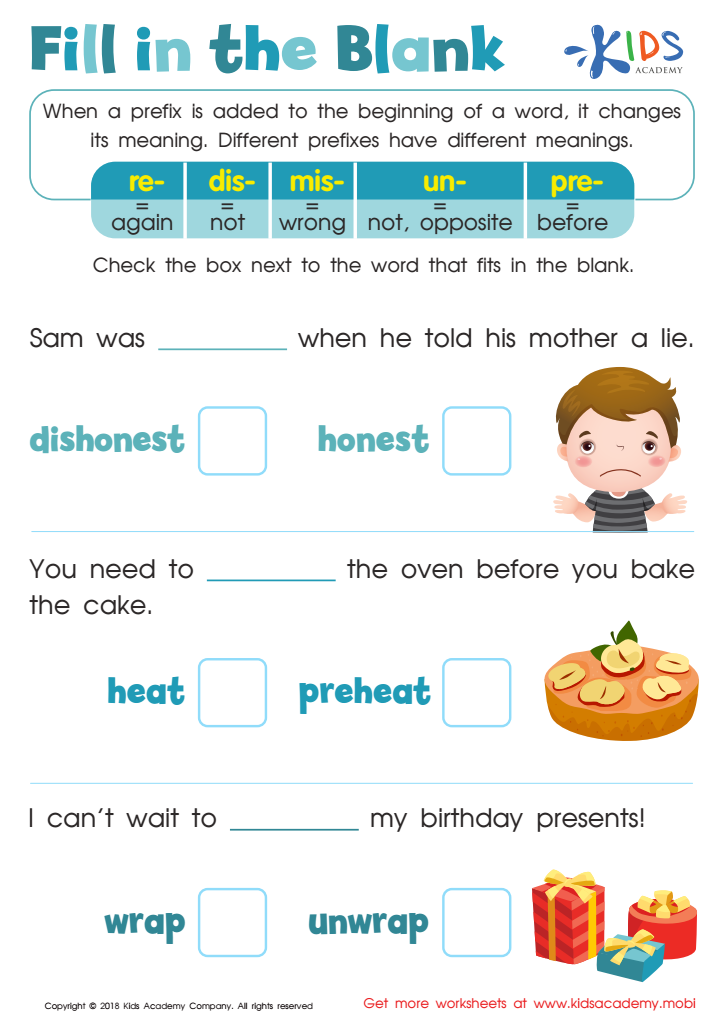
Reading: Fill in the Blank Worksheet
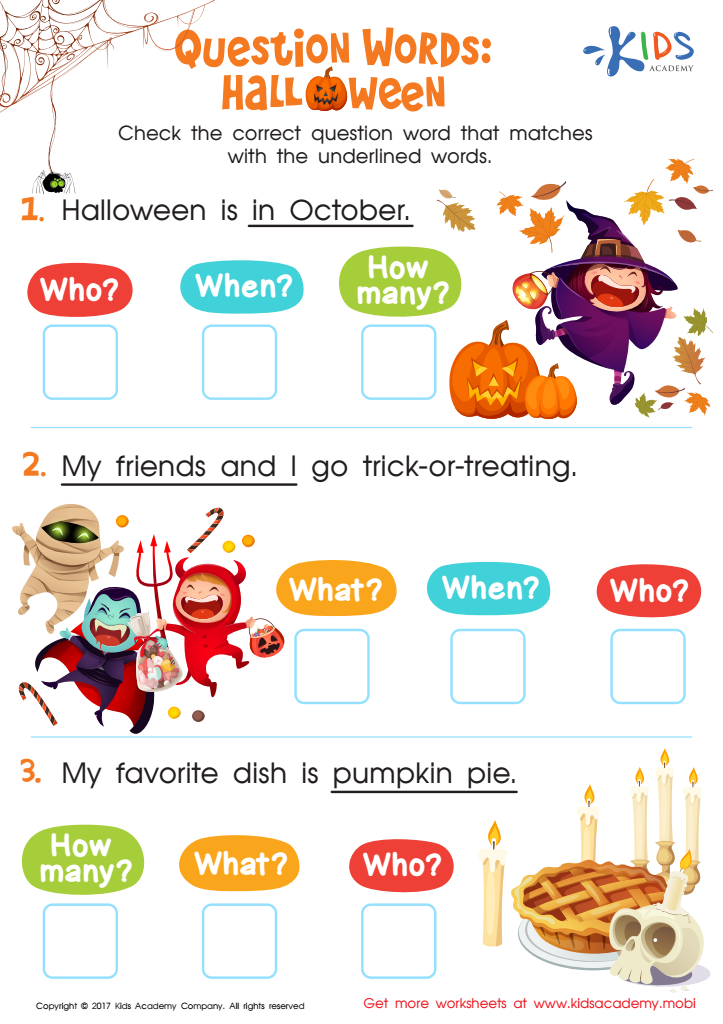
Question Words: Halloween Worksheet
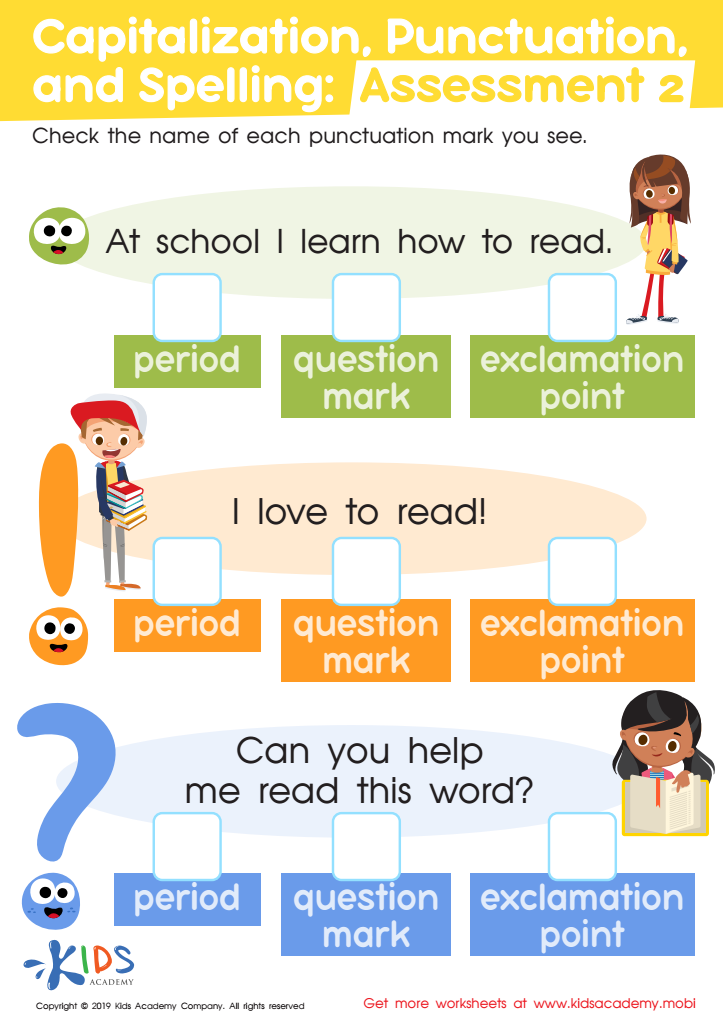
Capitalization. Punctuation. Spelling: Assessment 2 Worksheet



.jpg)




Comprehension skills are the foundation upon which future learning is built, making them crucial for children ages 5-9, who are in the early stages of literacy development. During this formative period, children not only learn to read but also to understand and process information. Effective comprehension skills enable them to grasp the meanings of words and sentences, see connections between ideas, and answer questions about texts—skills pivotal for academic success across all subjects.
For parents and teachers, fostering comprehension skills in writing at this age ensures children learn to express their thoughts clearly and logically. It reinforces the connection between reading and writing, as understanding what one reads is closely linked to the ability to write coherently about it. Comprehension exercises also develop critical thinking and analytical skills by encouraging kids to infer meanings, make predictions, and summarize content.
Furthermore, strong comprehension skills can boost a child's confidence and enjoyment of learning, reducing frustration and increasing enthusiasm for schoolwork. By prioritizing these skills, parents and teachers lay a robust foundation for ongoing educational success, equipping children with the tools they need to tackle more complex texts and topics as they progress in their academic journey.








