
Contextual understanding Writing Worksheets for Ages 5-9
6 filtered results
Difficulty Level
Grade
Age
-
From - To
Subject
Activity
Standards
Our "Contextual Understanding Writing Worksheets for Ages 5-9" are expertly designed to enhance young learners' reading comprehension and writing skills through engaging activities. These worksheets combine fun themes and age-appropriate challenges to help children grasp the context behind words and sentences. Ideal for kindergarten through third grade, our resources encourage critical thinking, vocabulary development, and sentence structure mastery. Parents and educators can use these versatile tools to support daily lessons or supplement homework, ensuring that students gain a strong foundation for more advanced literacy skills. Unlock your child’s potential with our interactive and educational worksheets!
Favorites
With answer key
Interactive
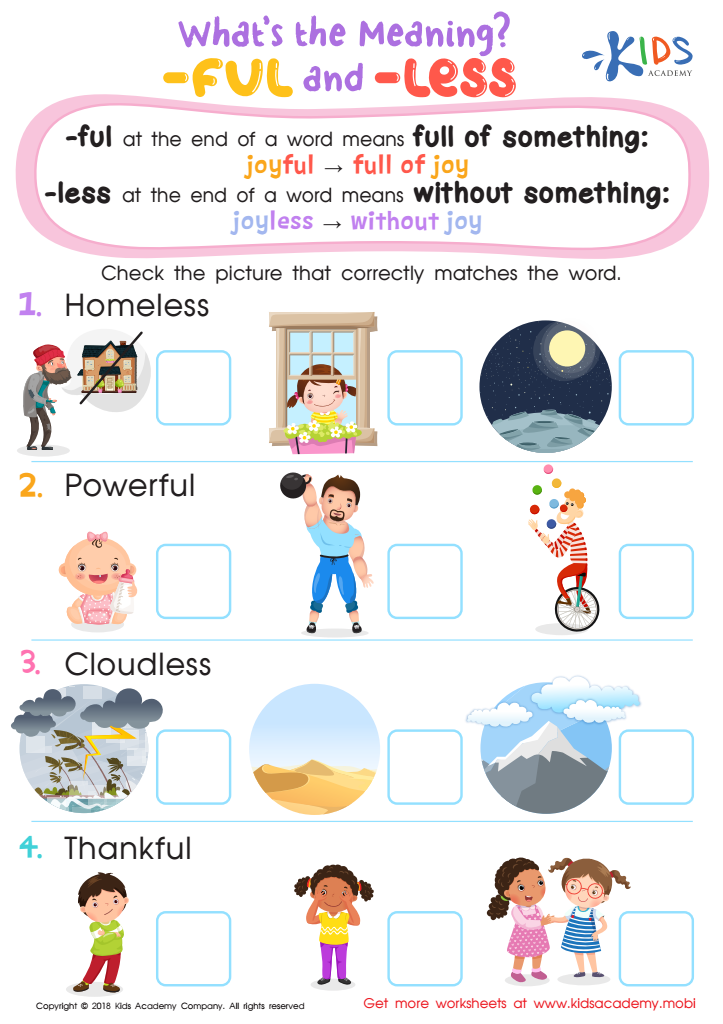
What's the Meaning? Worksheet
Look with your youngster through this colorful worksheet and match the pictures to the words at the top. These words have different meanings due to either a prefix or suffix being added, such as "ful" or "less".
 Assign to My Students
What's the Meaning? Worksheet
Worksheet
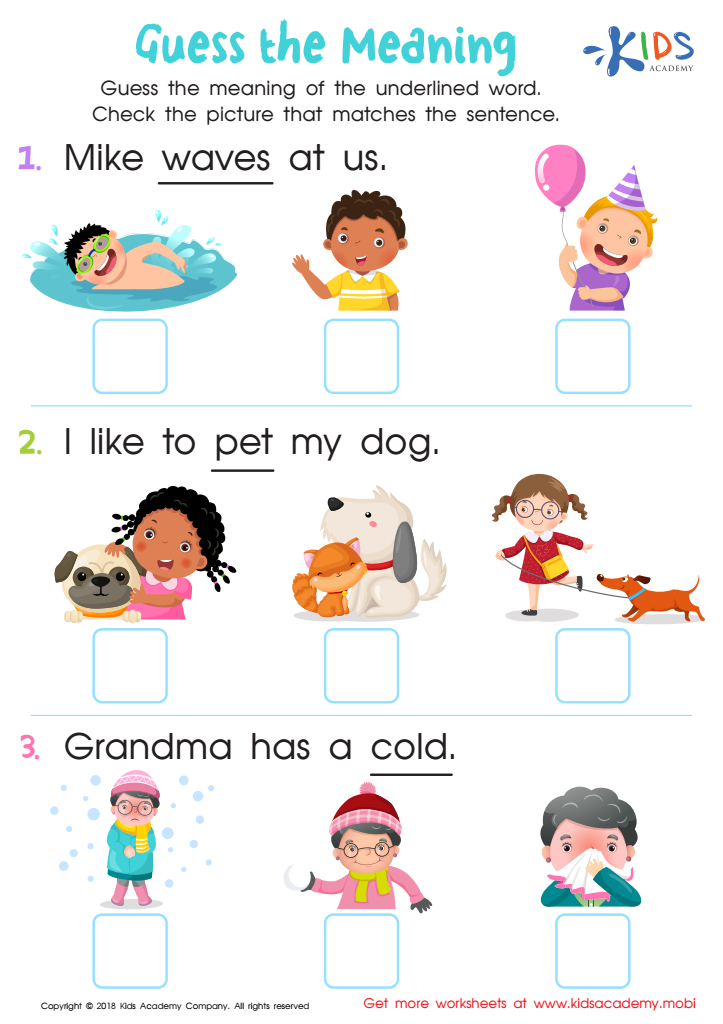
Guess the Meaning Worksheet
Help your child learn the meanings of words in different contexts by using this colourful, free worksheet. What is the meaning of the underlined words in each sentence? Look at the images and pick the one that accurately describes the word's context.
Guess the Meaning Worksheet
Worksheet
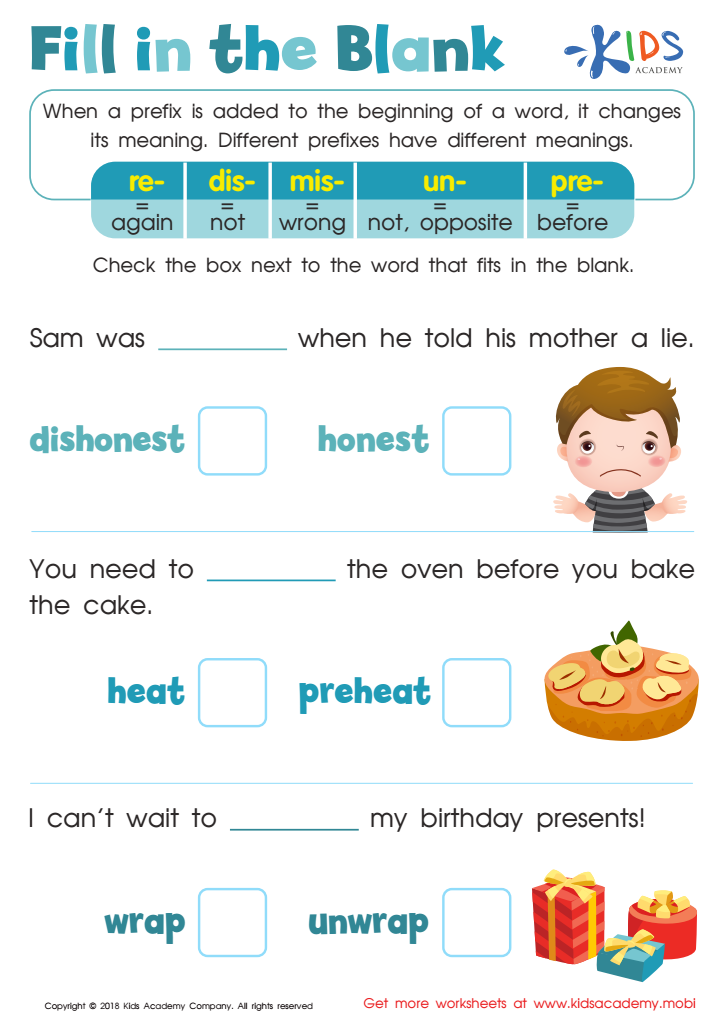
Reading: Fill in the Blank Worksheet
Students can practice understanding the meaning of common prefixes with this worksheet. They read sentences and pick the correct word with the appropriate prefix to complete it. Downloadable and a great addition to reading and vocabulary resources, this helps improve comprehension with mastery of the skill!
Reading: Fill in the Blank Worksheet
Worksheet
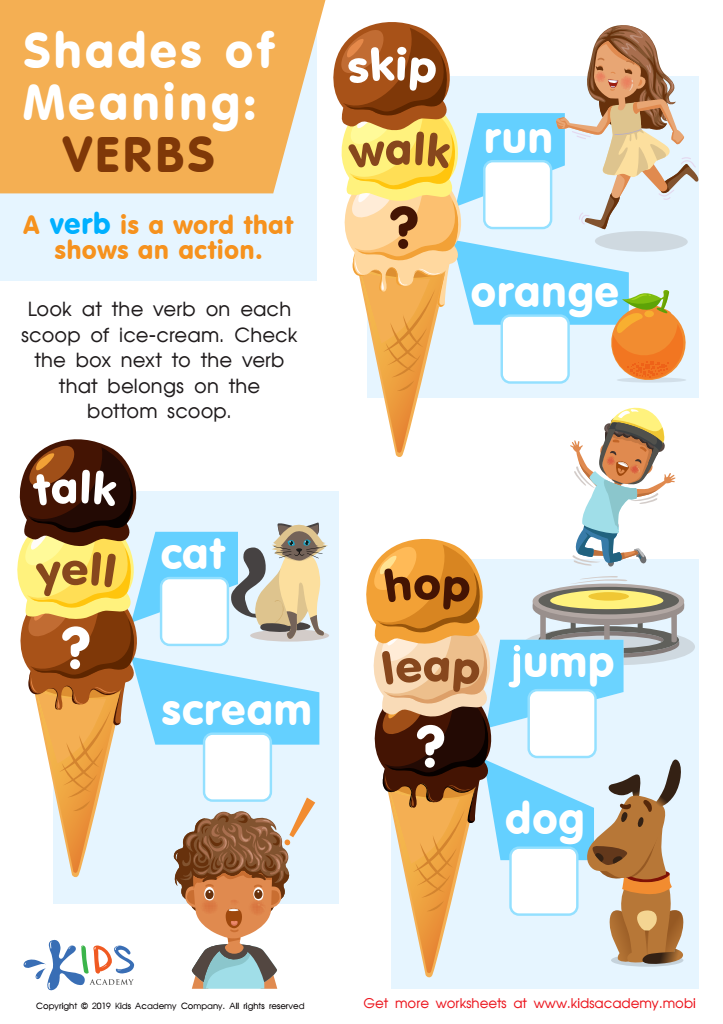
Shades of Meaning: Verbs Worksheet
Verbs are words that show action. Introduce kindergartners to verbs by having them check the box next to the verb that belongs on the bottom scoop in a worksheet. This is a great way to teach them this important part of speech and help them learn to write proper sentences and speak correctly.
Shades of Meaning: Verbs Worksheet
Worksheet
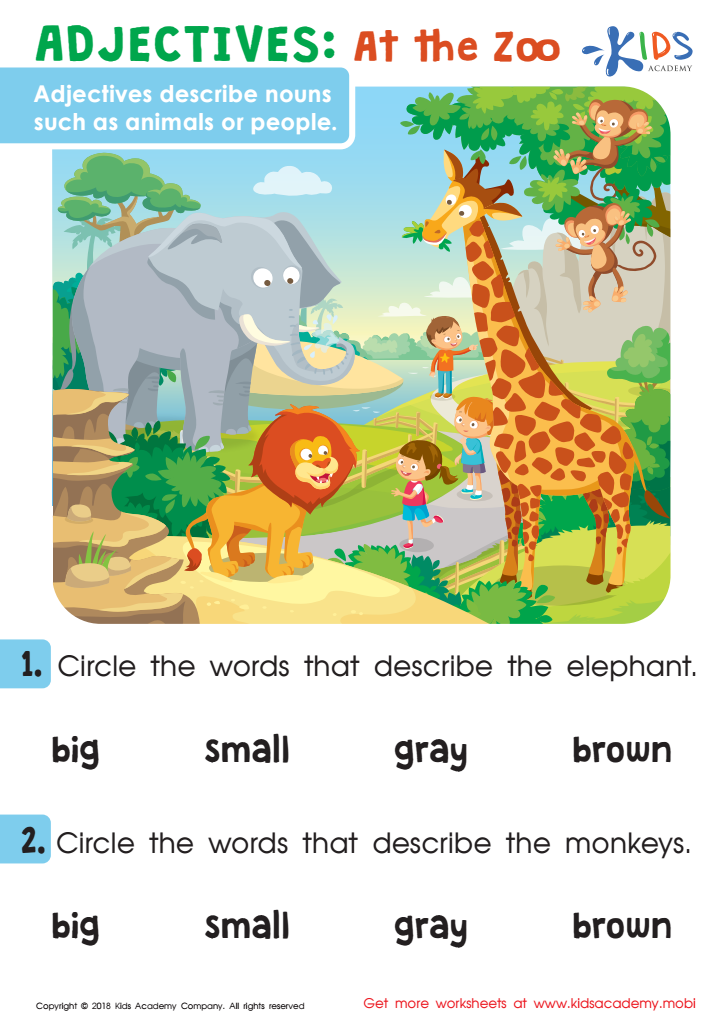
Adjectives: At The Zoo Worksheet
Take your kids to the zoo and ask them about their favorite activities and animals. This worksheet is a great way for kids to learn about adjectives. Explain that adjectives describe nouns like people or animals (e.g. big, tall, dark). Look at the printout with your kids and help them circle words that describe the animals in the picture.
Adjectives: At The Zoo Worksheet
Worksheet
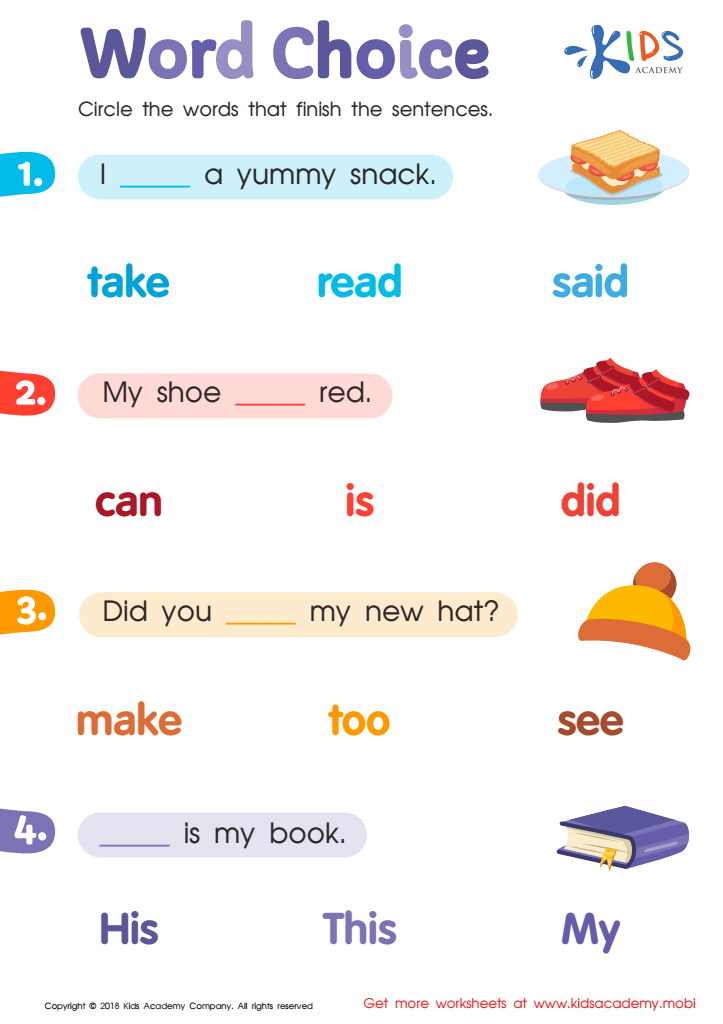
Word Choice Worksheet
This worksheet can help your children become better readers. By now, you should have an idea of their reading level. Read the incomplete sentences aloud and point to the missing piece. Have your students pick the correct word they think best fits the sentence out of the options given.
Word Choice Worksheet
Worksheet
Join Kids Academy for Free
Who is primarily going to use this learning content?







Parents and teachers should care about contextual understanding in writing for children aged 5-9 because it lays a foundational pillar for effective communication and comprehension. Contextual understanding involves knowing how words and sentences fit within a larger narrative, which means children can convey ideas more clearly and understand what they read or hear. For early learners, this skill is crucial as it influences how they interpret and engage with the world.
When children grasp context, they can better express emotions, describe experiences, and relate to others. This empowerment fosters strong language development, critical thinking, and adaptive learning. Context also aids in vocabulary acquisition because children start recognizing words in relation to a broader setting rather than isolated terms. This approach supports healthy cognitive growth and academic achievement.
Moreover, engaging with context-rich materials, stories, and conversations helps students develop empathy and social awareness. By understanding different perspectives and situations, children become more considerate and emotionally intelligent individuals. Small misunderstandings in context can lead to larger gaps in following instructions or comprehending lessons, which might hinder academic progress.
Ultimately, prioritizing contextual understanding prepares children not merely for academic success, but for active and thoughtful participation in life. It equips them with the skills to navigate complex social interactions, solve problems creatively, and communicate more effectively.








