Sight word recognition Writing Worksheets for Ages 5-9
6 filtered results
-
From - To
Boost your child's literacy skills with our engaging Sight Word Recognition Writing Worksheets designed for ages 5-9. These worksheets help children recognize, read, and write essential sight words, making reading more accessible and enjoyable. Each worksheet features fun activities that promote word familiarity and confidence in young learners. Through tracing, filling in blanks, and creative writing prompts, kids will enhance their vocabulary while fostering a love for learning. Perfect for home or classroom use, our resources cater to various learning styles, ensuring every child has the opportunity to succeed academically. Unlock your child's potential today with our delightful sight word worksheets!
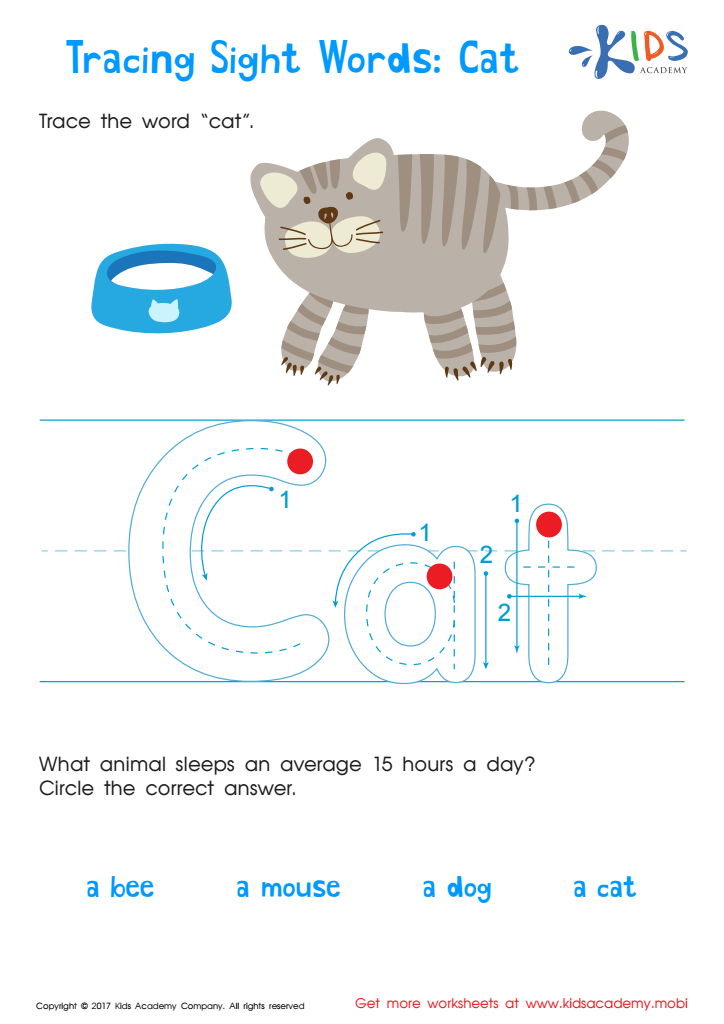
Cat Printable Sight Words Worksheet
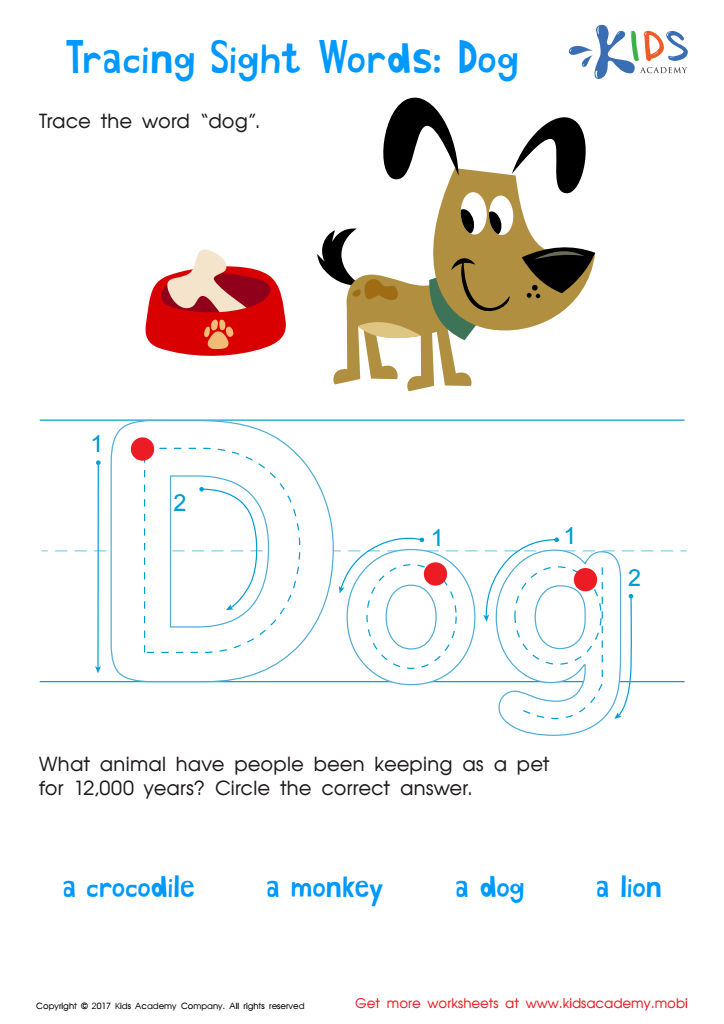
Dog Worksheet Sight Words Worksheet
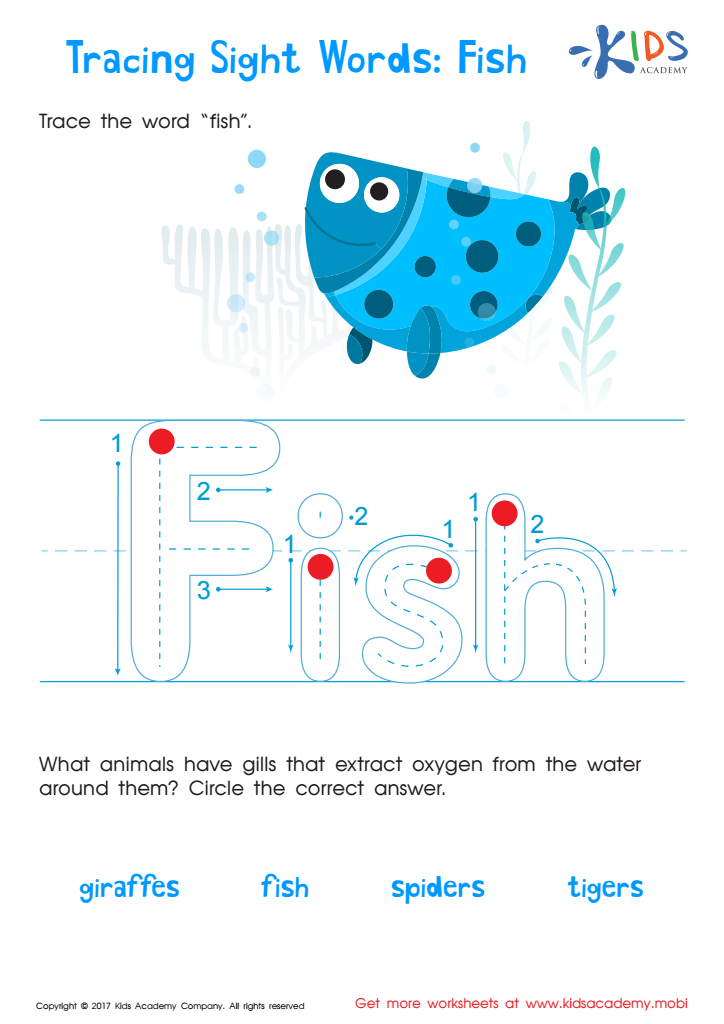
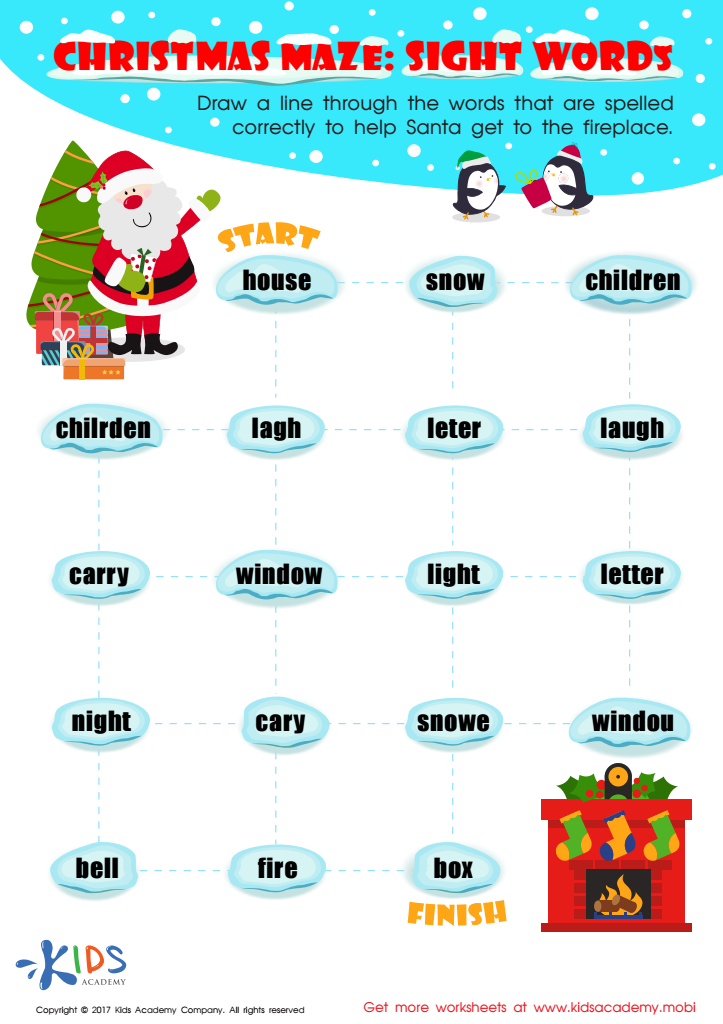
Sight Words Christmas Maze Printable
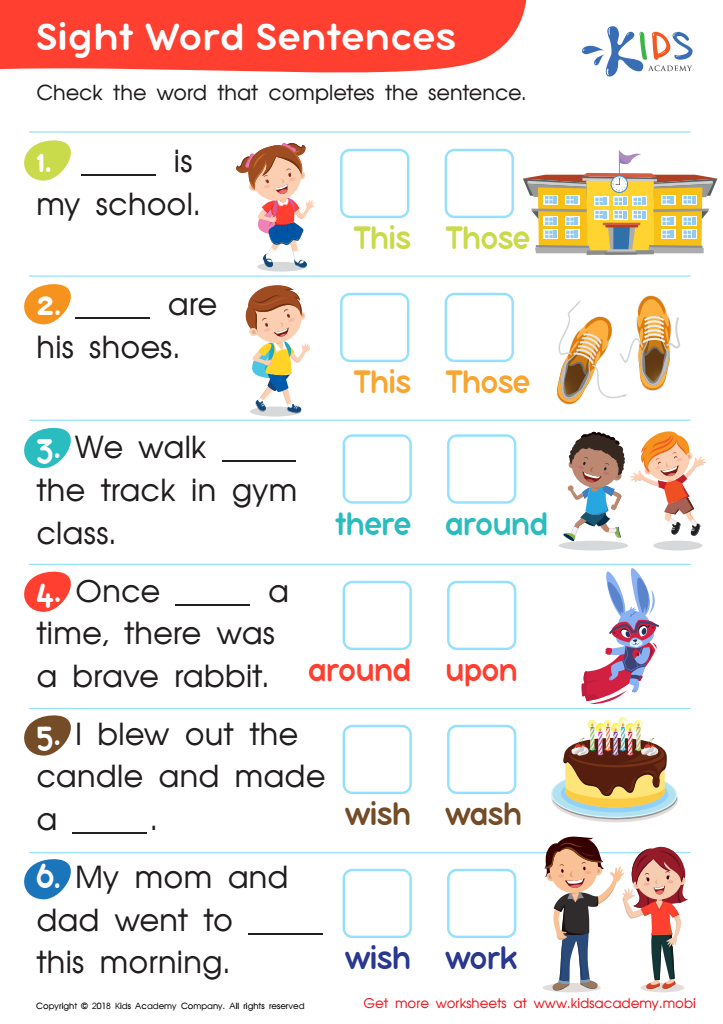
Sight Word Sentences Worksheet
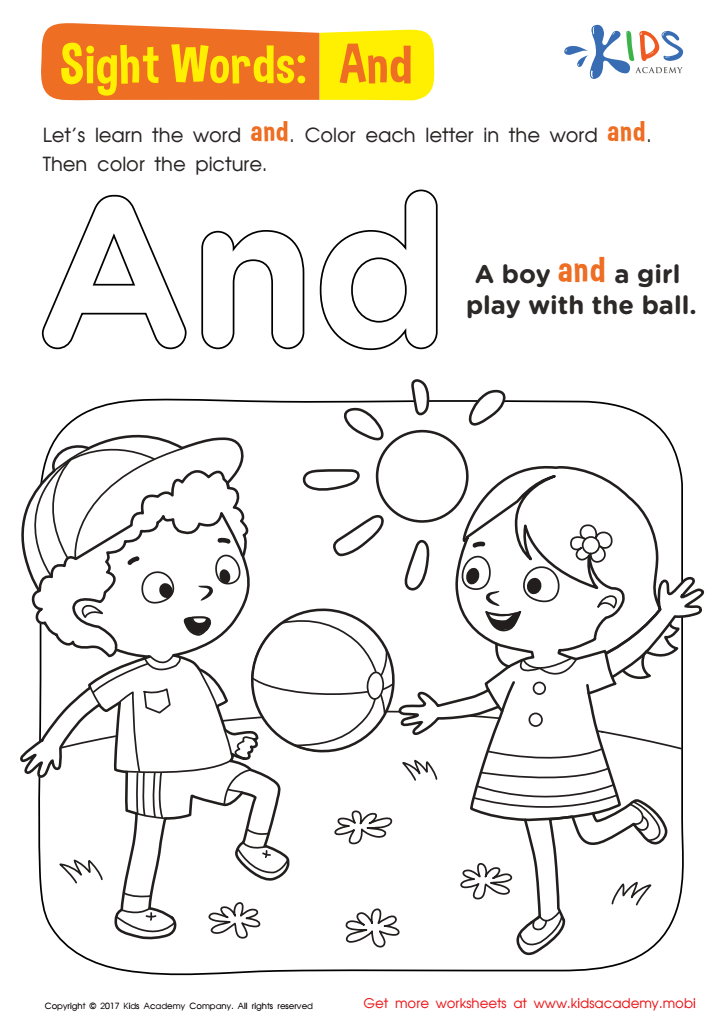
And Worksheet Sight Words Worksheet
 Assign to My Students







Sight word recognition is crucial for children aged 5-9 as it forms the foundation of reading fluency and comprehension. Sight words are the most frequently used words in the English language that children are encouraged to memorize by sight, enabling them to recognize them instantly without needing to sound them out. This immediate recognition allows young readers to focus on understanding the meaning of the text rather than getting bogged down in decoding, making reading a more enjoyable and fluid experience.
For parents and teachers, fostering sight word recognition directly contributes to a child's confidence and motivation in reading. Children who are proficient in recognizing sight words tend to read more independently, which enhances their overall literacy skills. Engaging in writing activities involving these words not only strengthens their memorization but also reinforces spelling and writing skills.
Moreover, early reading success has long-term benefits; it aids in the development of critical thinking, enhances vocabulary, and fosters a love for reading, which is essential for academic achievement. When sight word recognition aligns with daily practice through both play and structured activities, it cultivates a well-rounded approach to literacy, emphasizing the importance for educators and families in supporting children's reading journeys.








