Understanding adjectives Writing Worksheets for Ages 5-9
5 filtered results
-
From - To
Introduce your child to the colorful world of words with our "Understanding Adjectives" writing worksheets, crafted for ages 5-9! These engaging activities help young learners enhance their descriptive skills by identifying and using adjectives effectively. Each worksheet encourages kids to expand their vocabulary and unleash their creativity, transforming simple sentences into vivid and exciting stories. Perfect for both classroom and at-home learning, our structured and fun-filled exercises ensure a thorough understanding of adjectives. Boost your child's writing confidence today by downloading our expertly designed worksheets at Kids Academy!
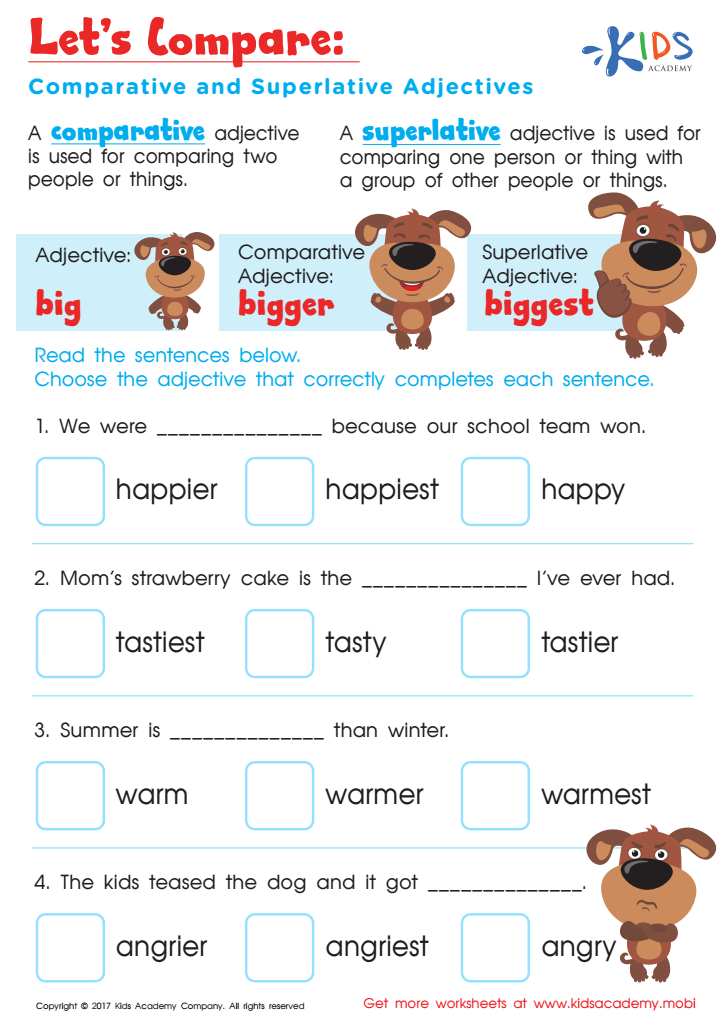
Comparative and Superlative Worksheet
 Assign to My Students
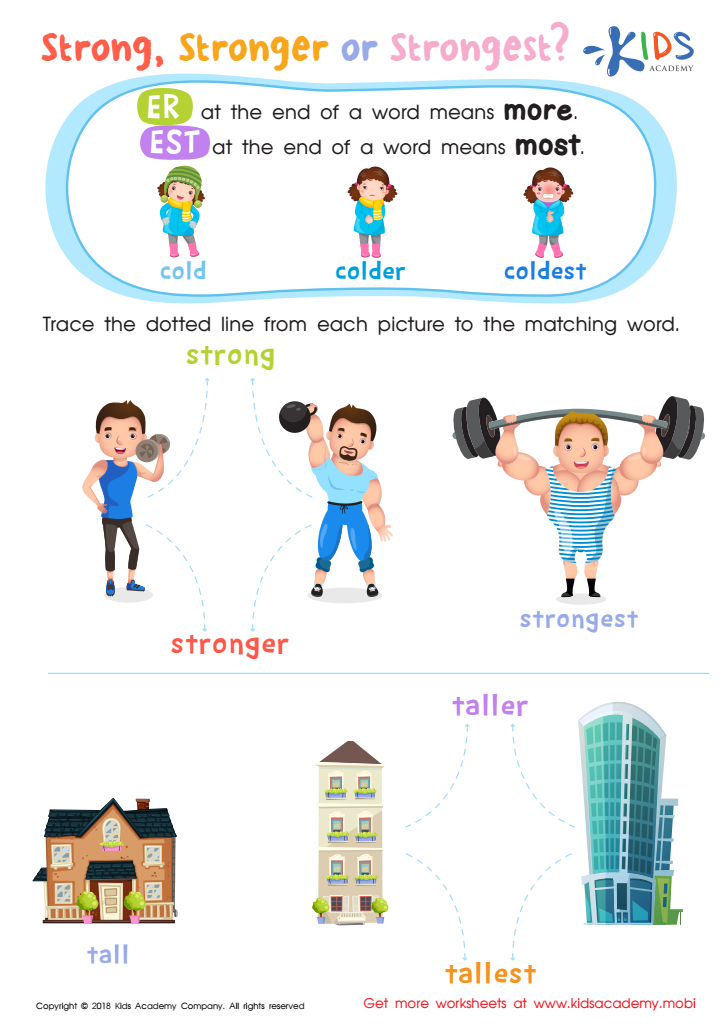
Strong or Stronger? Worksheet
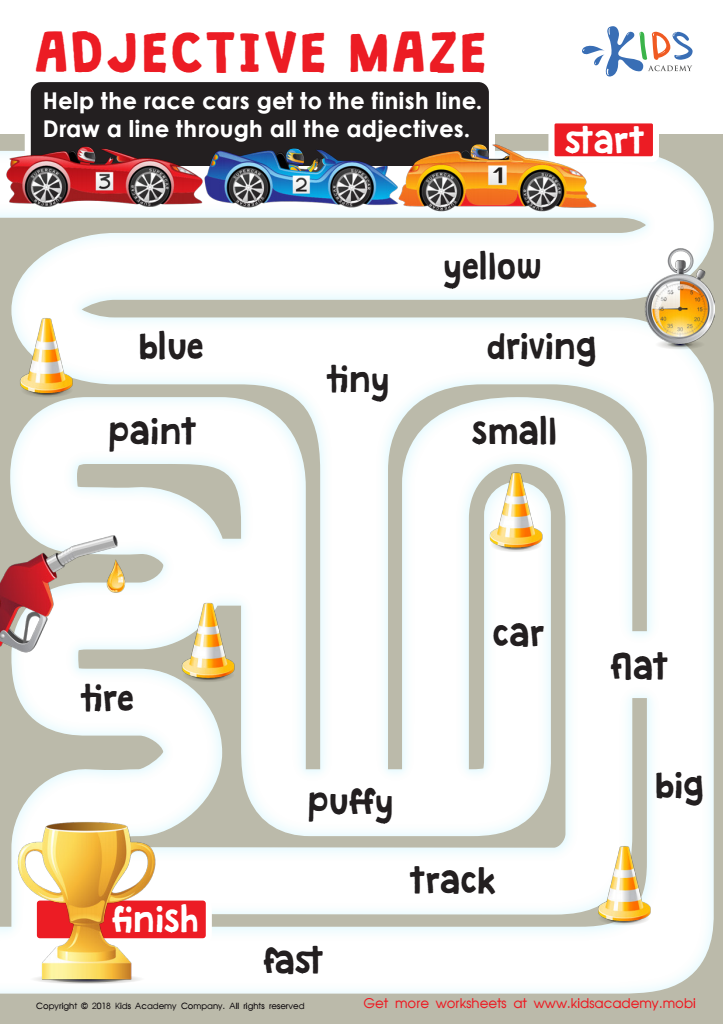
Adjective Maze Worksheet
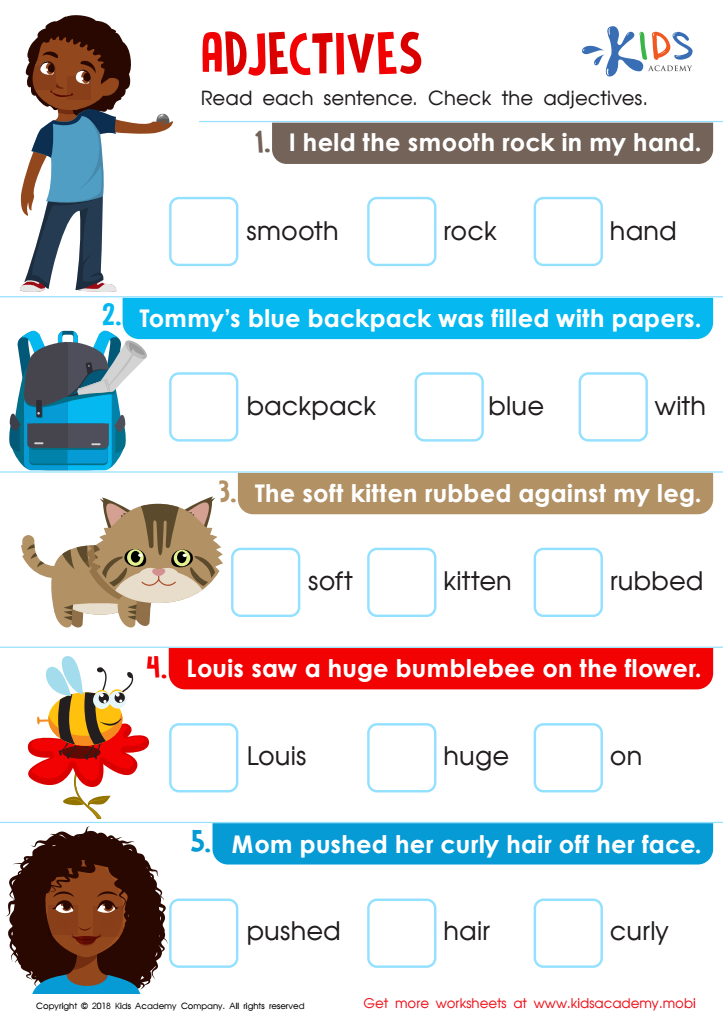
Adjectives Worksheet
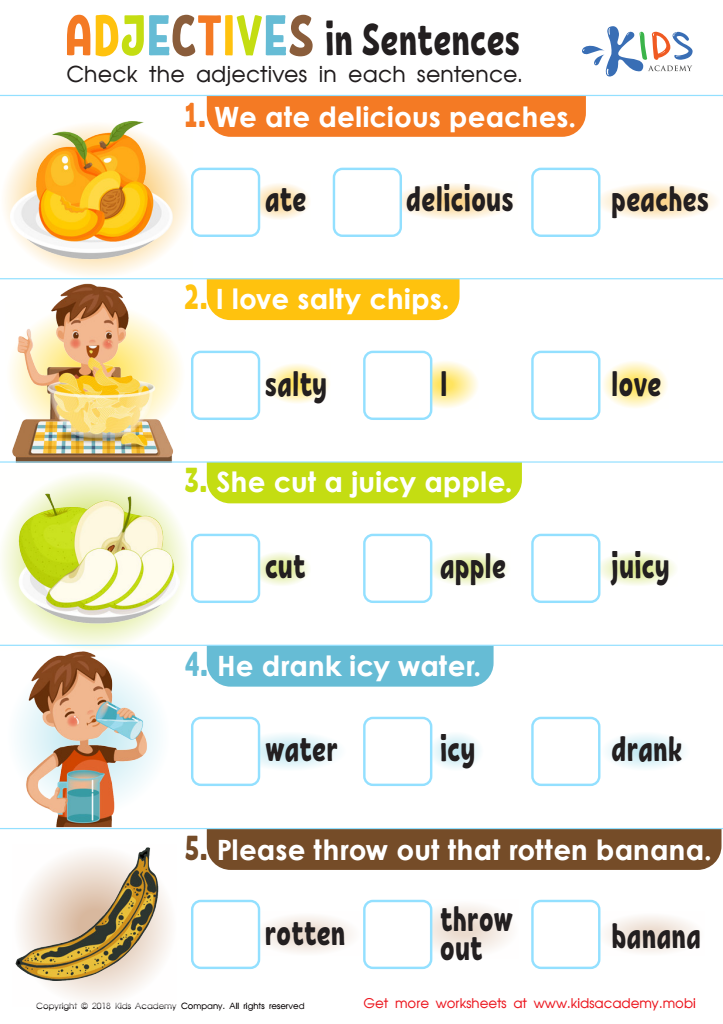
Adjectives in Sentences Worksheet








Understanding adjectives is crucially important for children aged 5-9 because this developmental stage is when most foundational language skills are formed. Adjectives, descriptive words that modify nouns, are key in enhancing vocabulary and language precision. When children grasp the use of adjectives, their ability to express themselves becomes richer and more detailed, fostering better communication skills.
For parents and teachers, fostering an early understanding of adjectives encourages children to observe the world more keenly and articulate their thoughts more clearly. Describing objects, experiences, and feelings in specific terms not only improves children's expressive skills but also enlarges their cognitive and emotional vocabulary.
Moreover, understanding adjectives contributes to a child's reading comprehension. When kids can decode descriptive passages, they visualize and connect with texts better, making reading a more engaging and effective learning process. Parents and teachers can incorporate adjective-rich books and activities, enhancing students' appreciation of literature and improving academic performance.
In essence, a solid grasp of adjectives lays groundwork for more advanced literacy skills. Parents and teachers who emphasize adjectives contribute to a child’s lifelong communication abilities, better comprehension, and a richer understanding of the world around them. These skills support academic success and everyday interactions, which are essential for holistic development.








