Reading comprehension Tracing Words Worksheets for Ages 5-9
10 filtered results
-
From - To
Unlock your child's reading potential with our "Reading Comprehension Tracing Words Worksheets" designed for ages 5-9. These engaging worksheets combine word tracing with reading practice, helping young learners improve their vocabulary, sentence structure, and comprehension skills. As kids trace words, they also get hands-on experience with reading passages, ensuring a multi-faceted learning approach that fosters both literacy and writing abilities. Perfect for at-home learning or classroom use, these worksheets make reading fun and interactive. Watch your child's confidence soar as they develop crucial skills that form the foundation for lifelong learning. Download and start today!
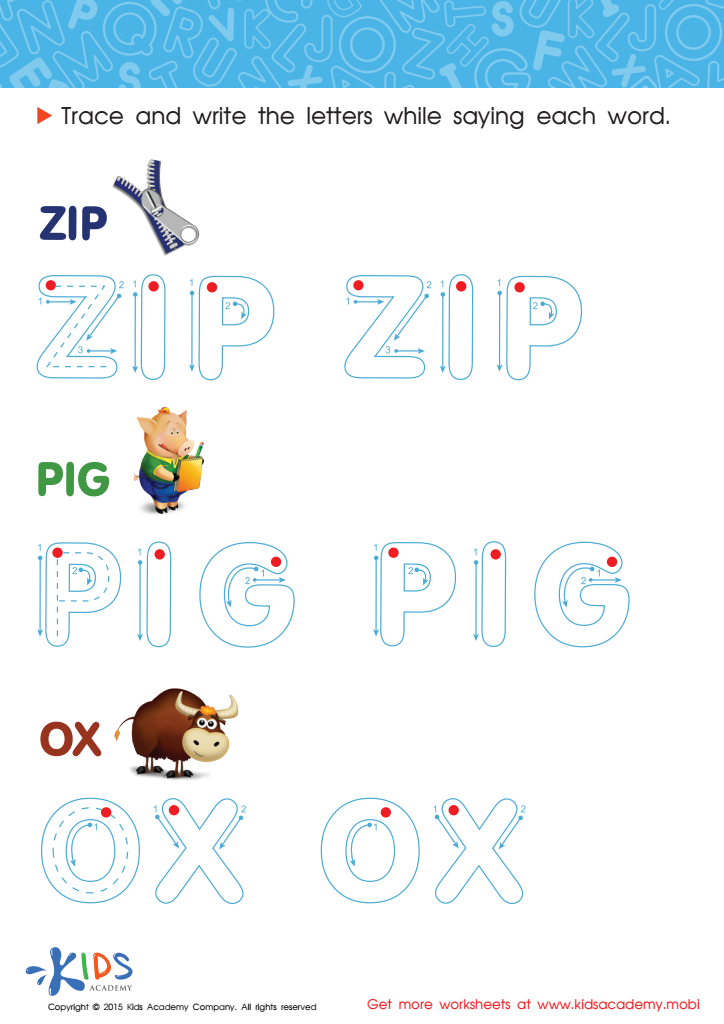
A Zip, a Pig and an Ox Spelling Worksheet
 Assign to My Students
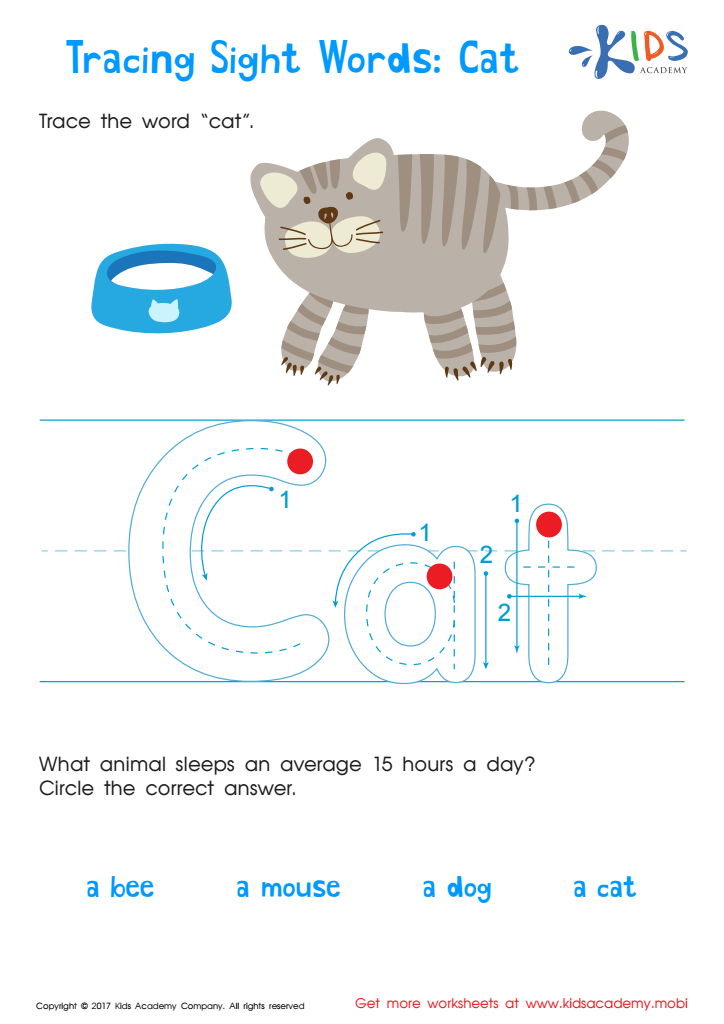
Cat Printable Sight Words Worksheet
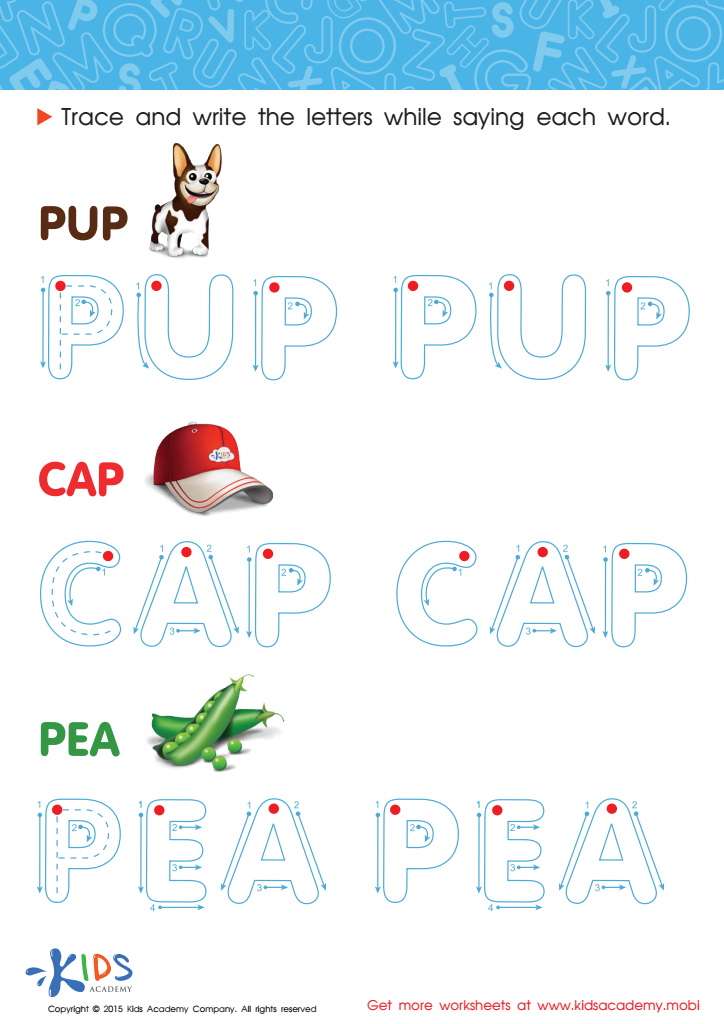
A Pup, a Cap and a Pea Spelling Worksheet
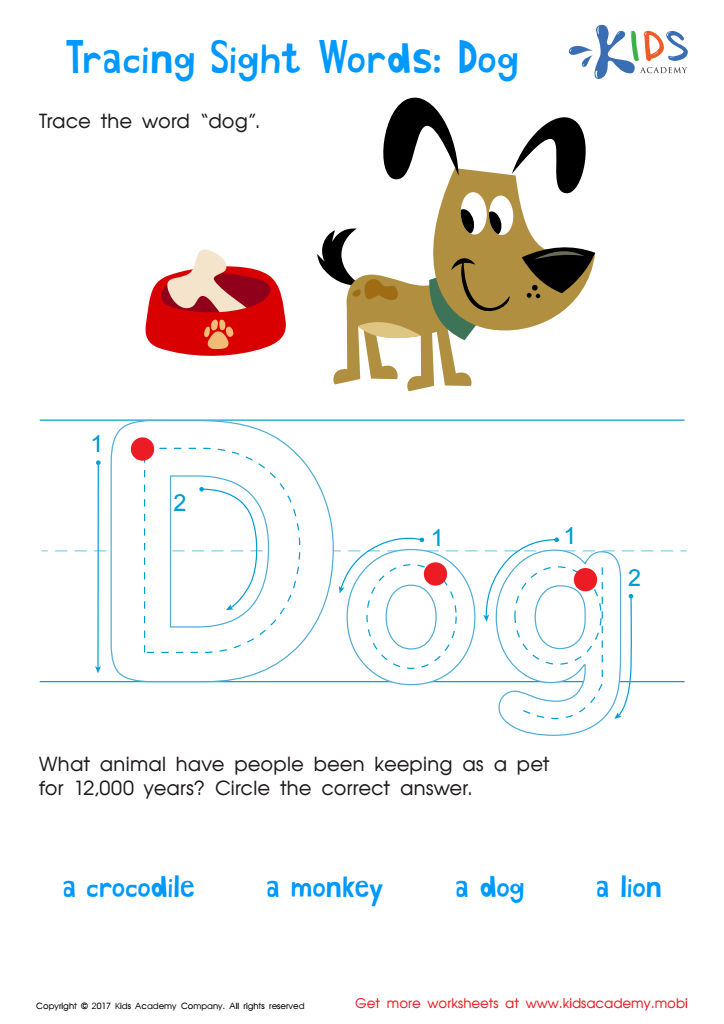
Dog Worksheet Sight Words Worksheet
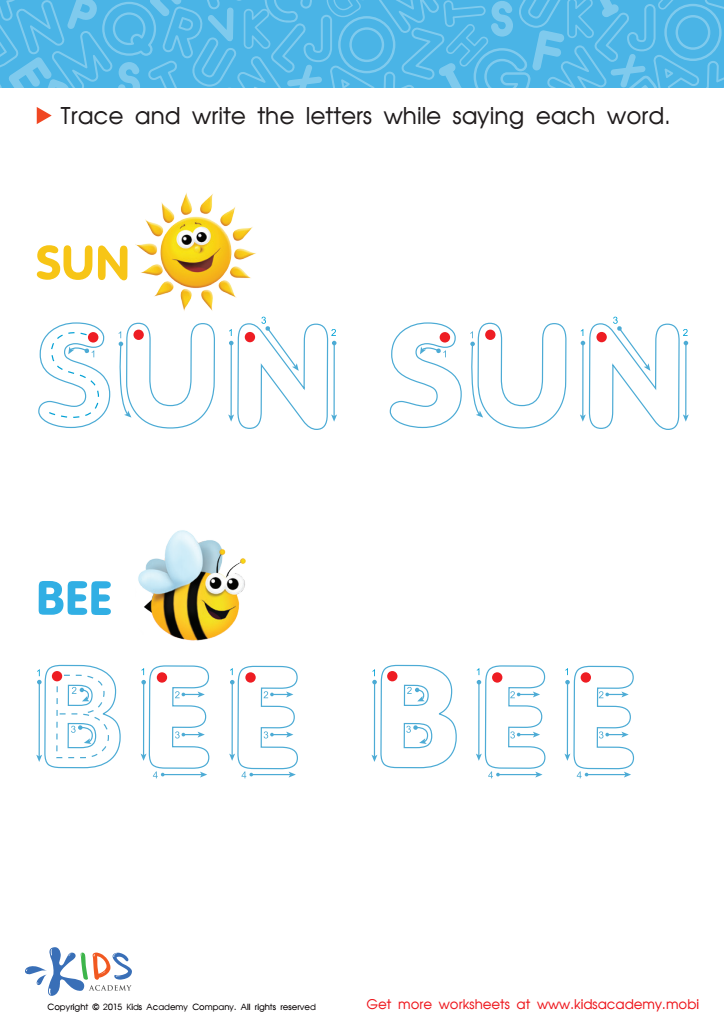
The Sun and a Bee Spelling Worksheet
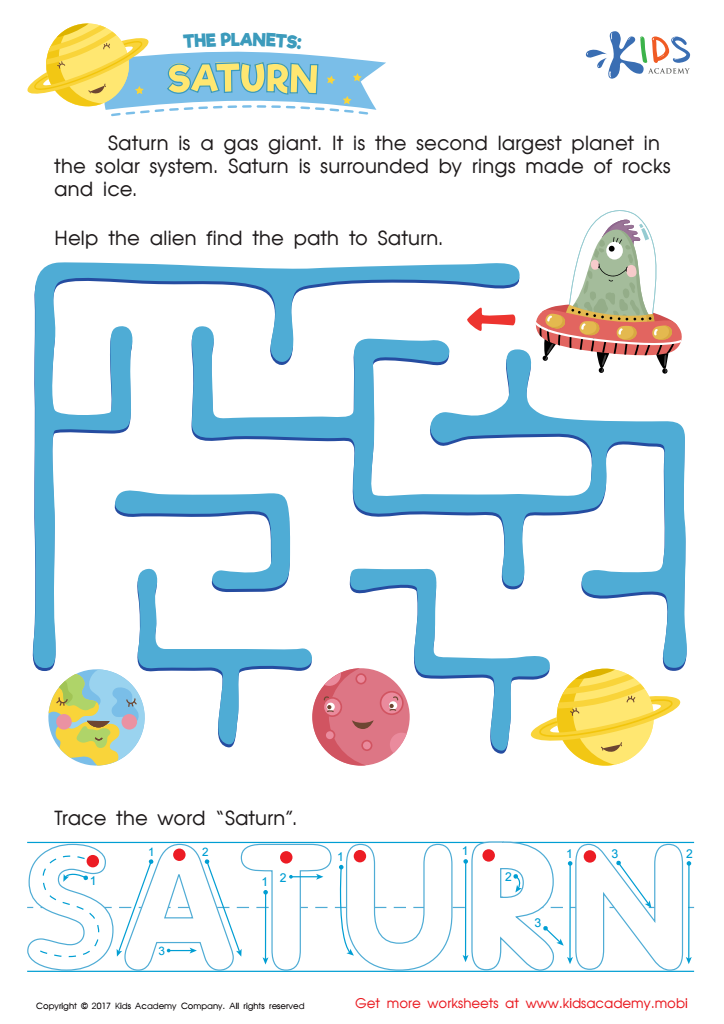
The Planets: Saturn Printable
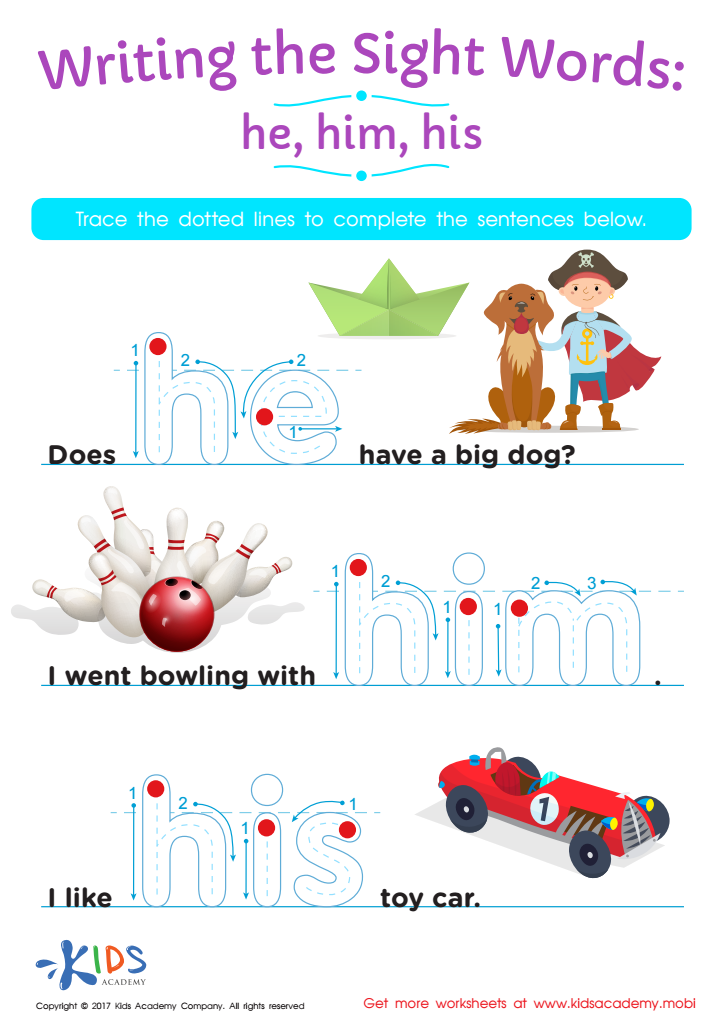
He, Him, His Printable Sight Words Worksheet
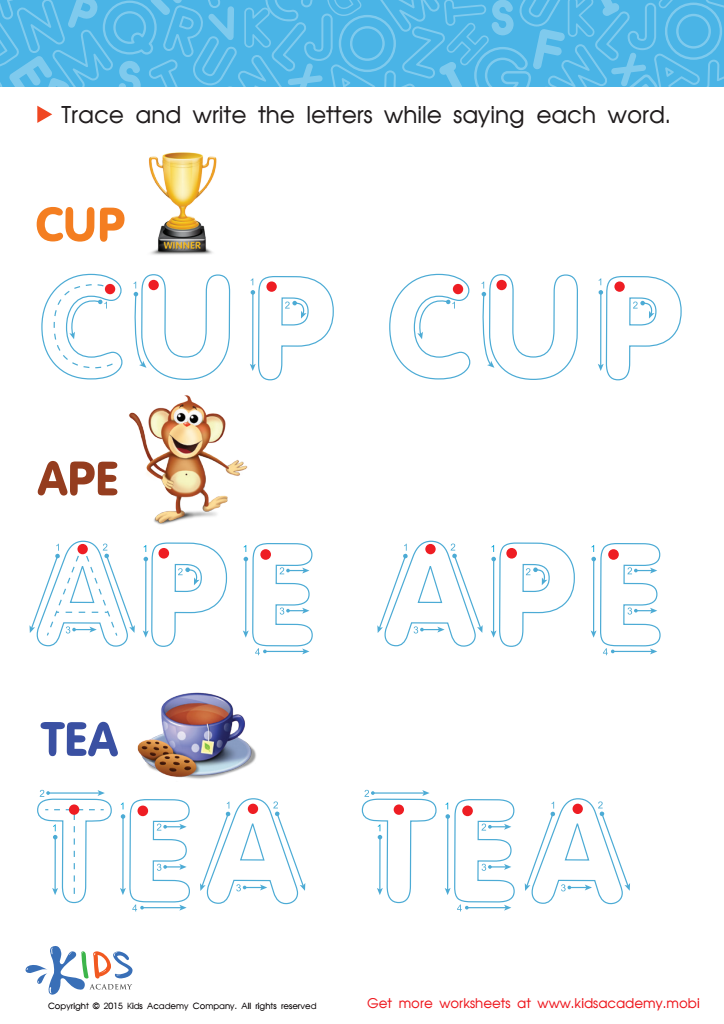
A Cup, an Ape and Tea Spelling Worksheet
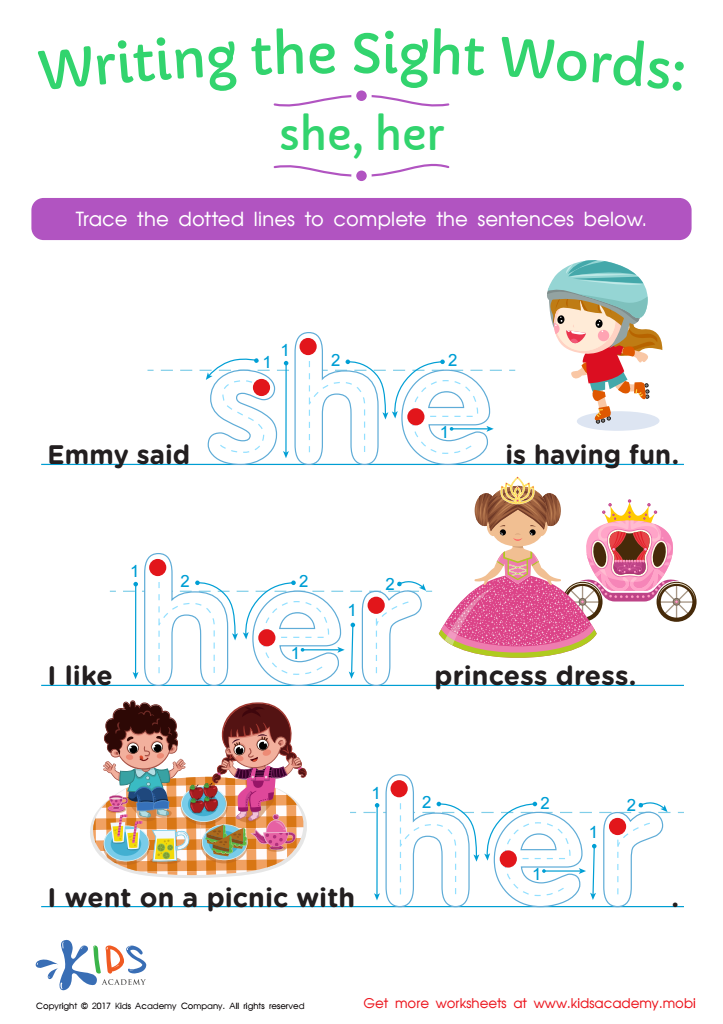
She, Her Printable Sight Words Worksheet








Reading comprehension tracing words is crucial for young children aged 5-9 because it lays the foundation for future academic success and lifelong learning. At this stage, kids are developing essential literacy skills that enable them to understand and interpret written texts. By engaging in tracing words exercises, children enhance their ability to recognize, write, and understand words, which are key components of reading comprehension.
When children trace words, they become familiar with the shape and structure of letters and words. This practice boosts their fine motor skills and hand-eye coordination, essential for neat and legible handwriting. Furthermore, tracing words helps reinforce the connection between spoken and written language, reinforcing vocabulary acquisition and phonemic awareness.
Developing strong reading comprehension skills early on allows children to follow classroom instructions more effectively, engage with learning materials, and participate actively in discussions. It also fosters a love for reading by making the process of decoding texts more manageable and enjoyable. Additionally, strong reading skills are linked to enhanced cognitive abilities, such as critical thinking and problem-solving.
For parents and teachers, investing time in tracing words is an investment in a child's future. Once children master these foundational skills, they are more likely to excel academically, feel confident in their abilities, and develop a positive attitude towards learning and exploration.








