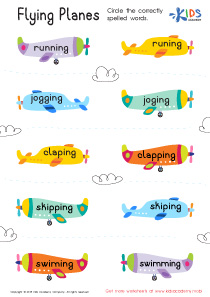
Letter recognition Elementary Phonics Worksheets for 5-Year-Olds
5 filtered results
-
From - To
Unlock your child's potential with our engaging "Letter Recognition Elementary Phonics Worksheets" designed specifically for 5-year-olds! These interactive worksheets help young learners master letter identification and sound recognition through playful activities and colorful visuals. Each worksheet is thoughtfully crafted to enhance phonetic awareness, making learning fun and effective. Children will enjoy practicing letter recognition with various exercises, including matching, tracing, and games that boost their confidence in reading. Perfect for home or classroom use, these worksheets are an essential tool for laying a strong foundation in literacy skills. Start your child's journey to reading success today!
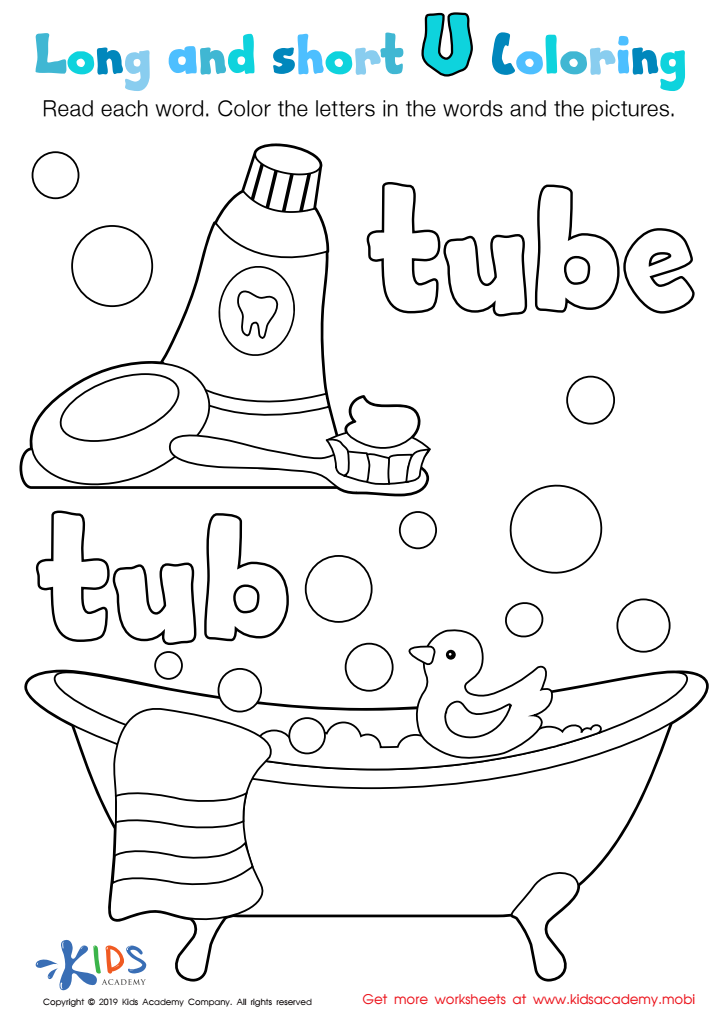
Long and Short U Worksheet
 Assign to My Students
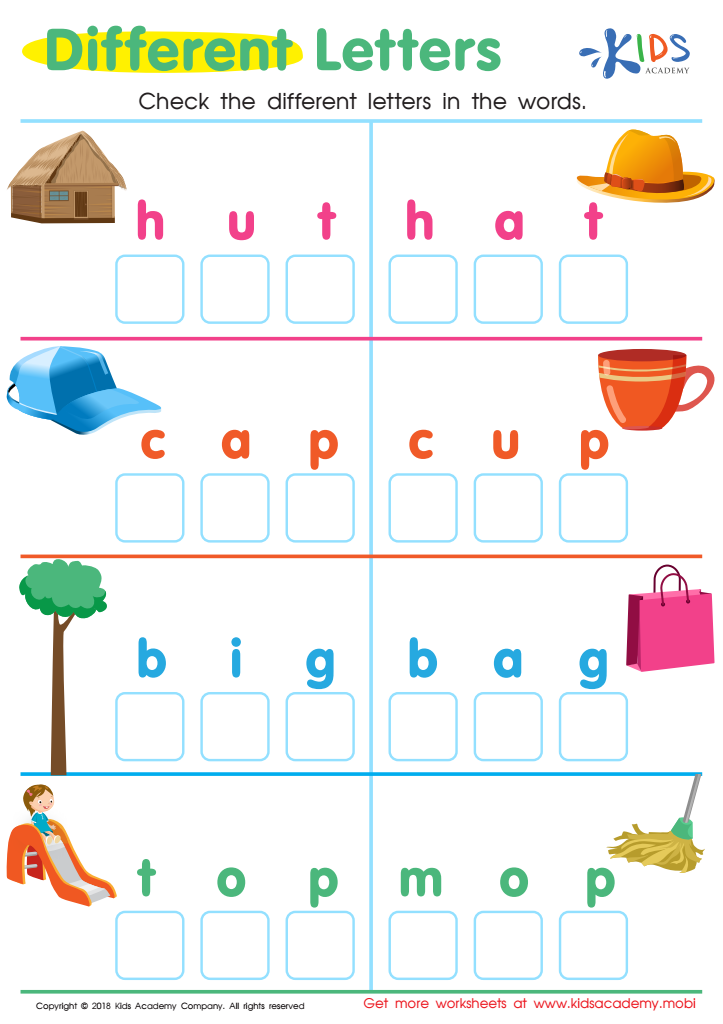
Different Letters Reading Worksheet
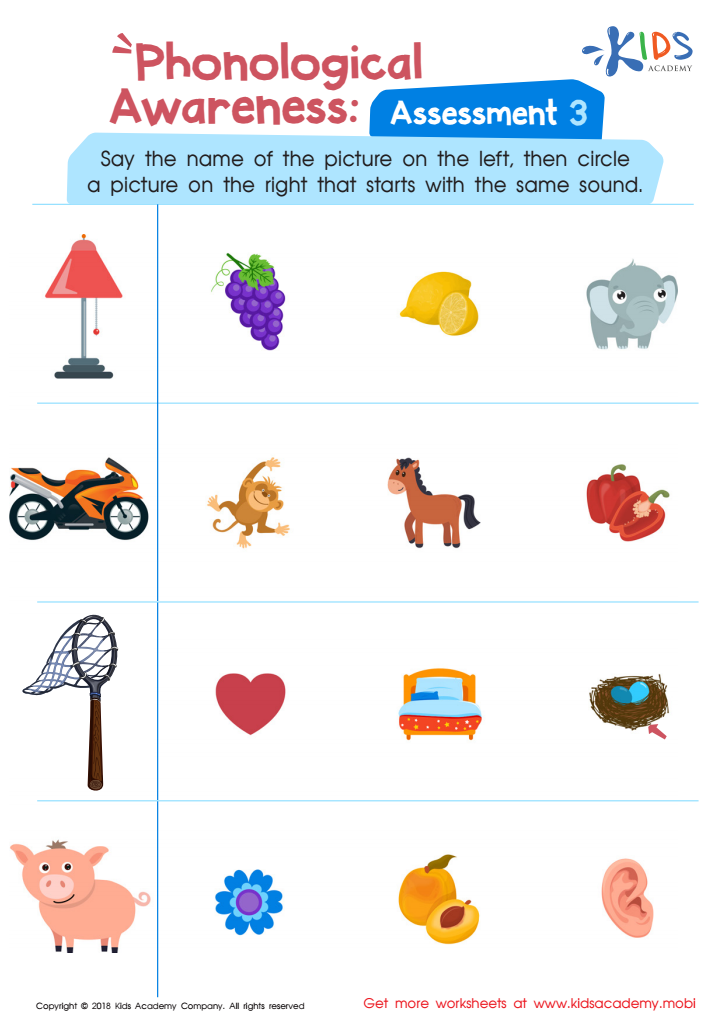
Phonological Awareness: Assessment 3 Worksheet
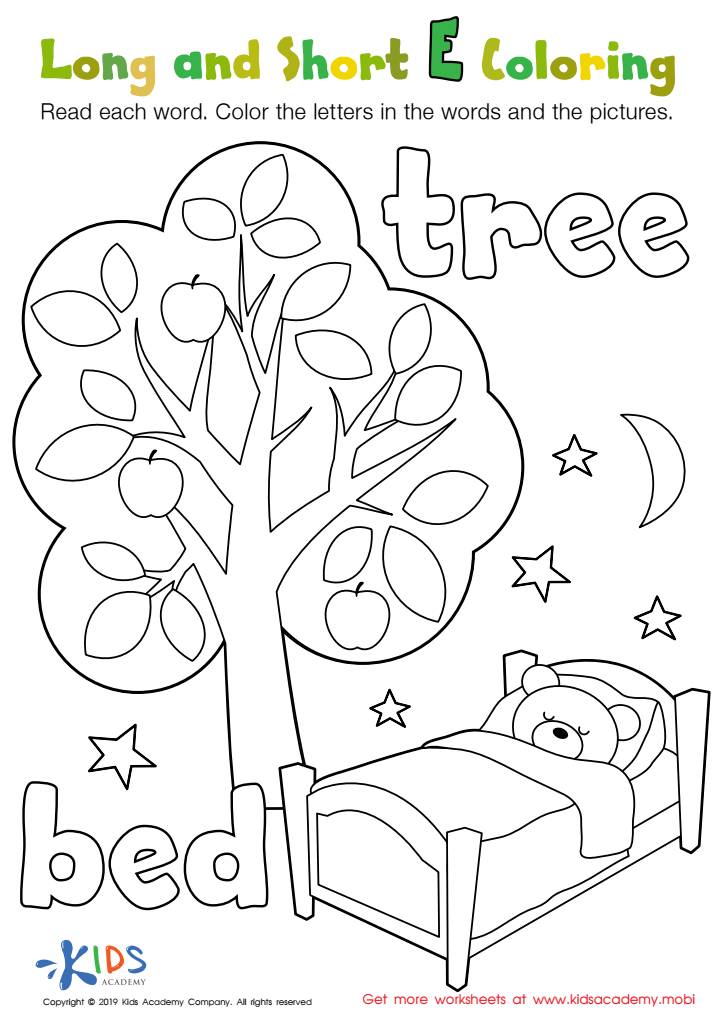
Long and Short E Worksheet
Assign to My Students
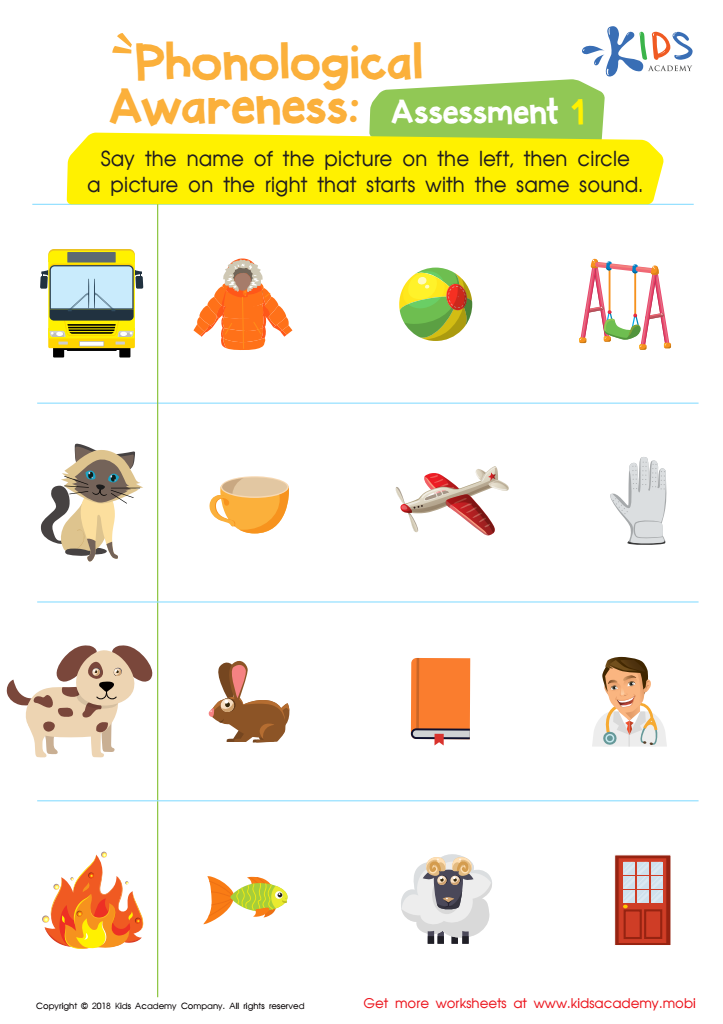
Phonological Awareness: Assessment 1 Worksheet




Letter recognition and elementary phonics are crucial foundations for early literacy, especially for 5-year-olds. At this age, children are in a vital stage of cognitive development where they begin to connect sounds with letters, a skill that directly impacts their reading and writing abilities.
When parents and teachers prioritize letter recognition, they provide children with the tools to decode words, enhancing their ability to understand written language. This directly correlates to future academic success, as strong reading skills are linked to improved performance across all subjects.
Moreover, letter recognition helps build children's confidence. When they can identify letters and match them with corresponding sounds, they feel capable and empowered in their learning. This fosters a positive attitude towards reading, nurturing a lifelong love for books and knowledge.
Additionally, early phonics instruction aids in developing critical thinking and phonemic awareness—skills that contribute to overall literacy development.
In an increasingly literacy-driven world, ensuring that children have a solid grasp of these concepts positions them for success in their educational journey and enriches their communication skills, providing a meaningful and engaging way to explore language. Therefore, parents and teachers play a pivotal role in supporting this essential aspect of early childhood education.