Lowercase letter writing Alphabet Worksheets for 5-Year-Olds
3 filtered results
-
From - To
Enhance your 5-year-old's writing skills with our Lowercase Letter Writing Alphabet Worksheets. Specially crafted for young learners, these worksheets provide engaging, step-by-step tutorials to help kids master lowercase letters. Designed to promote fine motor development and letter recognition, each worksheet features tracing exercises, interactive activities, and colorful illustrations. Perfect for at-home practice or as a supplement to classroom learning, our printable worksheets make practicing fun and effective. Boost your child's confidence in writing and start their literacy journey on the right foot with these amazing educational tools!
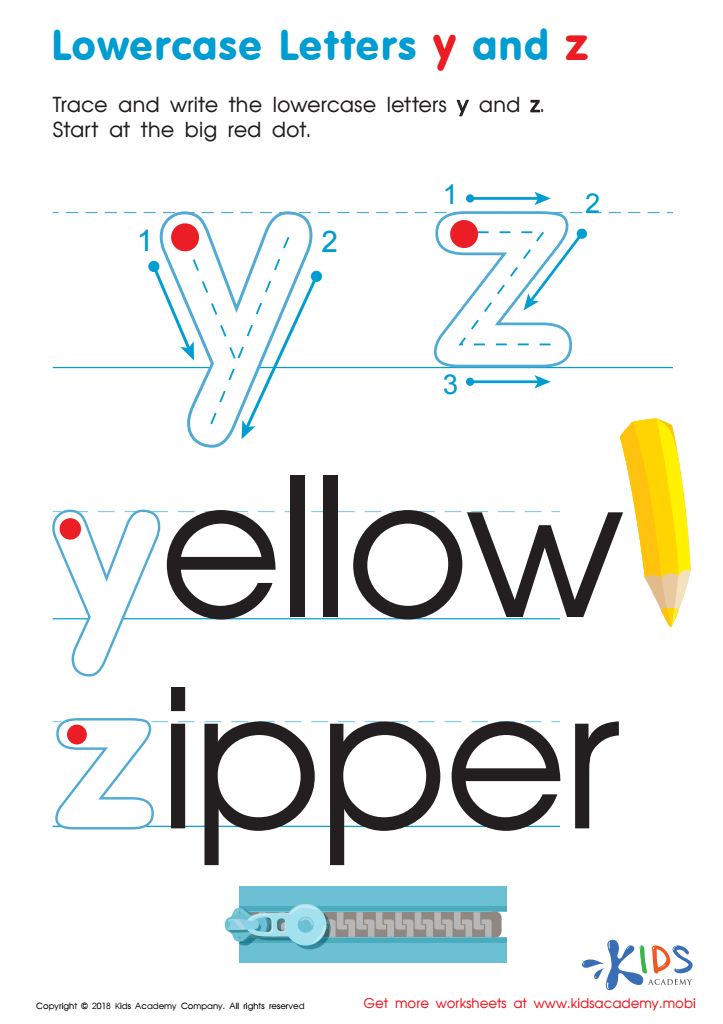
Lowercase Letters y z Worksheet
 Assign to My Students
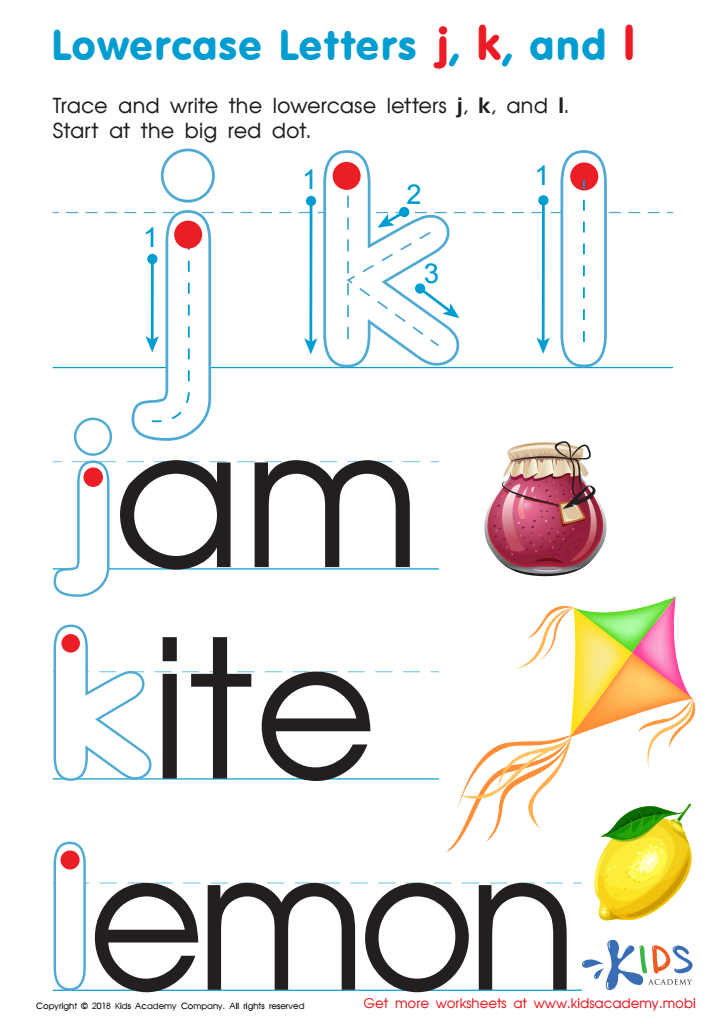
Lowercase Letters j k l Worksheet

Lowercase Letters m n o Worksheet








Parents and teachers should care about helping 5-year-olds master lowercase letters because it establishes a fundamental skill crucial for early literacy development. Lowercase letters are more frequently used in text than their uppercase counterparts, so children need to recognize and write them for reading fluency and comprehension. Learning lowercase letters helps children distinguish between different letter forms and improves their ability to decode words and sentences, strengthening their reading abilities.
Writing enforces fine motor skills development, such as hand-eye coordination and pencil grip, essential for other tasks like drawing and crafting. When children practice writing lowercase letters, they also learn how to control their hand movements and develop better handwriting over time.
Additionally, mastering lowercase letters boosts a child's confidence and encourages a positive attitude towards learning. It bridges the gap between pre-literacy skills (like recognizing shapes and patterns) and more advanced literacy concepts (like reading and writing complete sentences).
Early emphasis on lowercase letters prepares children for future academic success. By ensuring they are proficient in writing and recognizing lowercase letters early on, parents and teachers set a strong foundation for lifelong learning, fostering a smoother transition into more complex literacy and educational topics as they progress in school.







