Enhance your child's reading skills with our engaging Phonological Awareness Alphabet Worksheets for 5-Year-Olds! Designed to support young learners, these worksheets focus on key phonemic concepts such as letter recognition, sound identification, and auditory discrimination. Ideal for home or classroom use, our printable resources incorporate fun activities and colorful illustrations to keep children motivated and excited about learning. Stimulate your child's linguistic development and pave the way for literacy success with our expertly crafted worksheets. Explore activities that foster a love for language while building essential foundational skills that prepare them for reading and writing. Start your phonological journey today!

Check out this FREE Trial Lesson on Alphabet for age 5!

Matching Initial Letter Sounds

Favorites
With answer key
Interactive
  • 5
  • Phonological awareness
  • Alphabet
Phonological Awareness: Assessment 2 ELA Worksheet

Phonological Awareness: Assessment 2 ELA Worksheet

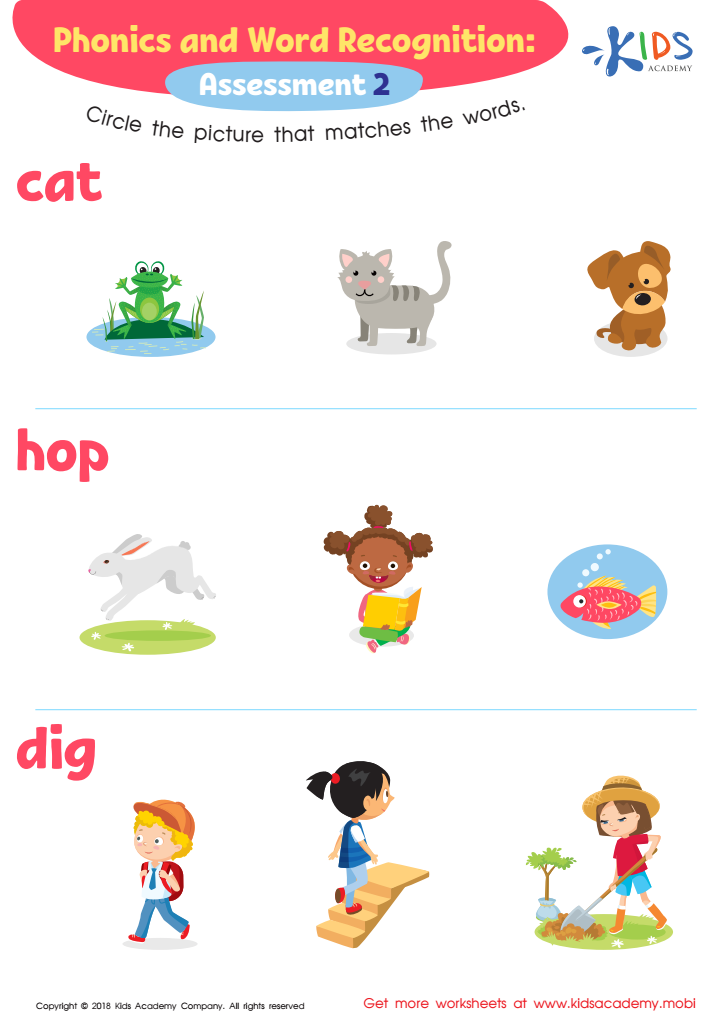
This free worksheet assesses your emerging reader's ability to decode and match closed-syllable high-frequency words to the appropriate picture. The pictures are cheery and easy to identify, so your child will have fun and find success with decoding and matching.
Phonological Awareness: Assessment 2 ELA Worksheet
Worksheet
Phonological Awareness: Assessment 2 Worksheet

Phonological Awareness: Assessment 2 Worksheet

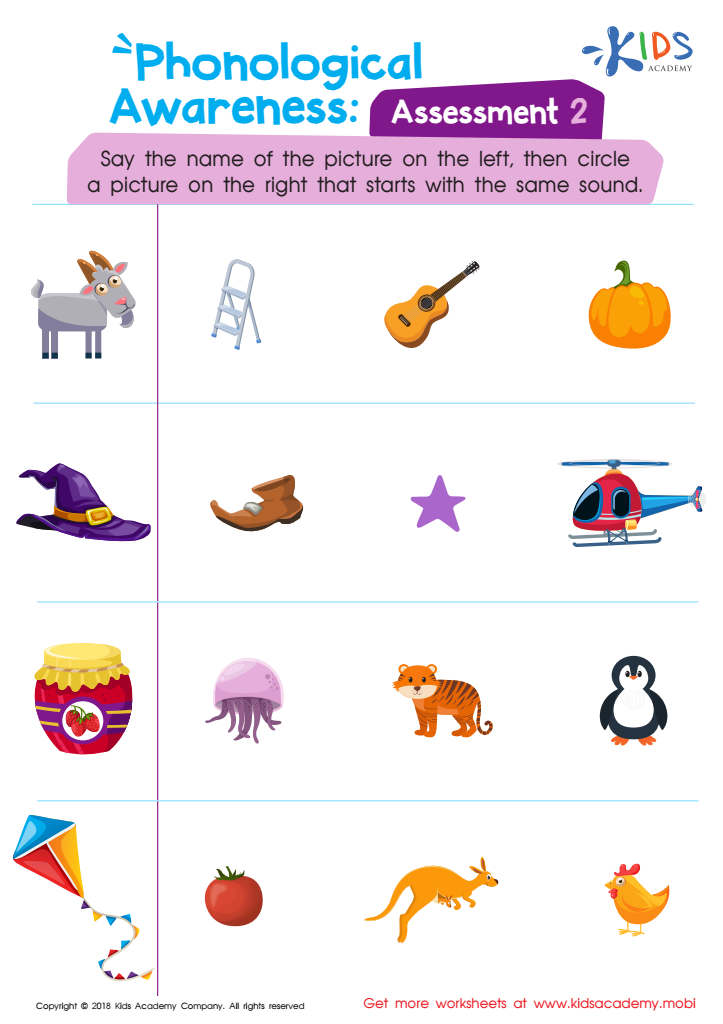
Test your child’s phonological awareness and reading readiness with this charming worksheet! Perfect for K-1, it assesses if they can name a picture aloud, listening for the starting sound and matching it to another word. Watch as they think deeply and listen to the sounds as they name each picture. Determine if your child is ready to sound out words or needs more phonics practice.
Phonological Awareness: Assessment 2 Worksheet
Worksheet
Phonological Awareness: Assessment 3 ELA Worksheet

Phonological Awareness: Assessment 3 ELA Worksheet

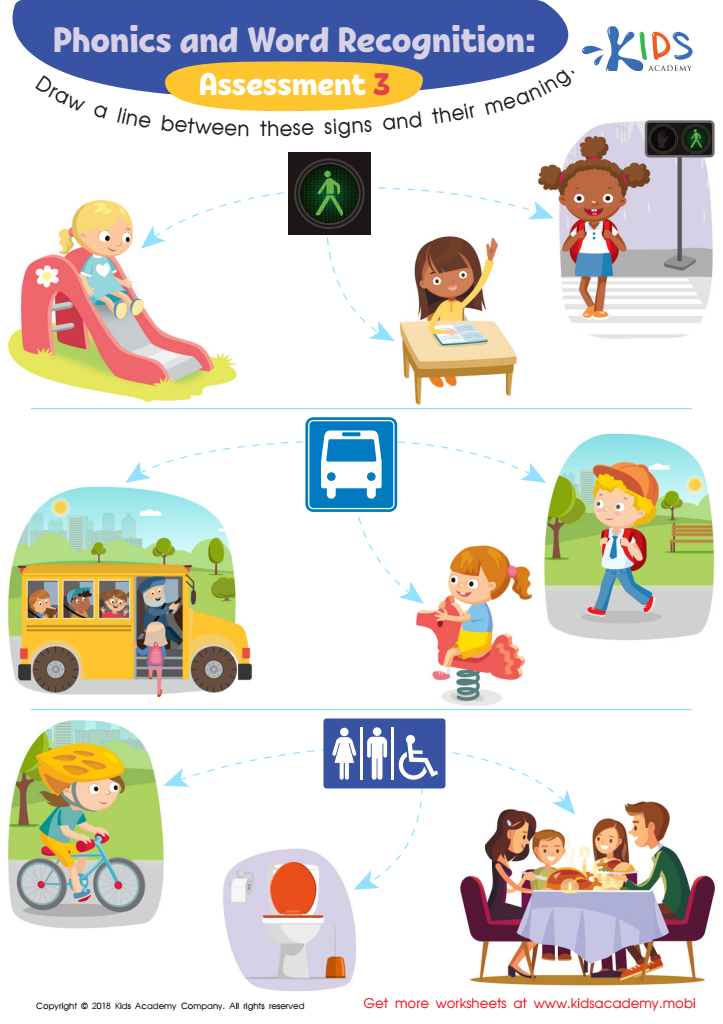
Want to test your preschooler's language skills, phonetic decoding and word recognition? This worksheet uses their knowledge of community helpers to match signs with depictions. It also works on fine motor skills, a key pre-reading skill.
Phonological Awareness: Assessment 3 ELA Worksheet
Worksheet
How Many Syllables? Worksheet

How Many Syllables? Worksheet

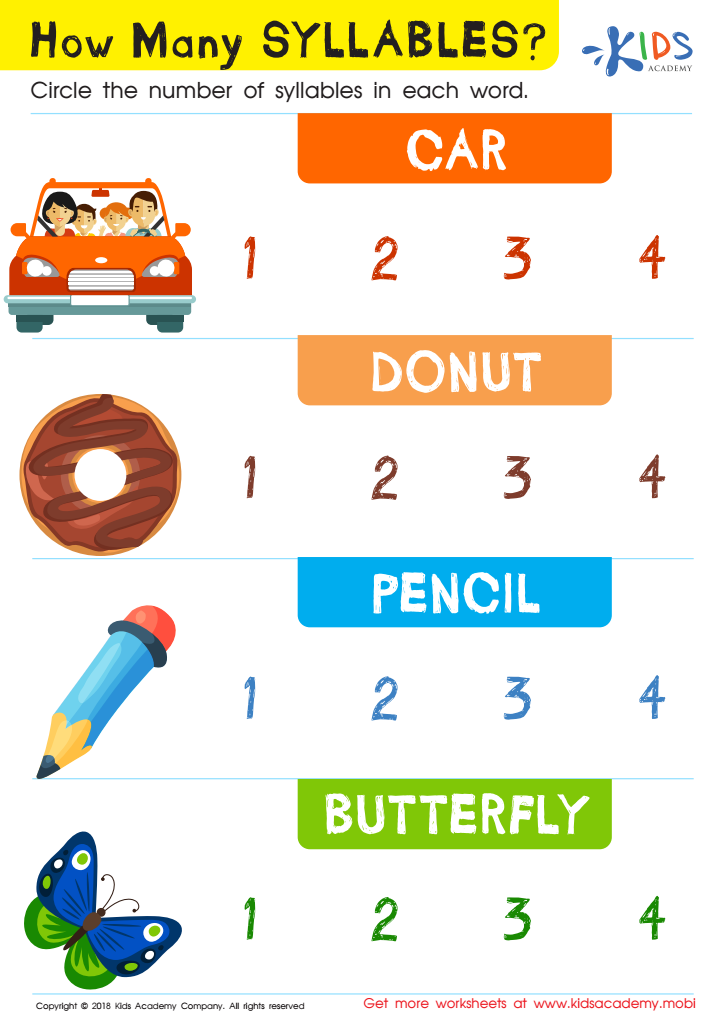
Syllabication or 'chunking' helps students decode words more quickly and increase fluency. This traceable worksheet is great for emerging readers, combining fun and fine motor practice with chunking words and counting syllables.
How Many Syllables? Worksheet
Worksheet
Phonological Awareness: Assessment 6 Worksheet

Phonological Awareness: Assessment 6 Worksheet

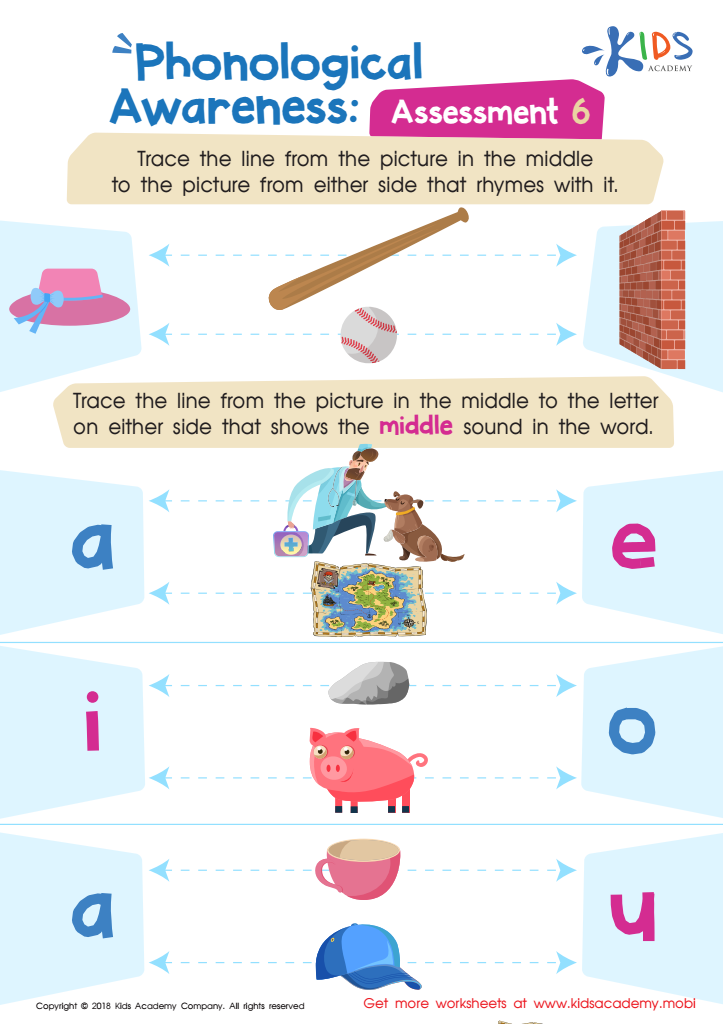
Check your child's ability to recognize middle word sounds using this free worksheet. Help them learn phonics by practicing with rhyming. Trace the line from the image to its rhyming match then encourage them to name each image aloud to identify which letter matches the sound. It's a great way to assess letter and sound recognition.
Phonological Awareness: Assessment 6 Worksheet
Worksheet
Phonological Awareness: Assessment 5 Worksheet

Phonological Awareness: Assessment 5 Worksheet

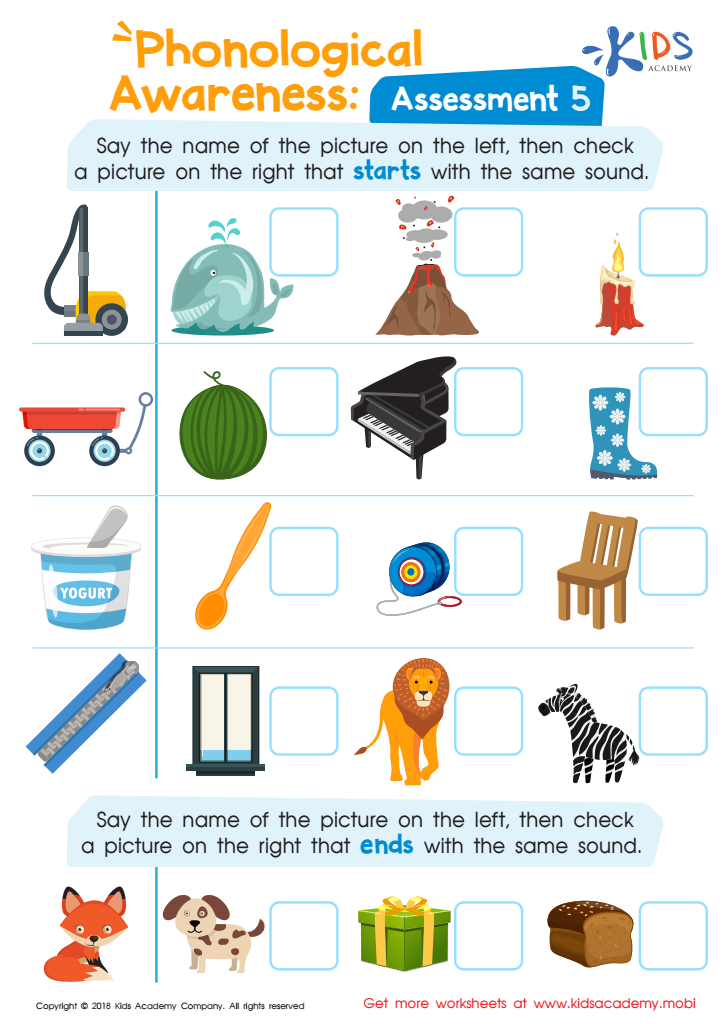
Repetition is key to success! This worksheet tests kids' ability to match beginning and ending sounds in words. Instruct them to say each word and listen closely to the sounds they make. Focus on the starting sounds for the first four pics, then the last one to hear ending sounds and find the right match!
Phonological Awareness: Assessment 5 Worksheet
Worksheet
Phonological Awareness: Assessment 3 Worksheet

Phonological Awareness: Assessment 3 Worksheet

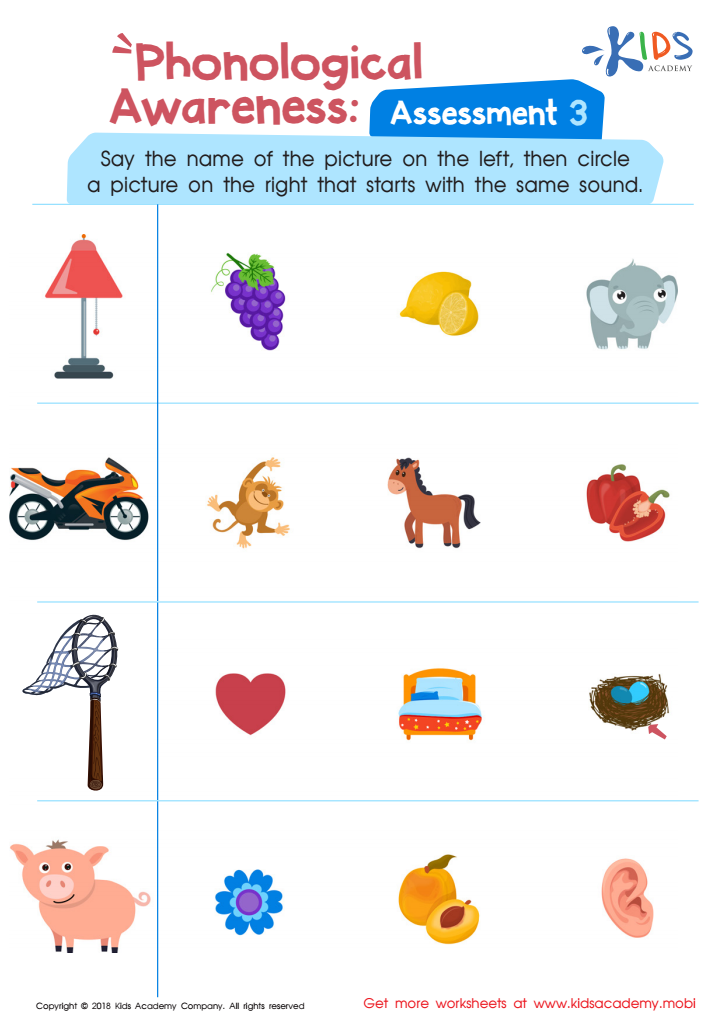
Test kids' reading readiness with a phonological awareness worksheet! With this PDF exercise, encourage children to name each picture aloud and match left to right. Help them learn to recognize word sounds at the start, middle and end of words. They'll be sure to remember that lamp doesn't sound like elephant!
Phonological Awareness: Assessment 3 Worksheet
Worksheet
Lets Count Syllables Worksheet


Lets Count Syllables Worksheet

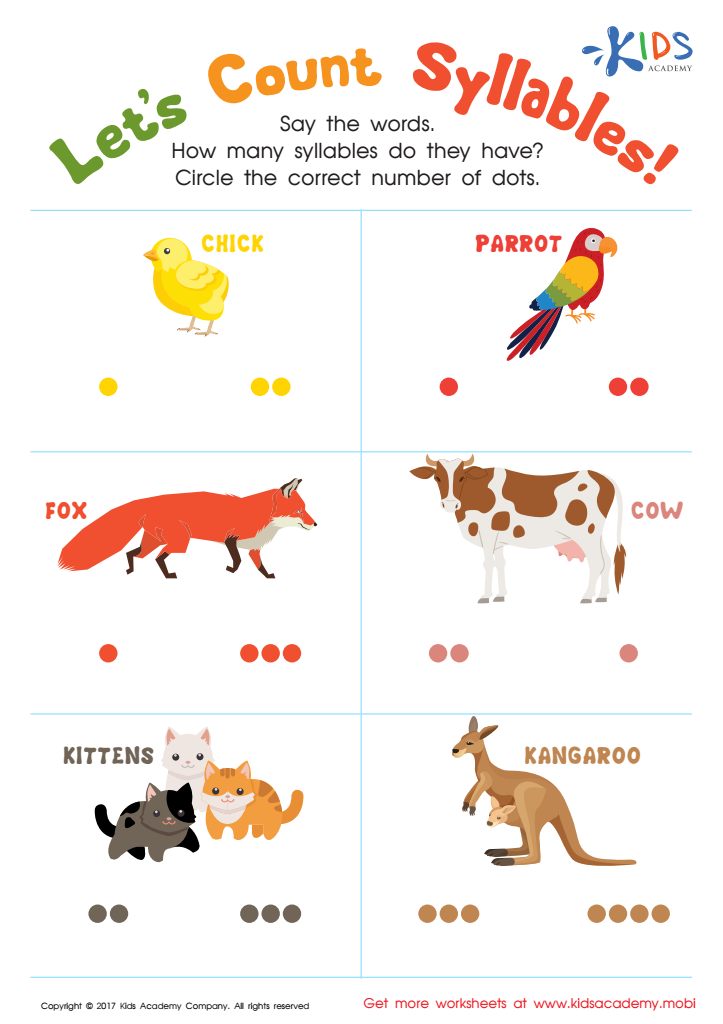
This fun animal worksheet makes learning to read easier by breaking words into syllables. Bright, cheery pictures give context and help kids choose the right syllable count. Count together and enjoy as your child learns and gains success!
Lets Count Syllables Worksheet

Worksheet


Phonological awareness and alphabet knowledge are critical components of early literacy development for 5-year-olds. Understanding phonological awareness—the ability to recognize and manipulate sounds in words—enhances children's reading and spelling skills. When children can identify and work with sounds, they are better equipped to decode written text, which is essential for reading fluency and comprehension.

Furthermore, developing solid alphabet knowledge—recognizing letters and their corresponding sounds—boosts a child’s confidence in using language. Mastery of these foundational skills lays the groundwork for successful reading experiences and facilitates future literacy skills, including vocabulary expansion and comprehension.

Parents and teachers play a pivotal role in nurturing these abilities. Engaging in fun phonological activities, such as rhyming games or sound matching, encourages active participation and makes learning enjoyable. Reading together and pointing out letters and sounds creates valuable connections between spoken and written language.

Fostering phonological awareness and alphabet knowledge not only prepares children for academic success but also enhances their communication skills. Early intervention can prevent struggles later on, making it crucial for parents and educators to emphasize these areas in their instruction and support. Ultimately, these skills empower children to become confident and competent readers.