
Reading proficiency Alphabet Worksheets for 5-Year-Olds
3 filtered results
Difficulty Level
Grade
Age
-
From - To
Subject
Activity
Standards
Boost your child's reading skills with our engaging Alphabet Worksheets designed specifically for 5-year-olds. These interactive activities make learning fun while enhancing letter recognition and phonemic awareness. Each worksheet focuses on phonics and vocabulary, providing essential practice for developing early literacy skills. Your child will enjoy tracing letters, identifying sounds, and completing vibrant illustrations that reinforce learning outcomes. Perfect for home or classroom use, our worksheets offer a variety of formats to cater to different learning styles. Start your journey towards reading proficiency today and give your child the confidence they need to excel in their reading endeavors!
Favorites
With answer key
Interactive
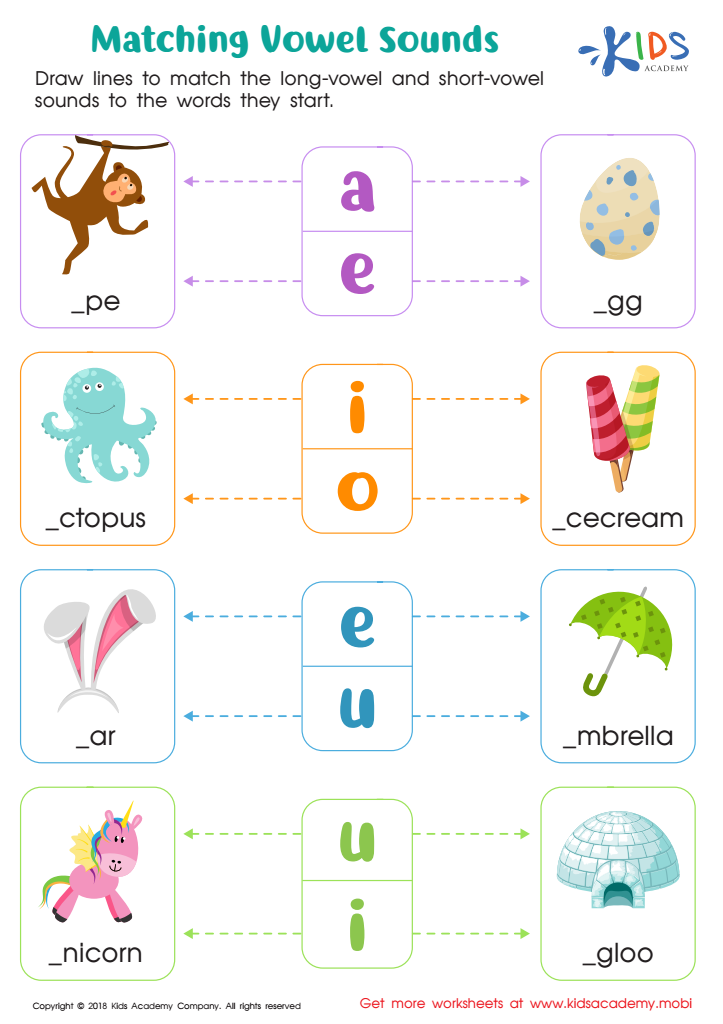
Matching Vowel Sounds Worksheet
Teach your child phonics with a fun worksheet! Ask your child to name a vowel sound and listen if it's long or short. Differentiating between long and short vowel sounds can be tricky, but this matching worksheet makes it easy for kids to understand. Have fun and master phonics - the worksheet will help them understand the difference between long and short vowel sounds!
Matching Vowel Sounds Worksheet
Worksheet
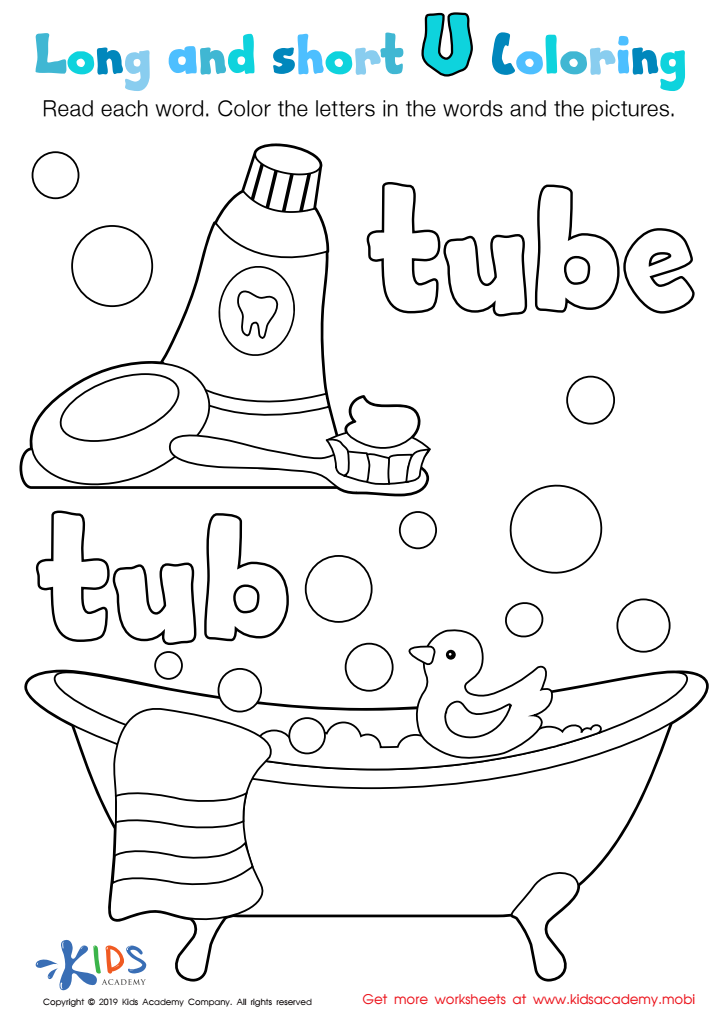
Long and Short U Worksheet
Revised: Spice up your lesson on long and short vowels with this fun printout! Kids read the words "tube" and "tub," then reinforce the sound by coloring in the words and pictures. It's a great way to make phonics class enjoyable!
Download (PDF)
 Assign to My Students
Assign to My Students
Long and Short U Worksheet
Worksheet
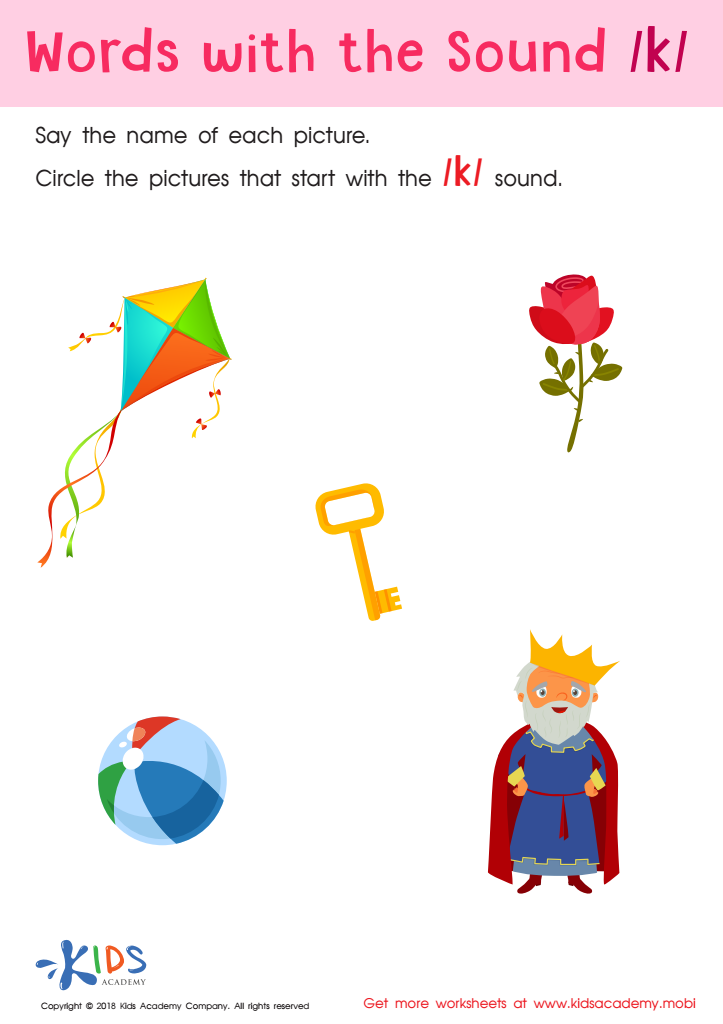
Words with sound k Reading Worksheet
Help your preschooler master the hard "k" sound with this fun worksheet from Kids Academy! Ask your child to say each picture aloud and circle only the pictures that start with "k". This early reading exercise will boost phonics skills and is sure to be loved by your little learner!
Words with sound k Reading Worksheet
Worksheet
Join Kids Academy for Free
Who is primarily going to use this learning content?







Reading proficiency, particularly the recognition of the alphabet, is critical for 5-year-olds as it serves as the foundation for literacy and academic success. At this age, children begin to develop essential cognitive skills, and understanding the alphabet is crucial for enhancing their phonemic awareness, vocabulary, and overall language, which are vital for effective communication.
Parents and teachers should care because proficiency in recognizing letters helps children make connections between sounds and symbols, leading to better reading and writing abilities in the future. Early mastery of the alphabet can increase a child’s confidence and motivation as they transition into more complex reading tasks. Studies show that children who are proficient in recognizing letters are more likely to excel not only in reading but across all educational areas. This foundational skill aids in boosting their cognitive development, critical thinking, and comprehension, setting a trajectory for lifelong learning.
Moreover, early intervention can address potential learning difficulties before they escalate. By fostering a strong alphabet recognition, parents and teachers not only enrich a child's educational experience but also encourage a love for reading that can lead to greater achievements both inside and outside the classroom. Engaging with children during this critical stage lays the groundwork for their future literacy success.







