Reading readiness Alphabet Worksheets for 5-Year-Olds
6 filtered results
-
From - To
Prepare your 5-year-old for reading success with our engaging Reading Readiness Alphabet Worksheets! Designed specifically for young learners, these worksheets focus on key skills such as letter recognition, phonemic awareness, and vocabulary building. Featuring fun illustrations and interactive activities, they make learning the alphabet an enjoyable experience. These resources help children strengthen their foundational reading skills while fostering a love for learning. Perfect for use at home or in the classroom, our worksheets cater to diverse learning styles. Join us on the journey to literacy and watch your child develop confidence in reading through play and exploration!
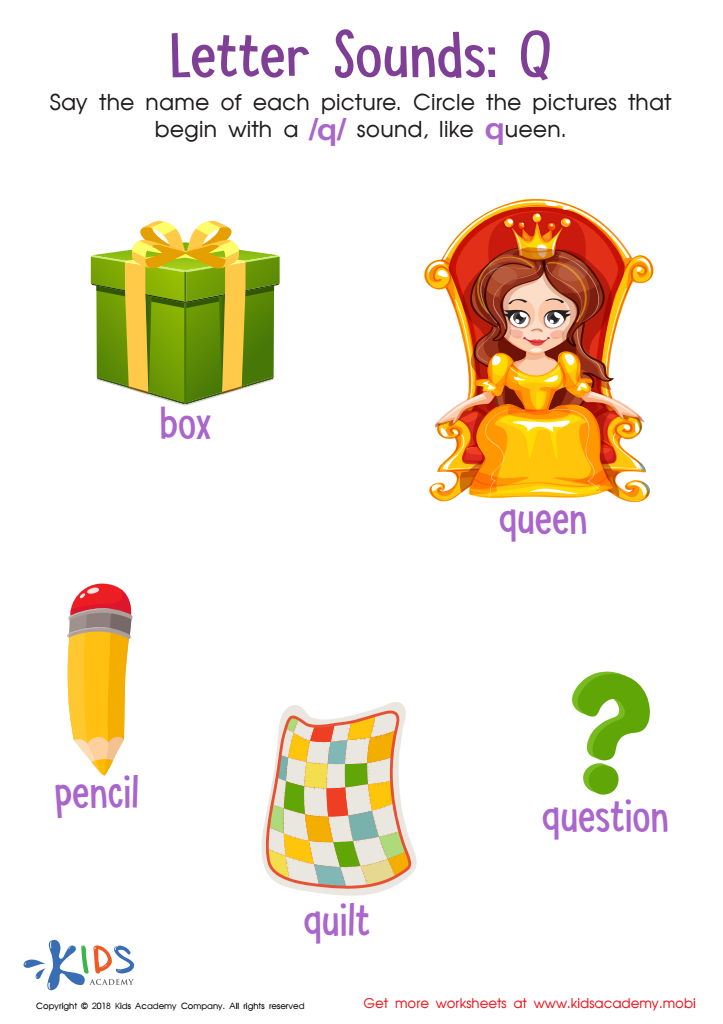
Letter Q Sounds Worksheet
 Assign to My Students
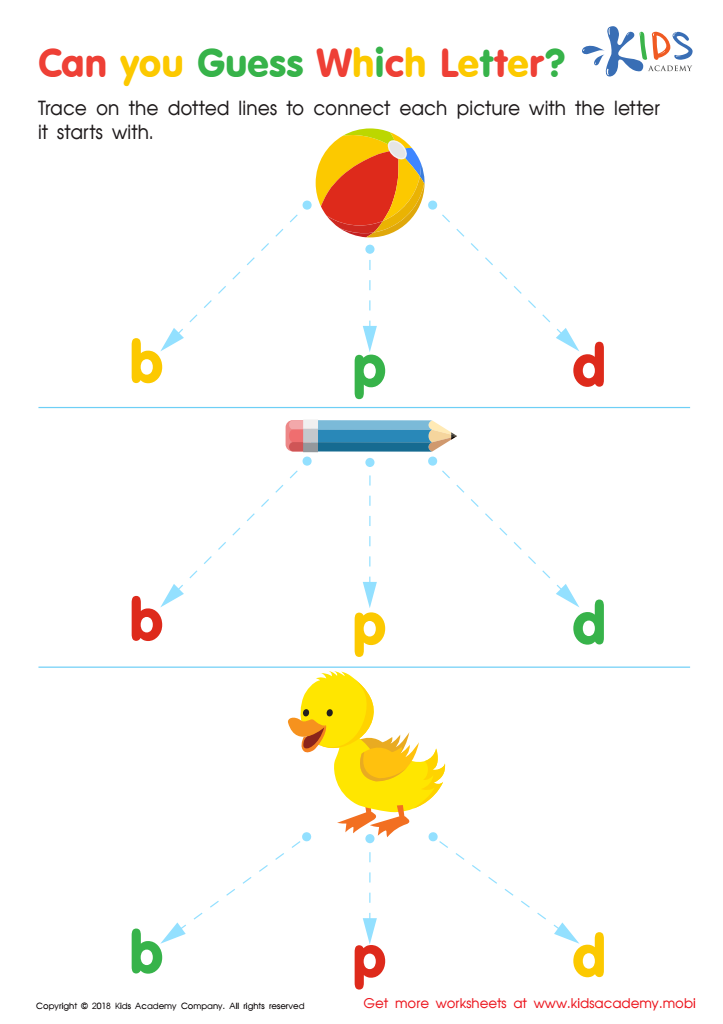
Can you Guess Which Letter? Worksheet
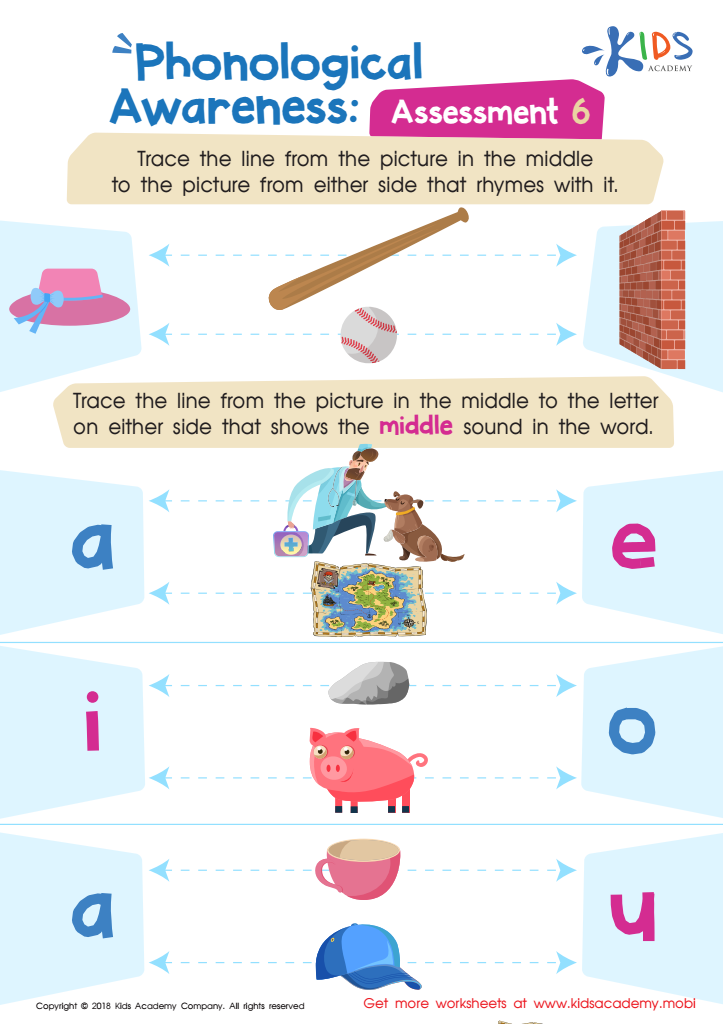
Phonological Awareness: Assessment 6 Worksheet
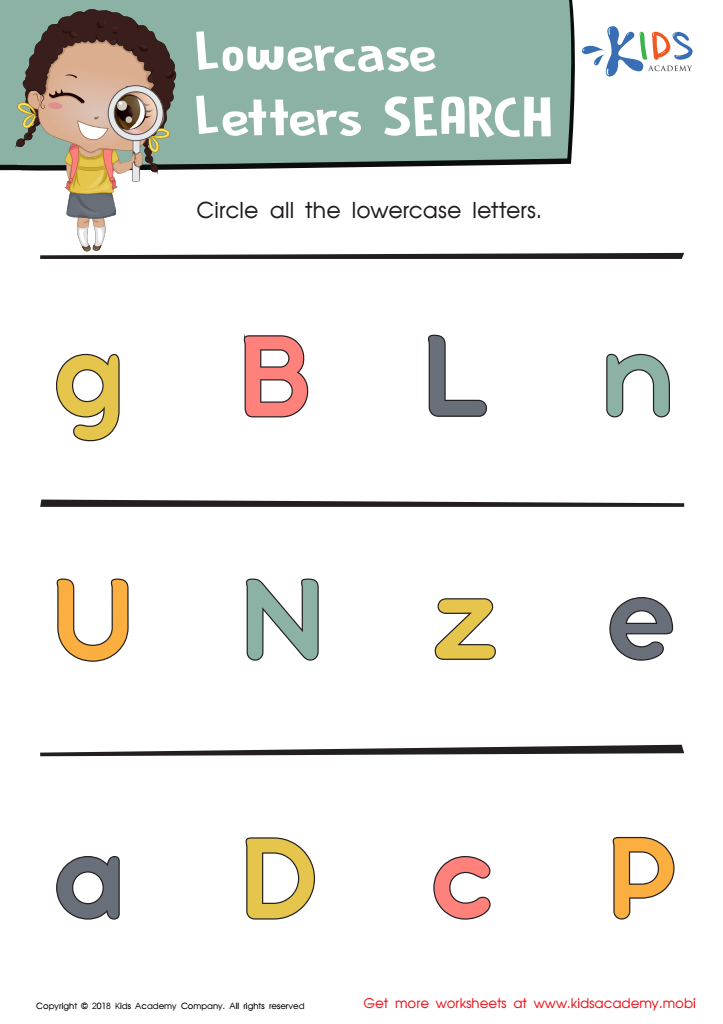
Lowercase Letters Search: Assessment Worksheet
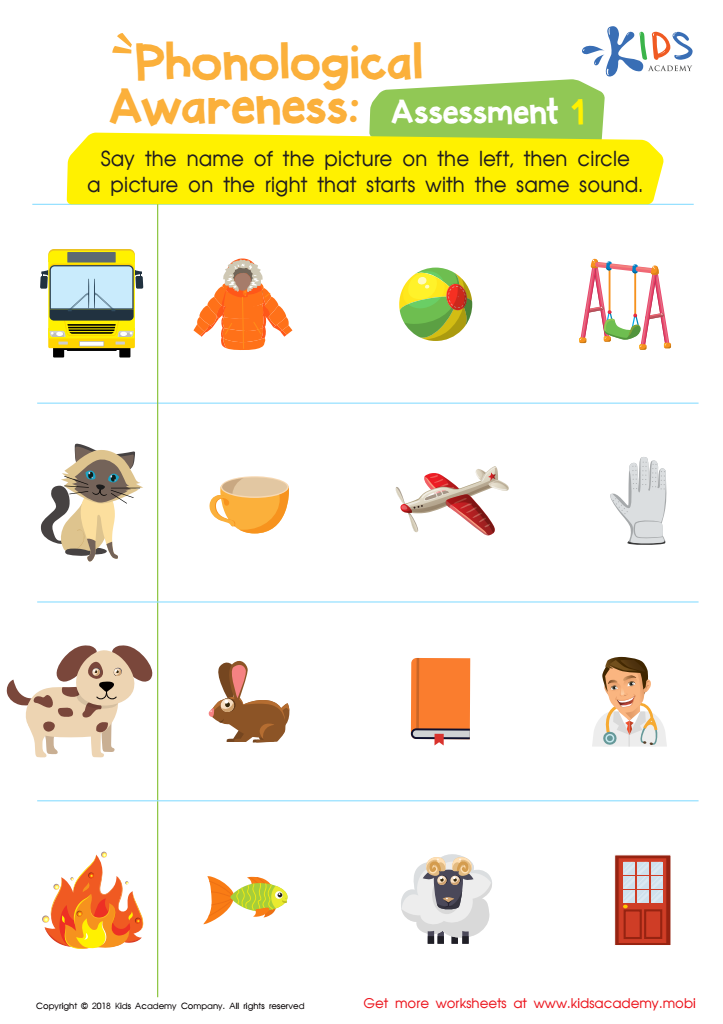
Phonological Awareness: Assessment 1 Worksheet
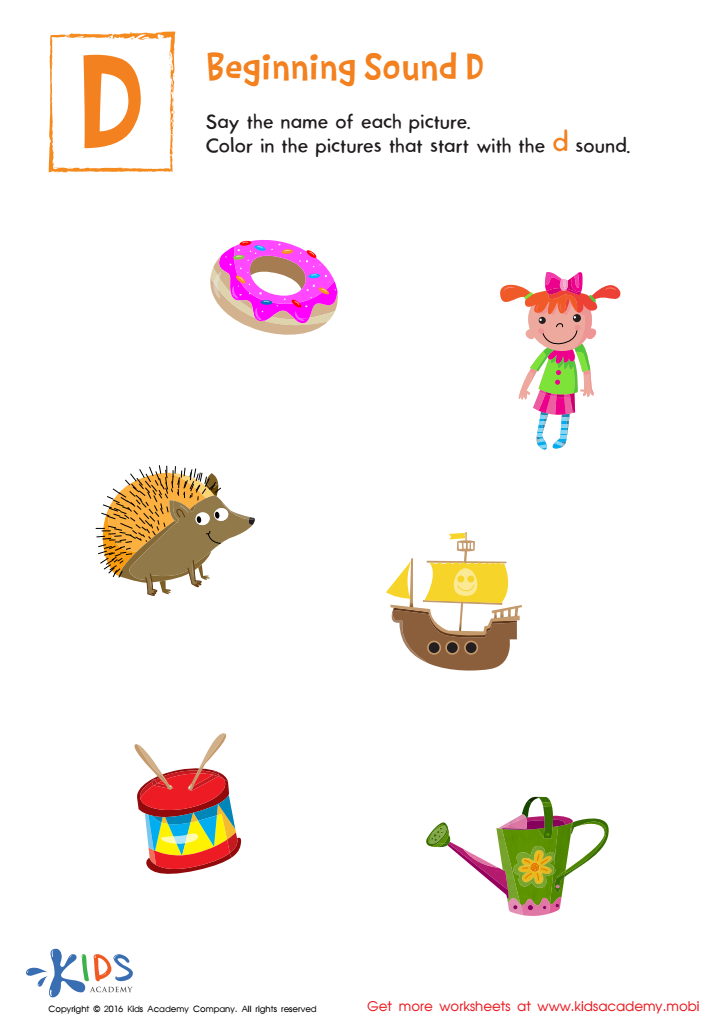
Beginning Sound D Worksheet








Reading readiness in 5-year-olds, particularly concerning the alphabet, is crucial for their overall literacy development and future academic success. At this age, children are forming foundational skills that will set the tone for their learning journey. Understanding the alphabet allows children to recognize letters, sound them out, and eventually blend them to create words. This is vital for reading fluency and comprehension.
Parents and teachers play pivotal roles in fostering a readiness for reading by providing an engaging learning environment. When children are introduced to the alphabet through play, songs, and interactive activities, they develop a positive attitude towards reading and learning. Moreover, early exposure to these skills can help close gaps for children who might struggle with literacy later on. Recognizing letters and their sounds ultimately boosts a child’s confidence, making them eager to participate in reading activities.
Additionally, reading readiness aligns with broader cognitive, social, and emotional developments. It enhances critical thinking, listening skills, and the ability to express thoughts clearly. Therefore, by prioritizing alphabet readiness, parents and teachers are laying a strong foundation for lifelong learning and equipping children with essential tools to navigate their educational journeys effectively.







