Lowercase identification Letter Recognition Worksheets for 5-Year-Olds
5 filtered results
-
From - To
Introduce your little learners to the exciting world of lowercase letters with our engaging Lowercase Identification Letter Recognition Worksheets for 5-Year-Olds! Designed to spark curiosity and enhance letter recognition skills, these worksheets offer a variety of interactive activities tailored specifically for early learners. Children will practice identifying, tracing, and writing lowercase letters while developing their fine motor skills and confidence in literacy. Each worksheet is colorful and appealing, making learning fun and enjoyable. Perfect for at-home activities or classroom use, these resources will help young children master lowercase letter recognition in a playful and supportive environment. Start their literacy journey today!
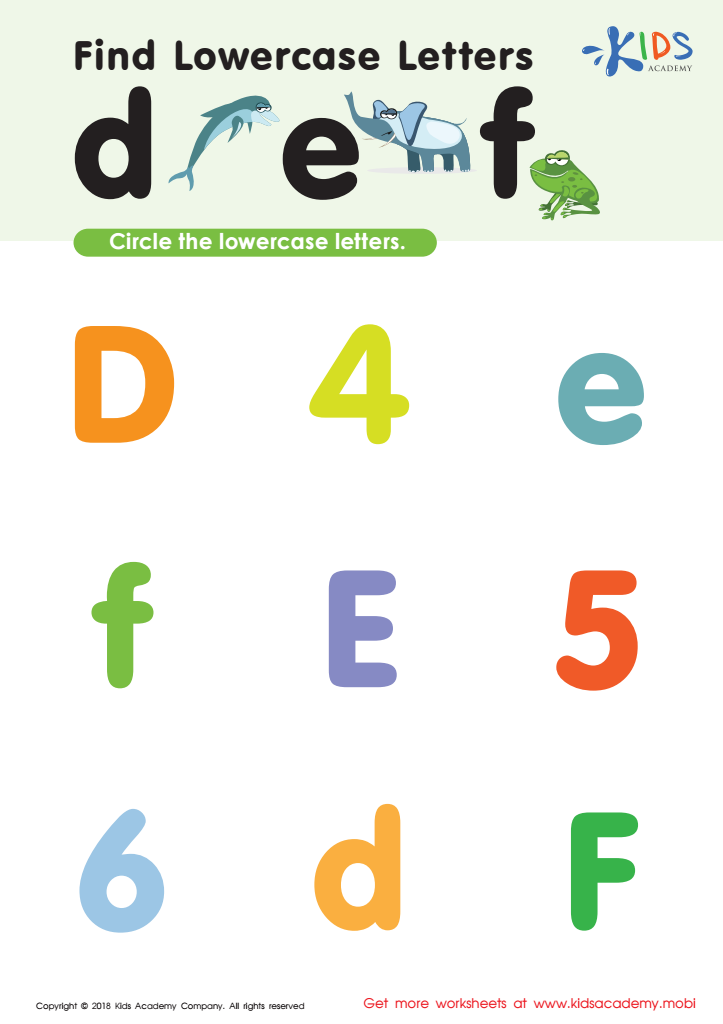
Find Lowercase Letters d e f Worksheet
 Assign to My Students
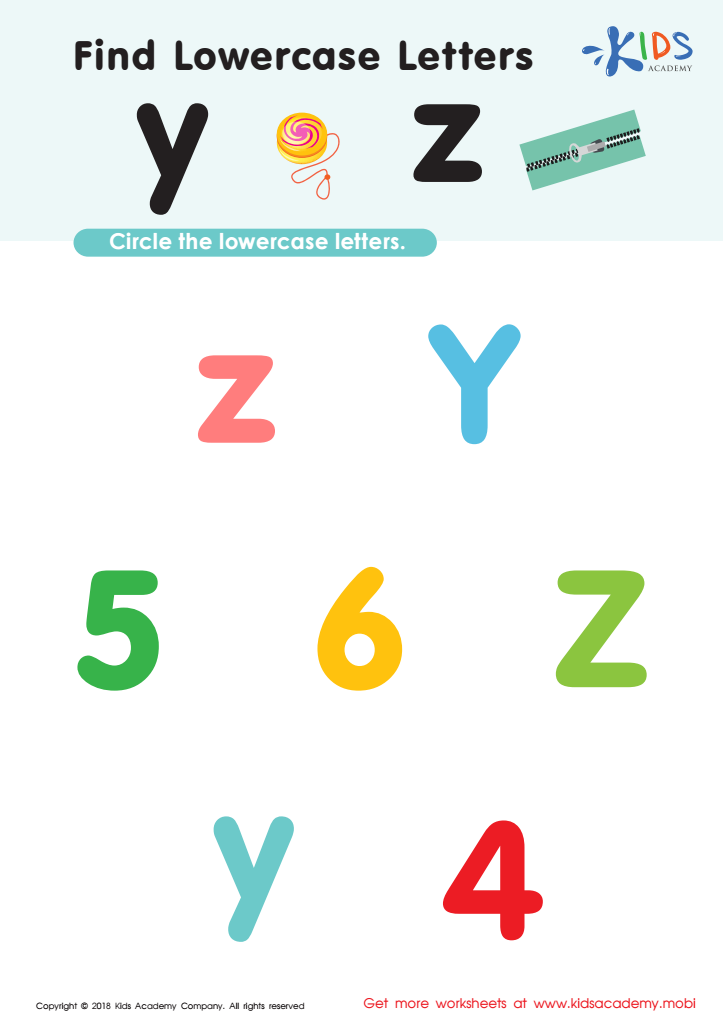
Find Lowercase Letters y z Worksheet
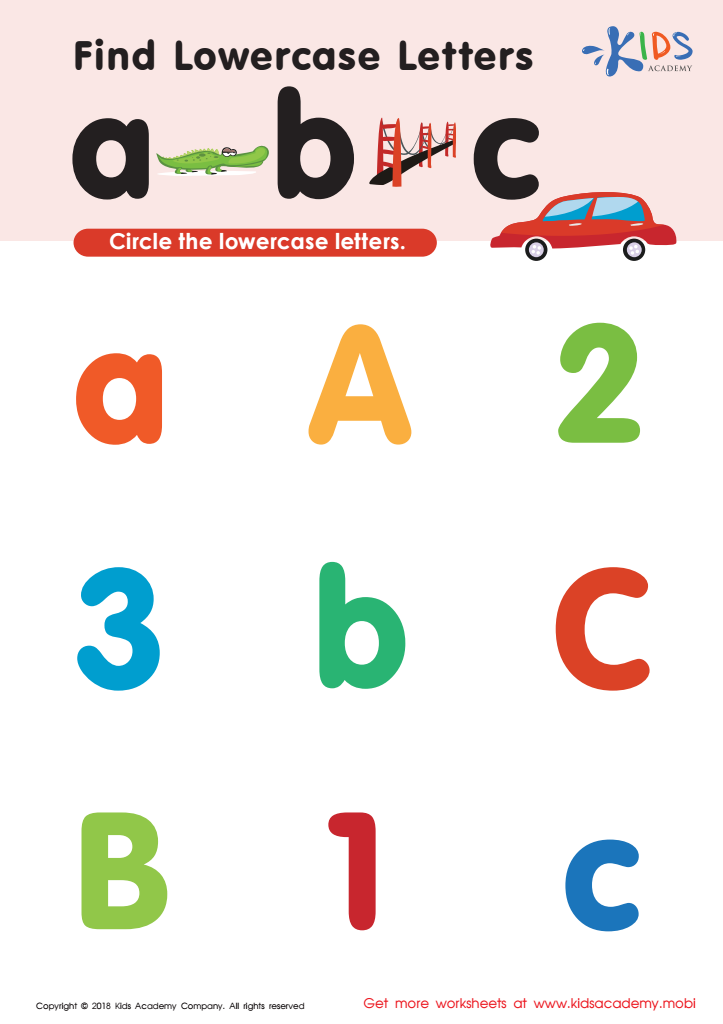
Find lowercase letters a b c Worksheet
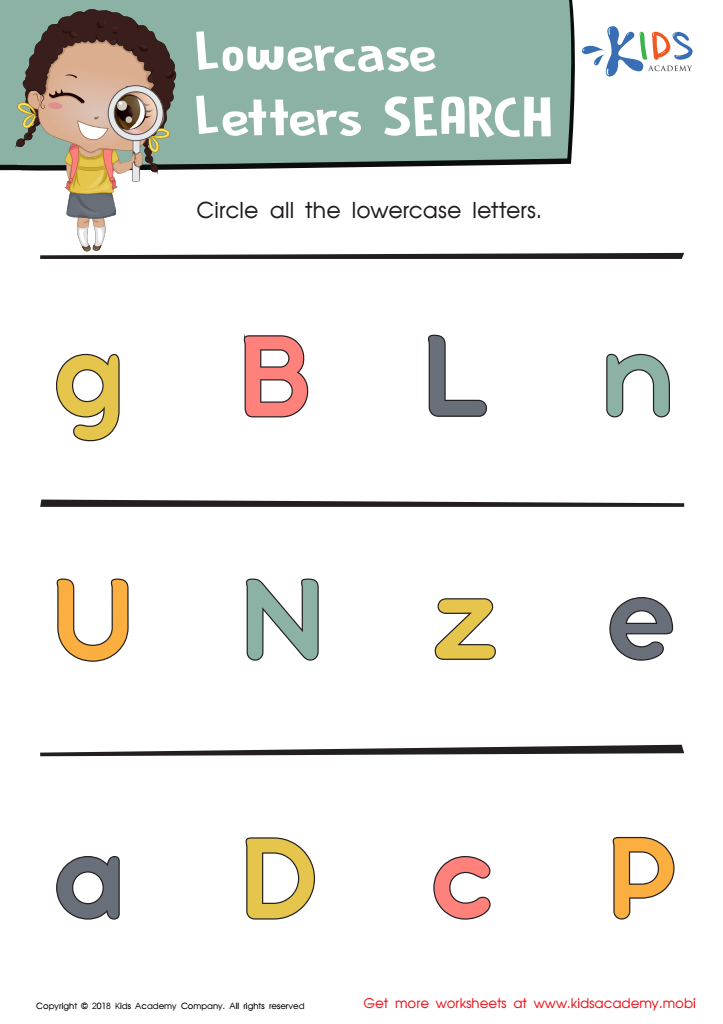
Lowercase Letters Search: Assessment Worksheet
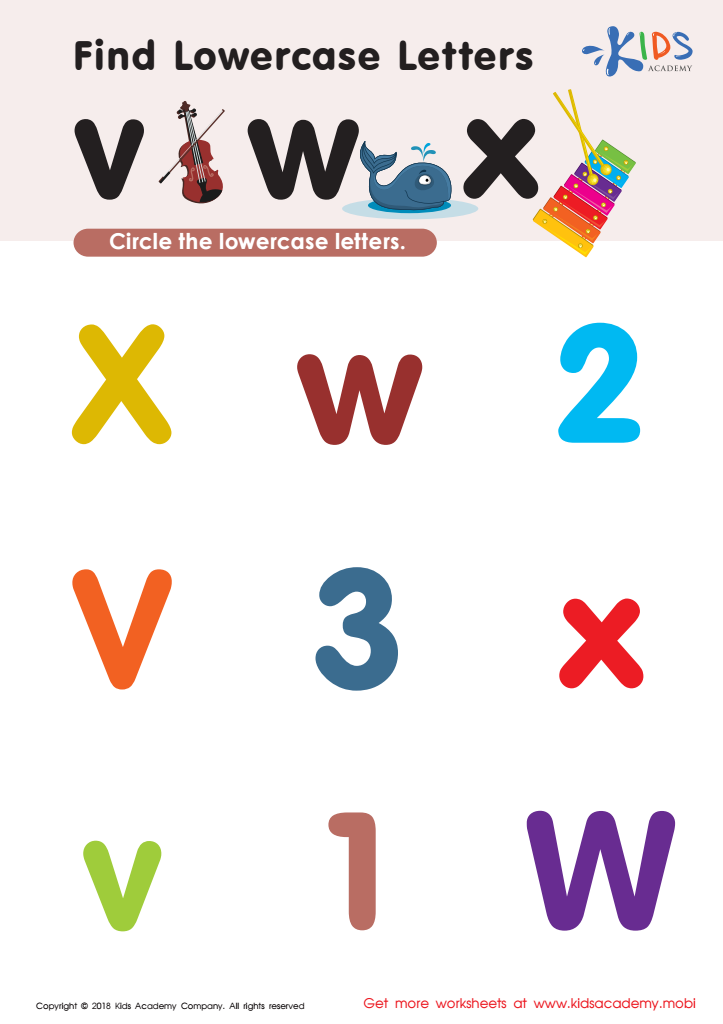
Find Lowercase Letters v w x Worksheet








Lowercase letter identification is a crucial skill for 5-year-olds, laying the groundwork for literacy and effective communication. At this age, children are developing foundational reading and writing skills, and recognizing lowercase letters is essential for several reasons.
Firstly, most texts and materials children encounter are written in lowercase, making it vital for kids to identify these letters fluently. If a child struggles to recognize lowercase letters, they may face challenges in reading comprehension and spelling later on. Furthermore, recognizing these letters aids in the development of vocabulary, setting the stage for successful language acquisition.
Additionally, lowercase identification boosts confidence and engagement in early literacy tasks. When children can identify letters easily, they are more likely to participate in reading activities, promoting a love for books and learning. Teachers and parents can enhance this recognition through fun, interactive activities, like letter games or reading sessions that emphasize lowercase letters.
Lastly, the ability to recognize lowercase letters supports handwriting skills and proper formation of letters, which are critical as children begin to write their names and simple words. Therefore, it is essential for parents and teachers to focus on lowercase letter identification to foster a strong literacy foundation in young learners.







