Shape identification 2D Shapes Worksheets for 5-Year-Olds
8 filtered results
Difficulty Level
Grade
Age
-
From - To
Subject
Activity
Standards
Engage your 5-year-old in fun and interactive learning with our Shape Identification 2D Shapes Worksheets. Specially designed to captivate young learners, these worksheets help children recognize and name basic shapes like circles, squares, triangles, and rectangles. Through vibrant visuals and engaging exercises, kids will improve their cognitive skills, hand-eye coordination, and spatial awareness, laying a solid foundation for future math success. Perfect for home or classroom use, these free printable worksheets make learning both effective and enjoyable. Explore our extensive collection and watch your child’s confidence and understanding of 2D shapes grow.
Favorites
With answer key
Interactive
Geometry Worksheet
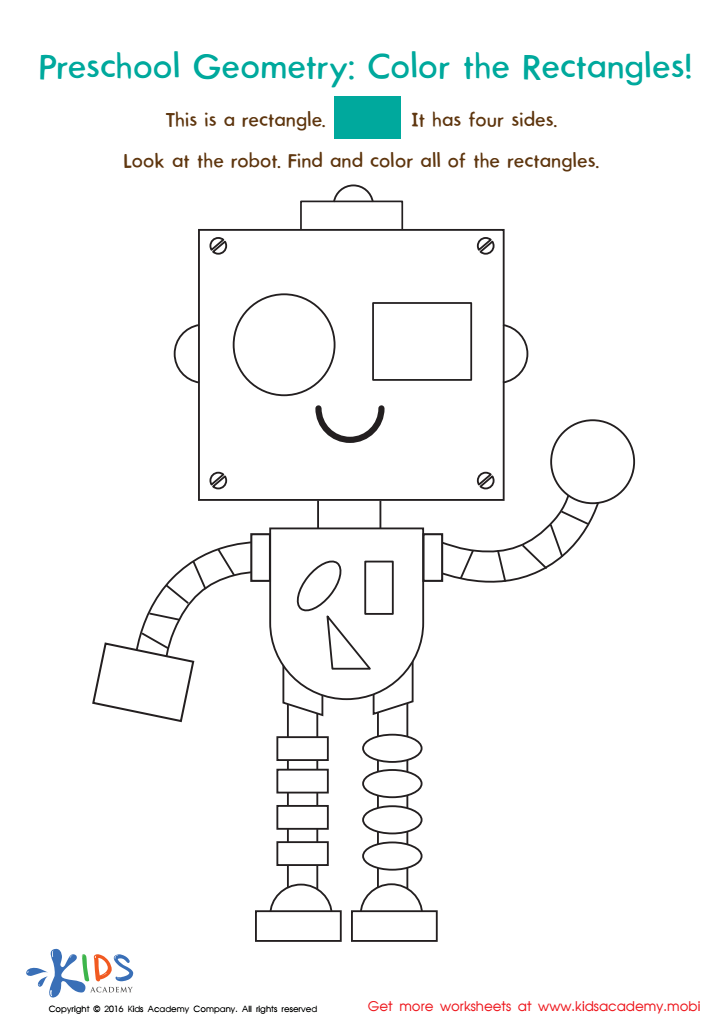
Geometry can be fun for kids! They explore shapes that create their favorite pics and objects. This preschool worksheet explains that rectangles have four sides, then kids color rectangles on a funny robot!
 Assign to My Students
Geometry Worksheet
Worksheet

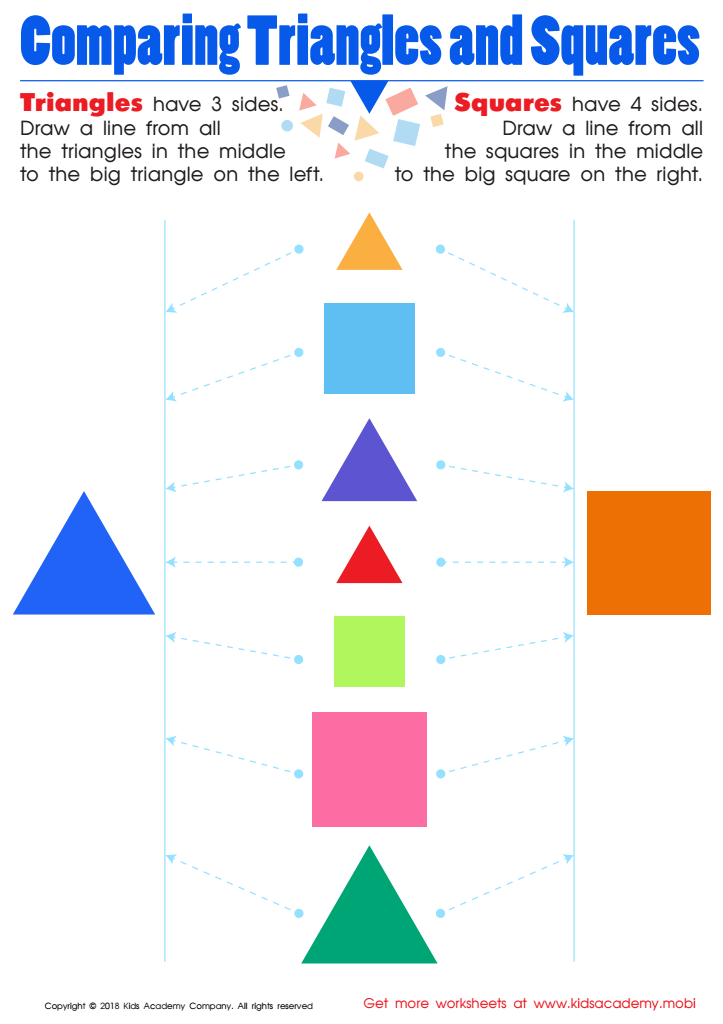
Comparing Triangles Squares Worksheet
Squares and triangles are different in the number of sides they have. Challenge kids to compare them with this fun worksheet! Read the descriptions at the top, then use the left and right shapes to match up the middle ones. Go down the page, joining the middle shapes to the side using the dotted lines!
Comparing Triangles Squares Worksheet
Worksheet
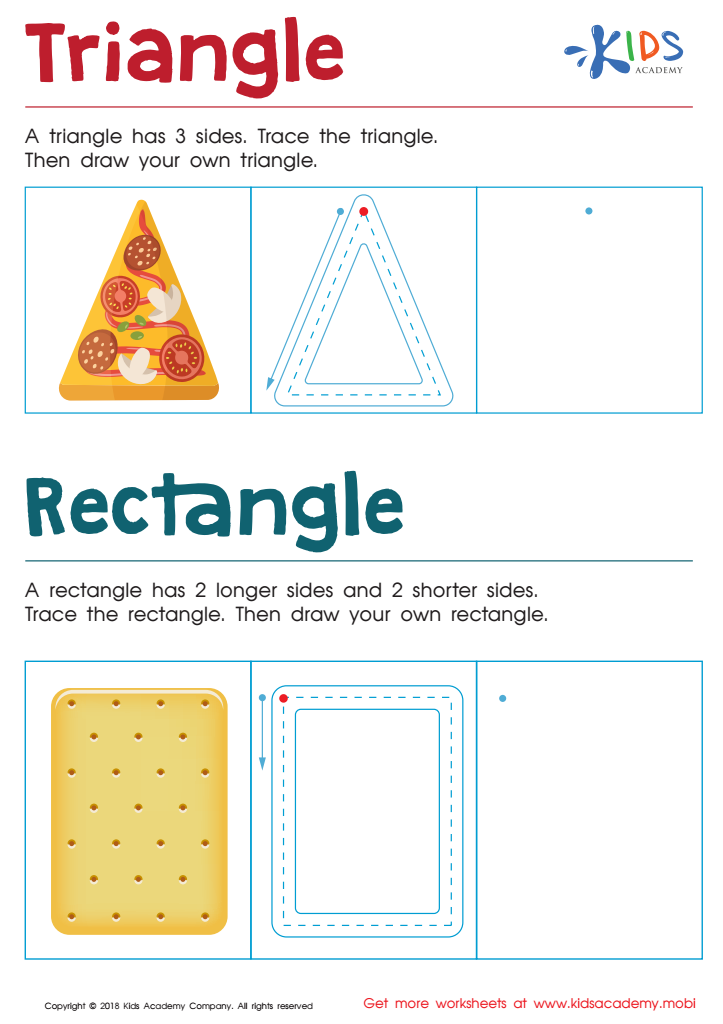
Triangle Rectangle Worksheet
This printable worksheet helps kids draw rectangles and triangles. Have your child trace the pizza and cracker shapes to become familiar, then try their own. Perfect for second graders! Coloring and creativity make this fun and educational.
Triangle Rectangle Worksheet
Worksheet
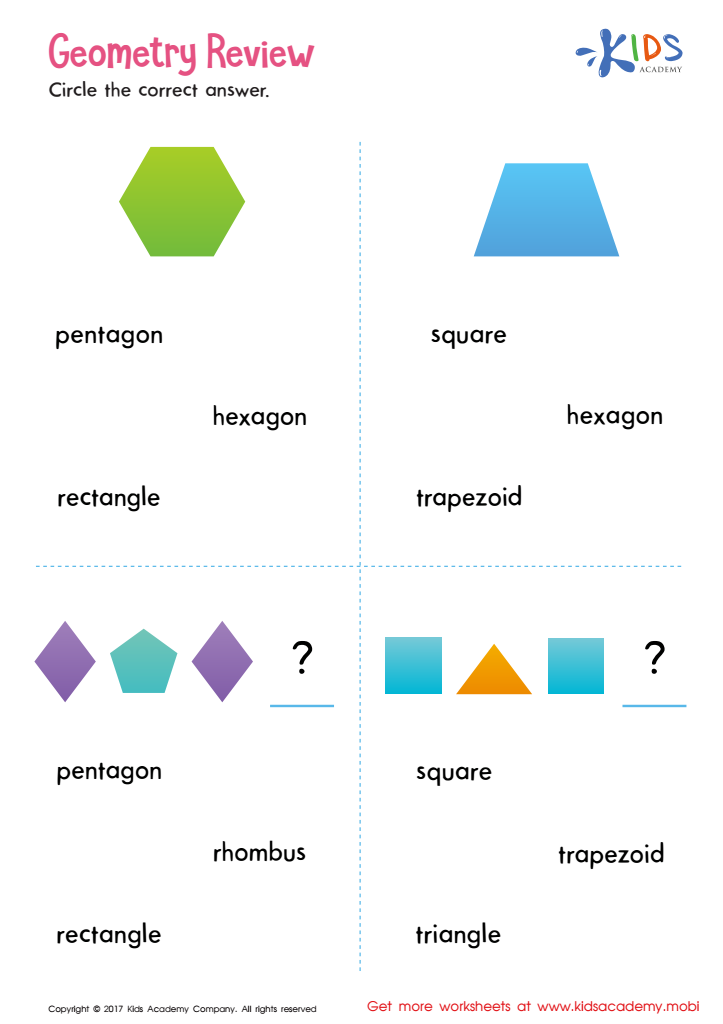
Geometry Review Printable
Repetition is key to success; give your child the practice they need with this geometry worksheet.
Geometry Review Printable
Worksheet
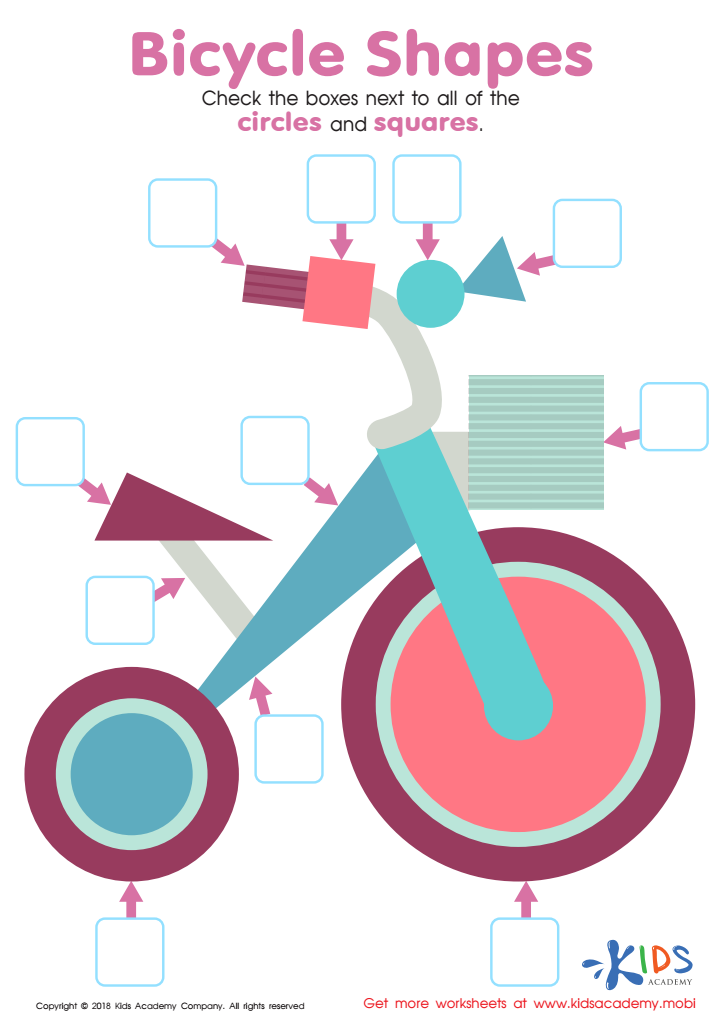
Bicycle Shapes Worksheet
This fun geometry worksheet for preschoolers asks the child to spot hidden shapes (circles, squares) in a colorful bicycle. Each shape varies in size and the child checks the box when it's found. It's a visual way to teach shapes.
Bicycle Shapes Worksheet
Worksheet
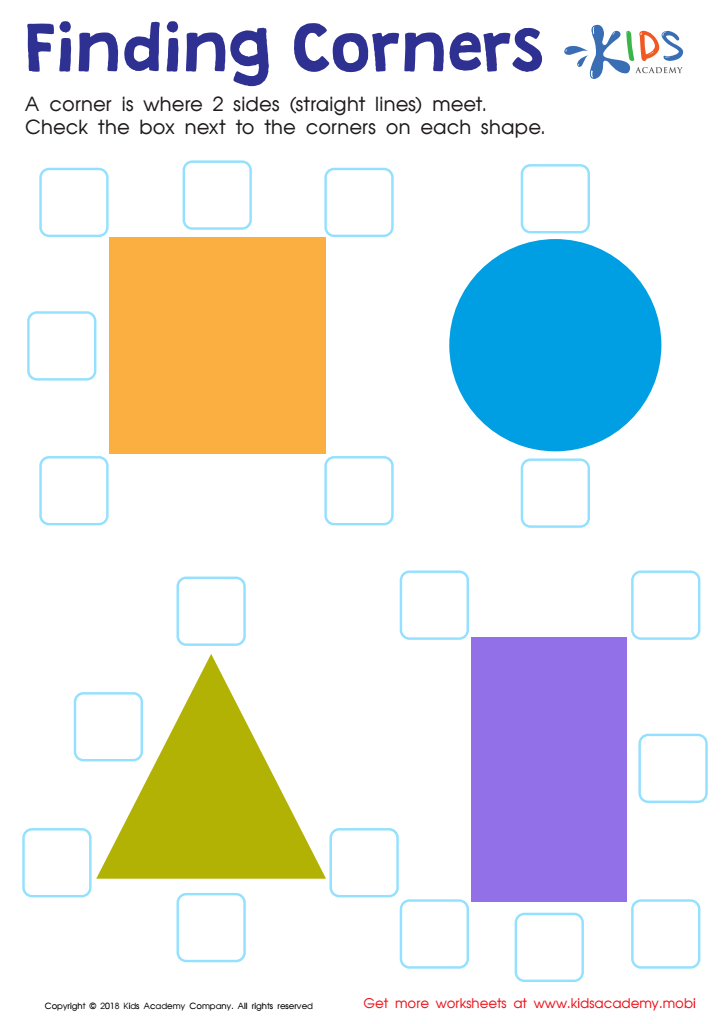
Finding Corners Worksheet
This vibrant worksheet introduces young learners to the fundamentals of geometric shapes. Through the downloadable PDF, they'll develop an understanding of corners - the intersection of two line segments - and how to identify them on different shapes. Fun colors and boxes let them label corners, helping them master this concept for future geometric reasoning.
Finding Corners Worksheet
Worksheet
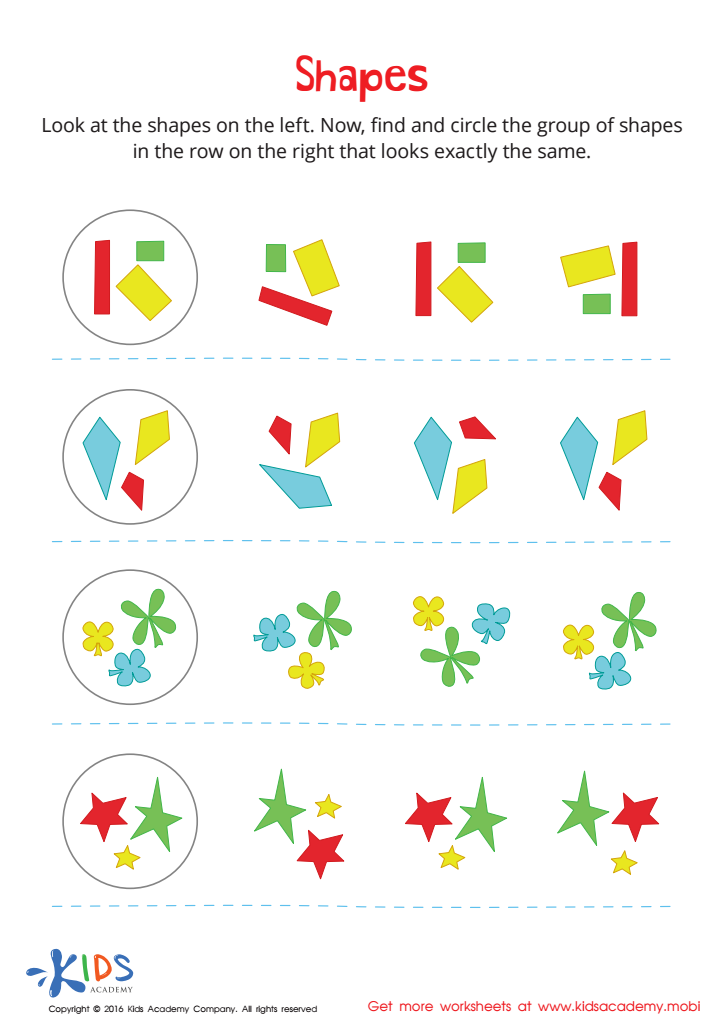
Shapes Worksheet
This fun worksheet will challenge your child to recognize tricky patterns, sort through similar ones, and create strategies to get the right answer. It'll also help them to strengthen problem-solving skills and build confidence. With more challenging tasks, your child will be ready to tackle higher level math and sequencing skills.
Shapes Worksheet
Worksheet
Join Kids Academy for Free
Who is primarily going to use this learning content?








Shape identification, particularly of 2D shapes, is a crucial aspect of early childhood education for several reasons. Firstly, it forms the foundation of geometric understanding which is essential for higher-level math skills. Recognizing and naming shapes like circles, squares, and triangles help children develop the ability to categorize and organize visual information, fostering shape awareness and spatial intelligence.
Secondly, understanding 2D shapes is important for developing fine motor skills and hand-eye coordination. Activities like drawing shapes or cutting them out require precision and control, benefiting children’s overall dexterity and preparing them for tasks such as writing.
Furthermore, shape identification promotes cognitive development. It enhances problem-solving abilities and critical thinking, as children learn to differentiate, sort, and match various shapes. Recognizing shapes and patterns also contributes to literacy skills by aiding in the recognition of letters and numbers, which often have distinct shapes of their own.
Socially and emotionally, shape activities can be fun and engaging, fostering a love for learning. Working on shape-based tasks in groups or pairs encourages cooperation, communication, and sharing.
In essence, making learning about 2D shapes enjoyable and integrated into daily activities can significantly advance a child's developmental milestones, setting a strong foundation for their future education.