Check out this FREE Trial Lesson on Adding Up to 5 for age 5!

Exactly the Same, or Not

Favorites
With answer key
Interactive
  • 5
  • Visual Learning
  • Adding Up to 5
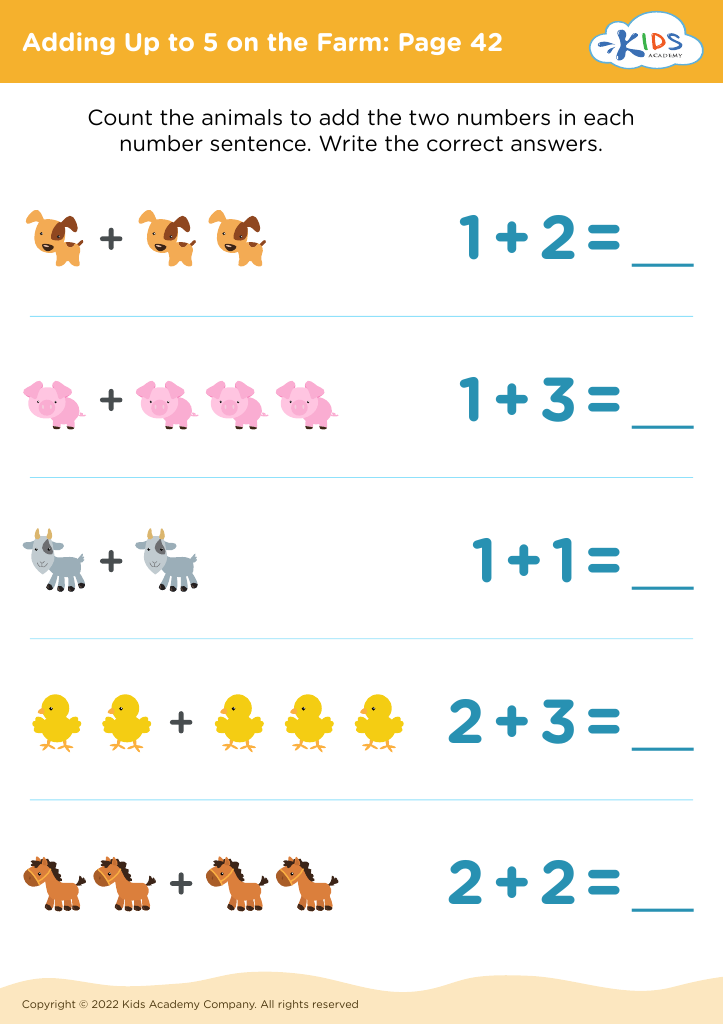
Adding Up to 5 on the Farm: Page 42
Worksheet
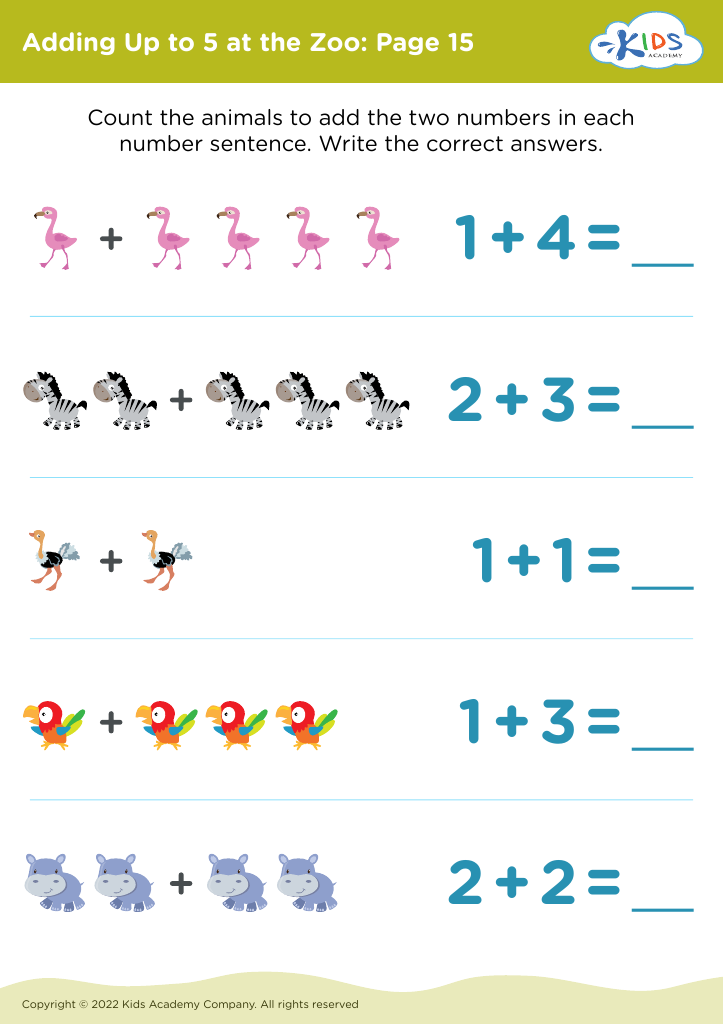
Adding Up to 5 at the Zoo: Page 15
Worksheet
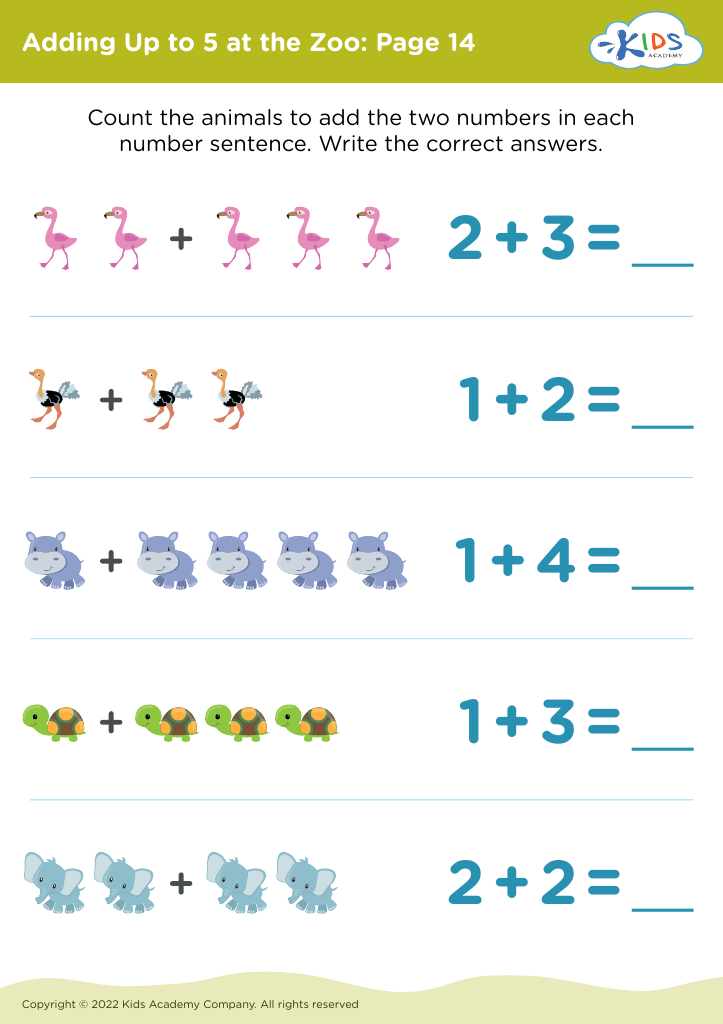
Adding Up to 5 at the Zoo: Page 14
Worksheet
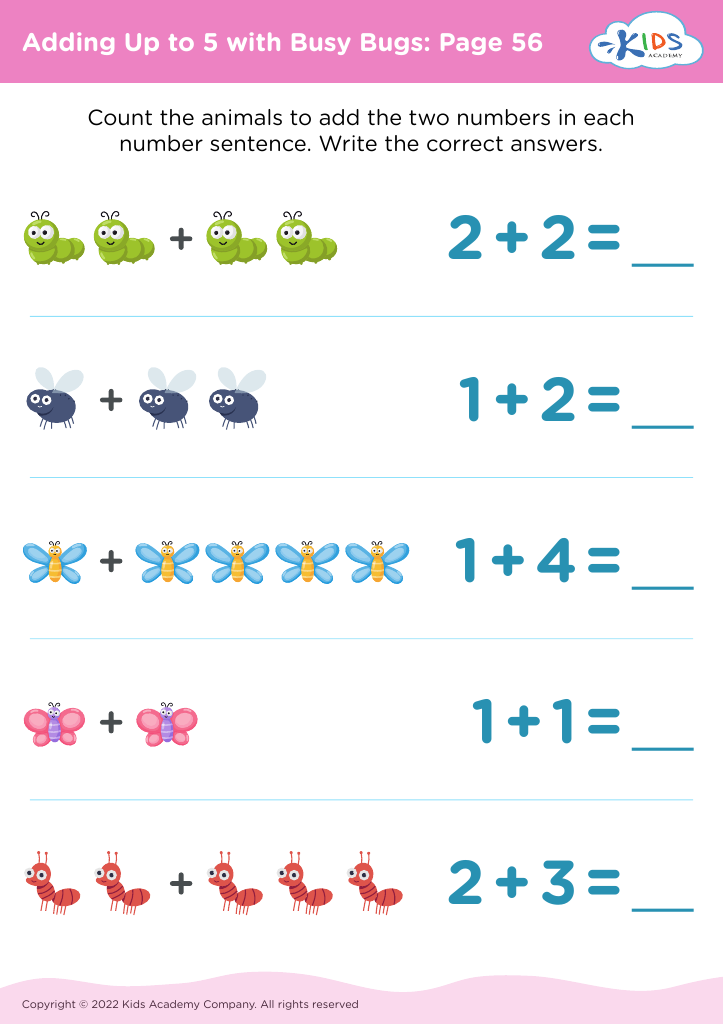
Adding Up to 5 with Busy Bugs: Page 56
Worksheet
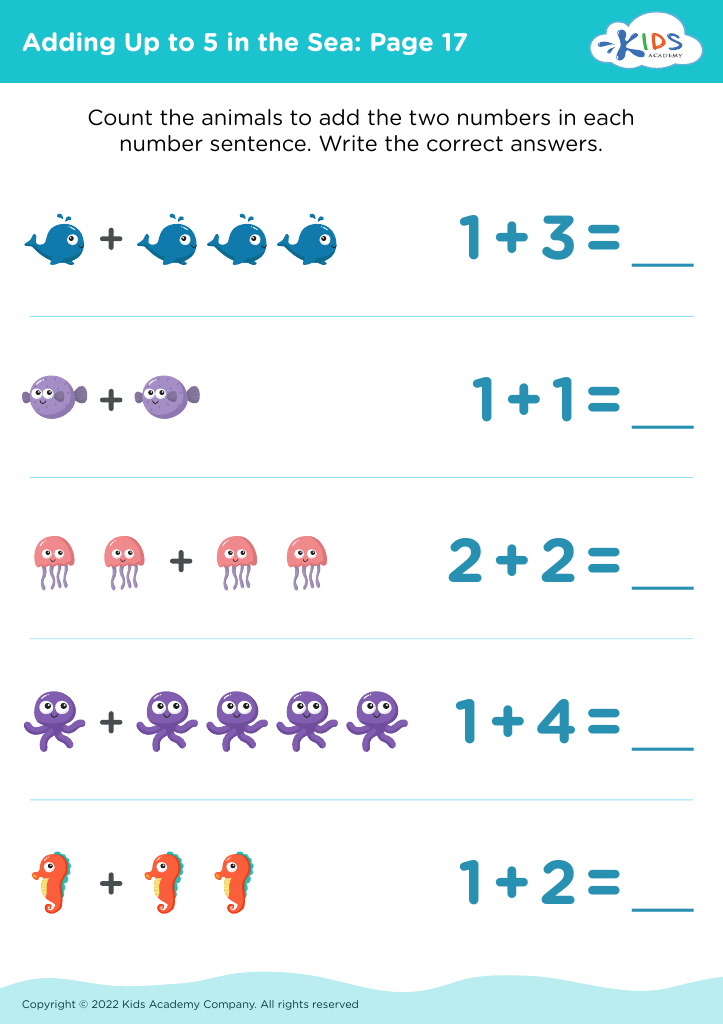
Adding Up to 5 in the Sea: Page 17
Worksheet
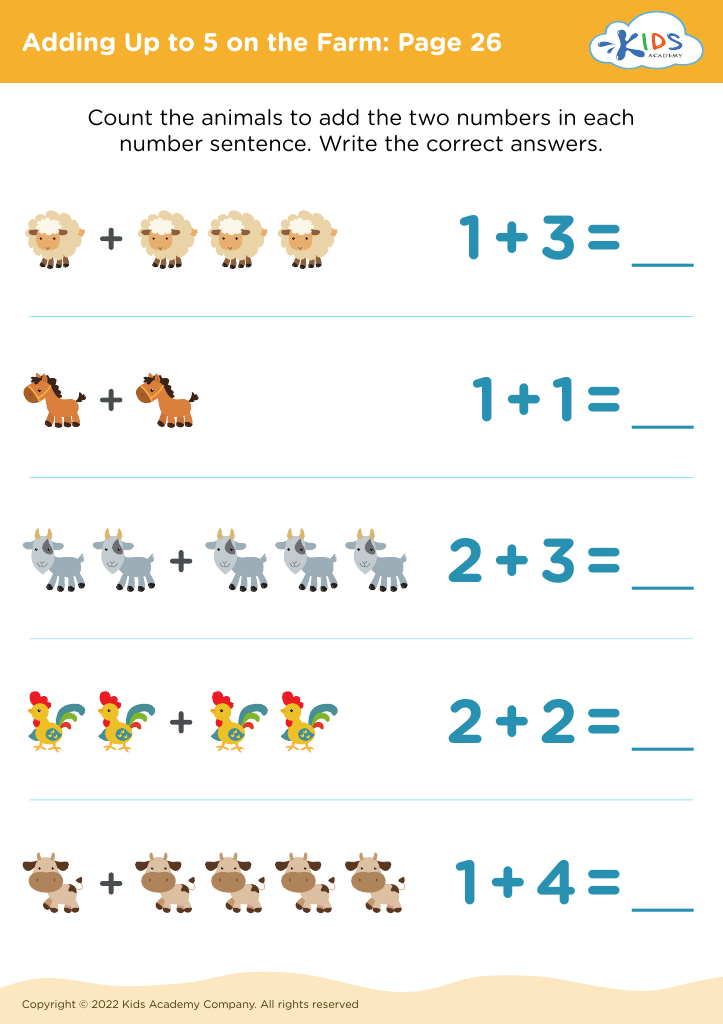
Adding Up to 5 on the Farm: Page 26
Worksheet
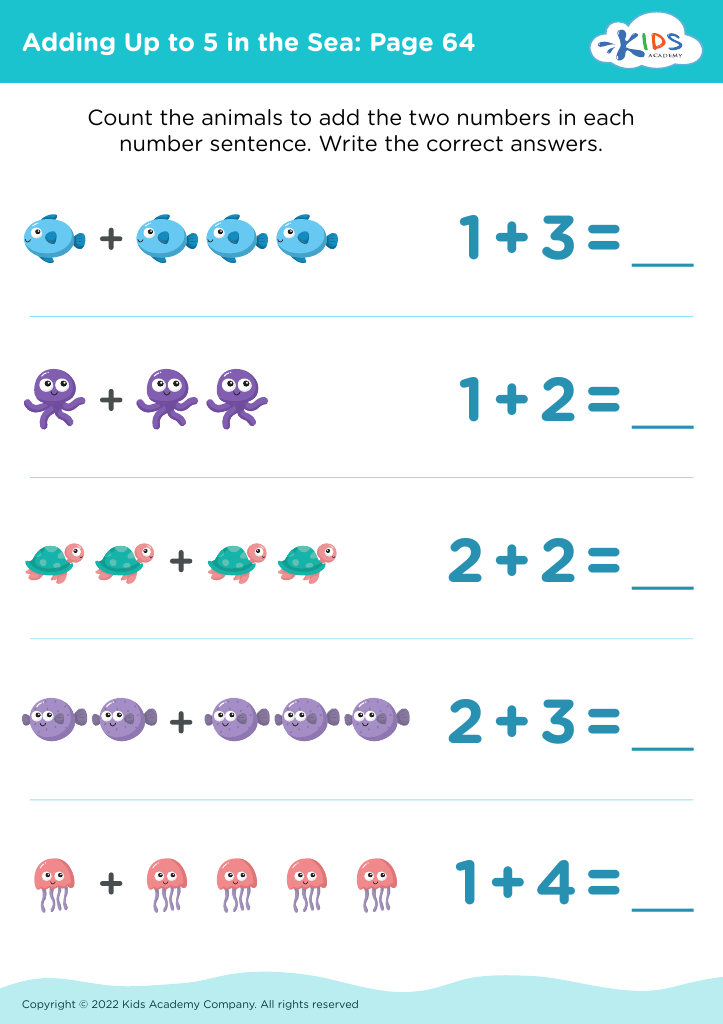
Adding Up to 5 in the Sea: Page 64
Worksheet
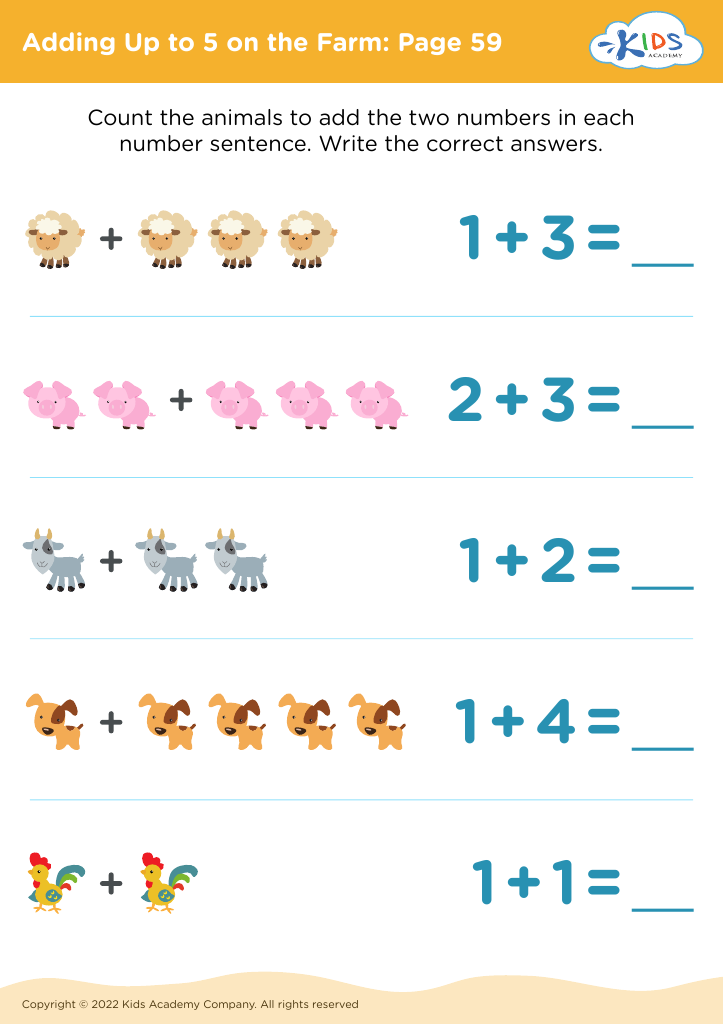
Adding Up to 5 on the Farm: Page 59
Worksheet
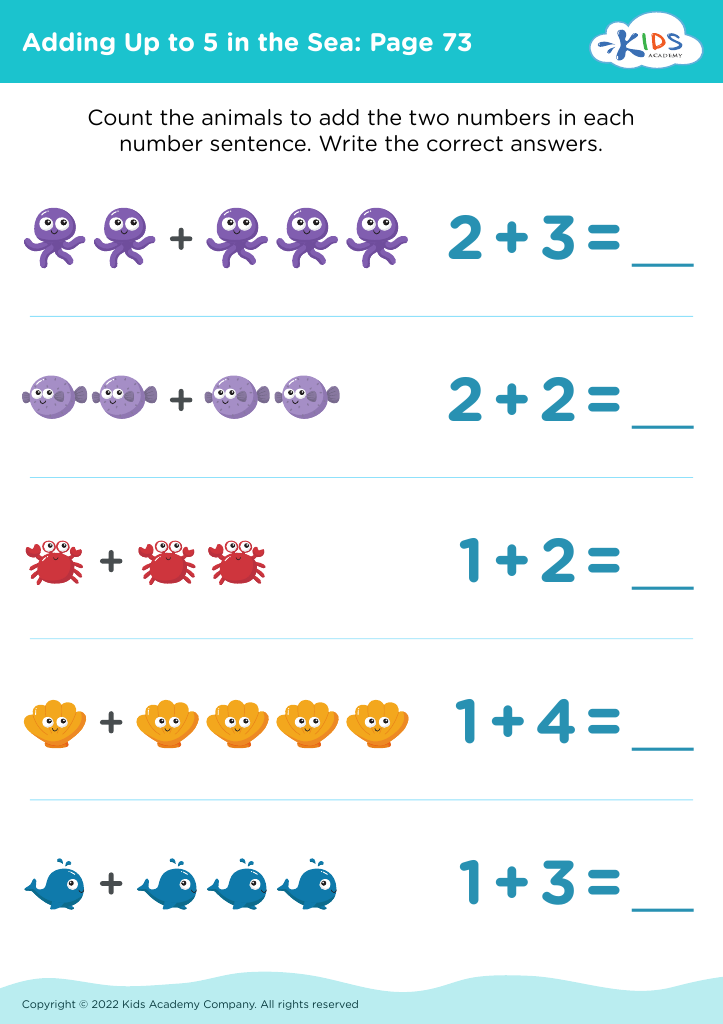
Adding Up to 5 in the Sea: Page 73
Worksheet
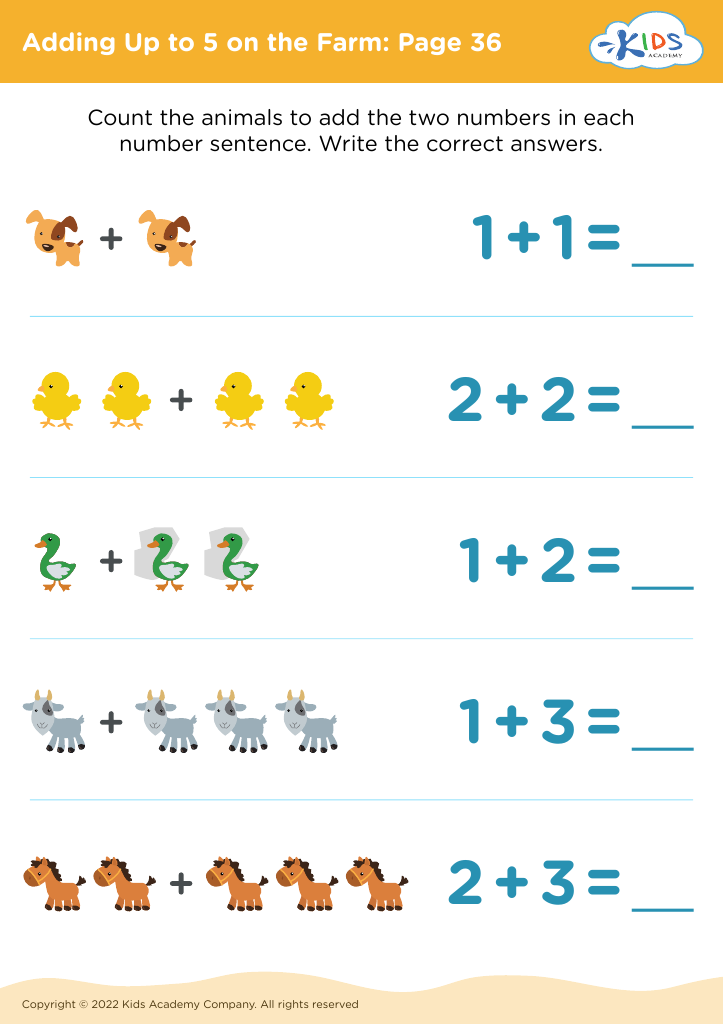
Adding Up to 5 on the Farm: Page 36
Worksheet
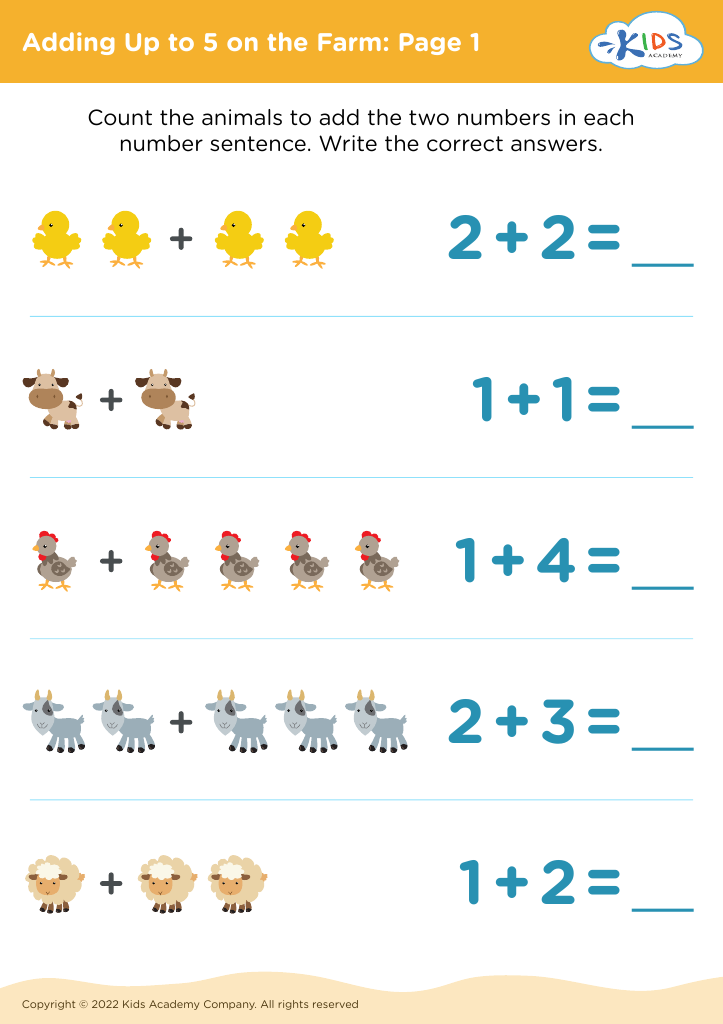
Adding Up to 5 on the Farm: Page 1
Worksheet
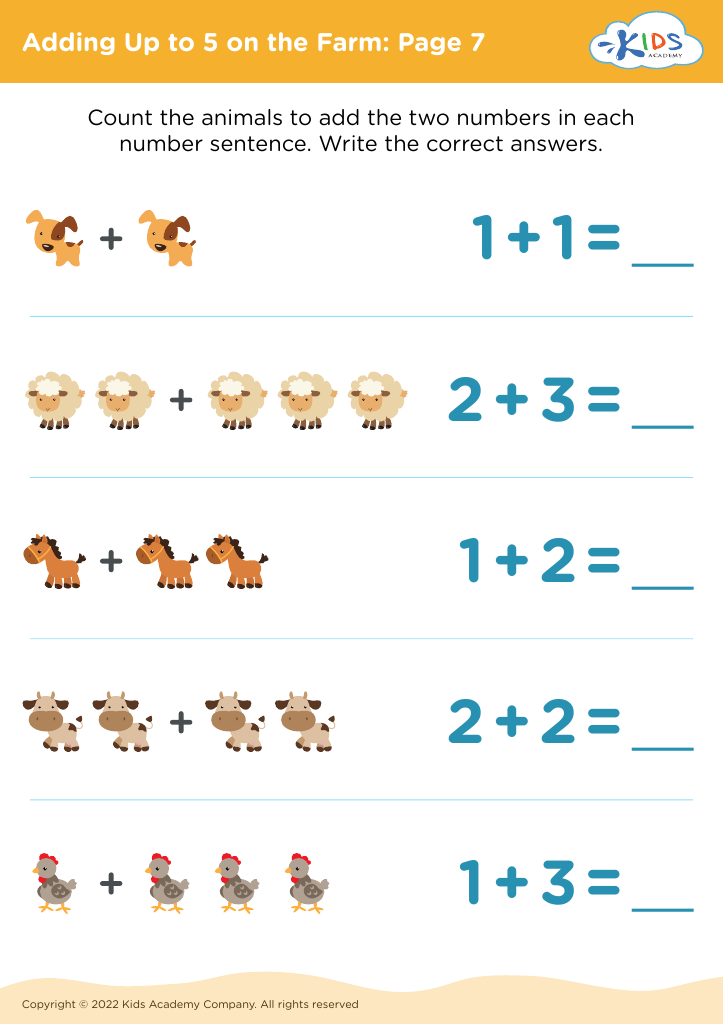
Adding Up to 5 on the Farm: Page 7
Worksheet
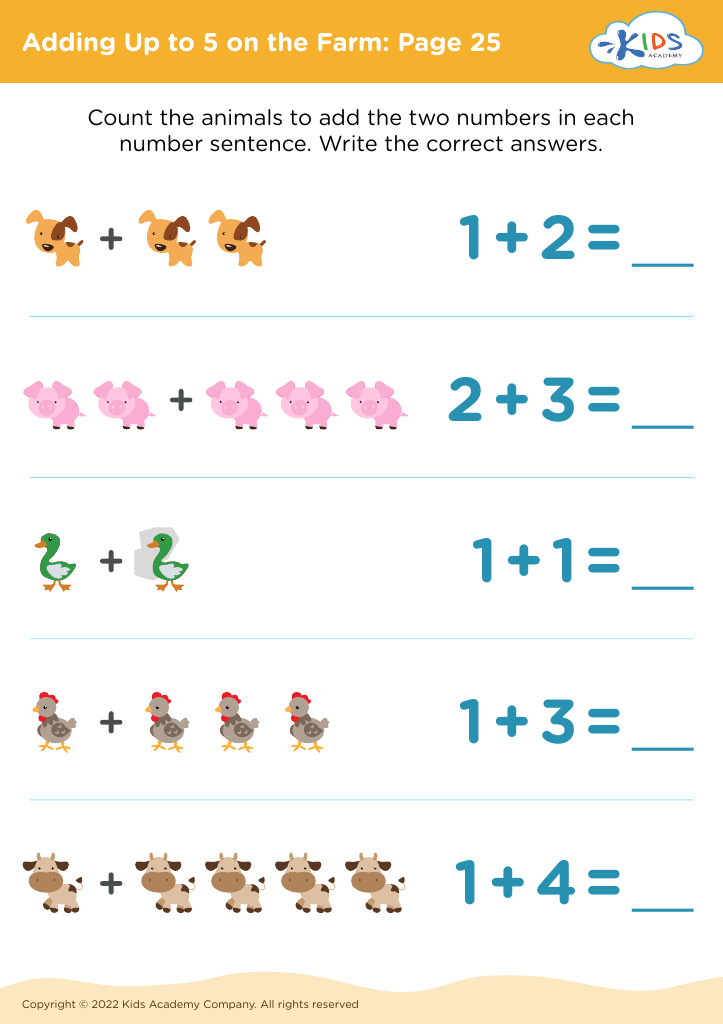
Adding Up to 5 on the Farm: Page 25
Worksheet
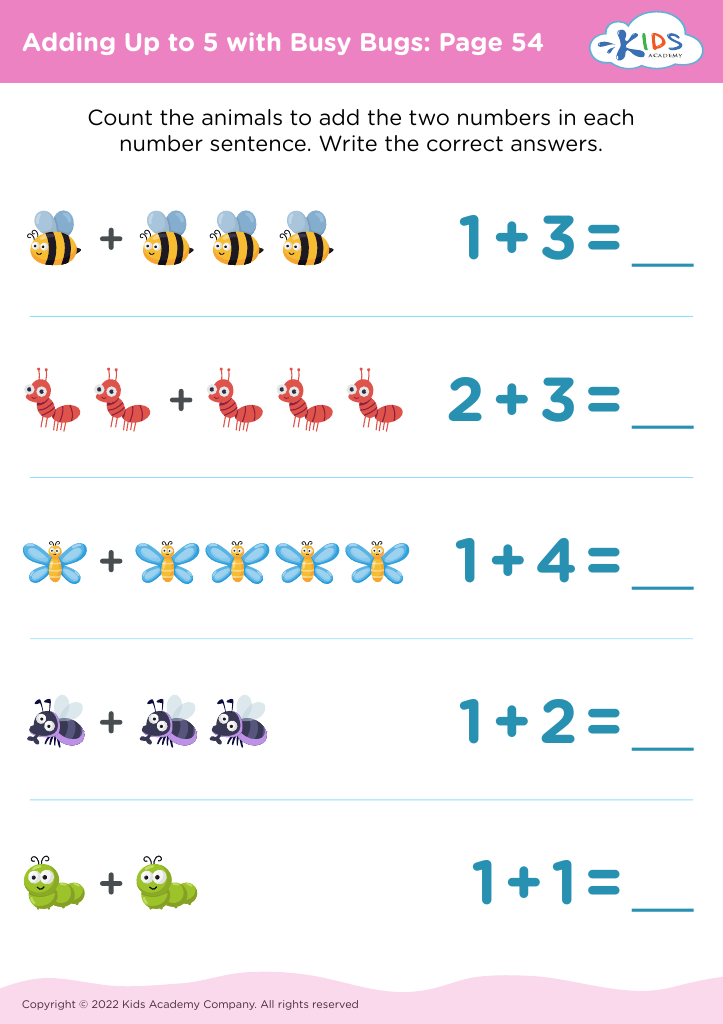
Adding Up to 5 with Busy Bugs: Page 54
Worksheet
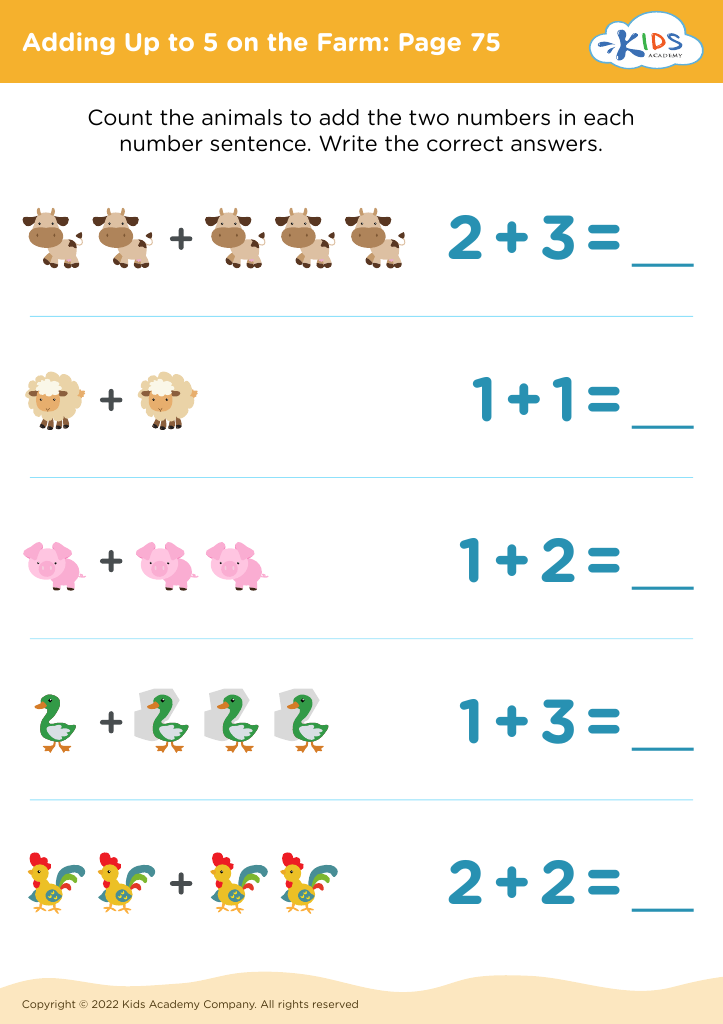
Adding Up to 5 on the Farm: Page 75
Worksheet
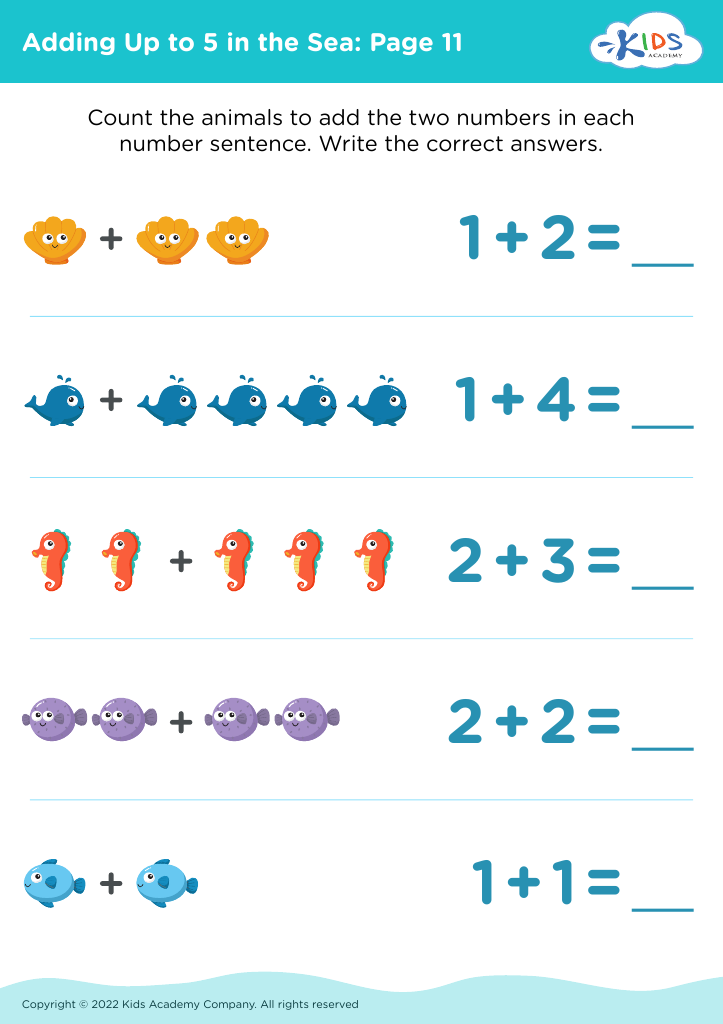
Adding Up to 5 in the Sea: Page 11
Worksheet
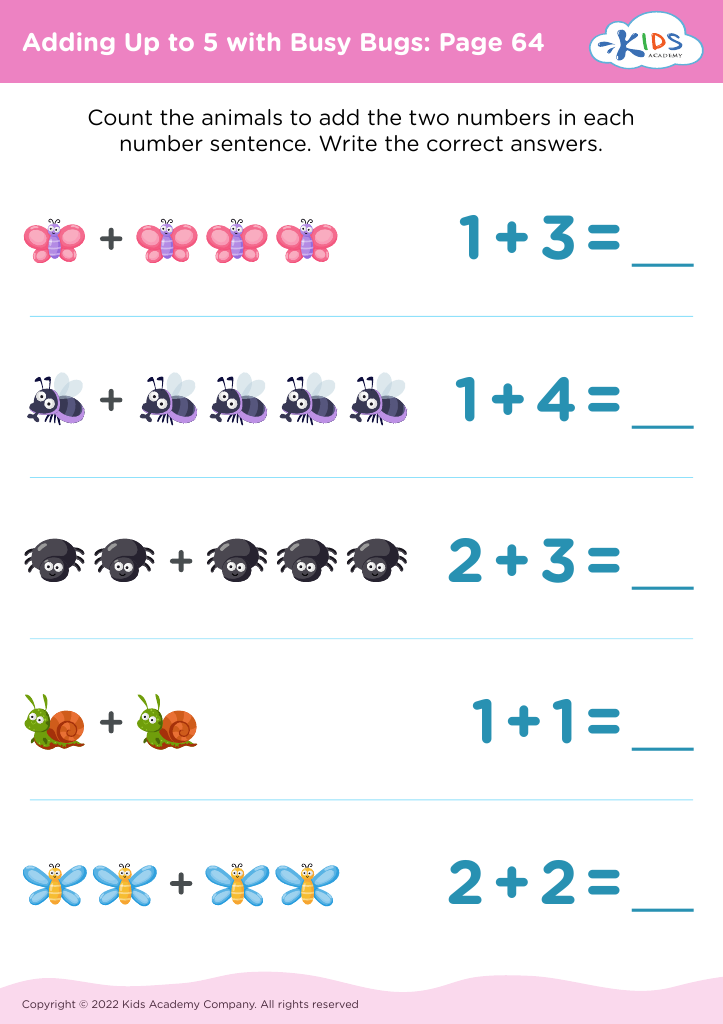
Adding Up to 5 with Busy Bugs: Page 64
Worksheet
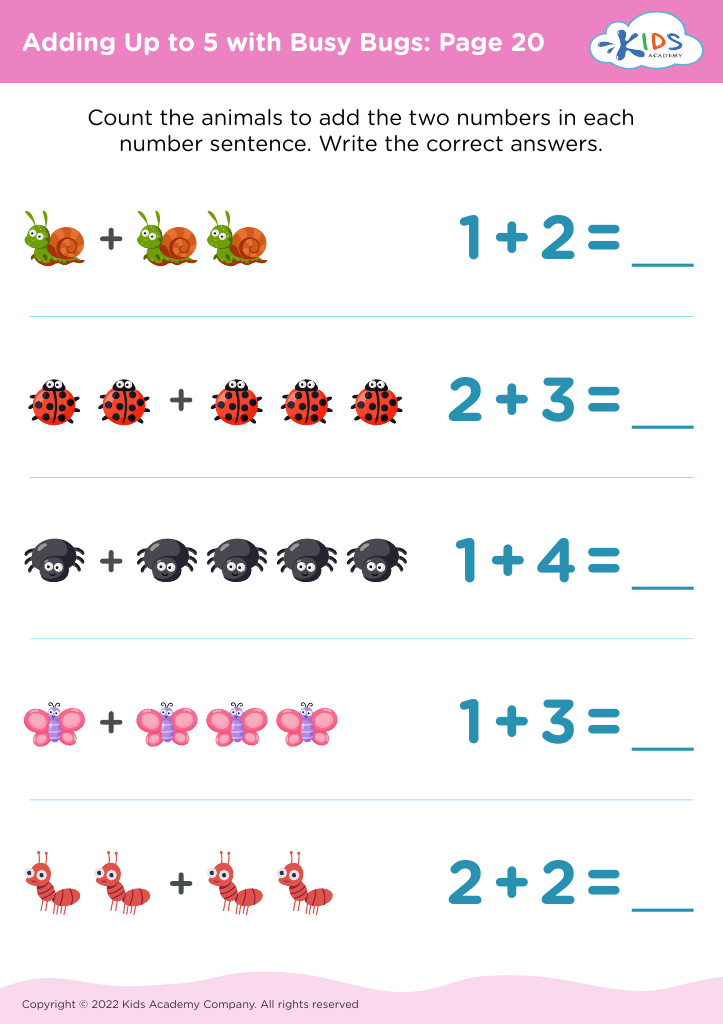
Adding Up to 5 with Busy Bugs: Page 20
Worksheet
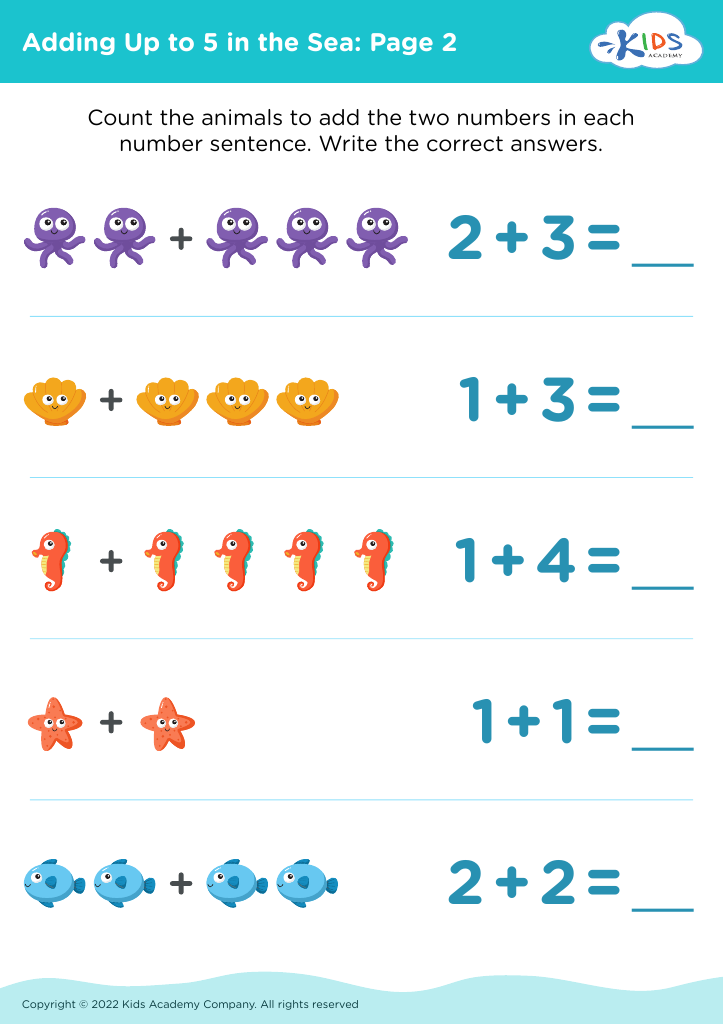
Adding Up to 5 in the Sea: Page 2

Adding Up to 5 in the Sea: Page 2

Adding Up to 5 in the Sea: Page 2
Worksheet
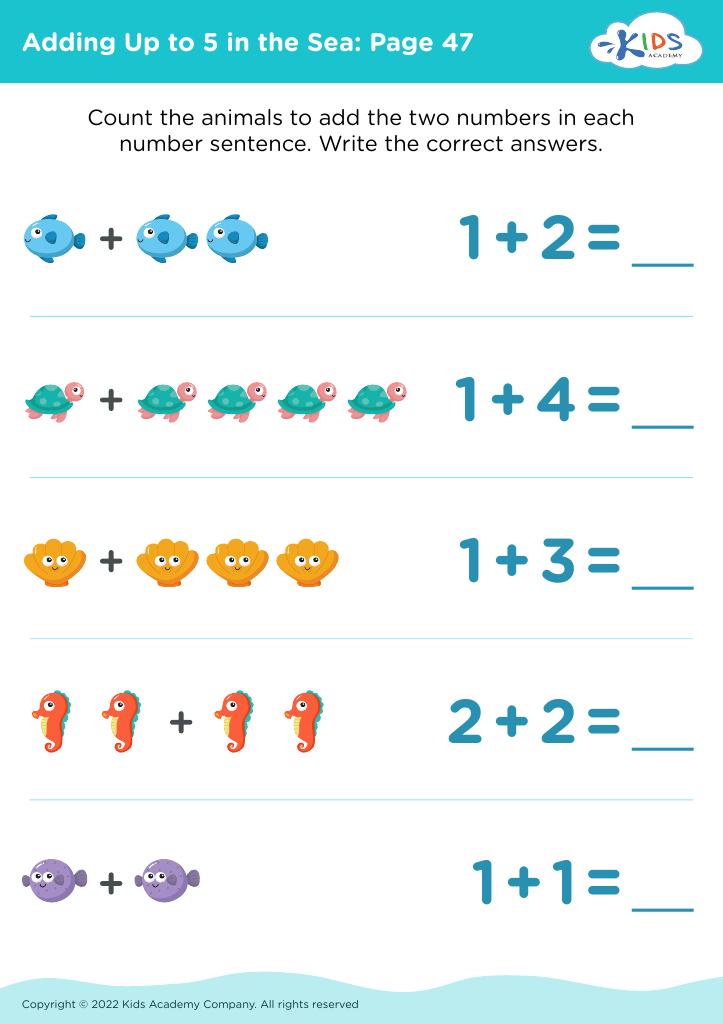
Adding Up to 5 in the Sea: Page 47
Worksheet
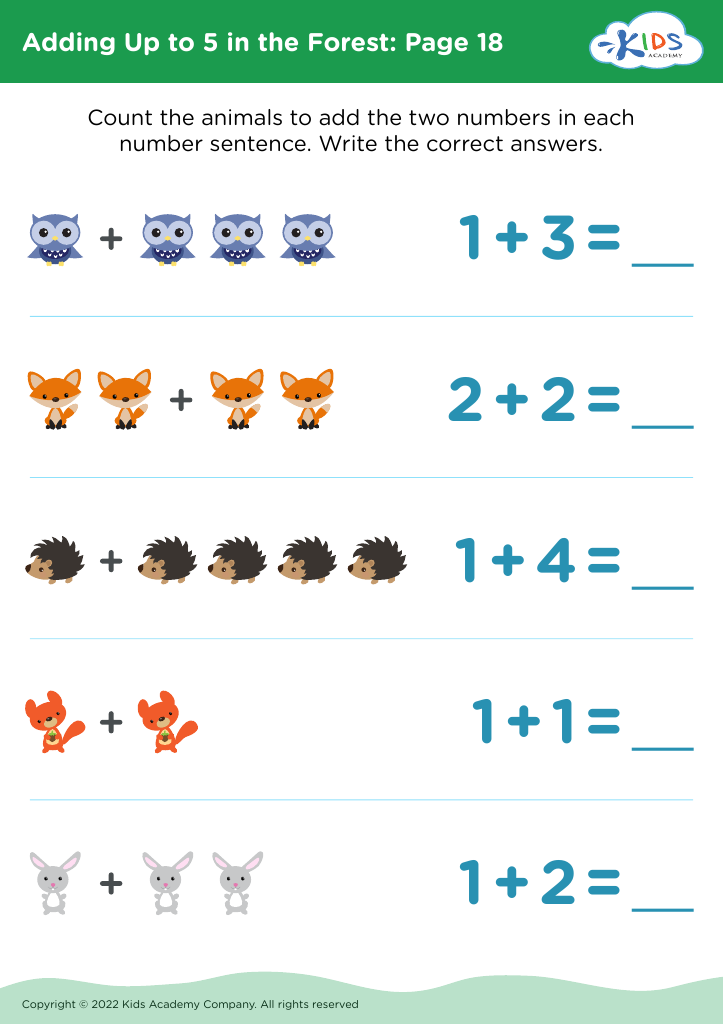
Adding Up to 5 in the Forest: Page 18
Worksheet
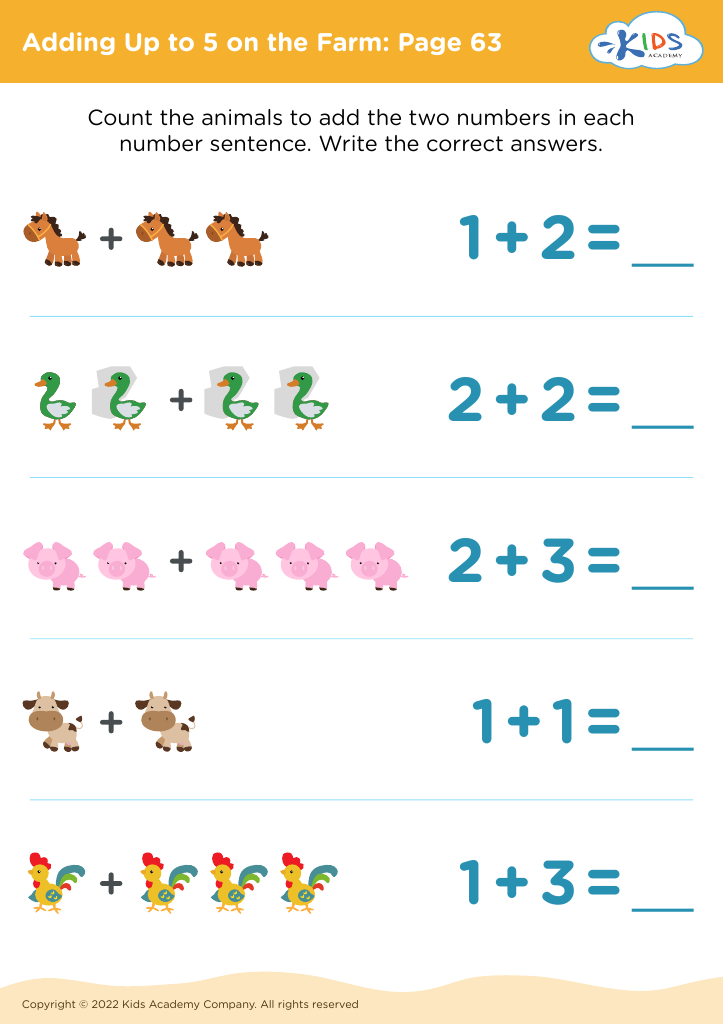
Adding Up to 5 on the Farm: Page 63
Worksheet
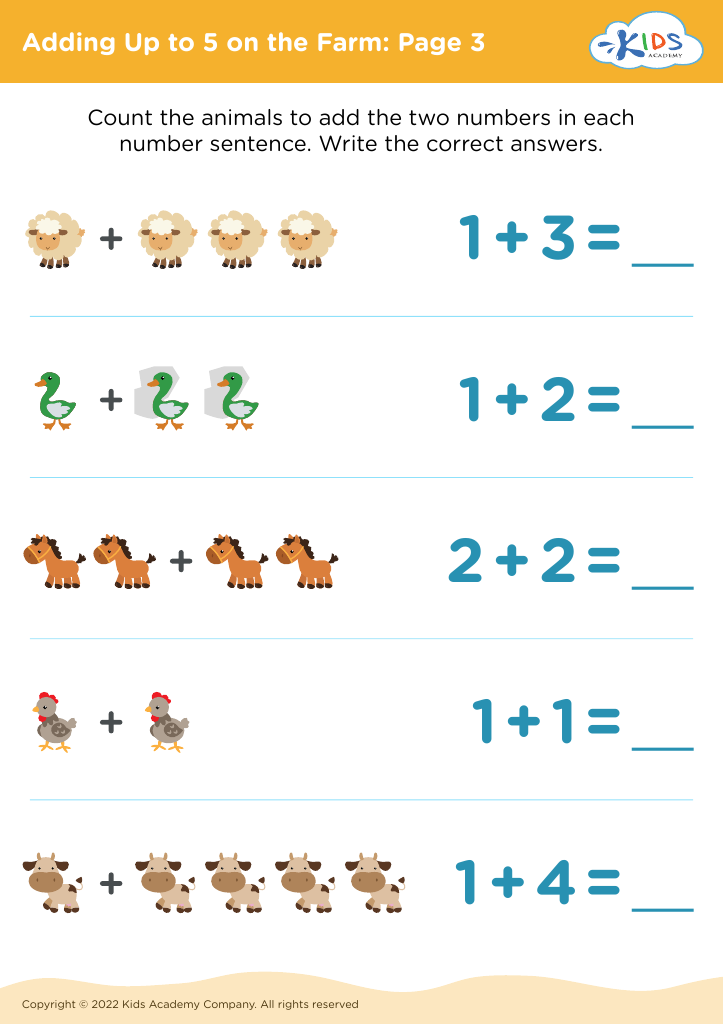
Adding Up to 5 on the Farm: Page 3
Worksheet
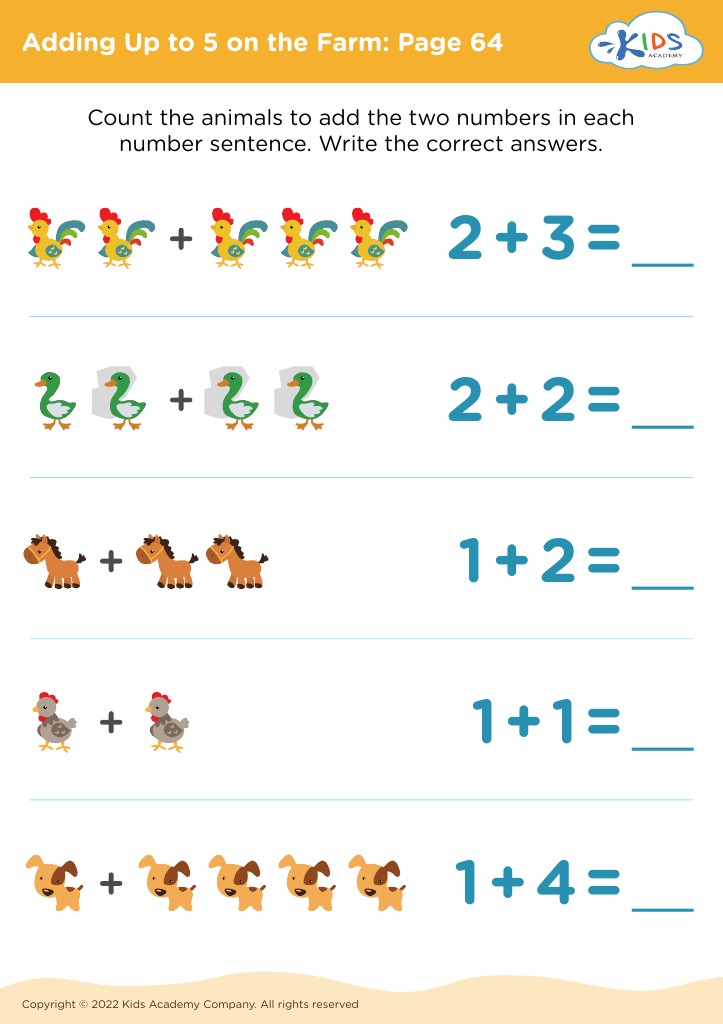
Adding Up to 5 on the Farm: Page 64
Worksheet


Visual learning is crucial for young children, especially when it comes to grasping mathematical concepts like adding up to 5. For 5-year-olds, who are often still developing their cognitive skills, visual aids provide tangible ways to understand abstract ideas. Using visual tools—like counters, number lines, or drawings—can help children concretely see the relationships between numbers and how they combine to form sums.

First, visual learning caters to diverse learning styles, ensuring that all children have the opportunity to engage with math in a way that resonates with them. This helps build a strong foundation in numeracy, essential for future learning. Additionally, visual aids can reduce math anxiety, making the learning process more enjoyable and encouraging a positive attitude towards mathematics.

Moreover, visual learning promotes critical thinking and problem-solving skills. By visualizing numbers, children can better understand the concept of “more” and “less,” which fosters comparison and development of logical reasoning.

In summary, parents and teachers should prioritize visual learning in mathematics, as it enhances understanding, promotes engagement, and lays the ground for a confident mathematical mindset. This early investment in visual learning will benefit students’ overall academic journey.