Visual Learning Addition and Subtraction Word Problems Worksheets for 5-Year-Olds
5 filtered results
-
From - To
Discover engaging Visual Learning Addition and Subtraction Word Problems Worksheets designed specifically for 5-year-olds. These interactive worksheets help young learners grasp fundamental math concepts through relatable scenarios and colorful visuals. By connecting math with everyday situations, children enhance their problem-solving skills while fostering a love for learning. Each worksheet is thoughtfully crafted to build confidence, promote critical thinking, and support cognitive development in early learners. Encourage your child's mathematical journey with our fun and effective visual aids, ensuring they grasp the essentials of addition and subtraction with ease. Spark their curiosity and watch them thrive in a friendly, supportive environment!
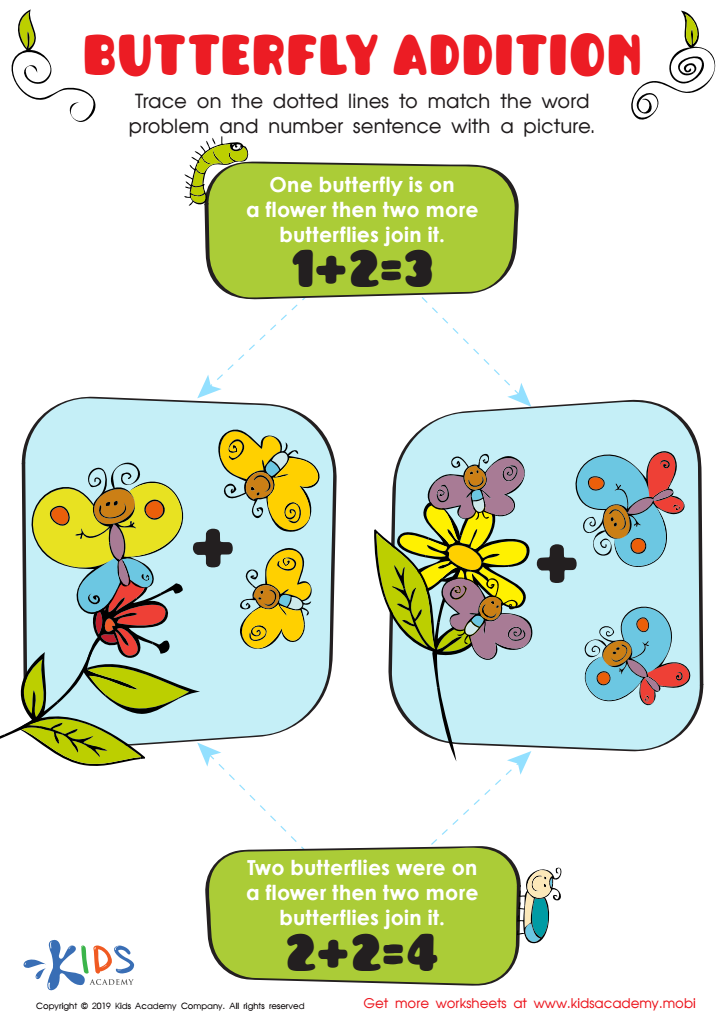
Butterfly Addition Worksheet
 Assign to My Students
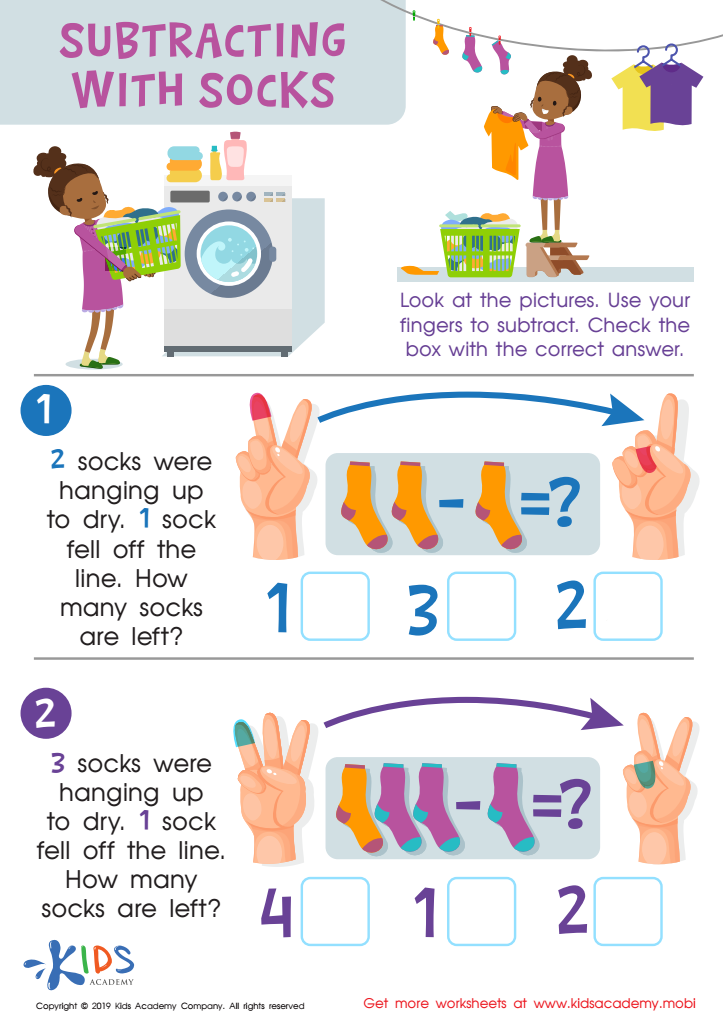
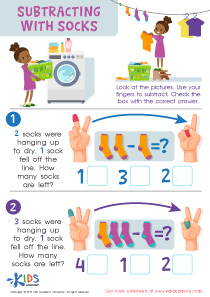
Subtracting Socks Worksheet
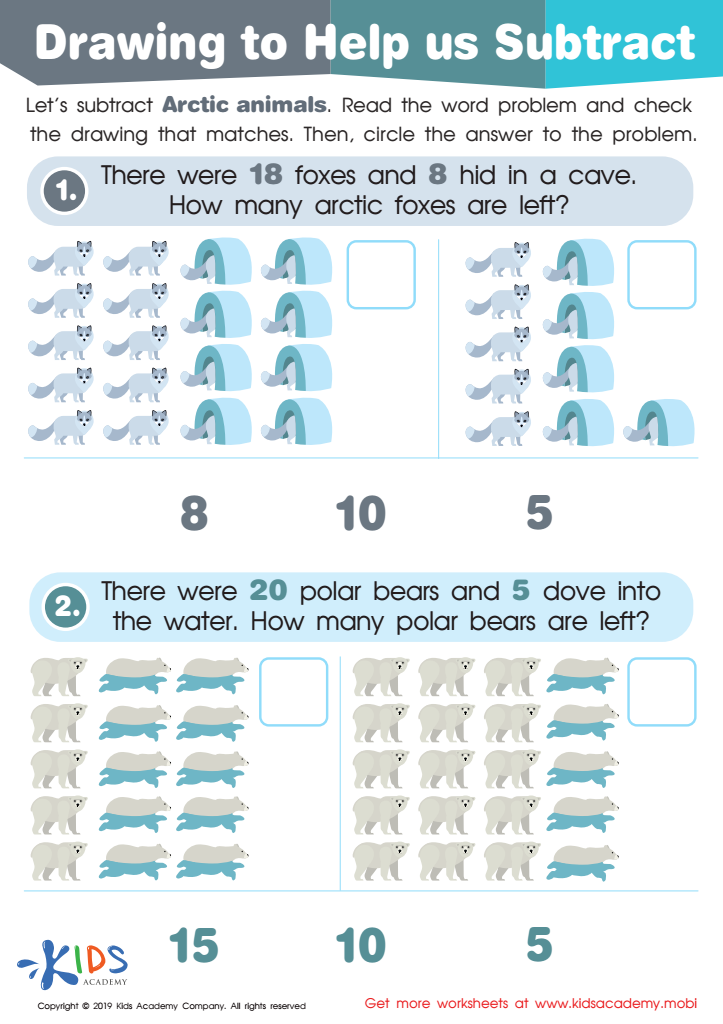
Drawing to Help Us Subtract Worksheet
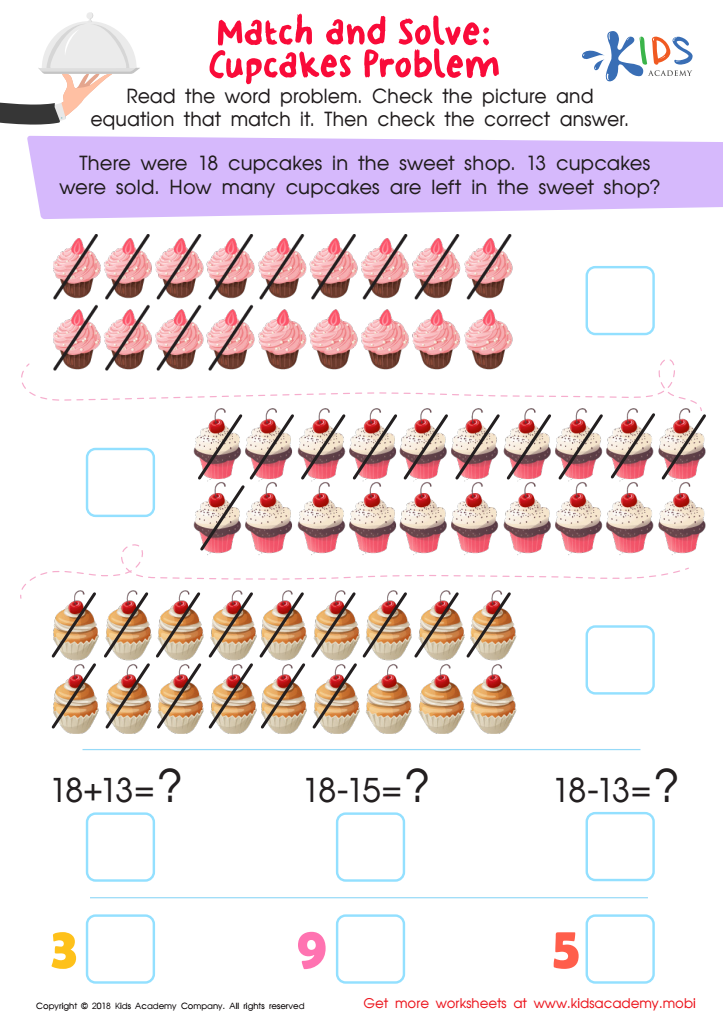
Match and Solve: Cupcakes Problem Worksheet
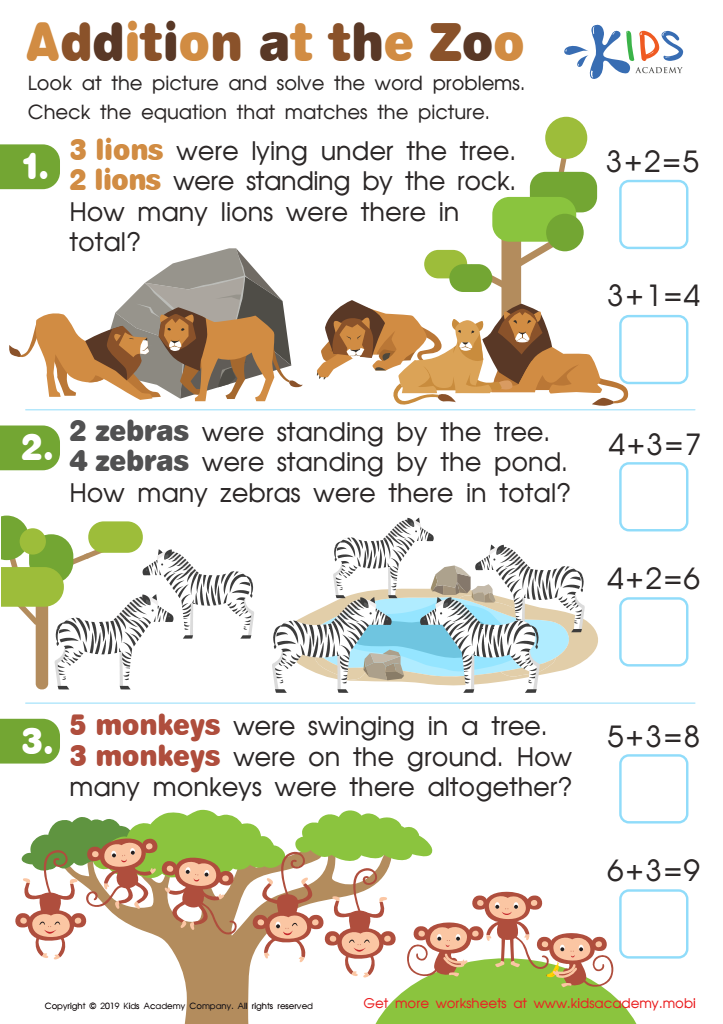
Addition at the Zoo Worksheet








Parents and teachers should care about visual learning in the context of addition and subtraction word problems for 5-year-olds because it provides a foundational skill set that enhances early mathematical understanding. Visual learning taps into children's innate curiosity and ability to grasp concepts through images and diagrams, making abstract arithmetic concepts more concrete and relatable.
At this young age, children often struggle to visualize numbers and their relationships. By using visual aids, such as drawings or manipulatives, children can better understand math processes. These visual representations help them grasp concepts like ‘how many more’ or ‘how many altogether’ through engaging and interactive methods. This fosters a love for learning and builds confidence in their mathematical abilities.
Moreover, addressing word problems creatively encourages critical thinking and problem-solving skills. As children learn to interpret and visualize these scenarios, they become adept at strategizing and applying their knowledge in real-world situations. This early exposure to structured thinking and numerical reasoning equips them with essential skills for more complex mathematics in the future. Ultimately, fostering visual learning in addition and subtraction not only aids in comprehension but also supports cognitive development, emotional growth, and lifelong learning habits.