Counting proficiency Addition & Subtraction Worksheets for 5-Year-Olds
11 filtered results
-
From - To
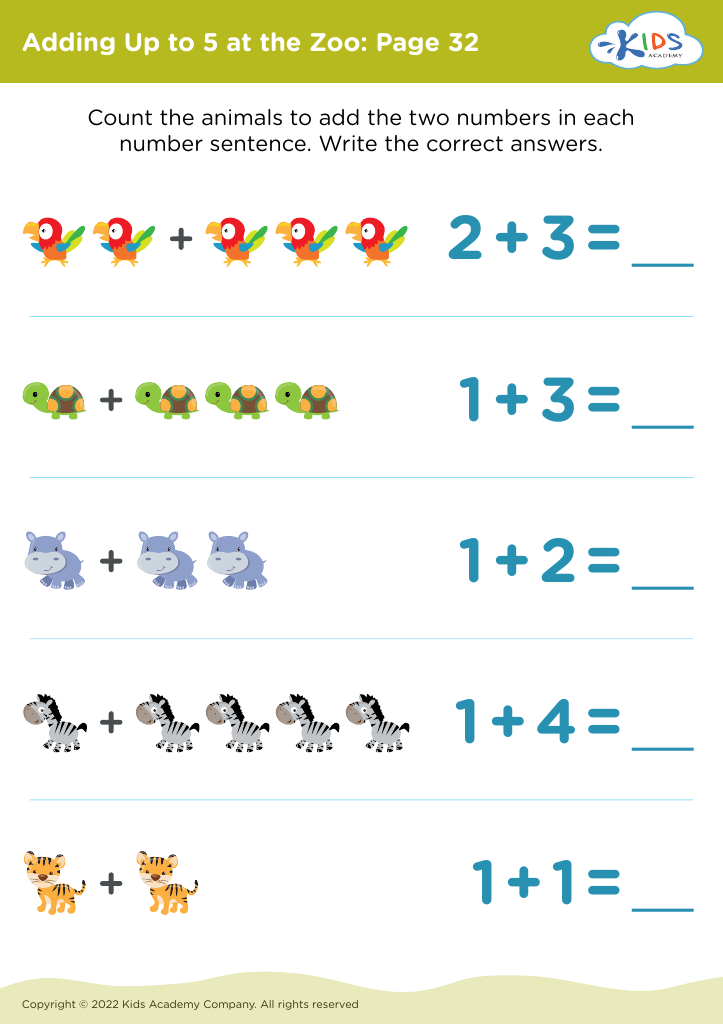
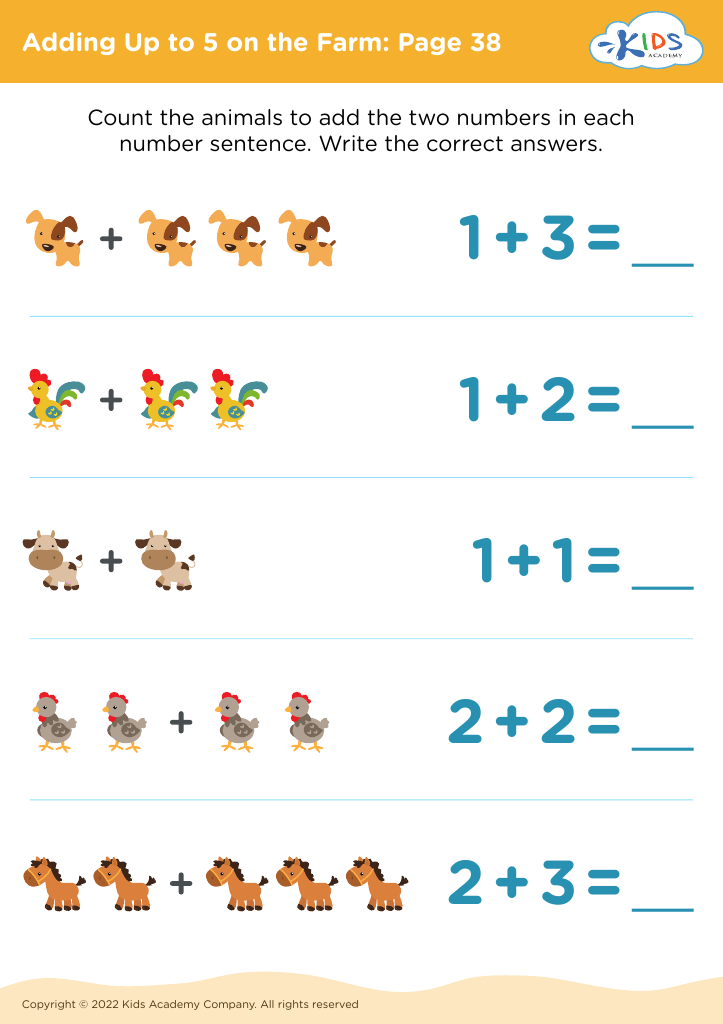
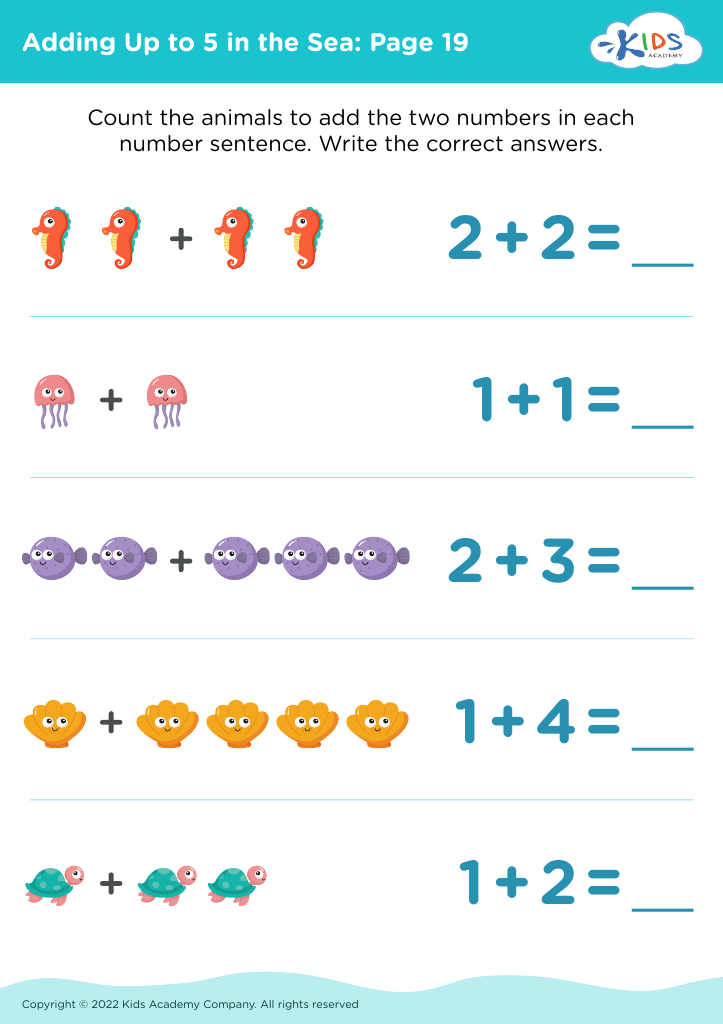
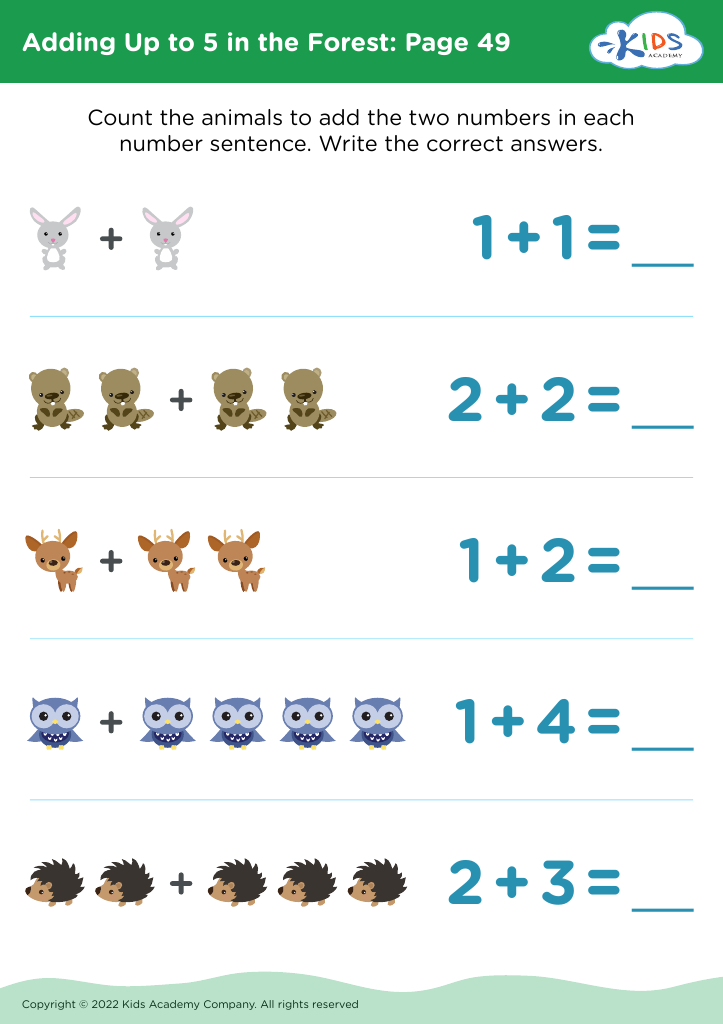
Enhance your child’s math skills with our Counting Proficiency Addition & Subtraction Worksheets designed for 5-year-olds. These engaging worksheets provide a fun and interactive way for young learners to grasp essential counting concepts while practicing basic addition and subtraction. With vibrant illustrations and age-appropriate exercises, kids will enjoy honing their numerical abilities. Our activities focus on developing a solid foundation in math, ensuring children gain confidence as they progress. Perfect for use at home or in the classroom, our worksheets facilitate hands-on learning and make math enjoyable. Explore our collection today and watch your child's counting proficiency bloom!
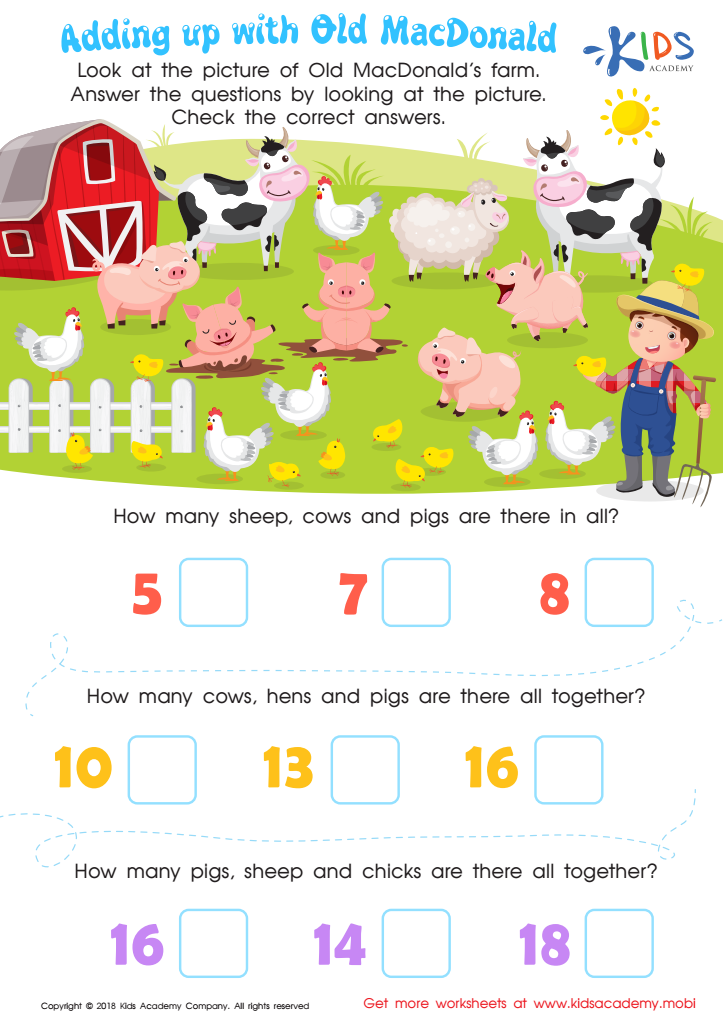
Adding Up with Old MacDonald Worksheet
 Assign to My Students
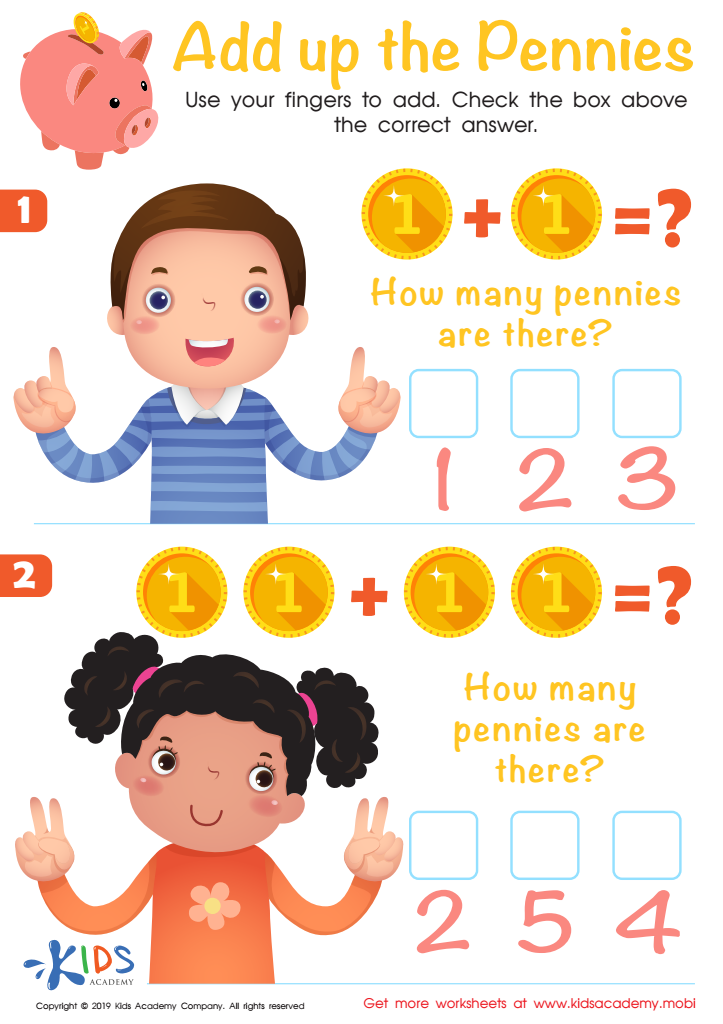
Add up the Pennies Worksheet
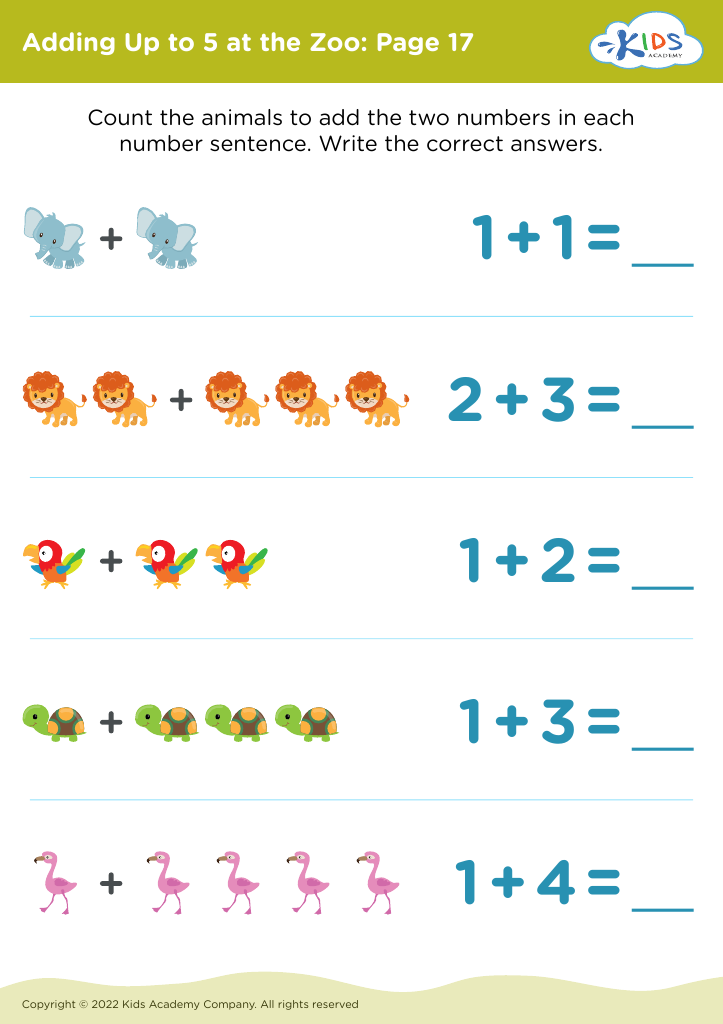
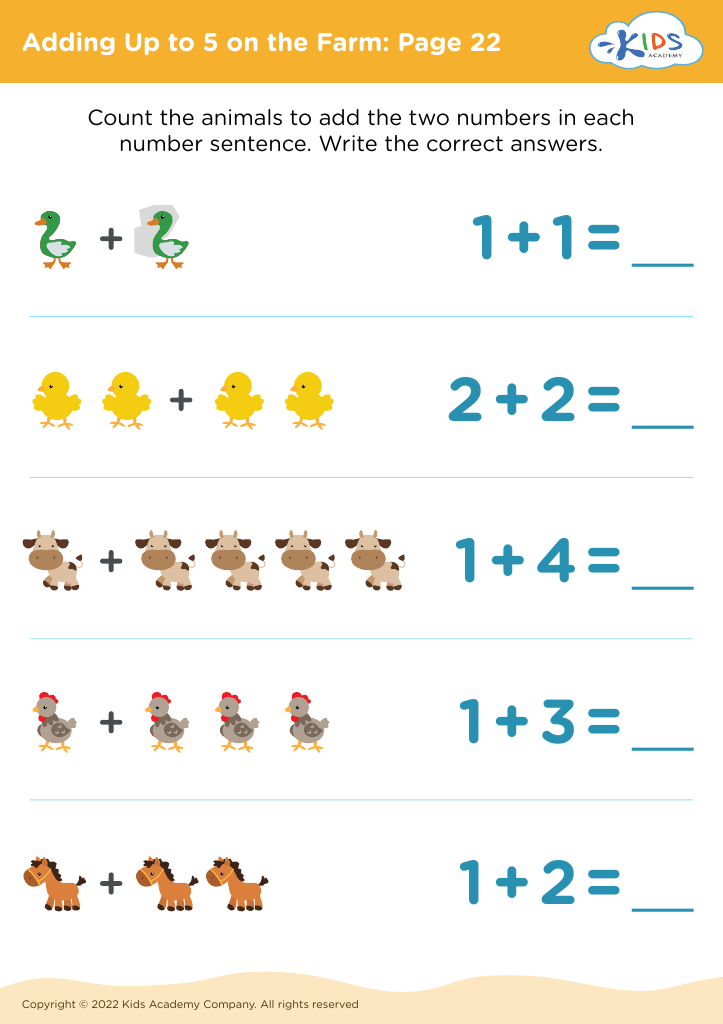
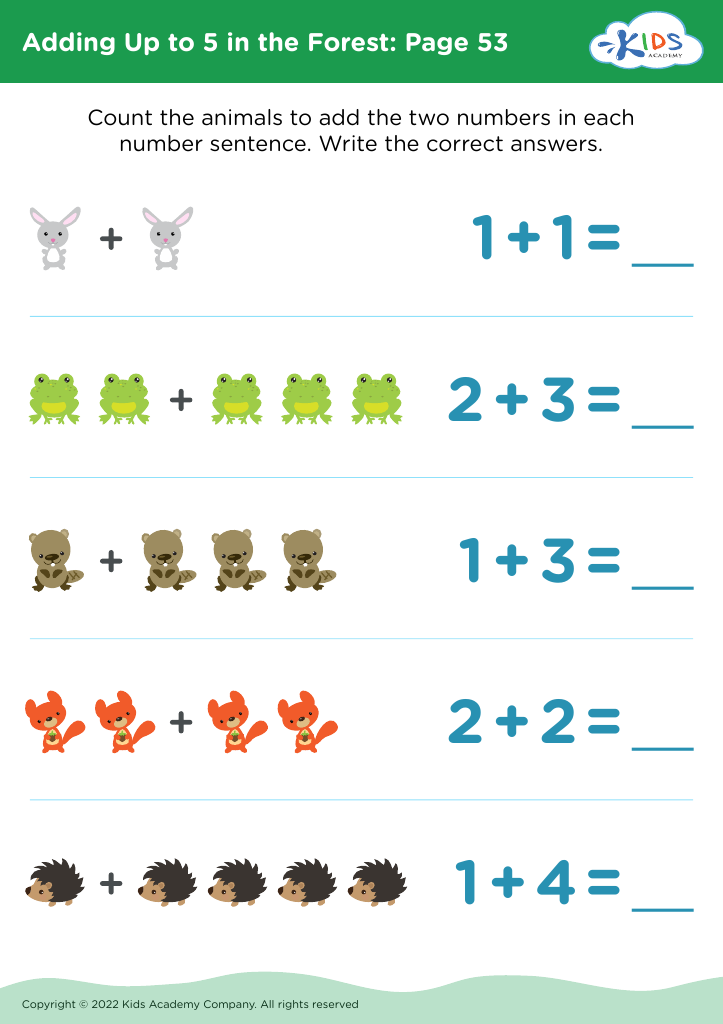
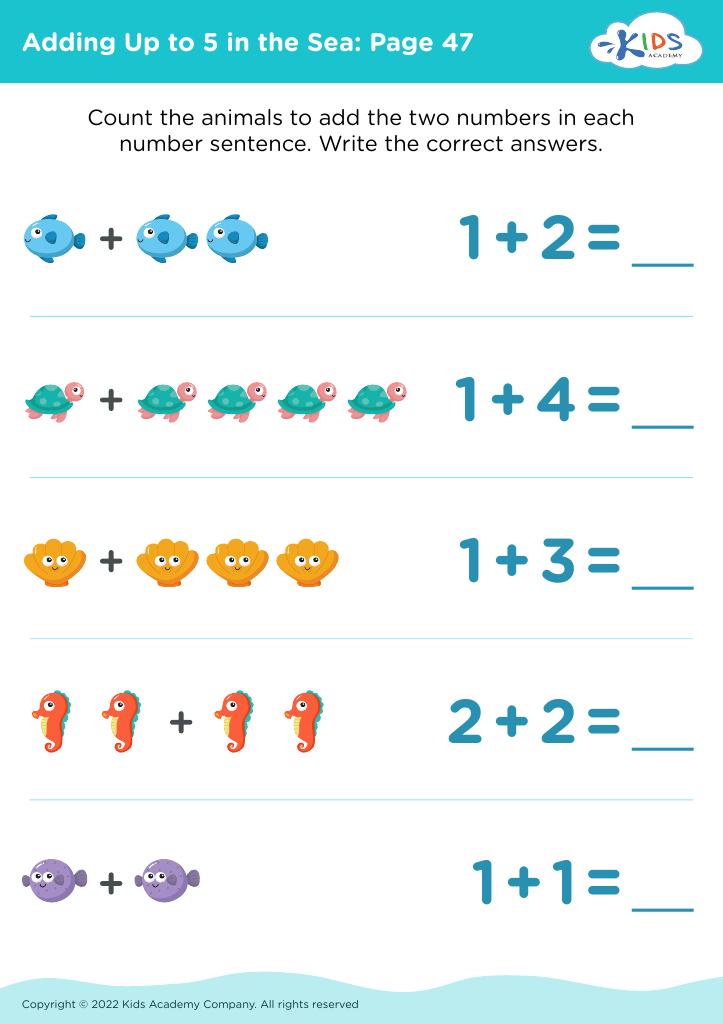
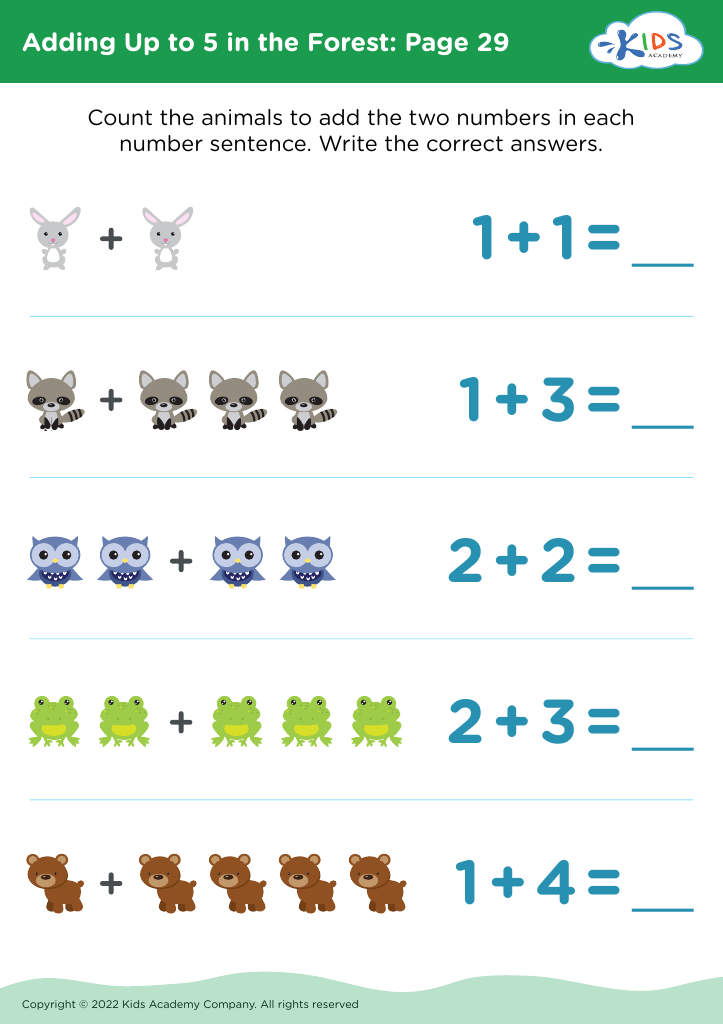








Counting proficiency and the ability to perform addition and subtraction are foundational skills for young children, particularly at the age of 5. Parents and teachers should care deeply about these competencies, as they form the cornerstone of a child's mathematical understanding and problem-solving abilities. Mastering counting enables children to recognize numbers, understand quantities, and develop number sense.
Early proficiency in addition and subtraction not only helps children grasp mathematical concepts but also enhances critical thinking and logical reasoning skills. These skills support academic success across all subjects, as mathematics is inherently intertwined with tasks in science, reading, and even art. Additionally, strong arithmetic skills promote confidence and a positive attitude toward learning.
Fostering a solid grasp of counting, addition, and subtraction at an early age can also prevent future mathematics anxiety or difficulties. Engaged parents and teachers can create enriching environments where children feel encouraged to explore numbers through games, everyday scenarios, and interactive learning experiences. By prioritizing counting and basic arithmetic, they lay a strong educational foundation that will serve children throughout their academic careers and daily lives. Overall, cultivating these skills in young learners fosters a lifelong love for mathematics and learning.








